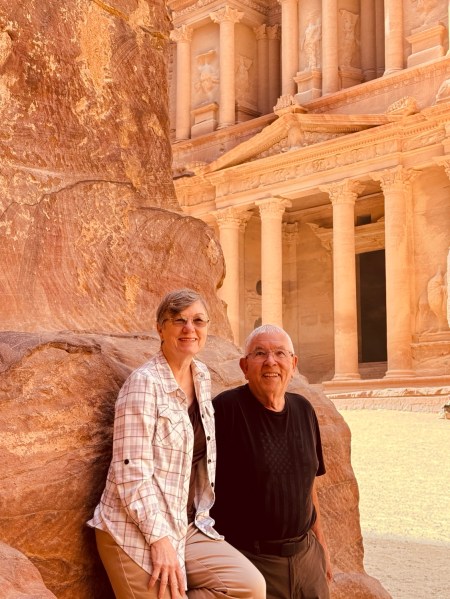
After days of winding down the King’s Highway, we finally arrived at the main event of our Jordanian journey: Petra. Carved directly into vibrant rose-red sandstone cliffs more than 2,000 years ago by the Nabataeans—an ingenious nomadic Arab tribe who grew wildly wealthy controlling ancient incense and spice trade routes—Petra officially joined the New Seven Wonders of the World on July 7, 2007. We were actually supposed to see it during our nine-month Ultimate World Cruise, but the disturbances in the Suez Canal forced a detour that left Petra off the itinerary.
I was blessed to be able to see it back in 2016 while Chuck stayed on the ship due to medical reasons. Determined not to let it slip away for him twice, we decided to skip the cruise ship this time and fly straight here instead—and it wasted zero time showing off.
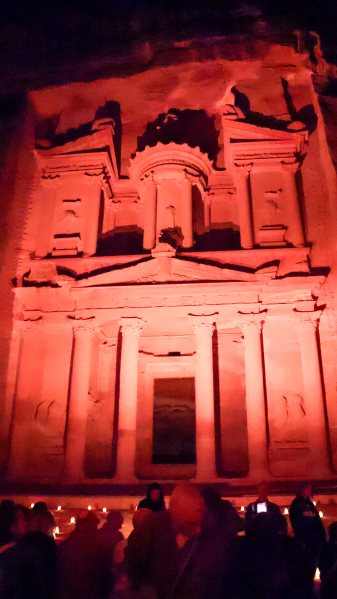
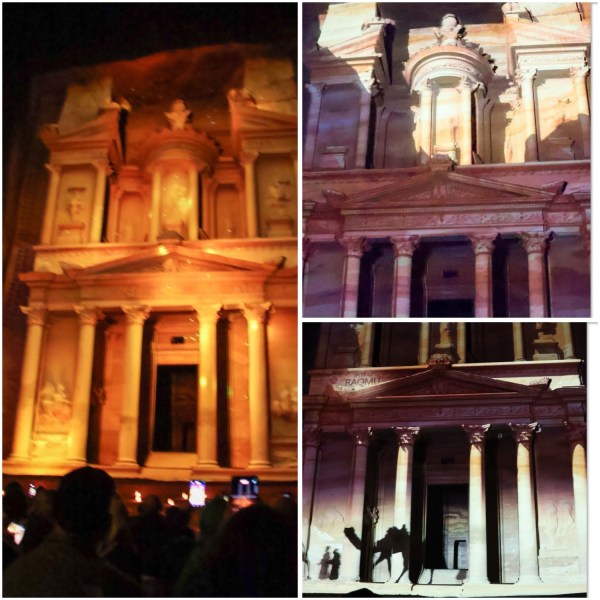
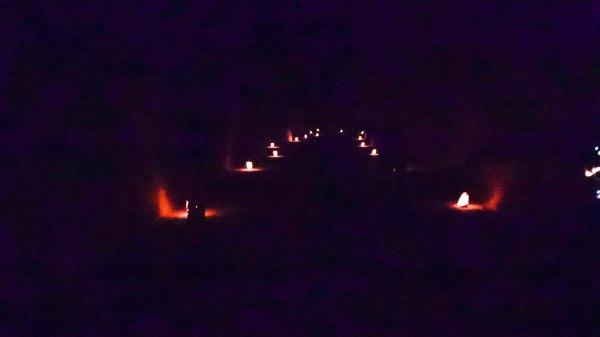
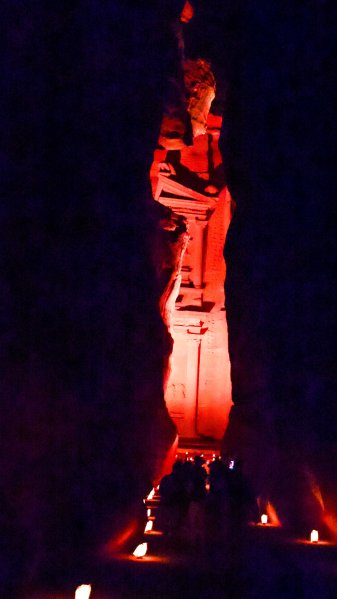
We kicked things off after dark with Petra by Night, which sounded wonderfully romantic until we realized it meant walking a 3-mile round trip in the pitch black before we had even started our main tour. Guided only by the flickering glow of over 1,500 paper-bag candles lining the narrow canyon floor, we shuffled through the shadows like cautious penguins trying not to trip over ancient cobblestones. Emerging at the end to see the monumental facade illuminated by a sea of warm candlelight—accompanied by traditional Bedouin flute music echoing off the cliffs—was magical. Better yet, the light show narrated the rich history of Petra while projecting vibrant visuals directly onto the rock face, creating a stunning overlay of realism that brought the ancient columns and massive doors vividly to life.
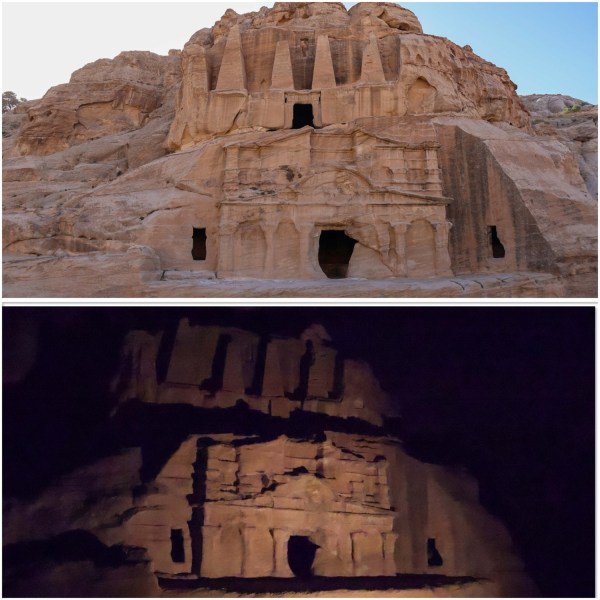
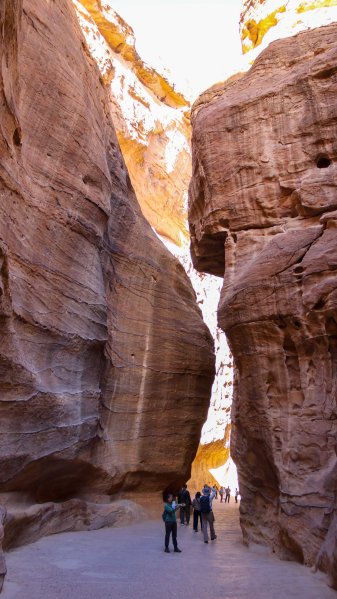
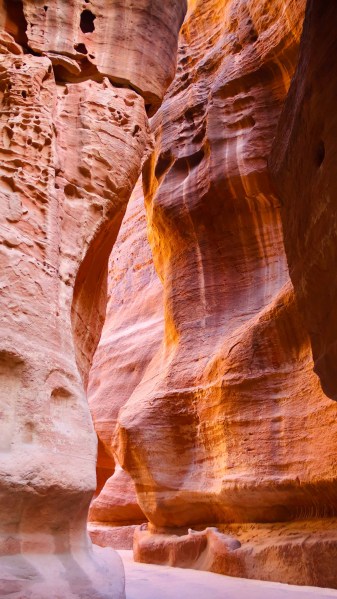
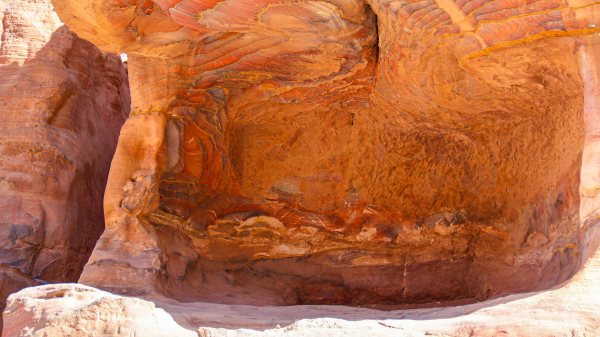
With three miles already on our pedometers from the night before, we set our alarms early the next morning to beat the midday crowds and the desert sun. Entering through the Siq—a dramatic, mile-long sandstone gorge with towering walls reaching up to 260 feet high—is half the thrill. Even after seeing it by candlelight, watching the morning sun paint the swirling red, pink, and orange rock formations in full daylight is jaw-dropping.
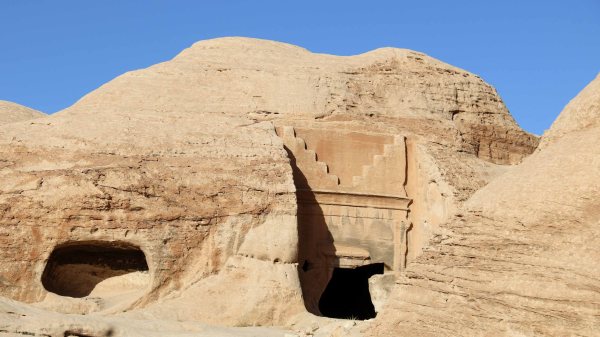
Along the walls, you can still spot the carved stone water channels the Nabataeans engineered to bring fresh spring water into their desert metropolis—proof that they were brilliant hydraulic engineers long before anyone worried about low-flow showerheads.
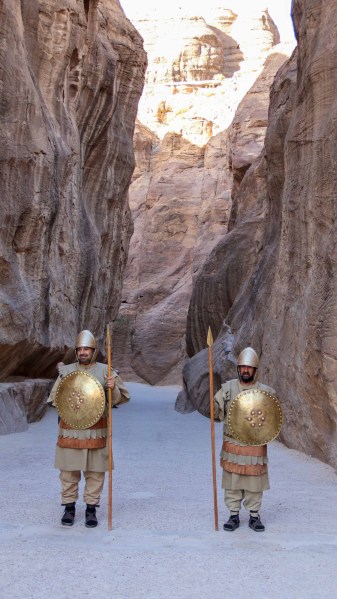
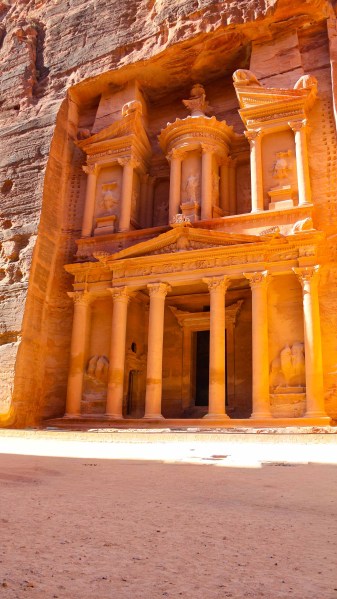
Just when you think the canyon can’t get any narrower, the cliffs part to reveal a sliver of the main event: Al-Khazneh (The Treasury). Standing nearly 130 feet high and intricately chiseled straight out of the sheer cliff face in the 1st century AD, it is easily one of the most iconic sights on Earth. Despite its name—inspired by local Bedouin legends that an Egyptian pharaoh hid his treasure in the giant stone urn at the top (which is still pockmarked with bullet holes from hopeful treasure hunters)—historians believe it was actually built as a royal mausoleum for the Nabataean King Aretas IV.
While the Treasury gets all the movie-poster fame (yes, Indiana Jones fans, this is the spot), it is really just the front door to a massive ancient city. We kept pushing another few miles deeper into the valley, passing:
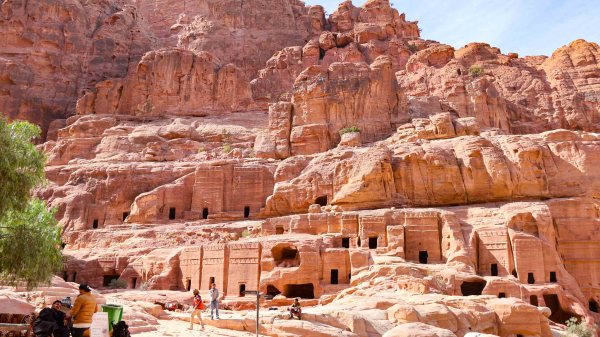
- The Street of Facades: Rows of monumental Nabataean tombs carved side-by-side into the cliffs like ancient luxury condos.
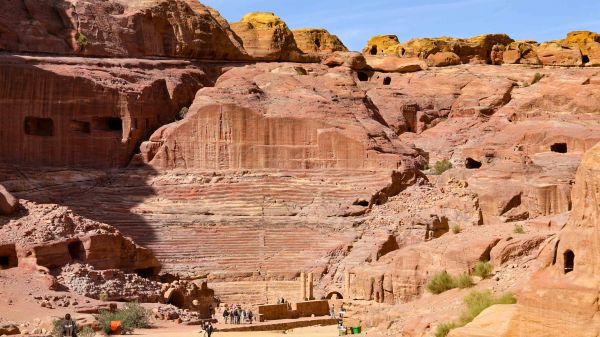
- The Nabataean Theater: A massive amphitheater hewn directly out of solid rock, originally built for around 4,000 spectators before the Romans later expanded it.
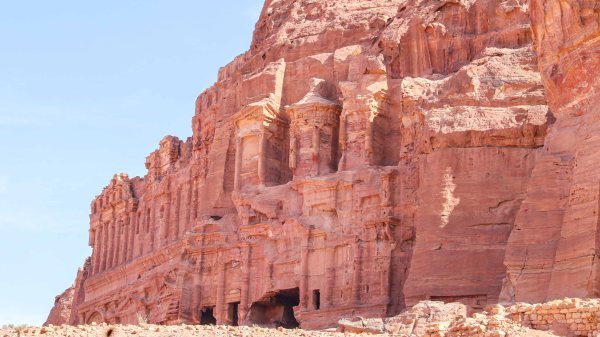
- The Royal Tombs & Colonnaded Street: Towering, weather-worn facades—including the massive Urn Tomb—overlooking the old paved city center where merchants once traded silk, frankincense, and myrrh.
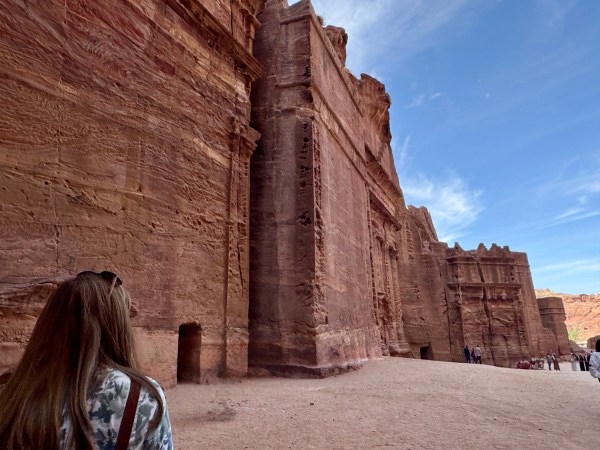
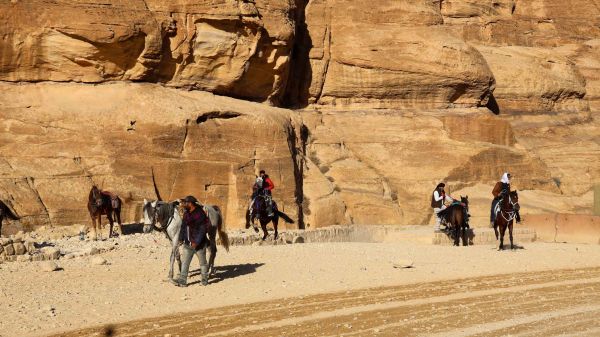
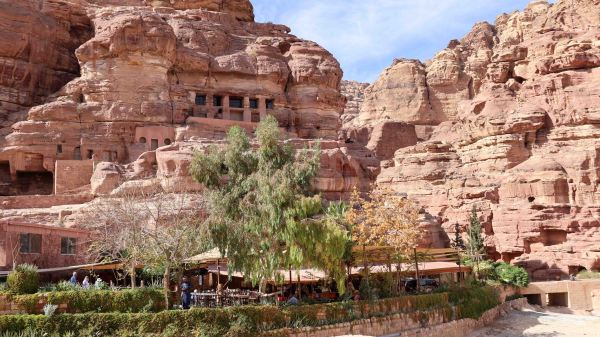
Of course, we weren’t the only ones navigating the ancient stone trails. Along the route, Petra is practically a bustling animal kingdom. We dodged sure-footed donkeys and horses clip-clopping past with local Bedouin handlers offering “taxi” rides to weary hikers, while friendly local dogs and cats lounged near the cafes and shops, shamelessly begging to be stroked by anyone who stopped to catch their breath—and honestly, after miles of walking, we were happy to oblige.
By the time we reached the far end of the main trail, our legs were ready for a break—and fortunately, we were rewarded with another fantastic traditional Jordanian lunch right at the end of the route before starting the trek back. Sitting down to a warm Jordanian meal of rice, meats and hummus after miles of desert hiking tasted like a royal banquet.
Refueled and happy, we marched our dusty walking shoes back out through the Siq late in the afternoon with our step counters practically smoking. Between the candlelight walk, a full day exploring the canyon, and finally checking off a wonder that the Suez Canal had kept out of reach, our knees might have filed a formal complaint—but seeing the Rose City in all its glory was worth every single mile. And after 12 miles of walking in the last two days, we will surely sleep well tonight!
May God bless you always!
Chuck and Lea Ann

