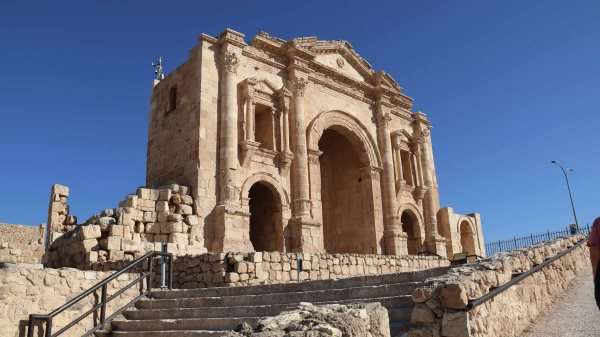
After soaking up the spiritual history of the Jordan River on Day 1, we traded quiet reflection for full-blown ancient grandeur on Day 2 of our Jordanian adventure. Today’s destination was Jerash (known in antiquity as Gerasa), widely celebrated as the best-preserved Greco-Roman provincial city in the world. Walking through its gates feels less like visiting a dusty archaeological site and more like stepping onto a movie set where the extras just stepped out for a coffee break.
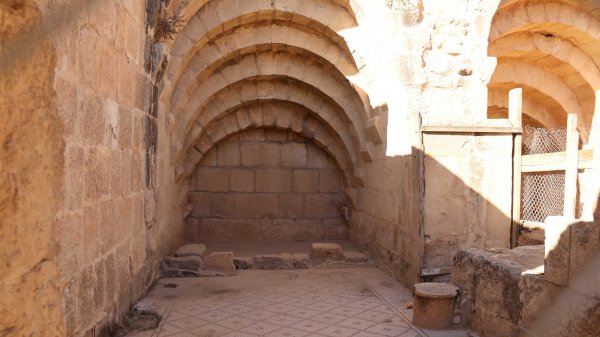
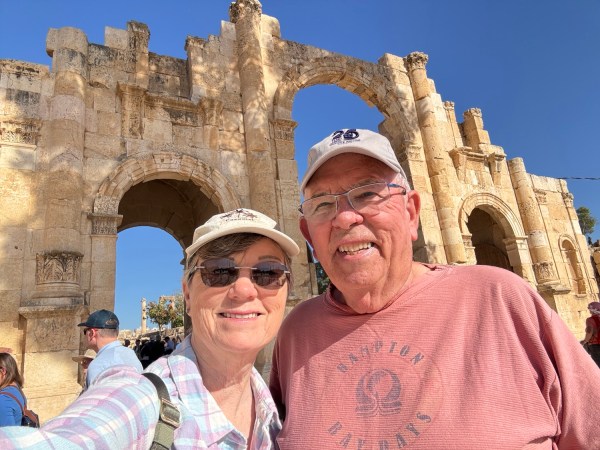
Our walk through the sprawling ruins began at the Arch of Hadrian, a towering triumphal gateway built in 129–130 AD to commemorate the visit of Roman Emperor Hadrian. If you want to make a subtle entrance into town, this isn’t it—the Romans clearly believed that if you were going to welcome a VIP, you needed roughly 70 feet of carved limestone to make the point.
Just past the arch, we came upon the Hippodrome, an enormous stadium capable of holding 15,000 spectators. In its heyday during the 2nd and 3rd centuries, this was the ultimate weekend hotspot for chariot races and athletic games—basically the ancient Roman equivalent of a sold-out NASCAR Sunday, minus the tailgating coolers and sunscreen.
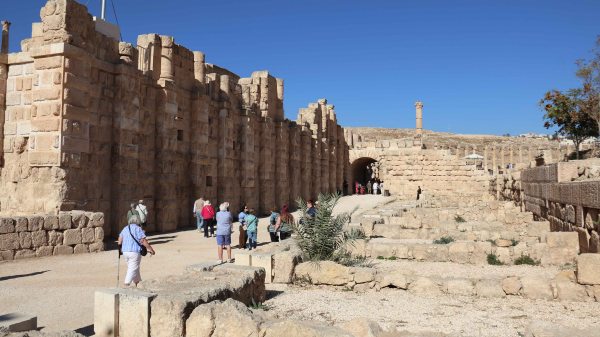
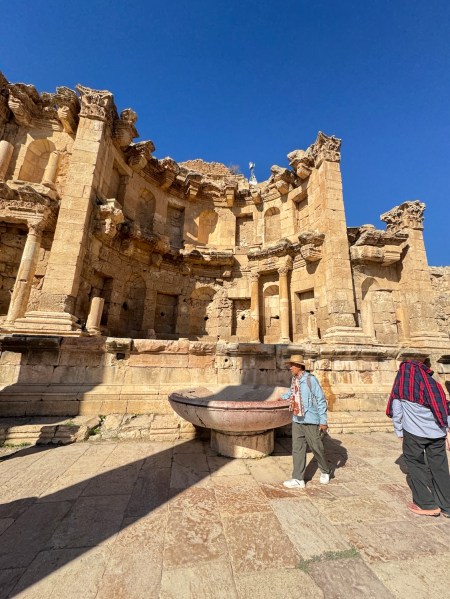
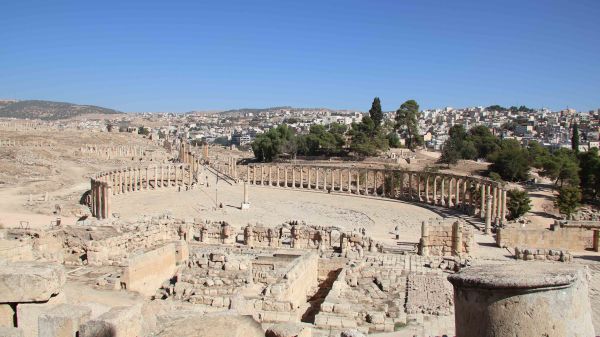
As we continued deeper into the city, the sheer scale of Gerasa’s urban planning took center stage. We wandered through the Oval Plaza (the city’s distinctive, asymmetrical Forum) and admired the Nymphaeum, an ornate, two-story public fountain dedicated to the water nymphs that once cascaded water down marble basins into the street.
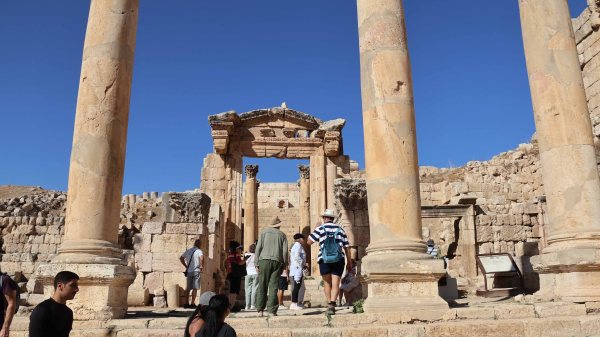
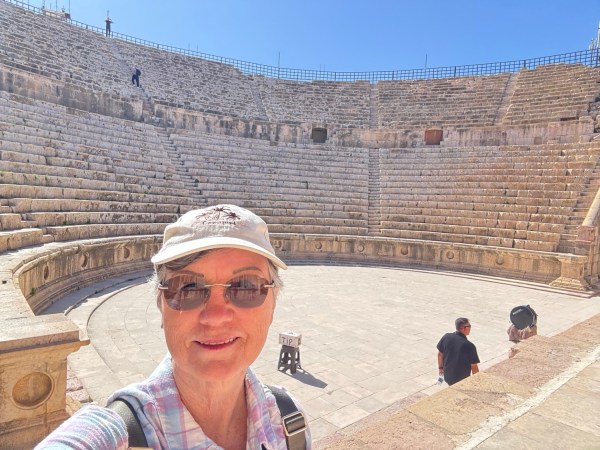
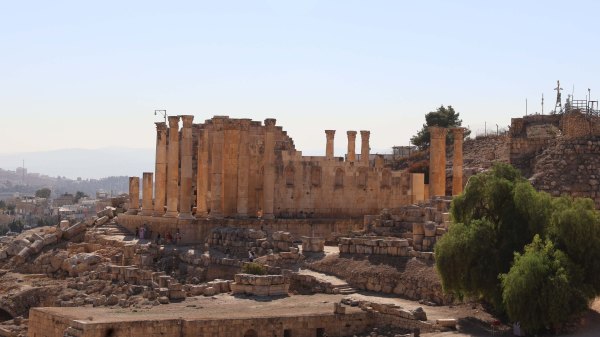
We also explored the South Theater—famous for acoustics so sharp a whisper from the stage reaches the top row—alongside the Byzantine Churches, where intricate mosaic floors still tell stories from the 5th and 6th centuries. Towering above it all stood the Sanctuary and Temple of Artemis, dedicated to the city’s patron goddess. Its massive 12-meter-high (nearly 40-foot) Corinthian columns are so perfectly balanced that you can actually see them sway slightly in the wind—an ancient seismic engineering trick that kept them standing through centuries of earthquakes.
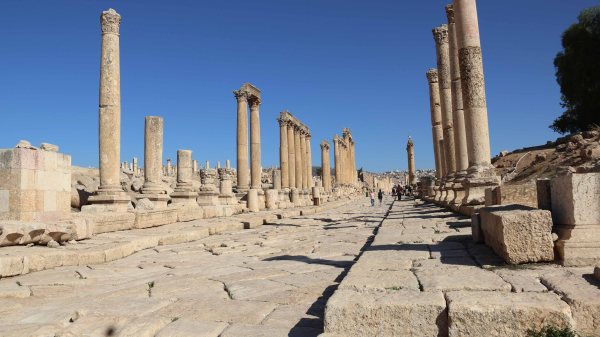
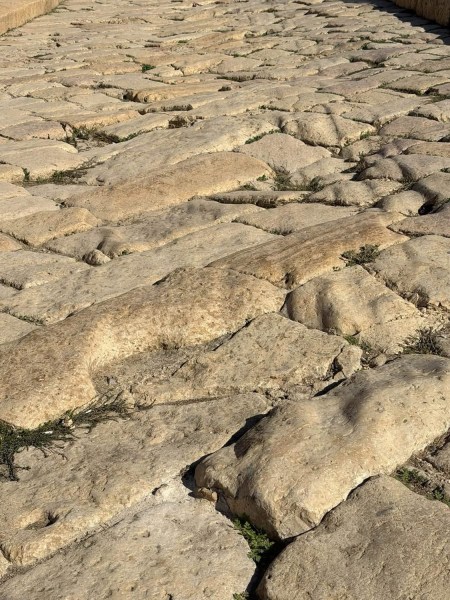
My favorite discovery of the day, however, had nothing to do with emperors or goddesses—it was the traffic engineering. Walking down the Cardo Maximus, Jerash’s grand, colonnaded main street (still bearing the ruts worn into the limestone pavers by thousands of Roman chariot wheels), we spotted distinct circular intersections built right into the stone grid: roundabouts. All this time we thought modern civil engineers invented the traffic circle just to test our patience, when it turns out the Romans were already forcing chariots to yield to the left nearly 2,000 years ago!
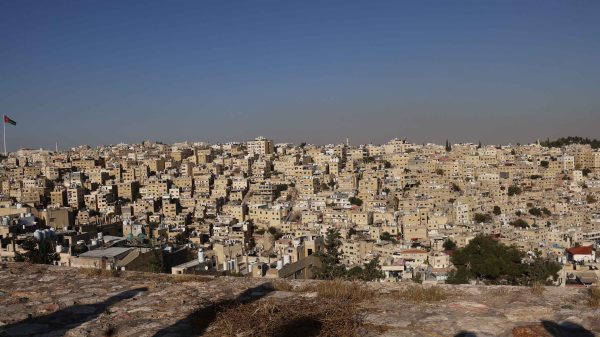
After putting a few miles on our walking shoes dodging phantom chariots, we wrapped up our tour with a traditional Jordanian lunch at a local restaurant. The food here is actually pretty good. Between warm, pillowy flatbreads, rich mezze dips, spiced grilled meats, and fragrant rice, it was the exact kind of hearty, flavorful meal we needed. Mainly because this is the main meal of the day!
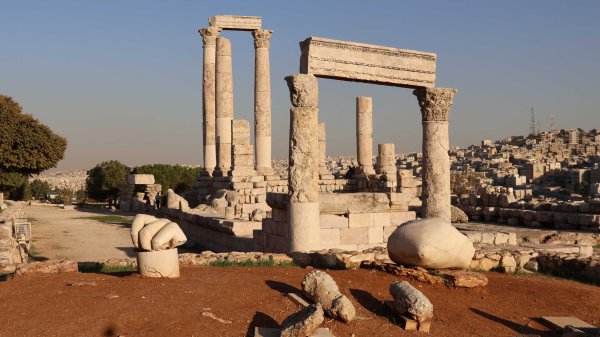
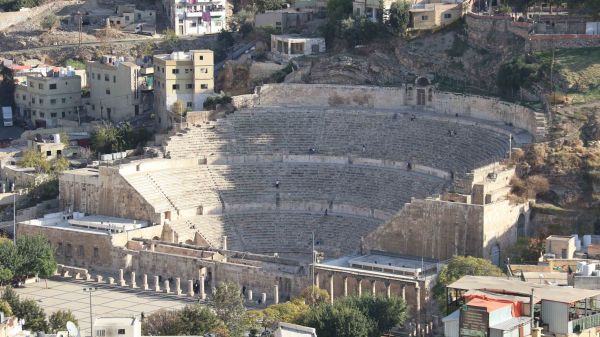
Back in Amman city our first stop was the Amman Roman Theater, a steep, 2nd-century amphitheater carved into the hillside with room for 6,000 spectators—and stairs that made our knees ache just looking at the nosebleed seats. From the valley floor, we climbed to Jabal al-Qal’a, the Amman Citadel. Continuously inhabited for over 7,000 years by everyone from the Ammonites and Romans to early Islamic dynasties, the hilltop is an open-air history book featuring:
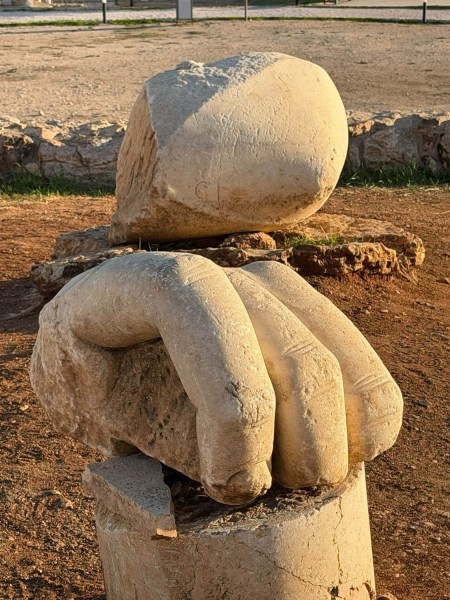
The Temple of Hercules: Giant 2nd-century columns alongside the massive stone hand and elbow of a colossal Hercules statue.
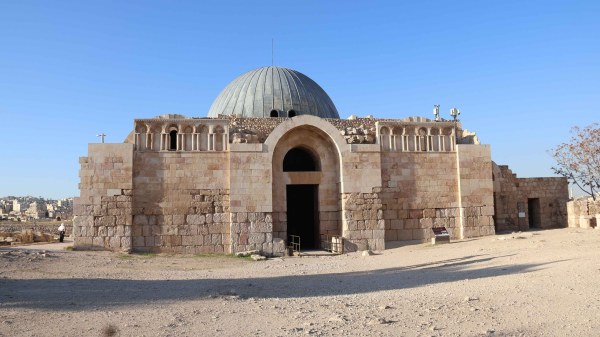
The Umayyad Palace Complex: Ruins of an 8th-century Islamic administrative palace and its domed Audience Hall.
As our afternoon wound down, we were treated to an unforgettable finale: the synchronized calls to prayer. Five times a day, mosques across Amman broadcast the Adhan in unison, sending a melodic wave rising from the valleys right over the ancient Roman columns. It brought back fond—if slightly sleep-deprived—memories of our time in Morocco, waking up at 5:30 AM to the prayers echoing over the loudspeakers!
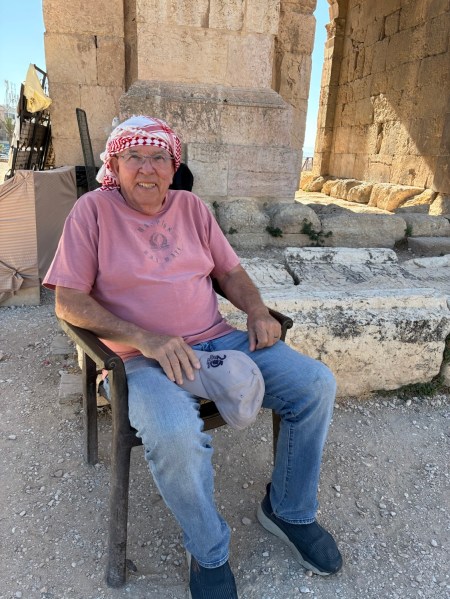
After a full day of absorbing 7,000 years of history, watching the city pause together from that hilltop was the ultimate way to cap off Day 2. Tomorrow morning, we check out of our hotel and head south for our trek to Petra—easily the bucket-list highlight of this Middle Eastern leg of our trip!
May God bless you always!
Chuck & Lea Ann

