Day two of our British adventure kicked off with the greatest luxury known to transatlantic travelers: permission to sleep in. Knowing our internal clocks were still stubbornly clinging to U.S. time, Mark graciously let us catch some extra shut-eye. Sure, it’s “only” a five-hour time difference, but tell that to a brain convinced it’s 4:00 AM when the British sun is already up and demanding you be productive. If you know Mark, you know just how monumental a sacrifice this was—this is a man who typically hits the ground running at the crack of daylight and doesn’t slow down until it’s officially time for bed. For him to pump the brakes on his usual dawn-to-dusk itinerary so we could recover from jet lag felt like winning the hospitality lottery! He said we are on Chuck time today!
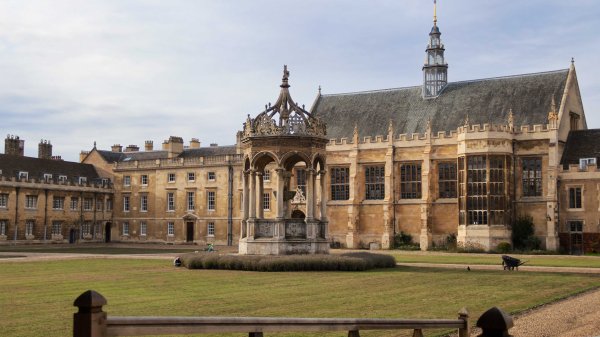
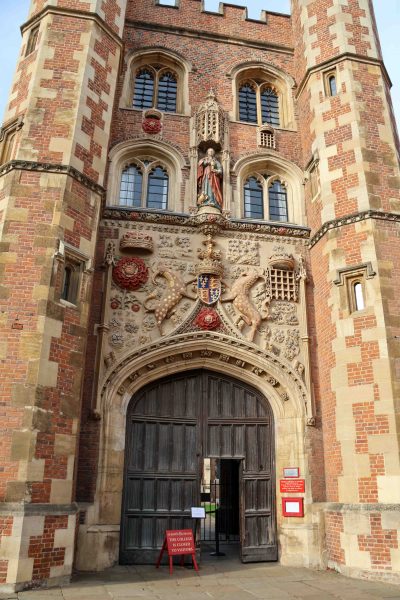
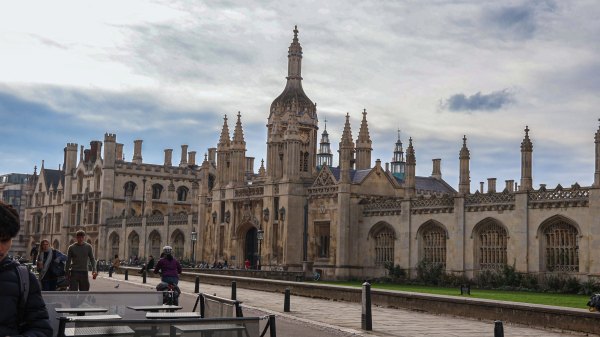
Refreshed and caffeinated, we drove up to Cambridge to explore one of the most prestigious academic hubs in the world. Founded in 1209, the University of Cambridge isn’t just one single campus; it’s a massive network of 31 autonomous colleges woven directly into the city. Navigating the streets is an extreme sport in itself—between gridlocked cars and bustling crowds of pedestrians, bicycles reign supreme here. Thousands of students zip past on two wheels, proving that a sturdy bike isn’t just a trendy accessory in Cambridge; it’s practically a survival tool.
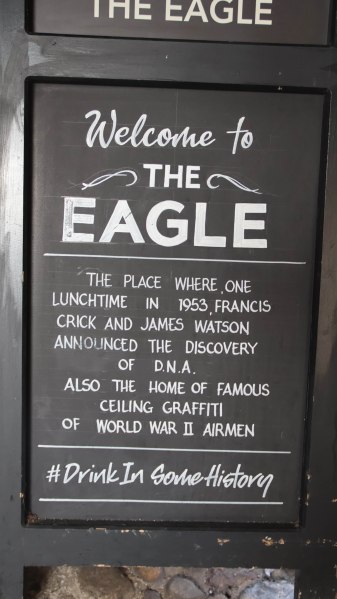
After admiring the jaw-dropping historic architecture on foot, we decided to give our legs a break and indulge in a quintessential Cambridge tradition: punting. Picture a long, flat-bottomed wooden boat (similar to a wide canoe) propelled by a guide standing at the back with a massive pole, pushing off the riverbed. Given his youthful energy and encyclopedic knowledge of every stone and spire, we quickly deduced our chauffeur was a local college student earning his keep.
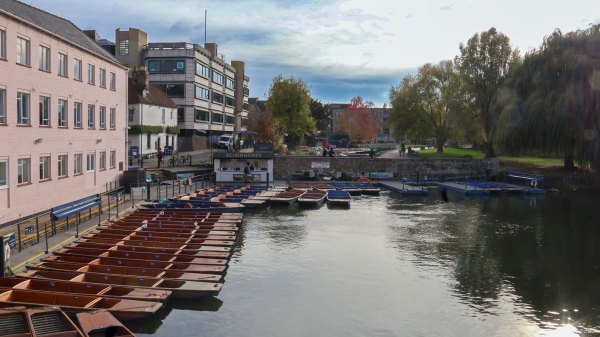
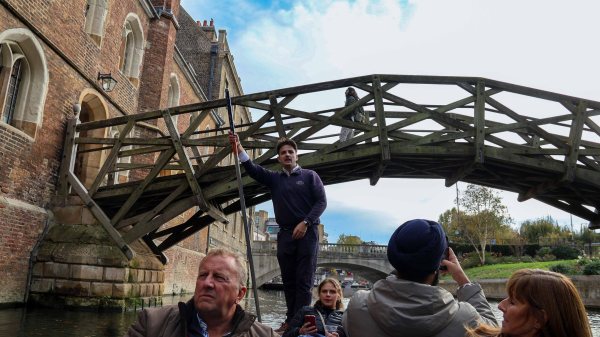
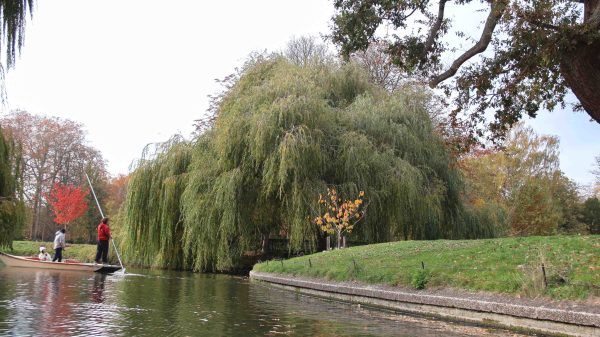
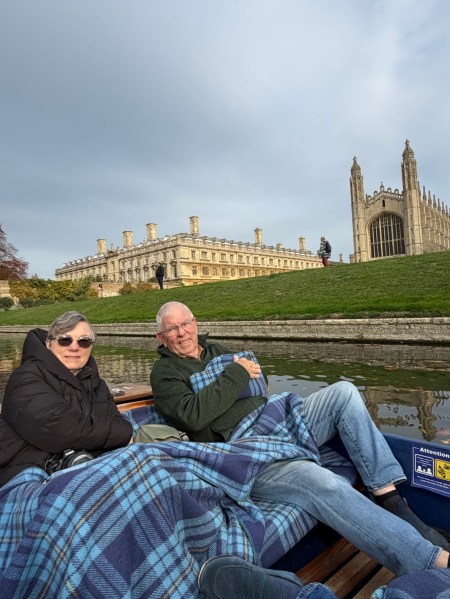
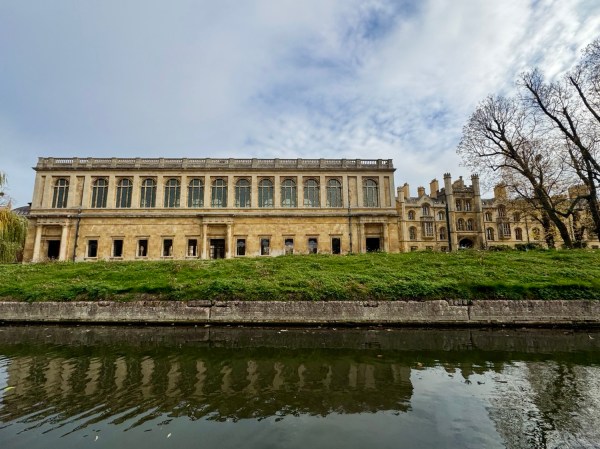
We glided effortlessly down the River Cam, cruising past The Backs—the famously picturesque stretch where the manicured green lawns and grand Gothic facades of several historic colleges (like King’s, Trinity, and St. John’s) back right up to the water’s edge. Along the way, we ducked under iconic historic bridges—including the famous Mathematical Bridge and the Bridge of Sighs—surrounded by weeping willows, vibrant late-season blooms, and stunning riverside gardens. We even spotted a stately, neoclassical building that looked remarkably like the White House—specifically the Fellows’ Building at King’s College, designed in the 1720s by James Gibbs. Its grand, symmetrical Palladian columns and bright Portland stone facade look so much like the U.S. presidential residence that locals and tour guides have affectionately nicknamed it after its American cousin (though this version was built decades before George Washington ever laid the cornerstone in D.C.!).
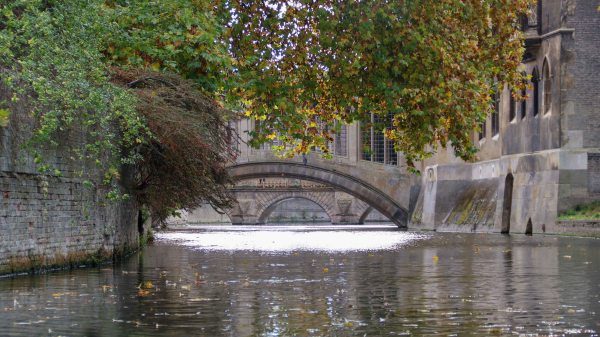
Because the crisp autumn air was downright chilly on the water, our thoughtful punter equipped us with cozy blankets and warm hot water bottles—an absolute lifesaver that turned our boat into a floating cocoon. Of course, all good rides must come to an end, which meant facing the ultimate athletic feat: exiting the punt. Graceful disembarkation from a wobbly flat-bottomed boat is not exactly Chuck’s specialty, so we held our breath as he made his move. Fortunately, a few strong, chivalrous college boys stepped in to lend a steady hand, and Chuck made it onto dry land without taking an unscheduled swim in the River Cam. We will be forever grateful!
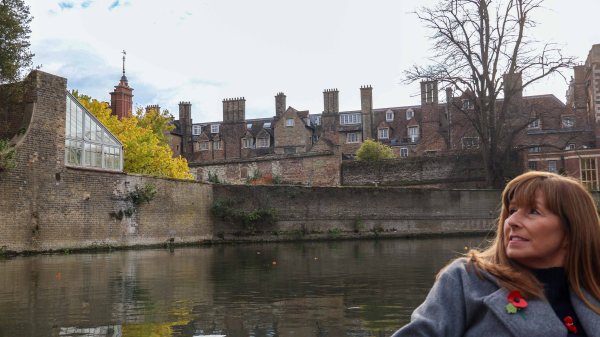
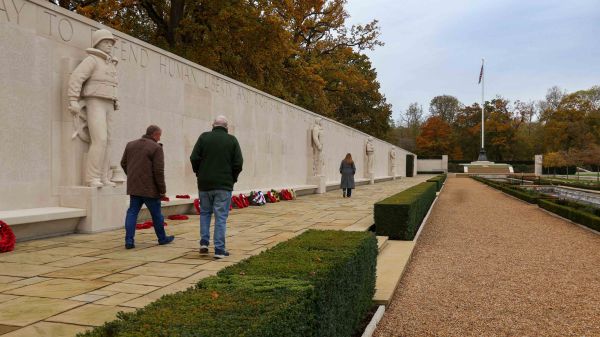
Before pointing the car back toward Bury St. Edmunds, we made a deeply moving final sightseeing stop at the Cambridge American Cemetery and Memorial—which felt all the more meaningful given the date on the calendar: November 11th.
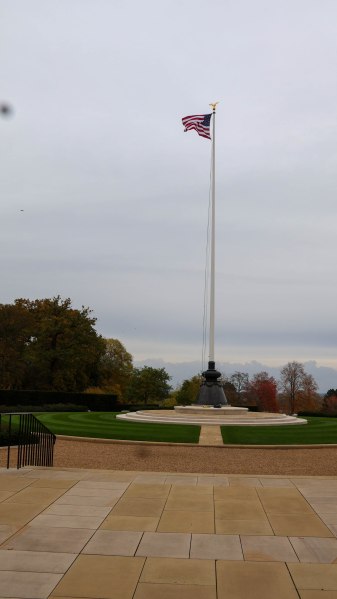
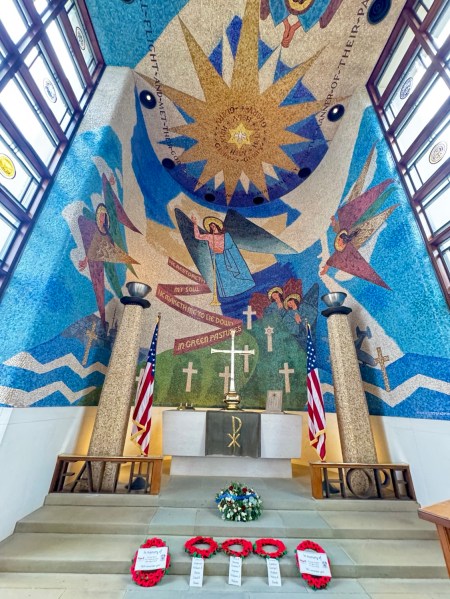
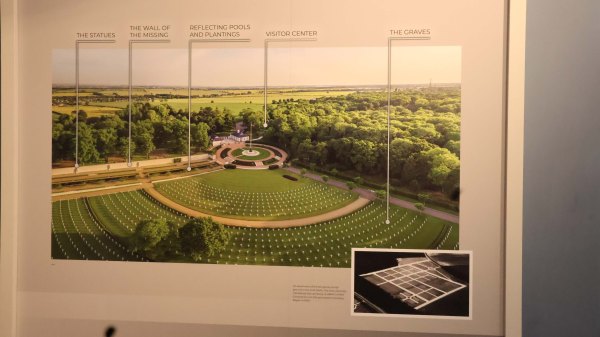
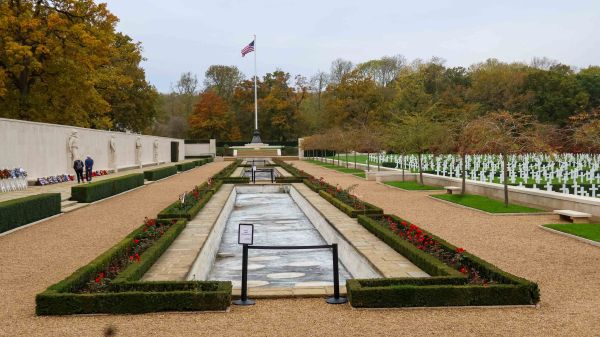
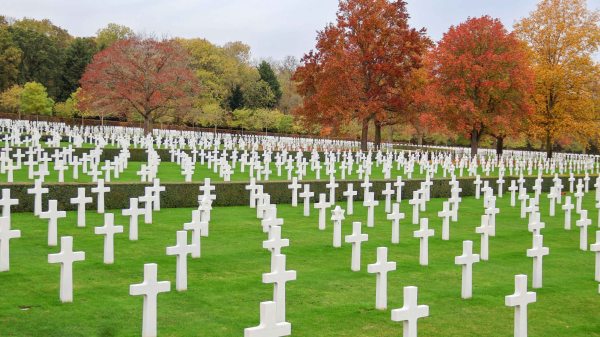
Dedicated in 1956, this serene, 30.5-acre hillside site was donated by the University of Cambridge and serves as the only American World War II cemetery in the United Kingdom. It is the final resting place for 3,812 American military dead—many of whom were airmen from the U.S. Army Air Forces stationed in East Anglia who lost their lives during the Battle of the Atlantic and the strategic air offensive over Europe. After the war, families were given the heartbreaking choice to bring their loved ones home or let them rest in the soil they fought to defend; thousands chose to keep them here together. Walking along the sweeping reflecting pool, visiting the peaceful mosaic-lined chapel, and reading the Wall of the Missing—engraved with 5,127 names organized by branch of service—was a powerful, humbling tribute to the young Americans who sacrificed everything far from home.
Experiencing this on November 11th—especially after seeing the poppy wreaths in Bury St. Edmunds the day before—also highlighted a fascinating cultural distinction between our two countries. Both the U.S. and the U.K. mark the date in honor of the 1918 Armistice (signed on the 11th hour of the 11th day of the 11th month to end World War I), though they observe it a little differently. Back home in the States, it’s Veterans Day—renamed by Congress in 1954 to honor all living and deceased military veterans who have served in wartime or peacetime (while Memorial Day in May specifically honors those who died in service). In the U.K., however, it remains Armistice Day, focusing specifically on remembering those who lost their lives in World War I and subsequent conflicts. At exactly 11:00 AM, the entire country pauses for a solemn two-minute silence, and people wear red paper poppies throughout November to honor the fallen—making our visit to the American Cemetery on this exact day doubly poignant.
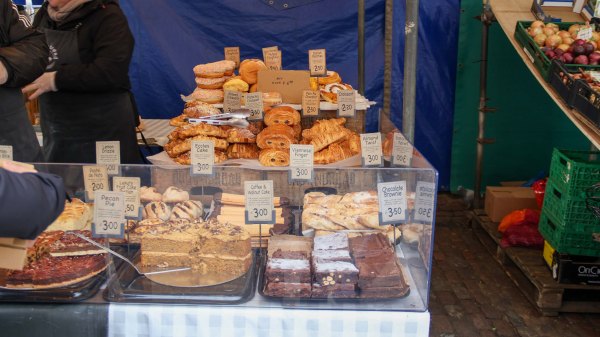
To warm our souls (and thaw our fingers) before returning to the “Sweetman Castle,” we made one last pit stop for hot coffee and Chelsea buns. If you’ve never had one, this spiced, sticky currant pastry—invented in the 18th century at the Old Chelsea Bun House in London—is a close cousin to the American cinnamon roll and every bit as delicious.
We truly loved exploring Cambridge, though the real highlight was simply soaking up the company of Mark and Jane, who will be rejoining us in a couple of days. Tomorrow, our adventure takes a dramatic geographical turn as we catch a five-hour flight to Amman, Jordan. We’re scheduled to touch down close to midnight—meaning we’ll be crawling into bed in the wee hours of the morning by Jordanian time, while the clocks in our heads are still insisting it’s time for dinner. Between London, Bury St. Edmunds, and Amman, our internal body clocks are going to be thoroughly confused by the end of this trip, and sleep tomorrow night is bound to be a challenge—but if it’s half as memorable as our time in England, we won’t complain for a second!
May God bless you always!
Chuck & Lea Ann

