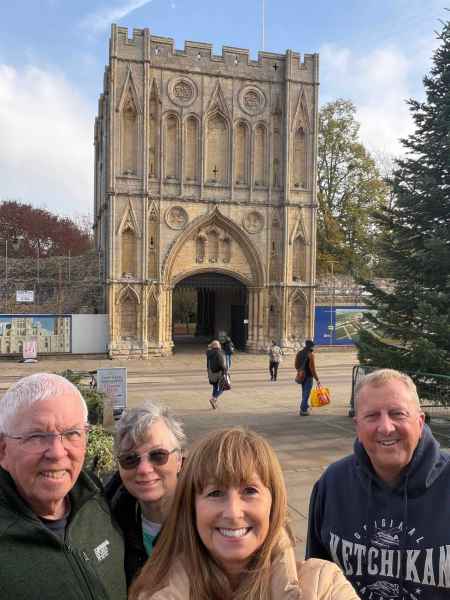
Our grand 21-day adventure is officially underway, spanning England, Jordan, and Egypt—because why settle for one time zone when you can conquer three? After touching down in London, we were rescued from our post-flight haze by our wonderful friends, Mark and Jane, who drove all the way from their home in Bury St. Edmunds to collect us. Let’s be honest: you know you have top-tier friends when they’re willing to brave two hours of northeast-bound British traffic just to pick you up at the airport and treat you to a five-star, Class-A bed-and-breakfast experience at their place. We simply adore them! Whenever people draw a blank on where they live, they use Cambridge University as their trusty geographic landmark—and since we couldn’t resist paying a visit to those famous academic halls, stay tuned for our next post, which will be packed with photos from around the area.
Before we get ahead of ourselves, though, let’s talk about what happens when you mix 1,000 years of medieval drama, a famous Victorian novelist, a pub the size of a walk-in closet, and a wizard’s childhood home. We spent a crisp autumn day wandering through Bury St. Edmunds and Lavenham, and let me tell you—this corner of the English countryside has more character per square foot than anywhere else on Earth (mostly because the buildings refuse to stand up straight).
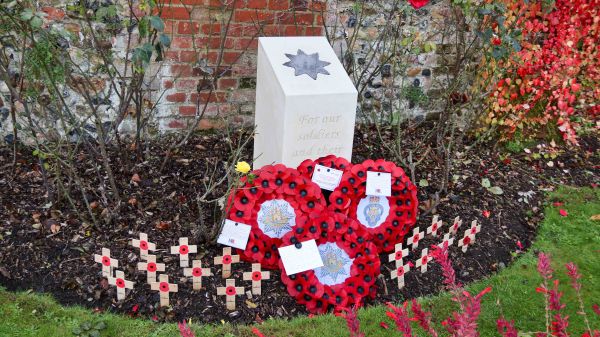
Our journey began with a brisk morning stroll through the historic town square of Bury St. Edmunds. With the autumn chill in the air, the square was draped in vibrant red poppy wreaths—a deeply moving tradition in the UK that dates back to 1921, inspired by the World War I poem In Flanders Fields. Seeing them laid out to honor the servicemen and women who fought for the country sets a reflective, grateful tone before you even grab your morning coffee.
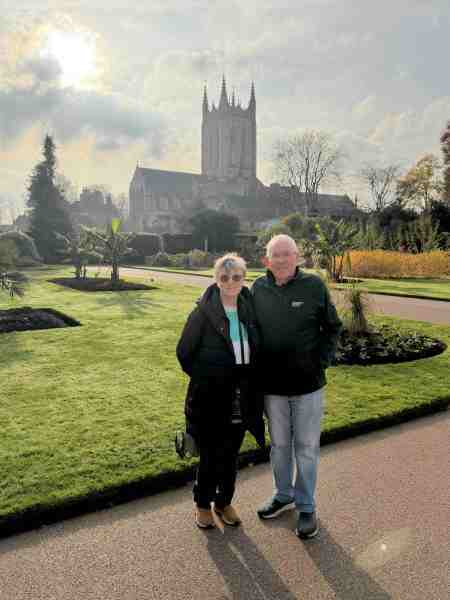
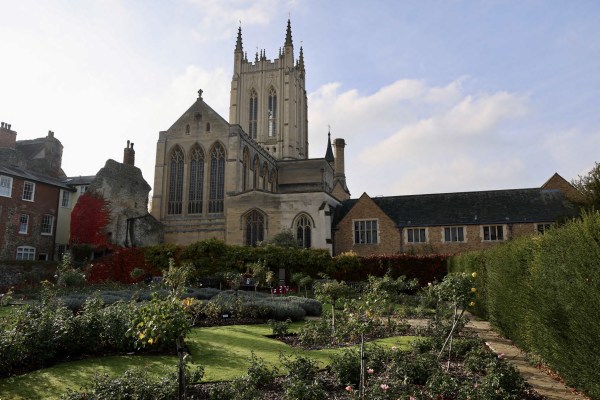
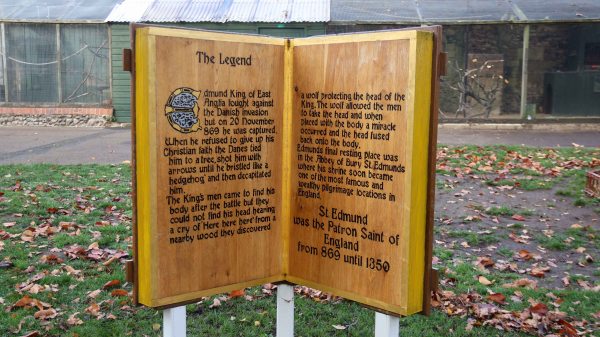
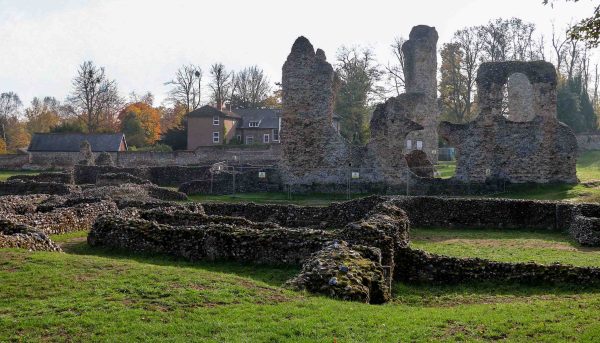
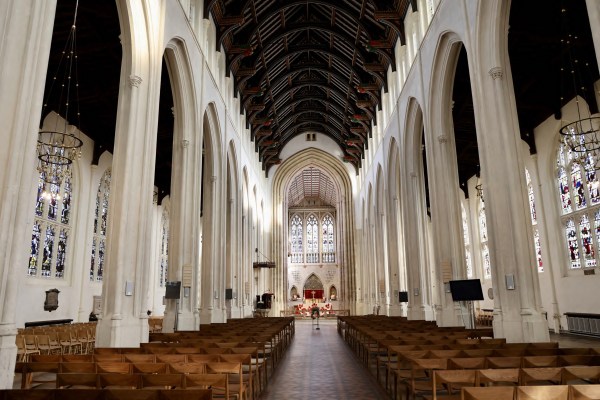
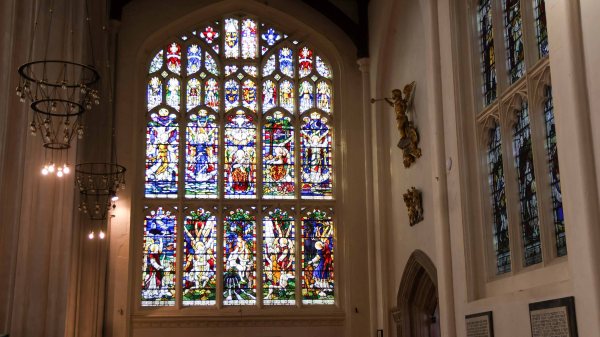
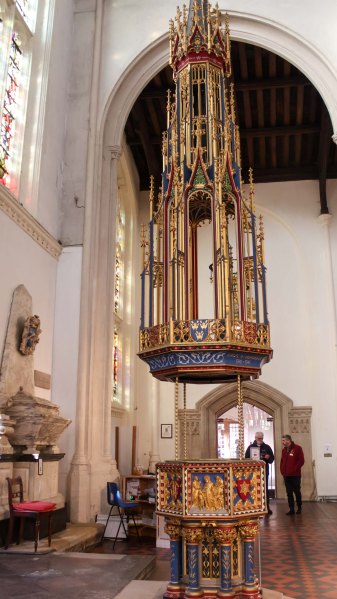
Just steps away lies the jaw-dropping Abbey of St. Edmund and the neighboring St. Edmundsbury Cathedral. Back in the Middle Ages, this abbey was one of the richest and most powerful Benedictine monasteries in England—a pilgrimage hotspot housing the shrine of St. Edmund, the 9th-century Saxon king martyred by Vikings. In 1214, rebellious barons even met here to swear an oath that led to the signing of the Magna Carta. Henry VIII eventually dissolved the abbey in 1539 (because nothing says “royal divorce” like dismantling historic architecture), leaving behind massive, dramatic stone ruins right next to the soaring Gothic-revival cathedral.
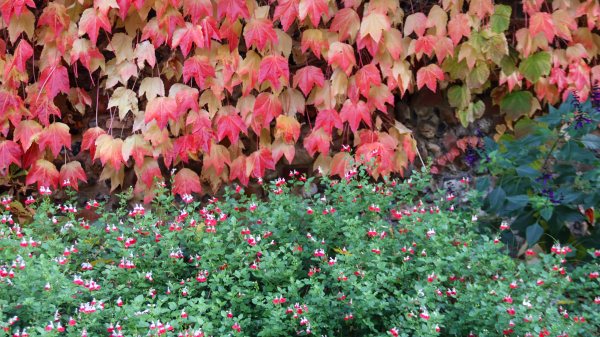
After soaking in all that medieval intrigue, we took a slow walk through the Abbey Gardens. Crunching through carpets of golden fallen leaves, we spotted a few stubborn, late-blooming roses clinging to the bushes—brave little survivors refusing to admit that sweater weather had officially arrived.
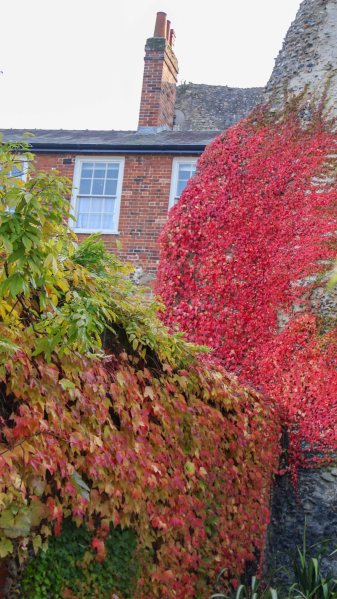
Right across from the Abbey Gate stands The Angel Hotel, an ivy-clad Georgian coaching inn where Charles Dickens stayed on multiple occasions in the 1830s, 1850s, and 1860s. Dickens loved the place so much he even wrote it into The Pickwick Papers. Walking past the entrance, you almost expect Mr. Pickwick himself to come tumbling out of a stagecoach, though nowadays you’re more likely to run into tourists hunting down Room 215 (the Charles Dickens Suite).
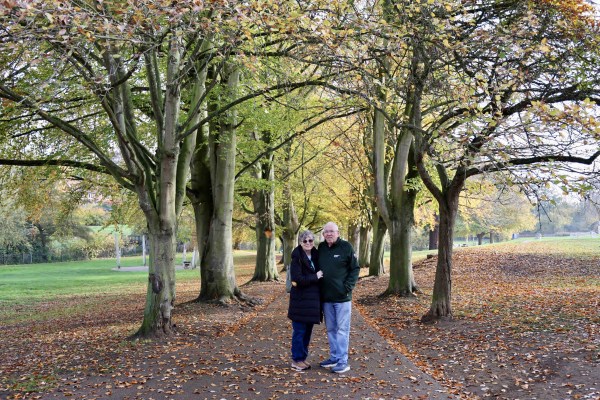
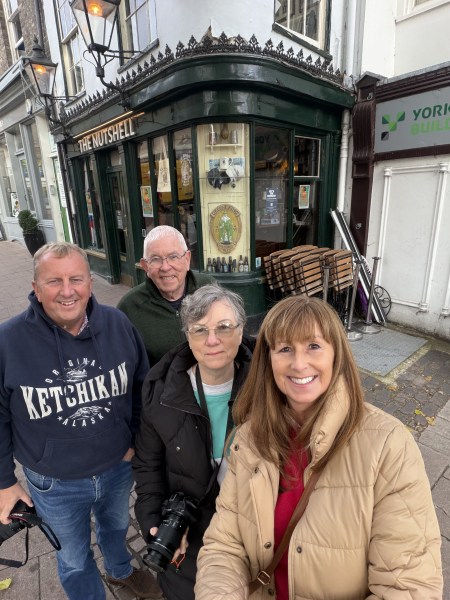
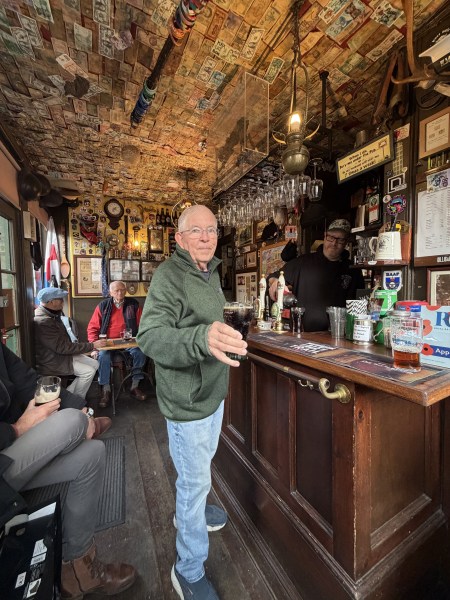
Of course, all that walking works up a thirst, so we headed over to The Nutshell—officially recognized by the Guinness Book of Records as the smallest pub in Britain. Measuring a whopping 15 feet by 7 feet, calling this place “cozy” is the understatement of the century. If three people sneeze at the same time, someone ends up outside on the cobblestone street. Built in the 19th century, its ceiling is covered in currency notes from travelers around the world, and it even boasts a mummified cat hanging behind the bar (because nothing pairs with a local ale quite like 400-year-old feline taxidermy). We decided to stick to diet cokes for this trip.
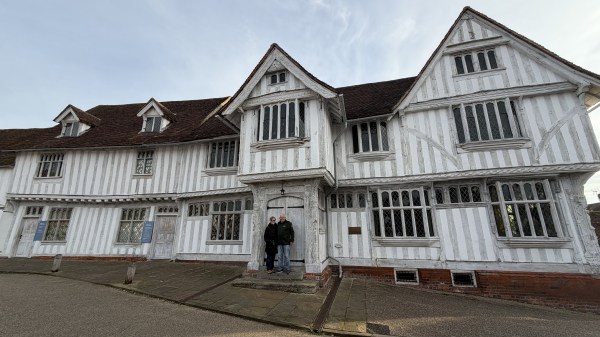
From Bury St. Edmunds, we ventured a few miles south to Lavenham, widely considered England’s best-preserved medieval village. In the 15th and 16th centuries, Lavenham was booming—it was actually the 14th wealthiest town in England thanks to the wool trade. Flush with cash, merchants built grand timber-framed houses using green, unseasoned oak. As the wood dried over the centuries, it warped, twisted, and buckled. The result? A village where every single house looks like it had one too many pints at The Nutshell.
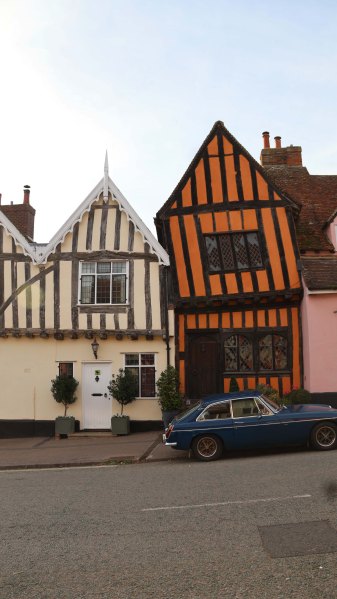
- The Crooked House: Built in 1395 as part of a medieval hall house, this bright orange, gravity-defying building leans at an angle that would make a structural engineer break out in hives. It’s so famously wonky that it’s rumored to have inspired the nursery rhyme “There Was a Crooked Man.”
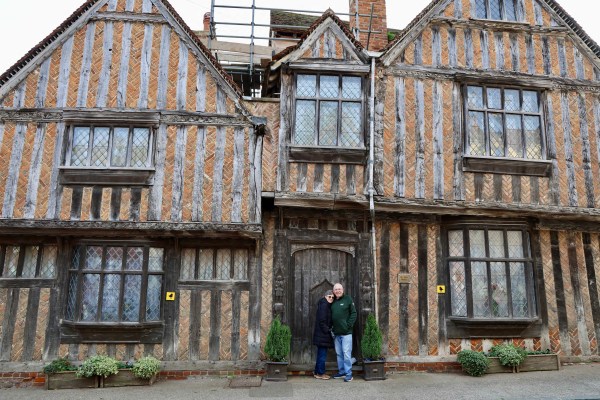
- Harry Potter’s Childhood Home: Just down the street sits De Vere House, a 14th-century medieval gem with an ornate doorway. If it looks familiar, that’s because Warner Bros. used it as the filming location for Godric’s Hollow—the birthplace of Harry Potter and the site of his parents’ fateful showdown with Voldemort in Harry Potter and the Deathly Hallows: Part 1. Thankfully, the neighborhood is significantly safer from Dark Lords these days.
To wrap up the day, we stepped inside The Swan at Lavenham to visit the historic Airmen’s Bar. During World War II, thousands of American servicemen from the USAAF’s “Mighty Eighth” Air Force (specifically the 487th Bombardment Group) were stationed at a nearby airfield. Between grueling bombing missions over Europe, these young American flyers congregated right here. Before heading out—or to celebrate making it back—they took to writing their names, squadrons, and hometowns directly onto the plaster walls and oak beams in pencil, lipstick, and candle smoke. Seeing those fading signatures preserved is a poignant reminder of the shared history between Britain and America, bringing our day full circle—from the poppies in the morning square to the names on the tavern wall.
To wrap up a whirlwind day of medieval ruins, wizard lore, wartime history, and architecture that defies basic geometry, we were treated to a delightful home-cooked meal courtesy of Jane. Frankly, I’m amazed she still had the energy to cook after serving as our personal walking encyclopedia all day—sharing endless fascinating stories about the hometown she grew up in without missing a beat. There is so much rich history packed into this corner of England, and we couldn’t help feeling a little envious of the incredible childhood memories she holds here. Between the warm hospitality, the wonky doorways, and a full belly, Bury St. Edmunds and Lavenham proved that the best travel days are equal parts awe-inspiring, wonderfully weird, and best experienced with a local tour guide who loves you enough to feed you!
Tomorrow we’ll visit Cambridge University and the American Cemetary and Memorial. To top off the day we’ll go Punting!
May God bless you always!
Chuck & Lea Ann

