Since Bali is about 83% Hinduism, we knew we would experience different religious customs than from other countries such as Roman catholic churches and Muslim Mosques. We have noticed some rituals that we thought were just everyday things and others that were (what we thought) as odd and we knew they had to be a part of the rituals of the Balinese Hindu religion. Balinese culture is very rich in symbolism. It seems that everything is symbolic and that even the symbols are symbolic.
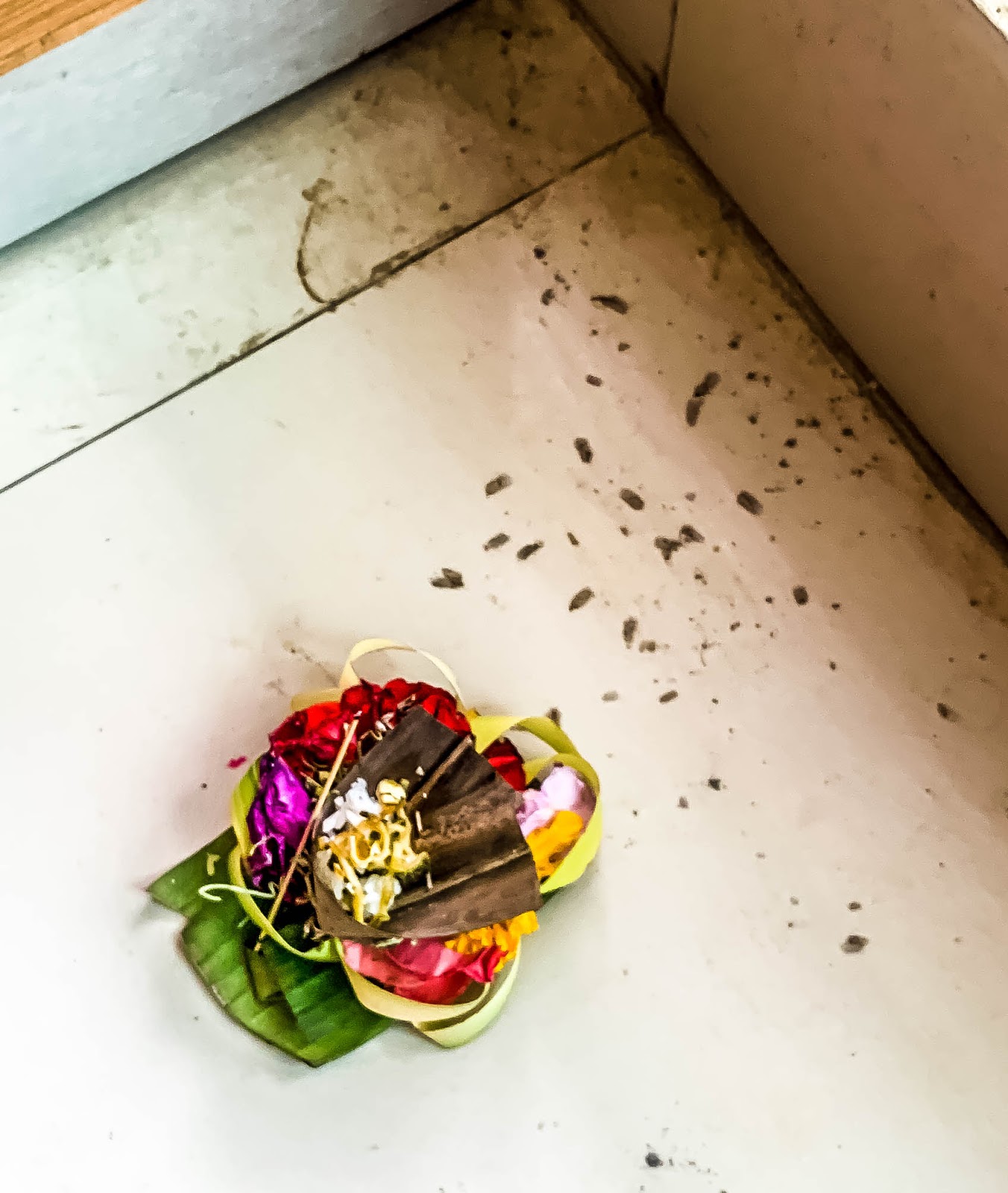
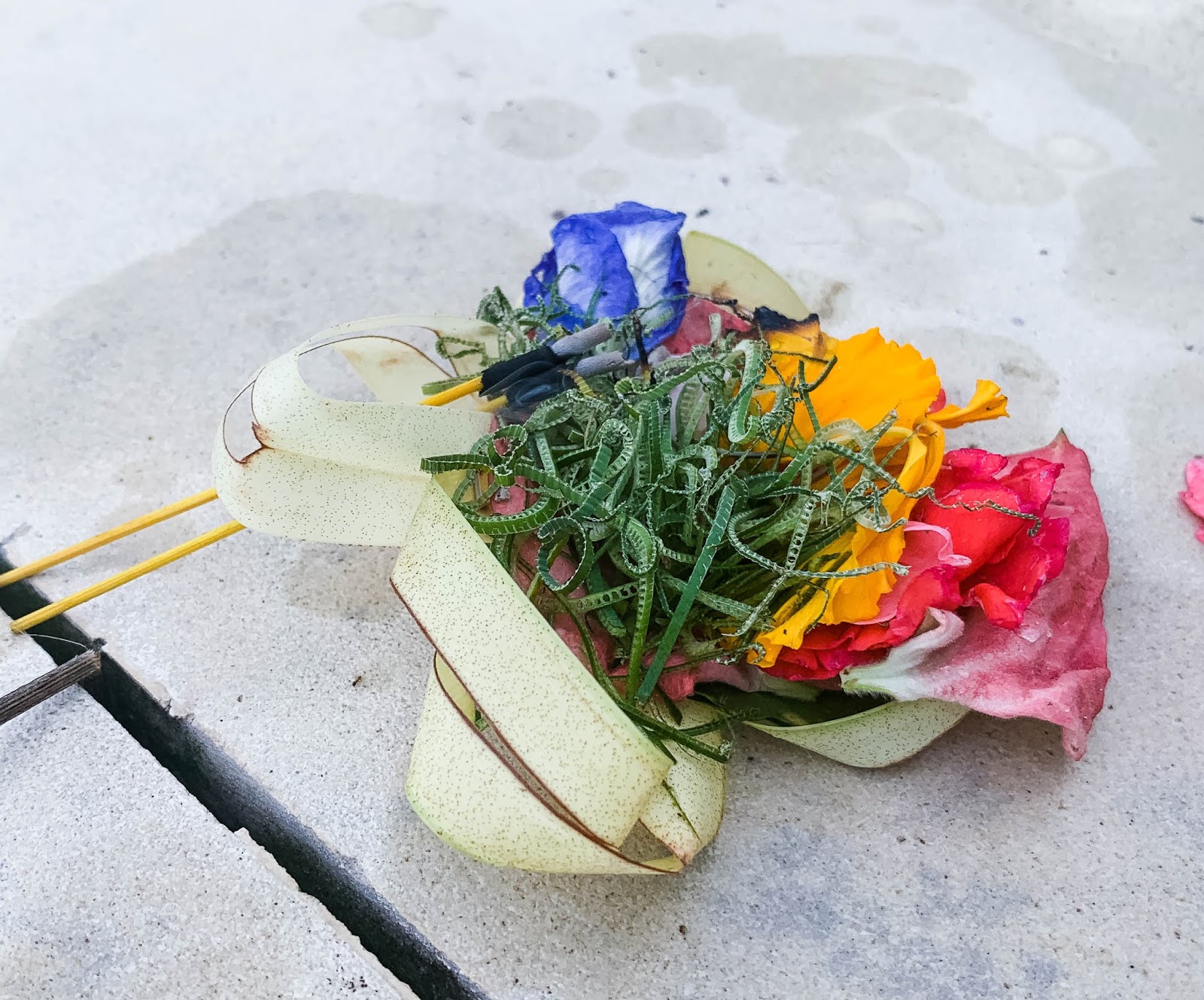
Wherever you go on Bali, you will see (and at some point accidentally step on) Balinese “offerings.” We almost stepped on a few around the beach. These offerings, called canang sari, are hand-sized, origami-like, carefully constructed open boxes, made of palm or banana leaves and most commonly filled with bright fresh flowers. Each flower is selected for its color and each color has a specific significance.
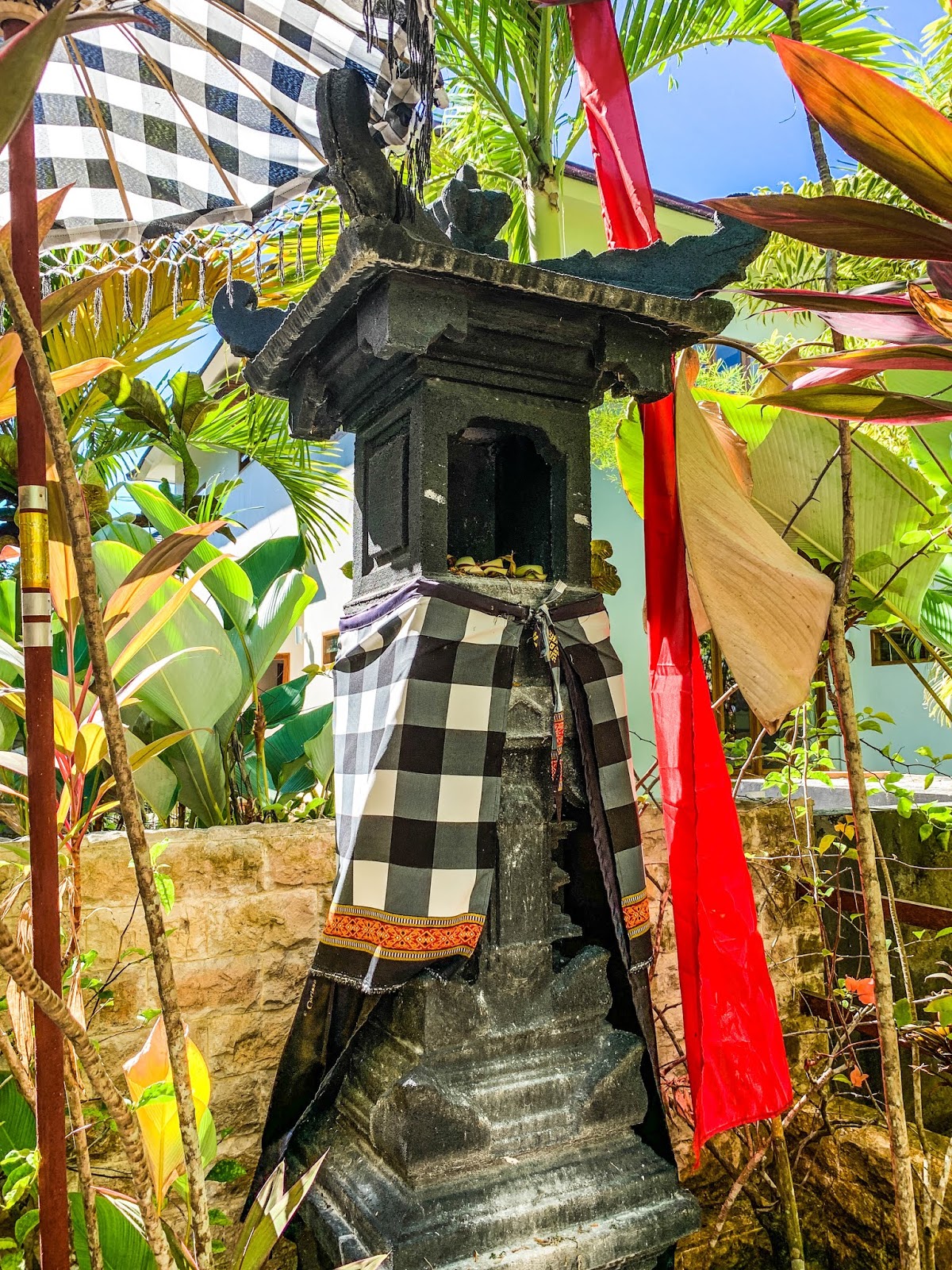 |
| This temple is in the front of our villa next door to the owners villa. Notice the umbrella is the same material as the dress/wrap on the temple. Also, there is a symbolic red flag here as well. |
Canang sari has different parts or core materials; there are peporosan, ceper, raka-raka, and sampian urasari. Peporosan is made from betel leaf, lime, gambier, prestige, tobacco and betel nuts. Material of peporosan symbolizes the Trimurti, the three major Hindu gods. Shiva is symbolized by lime, Vishnu is symbolized by betel nut, and Brahma is symbolized by gambier. Canang sari are covered by ceper (a tray made from palm leaf) as a symbol of Ardha Candra. Raka-raka is topped with sampian urasari, which are in turn overlaid by flowers placed in a specific direction. Each direction symbolizes a Hindu god, ( a little confusing but that’s because there are over 33 million gods of Hinduism):
- White-colored flowers that point to the east as a symbol of Iswara
- Red-colored flowers that point to the south as a symbol of Brahma
- Yellow-colored flowers that point to the west as a symbol of Mahadeva
- Blue or green colored flowers that point to the north as a symbol of Vishnu.
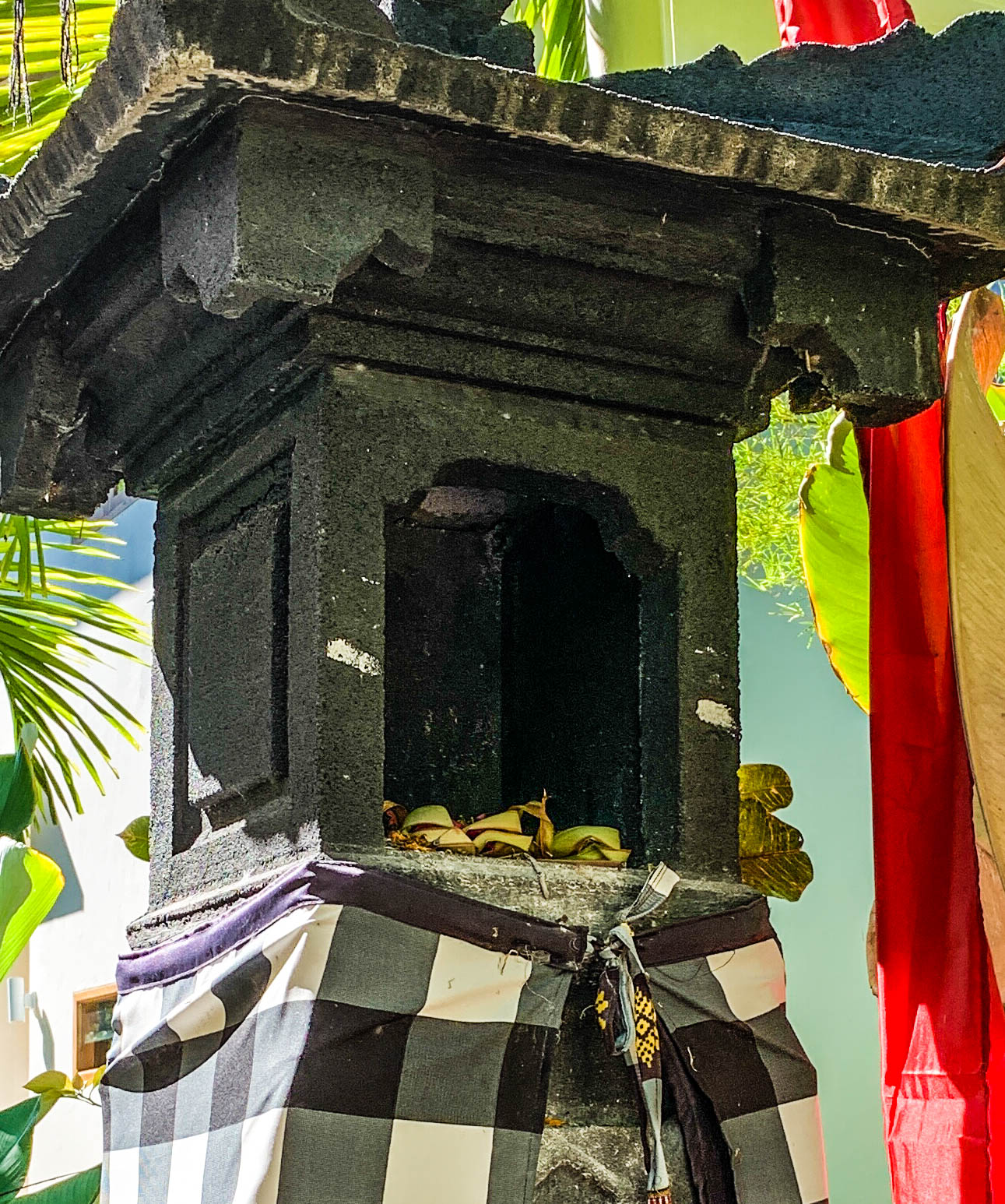 |
| The offerings are placed inside this temple. |
Occasionally, money, a small bit of food, or a burning incense stick is placed on top of the offering. All we have seen in our exploring is the burning incense stick but I believe there was food at the one we saw at the hospital. In almost all Hindu homes and temples, new offerings are set out every day. Here at the villa, the girls prepare these offerings daily. They have been at the pool by the Hindu statue, on the steps at the front entrance and even on the cooking stove in the kitchen. Besides looking pretty and filling the air with a sweet aroma, the ancient ritual of the canang sari carries deep significance and meaning to the Indonesian culture. The offerings are a sacred form of gratitude for what is and a wish for peace and abundance in the world.
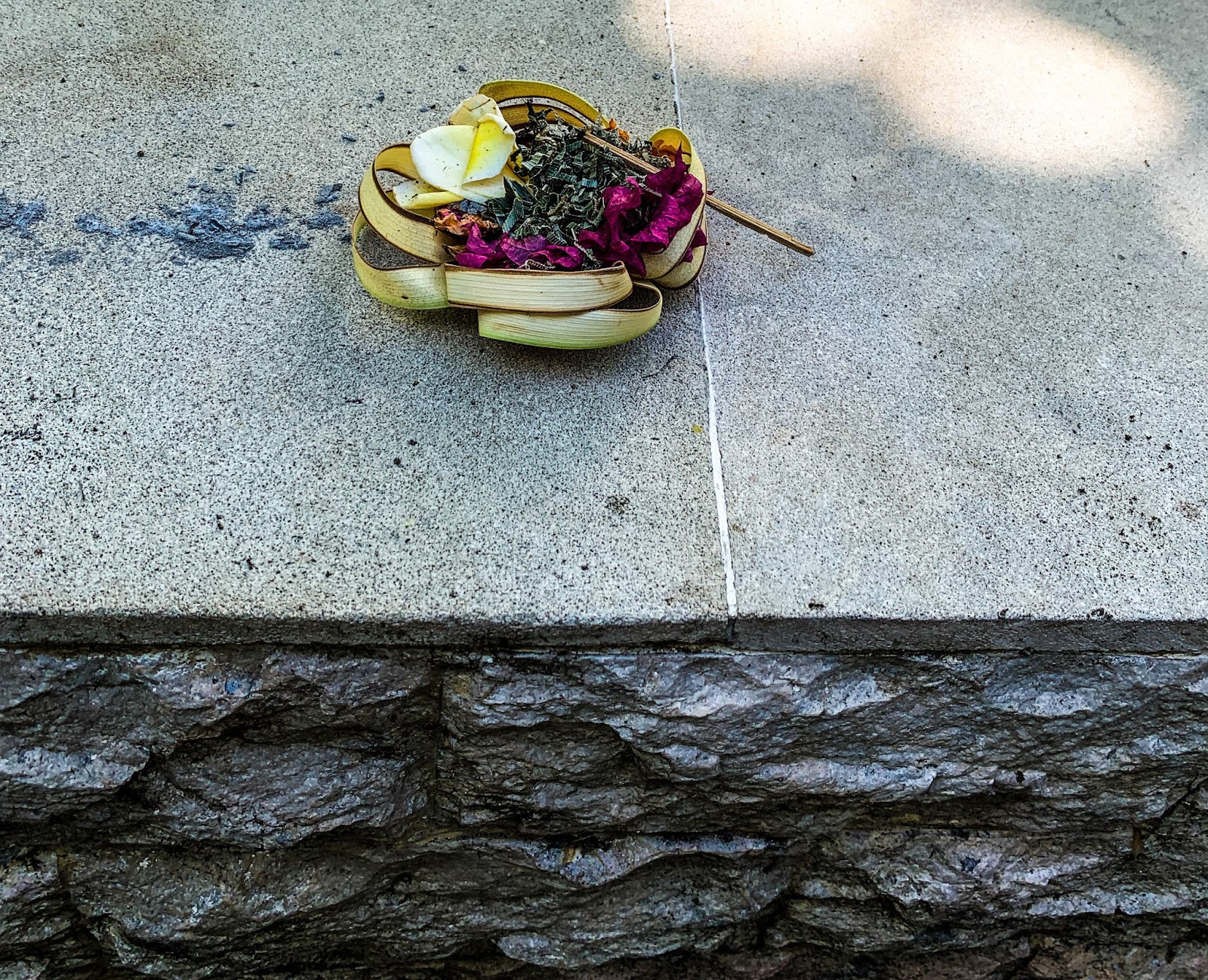 |
| On the front entrance this morning. |
They are a representation of the Balinese people’s devotion to their (Hindu) gods, but at the core, these offerings are so much more. The time and effort taken to prepare the canang sari offerings honor a daily ritual of self-sacrifice, a spirit of thankfulness, and a significant attention to detail. The creation of these modest offerings model the generosity, faith, and devotion that exists in the hearts and souls of the Balinese people. These values translate into everything they do and everything they are. We are truly amazed at what they do on a daily basis. Always smiling and happy and willing to do anything to make our stay amazing. We were eating dinner one night and it started raining so we jumped up to help move the outdoor furniture cushions indoors. The girls fussed at us for trying to help. We were to enjoy our dinner while they did the work. This shows how much value they put into “family dinner time”. Apparently this is all part of their belief system.
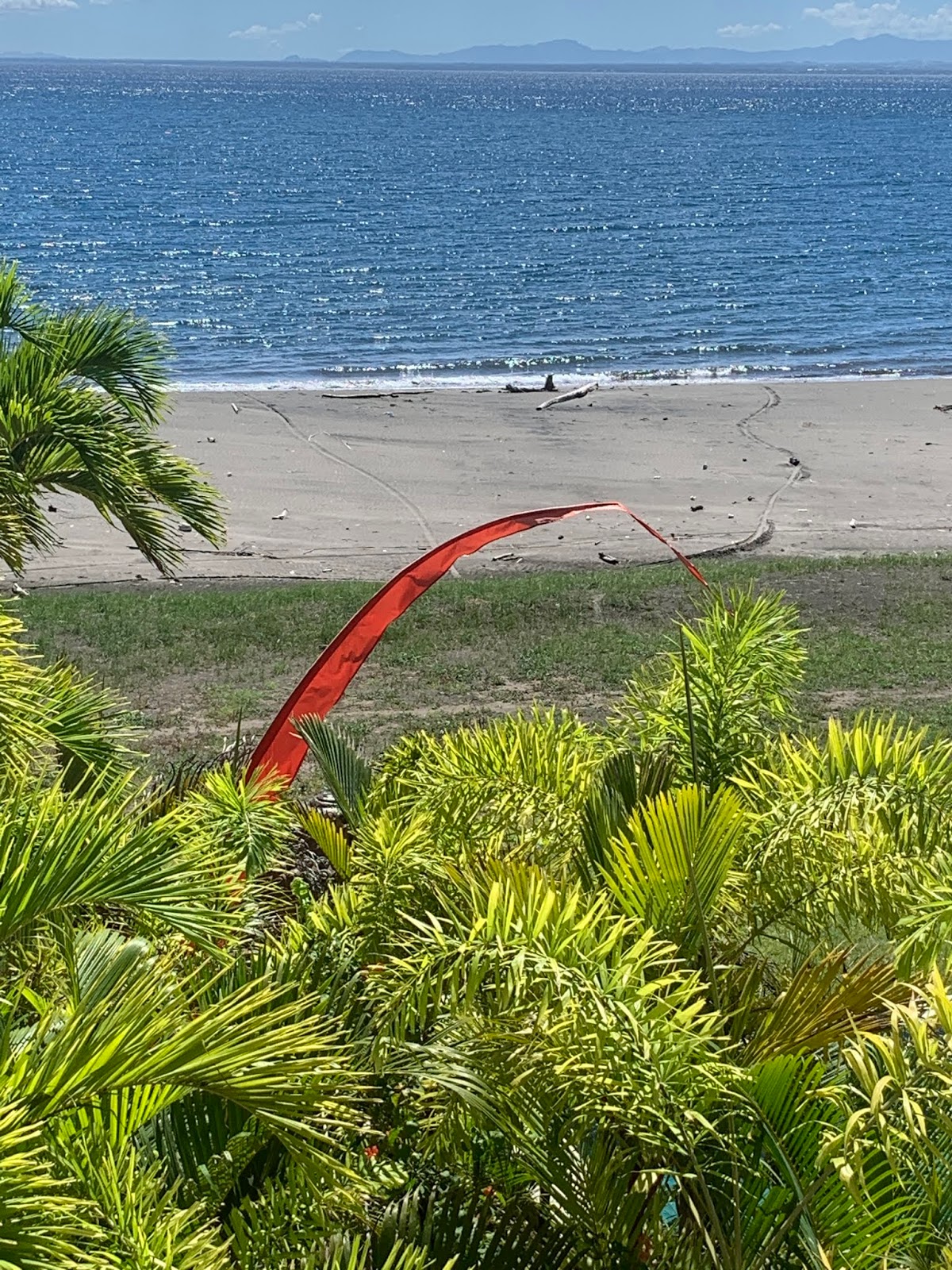 |
| Dragon Flags fly in front of our villa and at the small temple. |
We also have tall flags that fly at the villa’s property and as we were walking along the beach we noticed that almost every home had these same flags but differ. In America and some beach locations such as Canary Islands or the beach in Morocco, we mostly noticed these flags are generally used for placing on the beaches while surfers or divers are in the water. The shape may be a little different but here in Bali, the flags represent different things depending on what shape and color. Bali Dragon flags, the tall ones, are believed to be protectors and bringers of prosperity.
Weather has been sweltering. The actual temperatures are 90 F/33 C or below but the heat index has been over 100 F/38 C. Its been hard to get motivated to do much because we are so drained from the heat. We stay in the pool as much as we can to cool off but with my very light skin, I cant do that very long so we stay in the shade just inside the villa with fans going in the afternoons. Mornings feel pretty decent and after 7 pm, we turn the aircon unit on until we go to bed. There is a separate one in the bedroom and we use it at night. We love the tropics but sometimes it can get unbearable and we just need a break! Oh and did I mention we don’t have a freezer? So, no ice. It would melt immediately anyway. We do have a water filtering system that has very cold water so that helps quite a bit. We will be moving to Ubud in 11 days so that should give us something different that may give us some relief but I heard the mosquito’s were pretty bad so we switch one irritant for the other. 😏
I think I have given enough confusing information. I’m going to stop. Trying to understand it myself has been difficult but I find its interesting. However, that’s all the more reason I believe in the one and only true God, Jesus Christ our Lord.
May God bless you always!
Chuck & Lea Ann
 WorldTravelReynolds
The offerings are interesting and their devotion is commendable. I'm with you Lea Ann…Amen.
LikeLike
The offerings are interesting and their devotion is commendable. I'm with you Lea Ann…Amen.
LikeLike