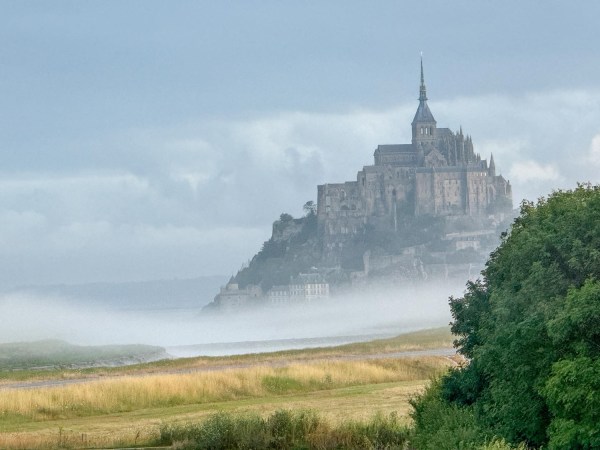
After a late night walk over to the castle (and well worth it I might add) we arose very early this morning so we could try to beat the crowds at Mont Saint Michel. It was a success and the early morning fog gave the castle a surreal effect.

Last night the tide was coming in as we were leaving so we were out of there just in time to keep our feet from getting too wet. We walked the first level of winding cobbled streets of Mont Saint-Michel and were able to see it with the streets lit up like a Harry Potter style story.

This morning, the tide was out. So far out that our friend Mark took a walk. What he didn’t know was that there is a myth that there is quicksand around the castle. However, we put those rumors out quickly by googling it. It states that the bay is known for its treacherous quicksand-like mud flats, but it isn’t exactly quicksand as it’s often portrayed in movies. It’s more like a soft, shifting sand that can trap you if you’re caught off guard.

Mont Saint-Michel’s history is as captivating as its appearance. Legend has it that in 708, the Archangel Michael appeared to Bishop Aubert of Avranches, commanding him to build a sanctuary on this rocky islet. Over the centuries, what began as a humble oratory transformed into a formidable fortress-monastery.
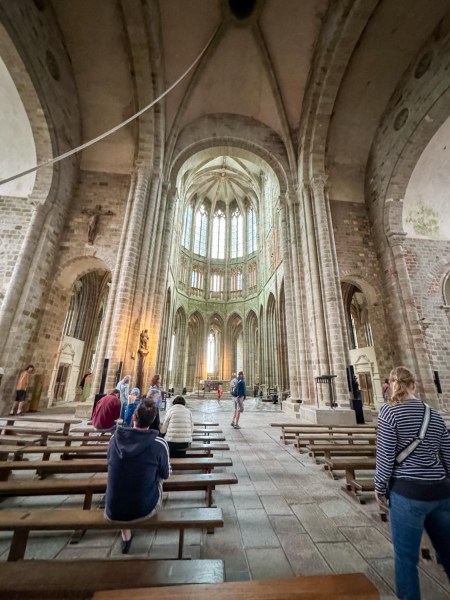
The abbey’s architecture is a testament to time. Romanesque and Gothic styles blend seamlessly, creating a masterpiece of human ingenuity.
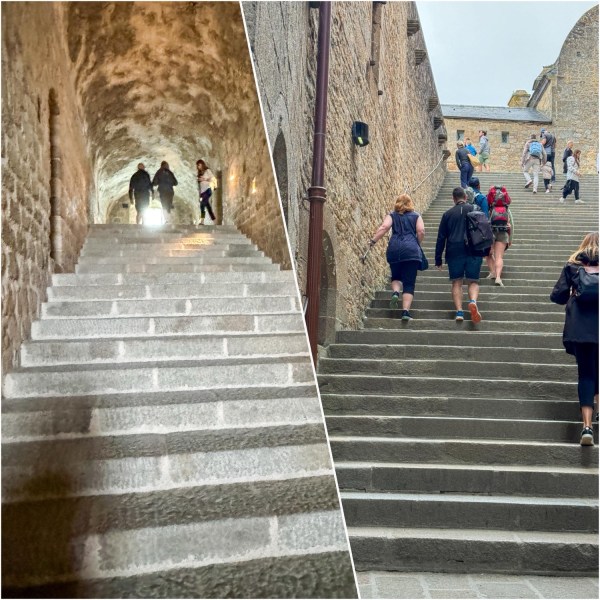
Continuing our walk through the abbey, a breathtaking architectural masterpiece, dominated the skyline. We spent hours exploring its intricate rooms and corridors, each one a testament to centuries of history and faith. We climbed the 400 stairs to the top, stopping at many areas along the way to take in the different styles of medieval architecture and rooms.
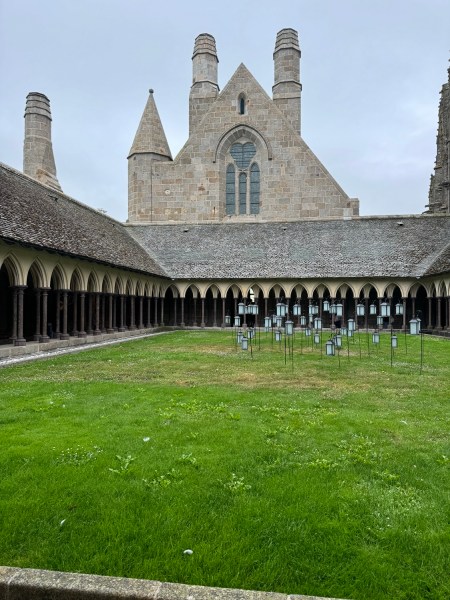

The cloister was a particular highlight. A suspended garden between sky and sea, it offered a moment of peace amidst the bustling abbey. It was really interesting how much greenery and flowers are inside these stone walls.
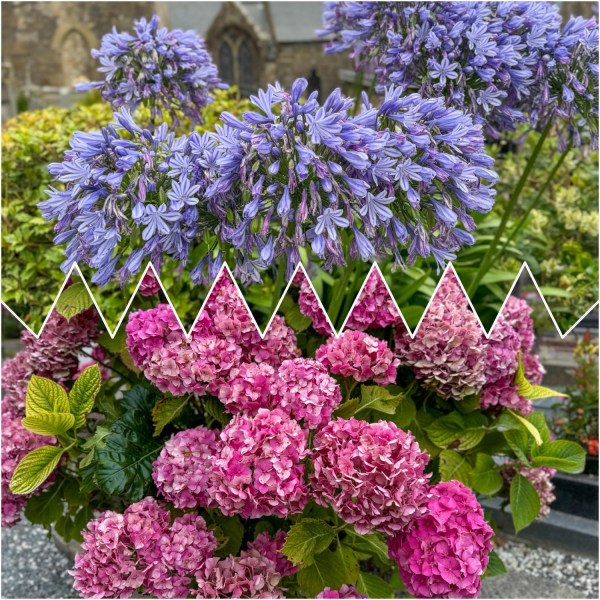
The garden, though planted with modern herbaceous plants, still captured the essence of the medieval cloister. I am sure the monks strolled here, meditated, or even discussed scholarly matters. The cloister’s architecture is a marvel in itself, with its graceful arches and intricate stonework. It’s a place where time seems to stand still.

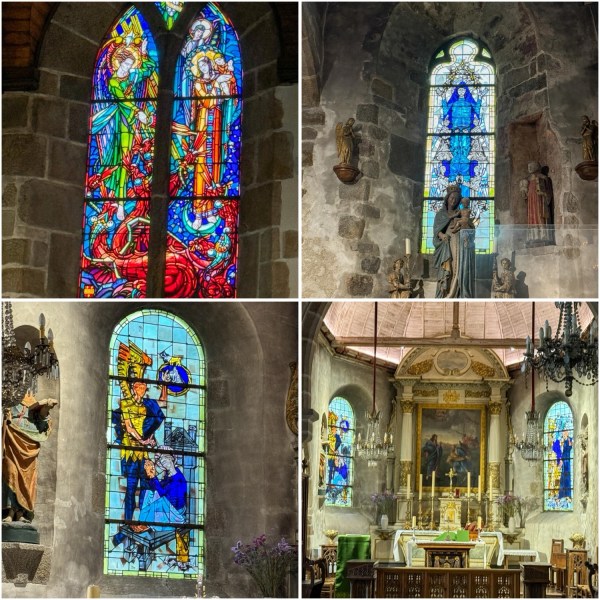
Next, we ventured into the Abbey Church. Its soaring nave, bathed in ethereal light, filled us with a sense of awe. The intricate stone carvings and stained glass windows were simply breathtaking. We wandered through the cloister, a tranquil oasis surrounded by beautifully proportioned arcades. It was here that the monks would have meditated and studied.
Our exploration continued to the Scriptorium, where the monks meticulously copied and illuminated manuscripts. The tranquility of this room was palpable, and we could appreciate the painstaking work that went into creating these priceless works of art.
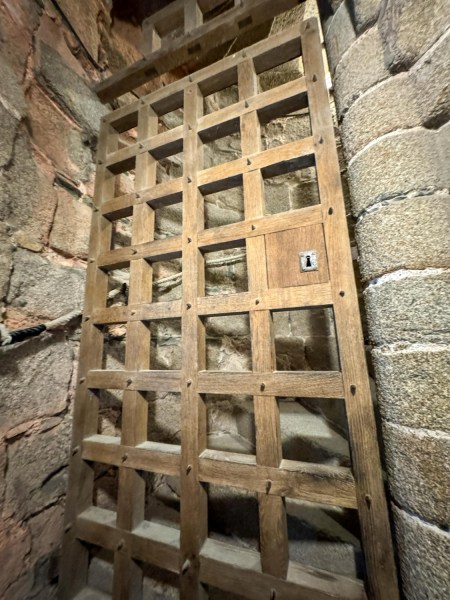
There were over 16 different rooms. We have been to many castles but this one was very interesting. Every corner of Mont Saint-Michel held a story, and we were captivated by the abbey’s rich history and spiritual significance. Pilgrims came seeking solace, forgiveness, and a closer connection to the divine.

The abbey itself is a microcosm of spiritual life. The monks, dedicated to prayer, study, and labor, embodied the ideals of Christian monasticism. Their lives were centered around the rhythm of the liturgical day, marked by the ringing of bells and the chanting of psalms.

We spent a little over two hours exploring the castle and once back on the ground floor we stopped at a little cafe to indulge in some crepes. They were amazing and it was great to take a breather after all those steps!

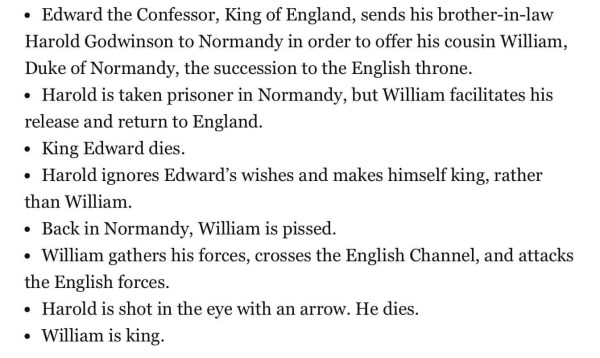
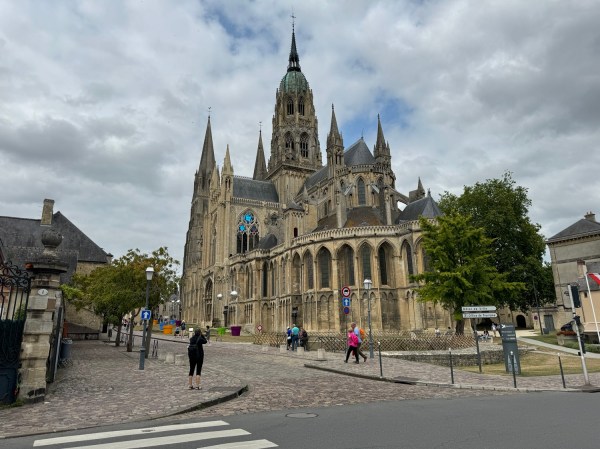
Our journey continued to the charming town of Bayeux. Here, we encountered one of history’s most extraordinary artifacts: the Bayeux Tapestry. This incredible piece of embroidery, created around 1080, is an almost 70-meter-long chronicle of the Norman Conquest of England in 1066.

The tapestry is more accurately described as embroidery, as it’s made from wool threads on linen. Its vibrant colors and detailed scenes bring the events of 1066 to life in a way that’s both captivating and informative. We had headphones that walked us through the 58 panels or scenes of the story. It was captivating and it hardly felt like the hour we stood reading and moving from one part of the story to the next. From the preparation for William the Conqueror’s invasion to the Battle of Hastings and its aftermath, the tapestry offers a unique and fascinating glimpse into medieval life.

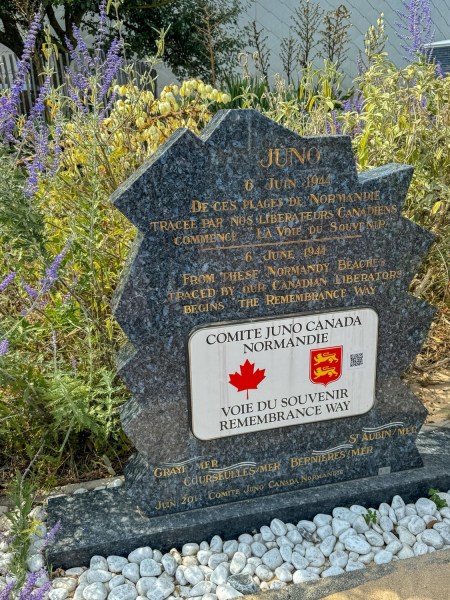
Our Normandy adventure wasn’t over yet. We had enough time to stop at the Canadian and British beaches to pay our respects. At the sands of Juno Beach we supported our Canadian friends as they did for us in the American beaches. Paying homage to the brave soldiers who stormed this stretch of coastline on D-Day.

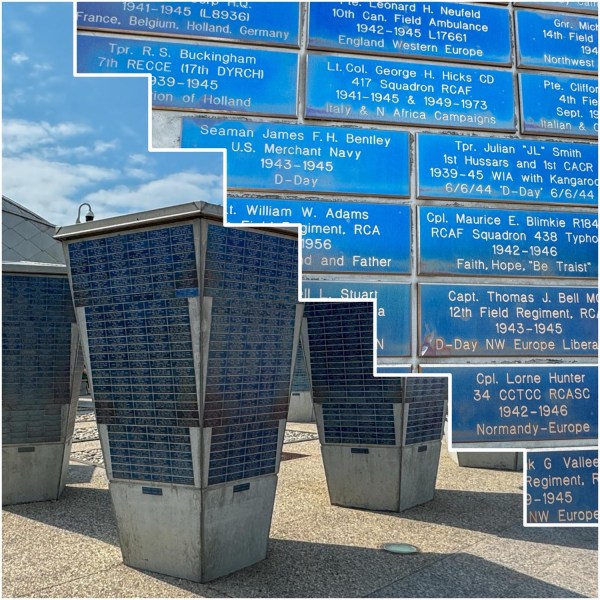
The Juno Beach Centre was well worth the visit. It offered a comprehensive look at the Canadian role in the D-Day invasion. The names etched on the walls of the Memorial stood as a touching reminder of the ultimate sacrifice.
Walking along the memorial gazing at the beach, we stumbled upon the Inukshuk, a Canadian symbol of strength and unity, which added a touch of home to this foreign land.
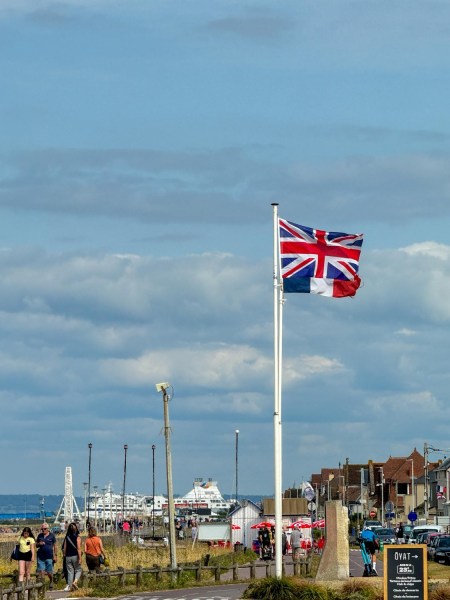
Our journey continued to Sword Beach, where we joined our British friends in support as well. The British contribution to D-Day is equally remarkable, and the memorials here pay tribute to their bravery. The Pegasus Bridge, a symbol of British airborne forces, is evidence to their ingenuity and creativity.
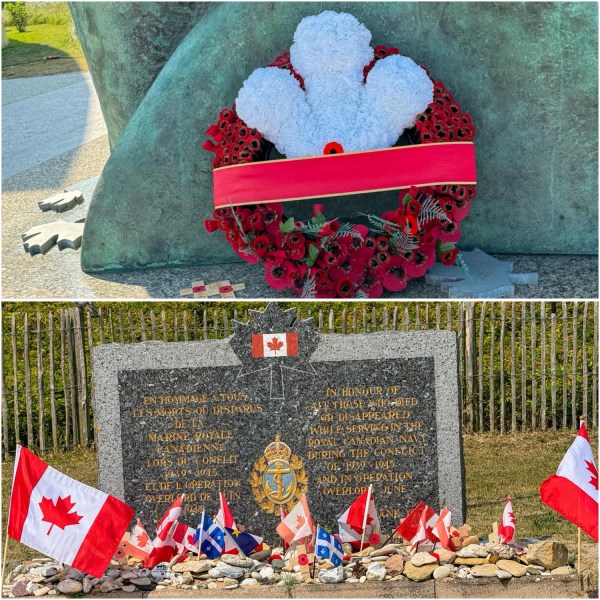

Learning how all countries came together to fight one enemy gave us a sense of pride and sadness all in one. So many men gave their lives on this war.
Our Normandy trip was an emotional rollercoaster, filled with awe, respect, and gratitude. Visiting all the beaches with our friends made the experience even more special.

We talked on our trip back to the ship about the intricate details of our last two days.

We were so glad we chose to learn more about our countries and the cost of war instead of attending the Olympics being held in Paris.

Tomorrow we will visit Honfluer, a little town across the river. We spent some time here in 2019 and really enjoyed enjoyed it.
May God bless you always,
Chuck and Lea Ann
 WorldTravelReynolds