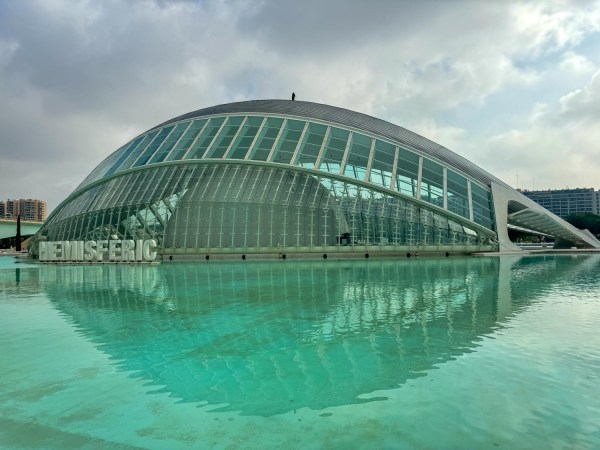
represents a great human eye, the eye of wisdom. Inside is an IMAX theater
Our day in Valencia got off to a rocky start! Our tour guide had our pick-up times mixed up and was 30 minutes late on their start to pick us up but not without another 30 minute delay due to traffic. It probably wouldn’t have been too bad but the heat had already started bearing down on us at 80 degrees very early this morning. With the A/C in the van on full blast we started our tour, finally.
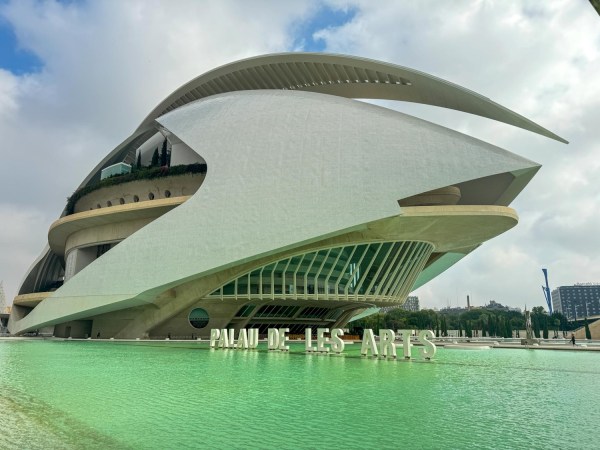
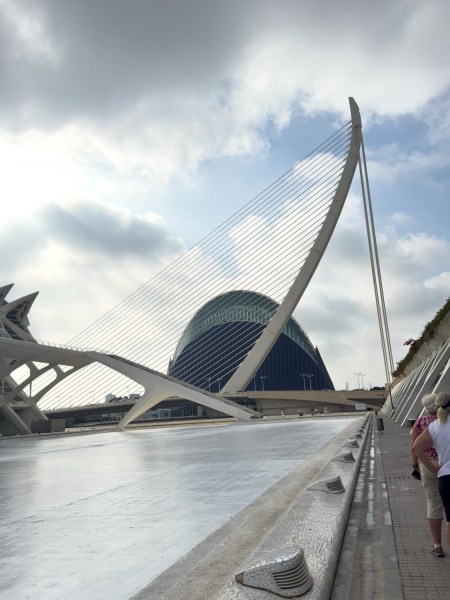
This city on Spain’s sunny east coast offered a fascinating mix of ultra-modern buildings that seemed ripped from a science fiction film, alongside historical structures like ancient churches embellished with gargoyles. And of course, no trip to Valencia would be complete without indulging in the city’s culinary crown jewel: paella!
Founded as a Roman colony in 138 BC, Valencia’s history is a vibrant blend of cultures, reflected in its traditions and sights. The Moors, who ruled from the 8th to 13th centuries, left their mark on irrigation systems and agriculture. Today, Valencia is the third-largest city in Spain, with a population of over 800,000 within its city limits. Interestingly, Valencia has its own language, Valencian, spoken alongside Spanish.

Our day began at the very cool looking City of Arts and Sciences. This sprawling cultural complex housed an IMAX cinema and planetarium within the futuristic Hemisfèric building and the Príncipe Felipe Science Museum. The nearby Reina Sofía Palace of the Arts, Valencia’s opera house, captivated us with its sleek, modern design much like the opera house in Sydney, Australia.
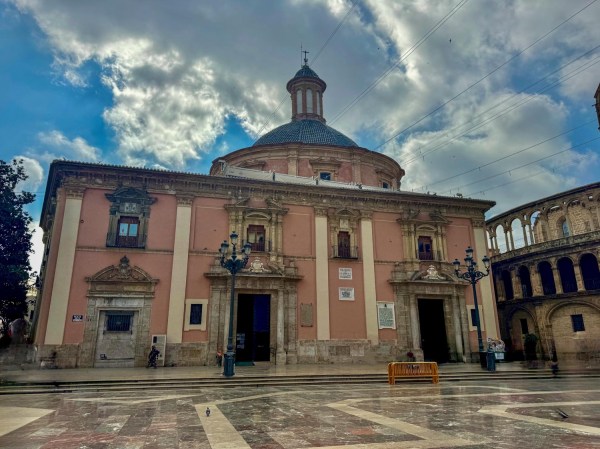
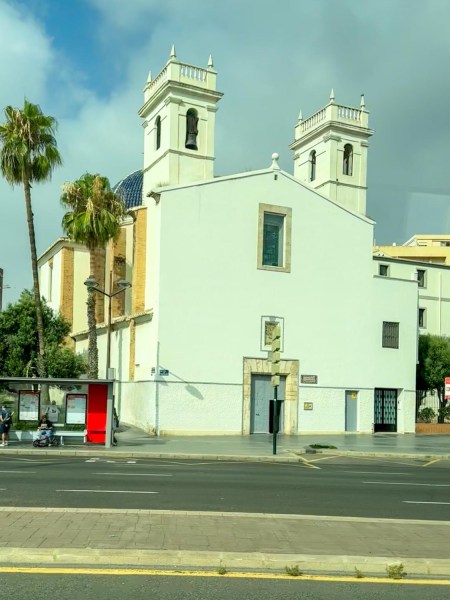
We took a scenic drive to the Sanctuary of Our Lady of the Forsaken, a beautiful white church offering a moment of peace and serenity.
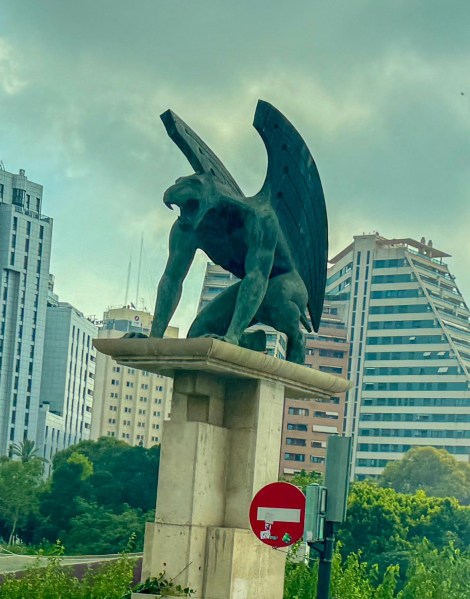
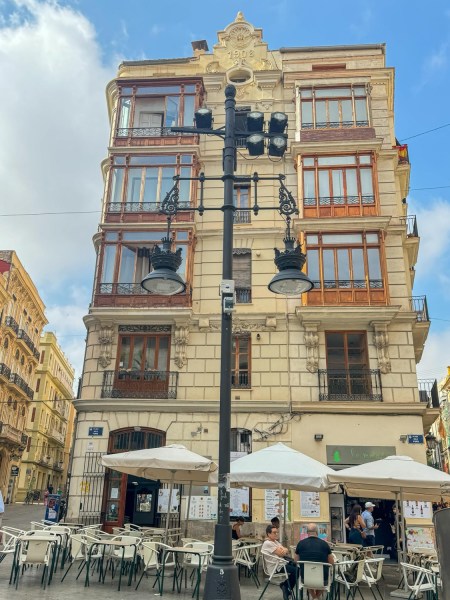
Continuing our exploration, we spotted the mischievous looking gargoyles adorning the Mont-Olivet and Sant Agustí churches, adding a touch of whimsy to these historic structures. The city is still very old looking reusing many its older Spanish buildings instead of tearing down and building in a more modern look.
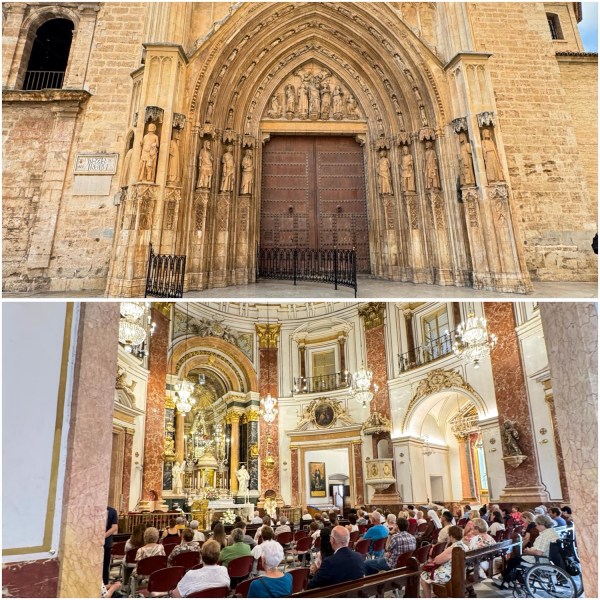
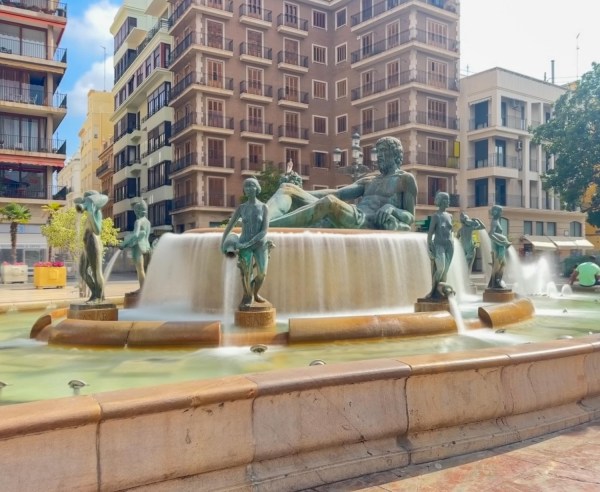
As we entered the heart of Valencia, Plaza de la Virgen (Virgin’s Square) was revealed before us. The majestic Valencia Cathedral, or La Seu, dominated the scene. We peeked inside during a local service, captivated by the cathedral’s ornate beauty and being very quiet so as not to disturb the fellow parishioners.
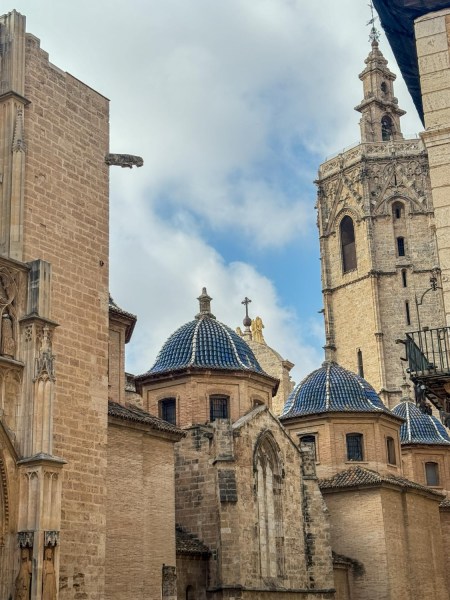
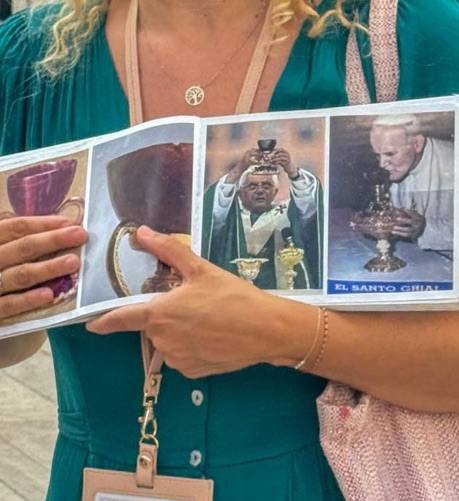
Stepping outside, we admired the four cupolas, or “migueletes” as they’re called locally, that graced La Seu’s rooftop. Legend has it that one of these cupolas might hold the Holy Grail!

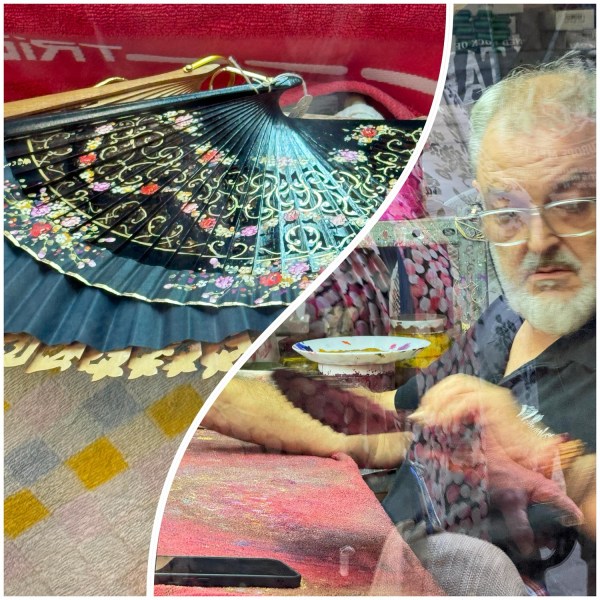
Continuing our exploration, we stumbled upon local artists meticulously painting intricate designs on traditional hand fans, a vibrant display of Valencian culture!
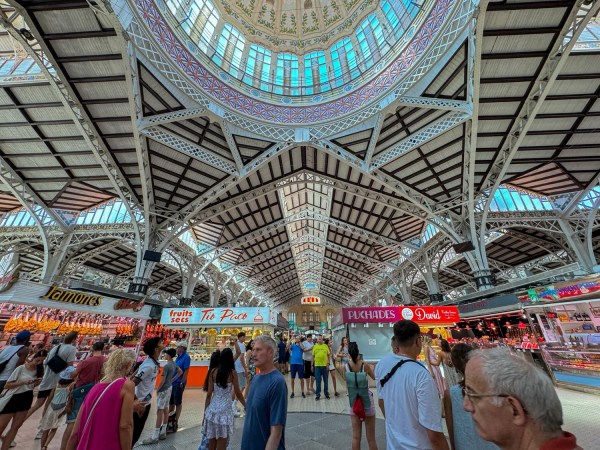
Our next stop was El Mercat, a bustling market overflowing with fresh produce and local delicacies. Here, we couldn’t resist indulging in a classic Valencian snack: horchata, a refreshingly cool drink made with tiger nuts, and fartons, light and fluffy pastries dusted with sugar, perfect for dipping into the horchata. Even the architecture of this building was extraordinary.
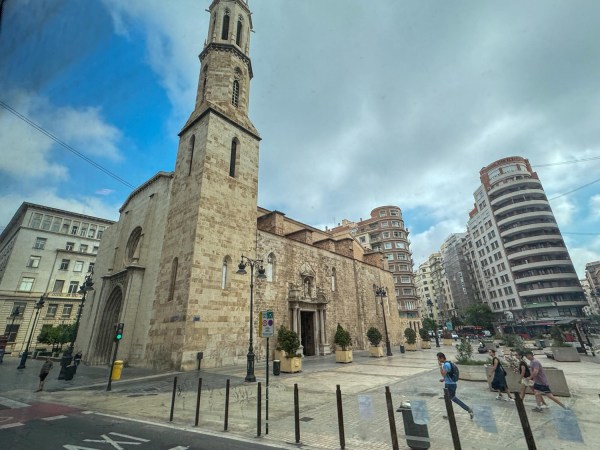
Llotja de la Seda, better known as the Silk Exchange, is a UNESCO World Heritage Site, adorned with intricate gargoyles, is also a testament to Valencia’s prosperous past. The nearby Church of Sant Joan del Mercat, with its octagonal bell tower, added another layer of historical charm to the area.
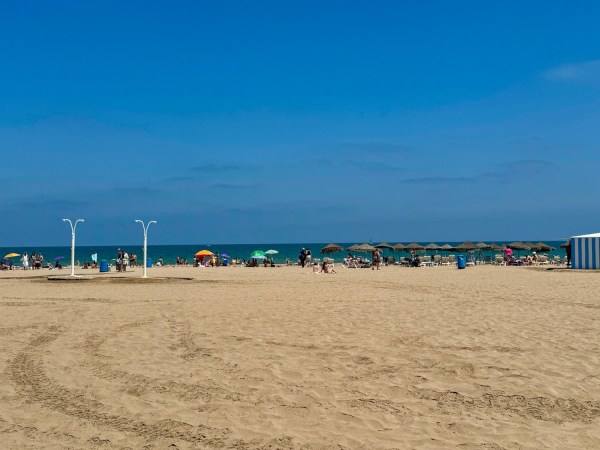

Finally, the grand finale! Paella by the beach. We made our way to the beach for the pièce de résistance: a steaming plate of paella, the saffron-infused rice dish with seafood and vegetables.The dishes were made in huge wok like pans outside creating a delightful aroma.
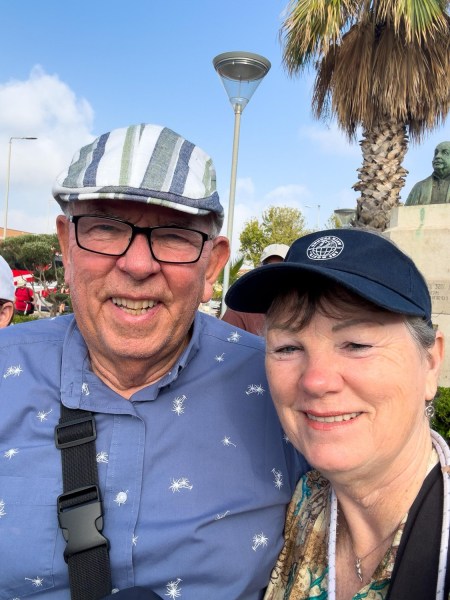
A great end to a long historical day. We were hot and tired and ready to take a cool shower.

Our next stop will be in Malaga Spain.
May God bless you always!
Chuck and Lea Ann
 WorldTravelReynolds