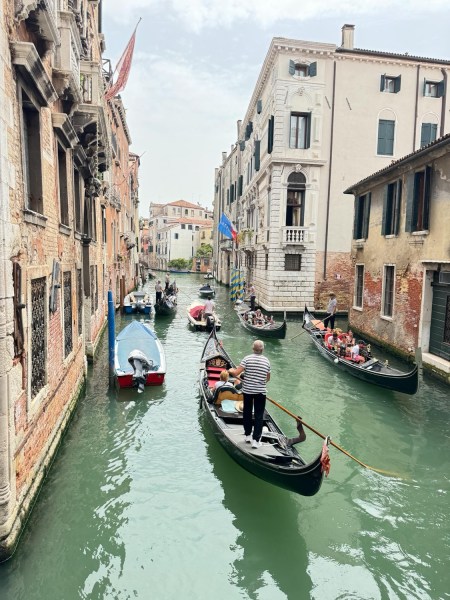
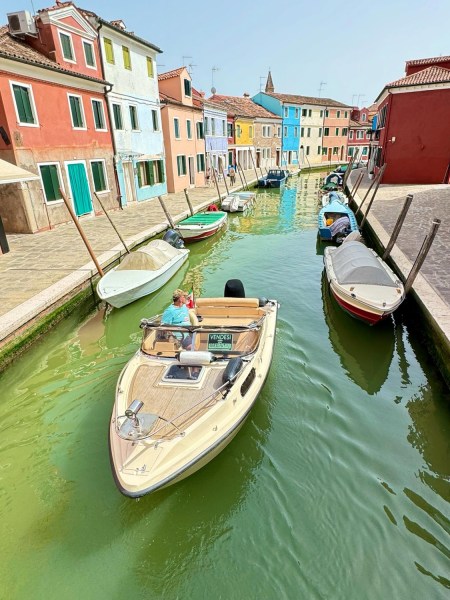
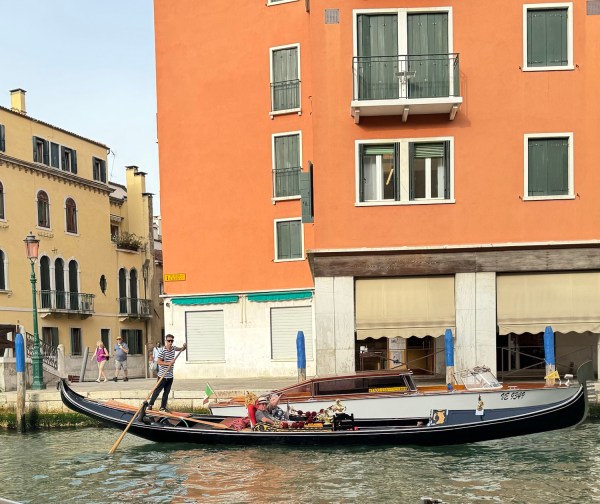
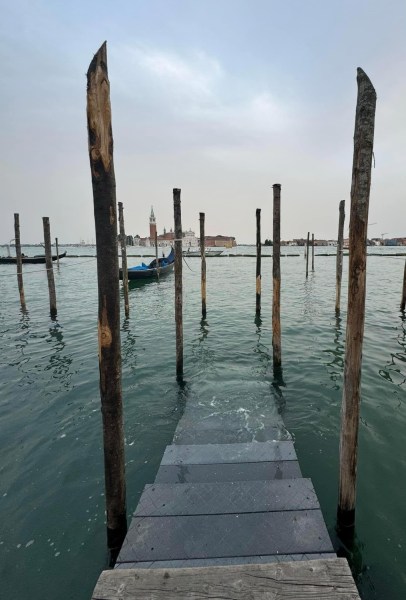
Such a wonderful opportunity to be in Venice again. This will be day one of our two-day adventure in this romantic city. We opted to ditch the traditional route of walking today and explore by private water taxi, zipping through the charming canals lined with colorful palazzos (buildings). The cool splashing of water and the calls of the gondoliers added to the atmosphere, making us feel like characters in a classic Italian film. Reminded me of the movie “The Italian Job” except no money fell through this boat!”
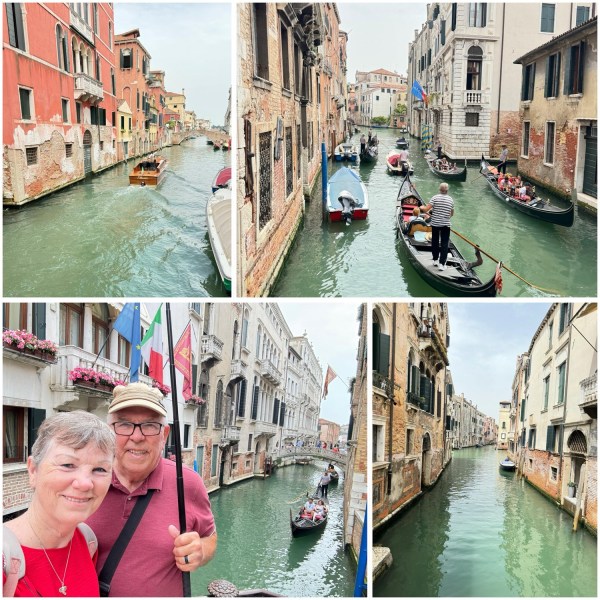
These canals, the very lifeblood of Venice, hold a history as rich as the city itself, and their future faces intriguing challenges.
These waterways were not always the meticulously carved paths they are today. Back in the 5th century, Venice was a collection of marshy islands separated by natural channels. As the city grew, so did the importance of navigating these channels. Venetians, with remarkable foresight, began to widen and deepen the existing canals, transforming them into efficient transportation routes. This network of canals not only facilitated the movement of goods and people but also played a crucial role in Venice’s rise as a maritime power.
However, the very magic of Venice, its unique relationship with water, now presents a challenge. Rising sea levels due to climate change threaten the city’s future. Engineers are working on innovative solutions, like the MOSE project, a series of inflatable dams designed to protect the lagoon from flooding. Something we experienced last year when Ravenna flooded and our ship had to be rerouted to Trieste. Interesting as well is the future of Venice’s canals is linked to the fight against climate change.
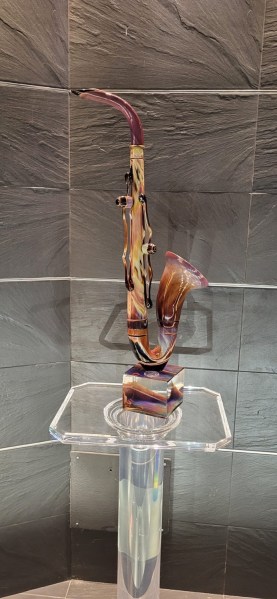
Our first stop was Murano, the legendary island of glassblowing artisans. Back in the 13th century, glassmaking was a thriving industry in Venice itself. However, it posed a significant fire risk. In 1291, the Venetian Republic, in a bid to protect the city from accidental fires, issued a decree. All glassmaking workshops were to be relocated to a cluster of islands north of Venice in Murano. This decision not only ensured safety but also inadvertently fostered a unique artistic community.
With skilled glassmakers concentrated on Murano, knowledge and techniques were fiercely guarded and passed down through generations. This isolation led to a flourishing of innovation. Murano’s artisans became pioneers in glassmaking, developing techniques that are still admired today. They mastered the art of crafting clear glass (cristallo), a feat that revolutionized the industry and made Murano the sole producer of mirrors in Europe for centuries. They also experimented with color, creating vibrant hues and intricate patterns that continue to captivate collectors worldwide.
So, while Venice may have sparked the flame, Murano became the furnace where Venetian glassblowing truly flourished.
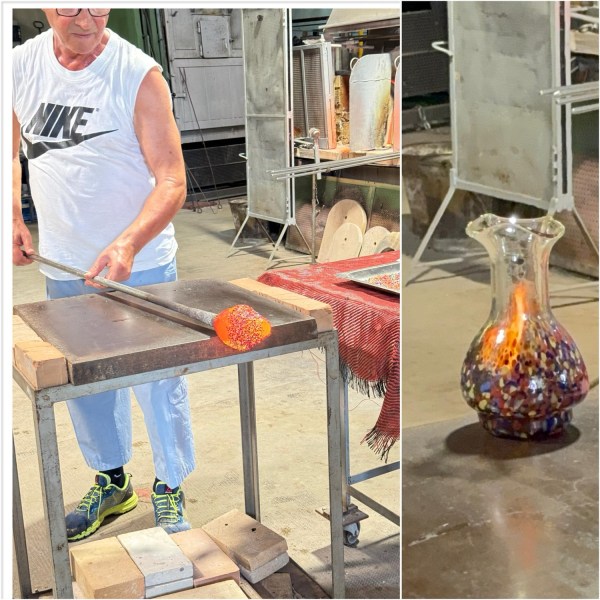
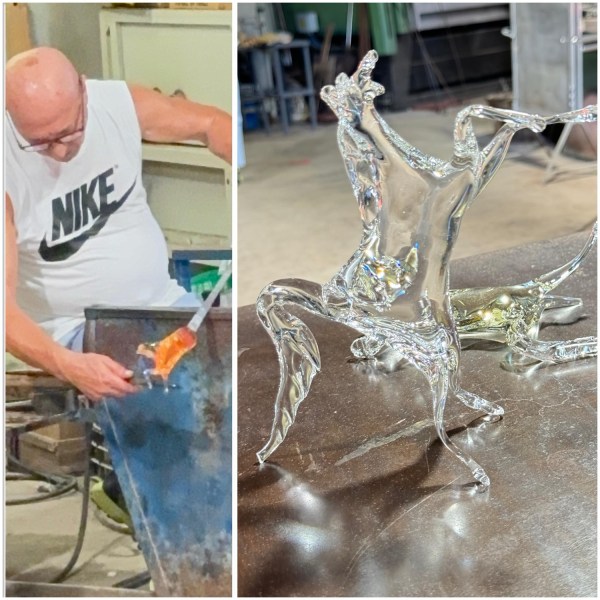
We were lucky enough to score a tour of a factory, where a master craftsman, with years of experience brought molten glass to life. We watched in awe as he transformed a glowing blob into a delicate vase and a majestic horse, (that I really wanted), their intricate details shimmering in the light. Inspired by his artistry, I couldn’t resist picking up a beautiful hand-blown Christmas ornament, because the horse was way out of my price range, as a unique souvenir to bring back as a piece of Murano’s magic.

Back on the water taxi, we glided towards Burano, an island known for its vibrant colored houses and exquisite lacemaking tradition.
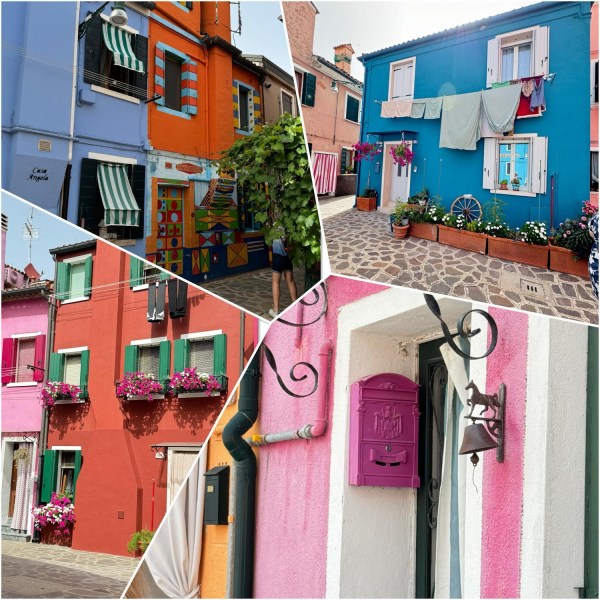
Burano’s mixture of colors is as iconic as Venice’s canals. The exact origins of this tradition are shrouded in a layer of mystery, with two main legends vying for explanation. Our first story from our wonderful guide was about a fisherman’s tale. Legend has it that Burano’s vibrant facades were a practical solution for fishermen returning home in thick fog. Coating their houses in bright, distinct colors made them easily recognizable landmarks, guiding them back safely even in the densest morning mist. A more realistic story is that none of the houses have numbers on them so it’s easier to tell the house is yours by the color.

Regardless of the exact origin, the tradition of brightly colored houses has become an integral part of Burano’s identity, transforming the island into a living work of art.
As we approached, a beautiful rainbow of colors unfolded, houses in shades of yellow, orange, turquoise and more lining the canals.

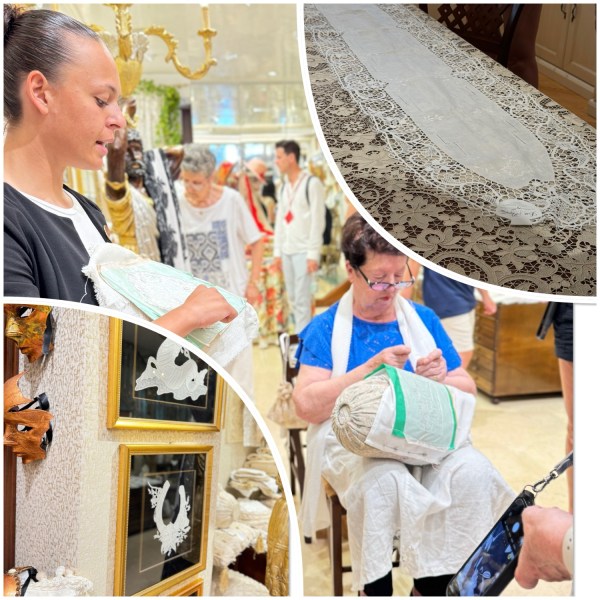
We explored a lace factory/store, marveling at the intricate patterns created by nimble fingers working on delicate threads. One small 2 x 3 piece can take up to 3 hours to make. The history and dedication behind this craft were inspiring. I think I’ll stick to my crocheting for now.
After immersing ourselves in Burano’s colorful neighborhood, we headed back close to our hotel. Our stomachs, ringing the dinner bell, led us to a charming restaurant right on the canal front. We savored delicious Italian pizza while watching a gondola glide by, filled with friends taking their turn on this classical Venetian experience. We reminisced about our own gondola ride from our previous visit, a memory forever etched in our hearts.
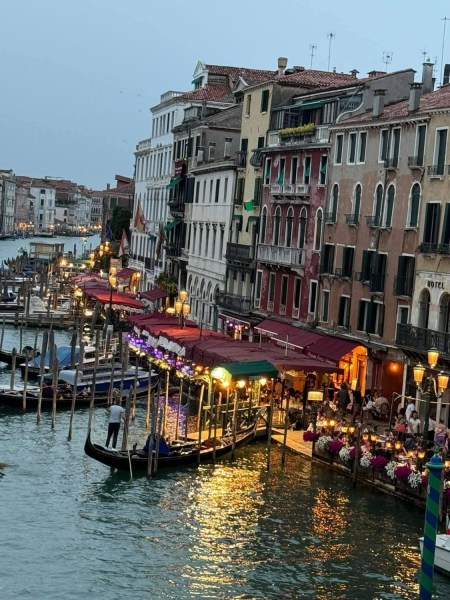
As the sun began its descent, we strolled back to our hotel, stopping for a refreshing scoop of gelato, a perfect ending to a perfect day. With our hearts and bellies full, we headed back for some well-deserved rest. We will need it as our tour tomorrow is a walking tour and it will be a long one! I have never seen so many steps to climb but they are a necessity to cross these canals.
Take a look at my YouTube channel below for a ride through the Canal.
May God bless you always!
Chuck and Lea Ann
 WorldTravelReynolds