
Our last stop in Africa is at Senegal’s capital, Dakar. As I explained in my last post, it is also part of the Atlantic slave trade that began in the 15th century. I can tell you I have learned more about slavery this past week than I ever learned in my lifetime. Much of that was probably because I didn’t care about history at all! So, it could be my age or the travel that provided more knowledge, but I am glad I didn’t just gloss over these several days in this dark history because I have learned so much!

Senegal, nestled in West Africa, boasts a population of over 17 million. The country is woven from diverse ethnicities, with Wolof being the most widely spoken language, followed by French, a legacy of colonial times. Religion plays a central role in Senegalese life, with approximately 97% of the population identifying as Muslim so we weren’t surprised in the stories our guide (who is Muslim) told about Polygamy, the practice of a man having multiple wives, being legal in Senegal with certain restrictions. His information was that if you marry, you must state upfront with your current wife that you may or may not take on more wives. They can have up to 4. Your first wife will pick the 2nd wife and so on. If you state up front that you will be monogamist, having only one wife, then you are held to that for life even if you divorce. How much of this is true is controversial as well. Not being African nor Muslim, I have to take the research performed and hearsay from someone that’s been there at their word.

Dakar is the capital of Senegal and is a city of over 3 million people. With the large amount of Muslims, we expected more head coverings of women, etc but found it to be more westernized in this city.
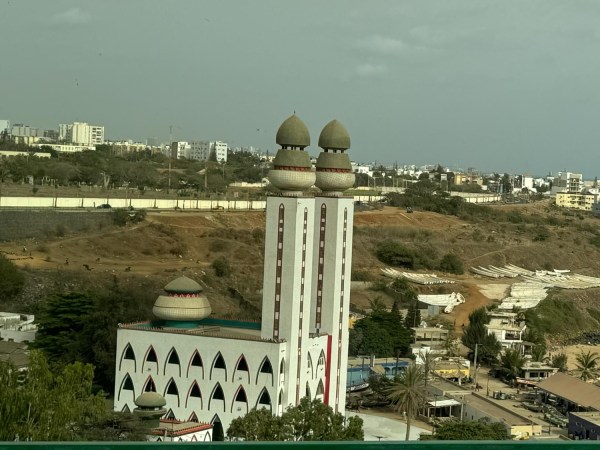
We stopped by the Grand Mosque which was nice but after seeing the Taj Mahal, it was almost laughable that the guide was describing it as the largest mosque in the world. (We soon found out that he described every thing we saw as the “largest or grandest in the world”. We’ve come to the conclusion that he is just proud of his country, which is great for him but he needs to expand his research!
Back to the mosque. This architectural marvel, a collaboration between Moroccan and French designers, opened its doors in 1964. Towering over the city with its 721 feet of towers, a little taller than the One World Trade Center in New York, USA, the mosque’s beautiful tilework and rich architecture reflect a blend of Islamic and Moroccan styles. Not surprising, non-Muslims are not permitted inside although that’s not true for all mosques in the world.

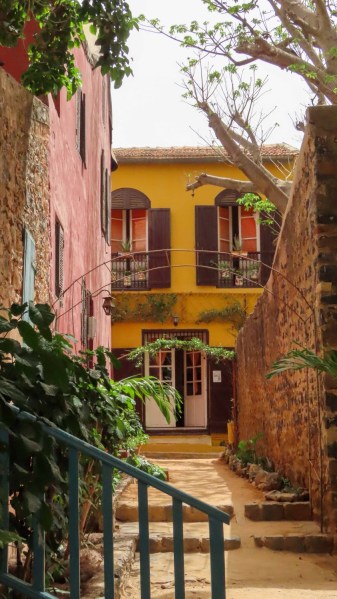
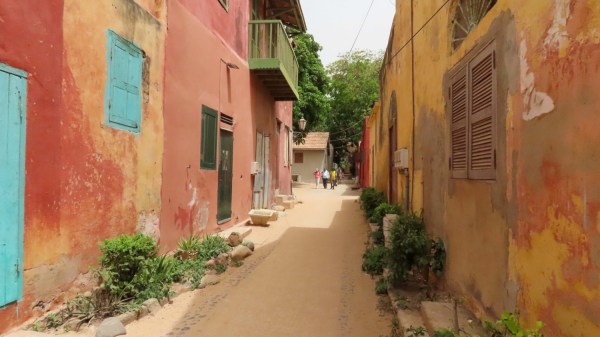
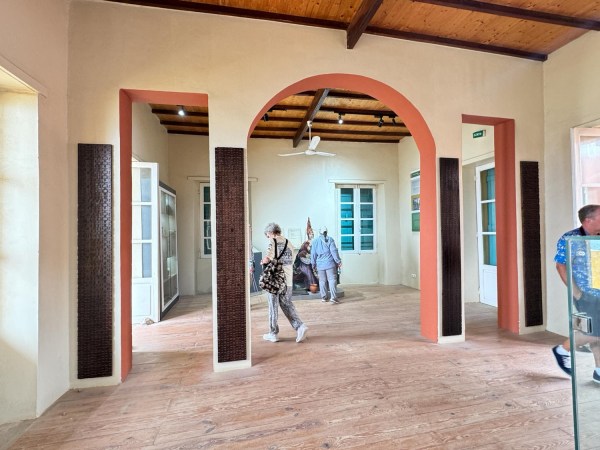
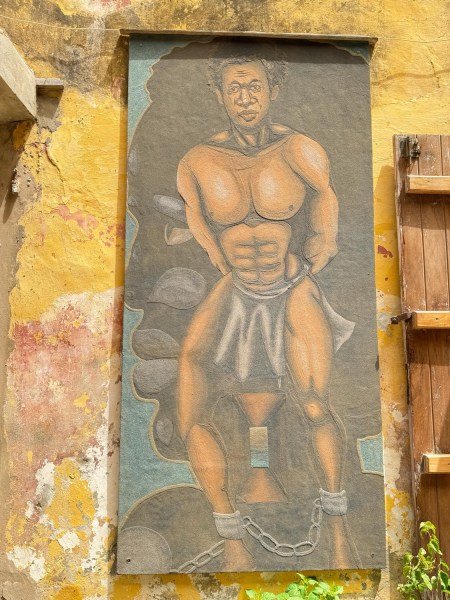
After an hour wait and a 20 minute packed ferry ride, we arrived at Goree Island, a UNESCO World Heritage Site. However, this islands beauty has a dark past just like Ghana and Angola except that it served as a major entrepot for the Transatlantic slave trade from the 15th to the 19th centuries. European powers, including the Portuguese, Dutch, English, and French, fought for control of Goree due to its strategic location. Captives, often acquired through warfare or raids conducted inland, were brought to the island and held in holding pens, similar to the other cells in Ghana with horrible conditions. The Maison des Esclaves (House of Slaves) museum simulated these cells in the house built in the 1800s but renovated in 1962 as a museum. Here, the slaves were separated from their families, branded, and crammed onto ships bound for the Americas under horrific conditions. Estimates vary on the exact number who passed through Goree, but historians believe it could be in the tens of thousands. The Door of No Return, a gateway leading directly to the docks, stands as a symbol of this forced exit in which many jumped to their deaths below to keep from boarding the boats. They may have had a chance if 30-40% of them were not shot. The most disturbing information we were told (and I researched) was that more children died at this location as they were separated from their mothers and subjected to the same living conditions as adult slaves. Young girls became pregnant, which sadly was a good thing because they could escape these conditions especially if they had a light skinned child. This provided them a full French citizenship and became privileged to attend a school in France.

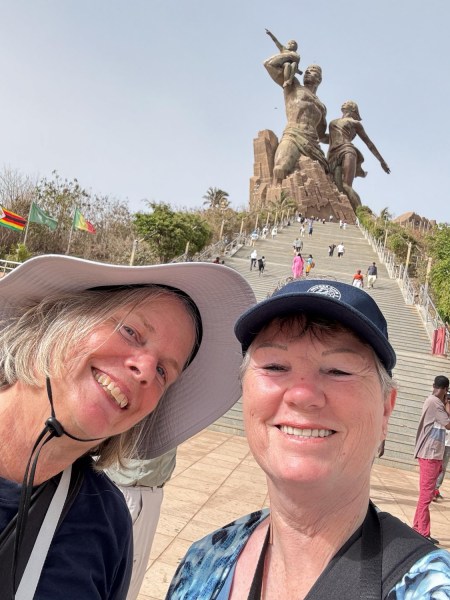
Back on the mainland, we couldn’t miss the towering presence of the African Renaissance Monument. This colossal bronze statue, the tallest in Africa, has sparked debate as well. The first was that the guide stated it was the largest in the world, another statement easily disproved! Another was from the critics of the project itself. They argued that the 27-million dollar, 5 year project completed in 2010, championed by former president Abdoulaye Wade, would have been better spent on social programs or at least to help the extreme poverty of this country. The monument commemorates the 50th anniversary of the countries independence from France. Apparently, this president wasn’t reelected after this project and much of the city’s buildings such as apartments and living quarters that are badly needed are standing unfinished.


Dakar may not be your typical tourist destination, but its history leaves a lasting impression. However, you must do your homework (research) as some of the tales are stretched and the real truth will probably never be known.
We are now heading to the Canary Islands, a place we spent 30 days enjoying back in 2019 so we will more than likely stay on the ship or hop off for their amazing gelato on one of the two days. It’s a nice Spaniard town. Our last 90 days of this wonderful cruise will be spent in Europe. Africa was both amazing and thought provoking. We would come back to the East side in a heartbeat but as far as the west, we will probably skip. I’ve learned enough to make my head swim.
May God Bless you always!
Chuck and Lea Ann
 WorldTravelReynolds