This morning we had to be all packed and ready to head to our next location. Packing light is a must since we will be flying in very small prop planes. Duffle bags were the prime choice. We all kind of nervously giggled as we boarded these small planes. Nota fan of planes with propellers but here we have no choice. We had female pilots that we aptly named our bush pilots! The dust swirled around our small plane as we touched down on the bumpy dirt airstrip in Nanyuki, Kenya. The two female pilots were amazing!

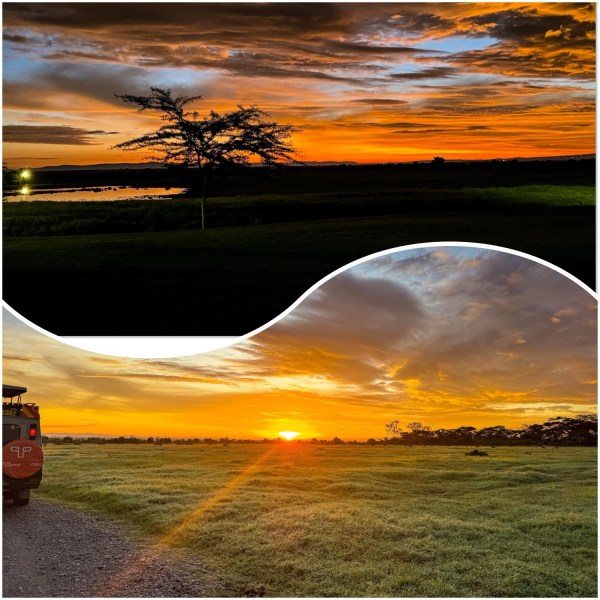
We were fresh off a whirlwind 3-day safari in the Maasai Mara, our discussions were still buzzing with the sights and sounds of Africa’s most famous national reserve. How could it get any better than that! Leaving that wildlife paradise behind us, we were about to embark on a new adventure 225 miles north, at the Ol Pejeta Conservancy.


Ol Pejeta’s story is one of transformation. Originally a cattle ranch established in the early 1940s by Lord Delamere, a prominent British settler, it was a small scale version of colonial Kenya. Nanyuki, the town that serves as the gateway to the conservancy, also boasts a colonial past. British settlers arrived in the early 20th century, drawn by the fertile land for farming. Today, Nanyuki is a vibrant town with a rich cultural heritage, a blend of Kenyan traditions and influences brought by past residents.


Thankfully, by the late 1960s, the tide began to turn towards conservation. Concerned about the devastating impact of poaching, one of Ol Pejeta’s owners, Lonrho Africa, established the Sweetwaters Game Reserve in 1988. This marked a turning point, creating a safe haven for black rhinos and another critically endangered inhabitant: the white rhino.
Sweetwater camp is where we stayed for two nights. Fast forward to 2004, and Ol Pejeta entered a new chapter. The UK-based conservation organization Fauna & Flora International, with the backing of the Arcus Foundation, purchased the ranch. This shift in ownership solidified Ol Pejeta’s role as a leading force in protecting endangered species.
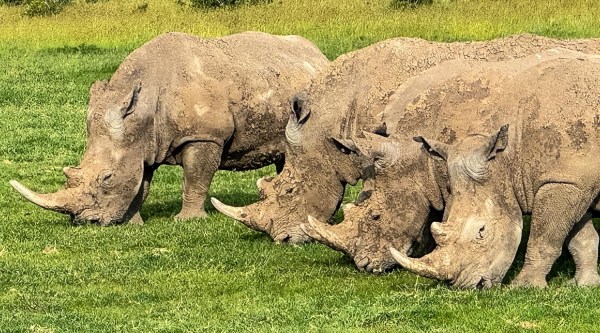
The first southern white rhinos were introduced to Ol Pejeta in 2005. Their presence wasn’t just about boosting the conservancy’s population; it played a crucial role in another historic event. In 2009, four of the world’s last remaining northern white rhinos arrived at Ol Pejeta from a Czech Republic zoo. The hope was that the more natural environment and the presence of southern white rhinos would encourage them to breed. While breeding attempts for these four haven’t been successful so far, Ol Pejeta continues to provide a safe haven for these incredibly rare animals.
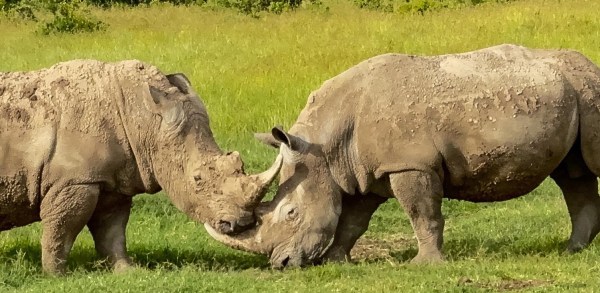

So the star of the show here are the white rhinos but there are many more animals to see. This may not be maasai mara but it still has beautiful animals.


Our luxurious glamping tent offered all the comforts we expected… plus a jaw-dropping surprise! Just yards from our front door two enormous African elephants munched peacefully. Unique views? Absolutely! Luckily, a secure electric fence separated us from these gentle giants.


This unforgettable encounter reminded me of a funny story from our first night at the camp. Our meticulous room steward, during his detailed orientation, explained the lack of heating or air conditioning (it was quite chilly!). His solution? Hot water bottles to keep us warm. We were skeptical, but for someone like me who always suffers from cold feet, it turned out to be perfect – rustic camping with a luxurious twist!

The next morning, breakfast erupted in laughter. One of our friends, convinced an animal had crawled into bed with her, had unleashed a hilarious scream, sending another friend next door scrambling to the rescue! Needless to say, it was a moment of pure panic turned side-splitting laughter.

This glamping adventure, with its unexpected wildlife encounters and hilarious mishaps, created memories we’ll cherish forever.

That afternoon we drove over and crossed the equator, standing with our feet positioned over the northern hemisphere and the other in the south. We were all still a little jet lagged so this was a fun way to blow off steam. We then moved on to our safari.


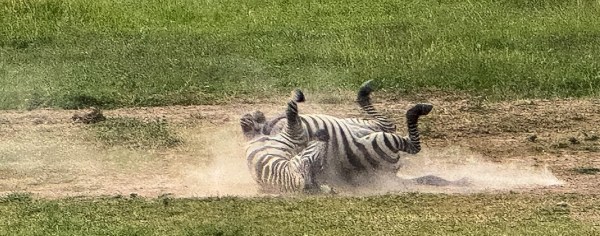
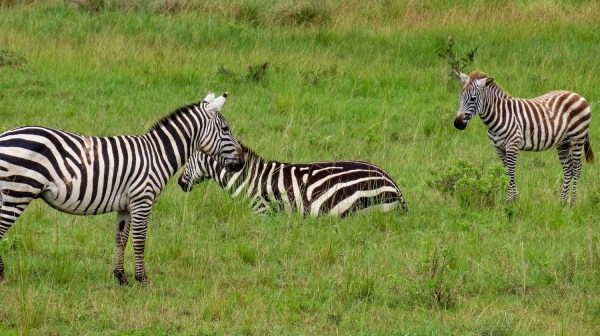
Our guides have changed but the jeeps were similar so we all still had a great seat for animal watching. Ol Pajeta wasn’t quite as action-packed as the Maasai Mara, but it still held its own charm. this morning we saw those beautiful black and white zebras kicking up dust but the stars of the show here in Ol Pejeta are the white rhinos. They arent actually white but they were pretty, for rhinos that is.
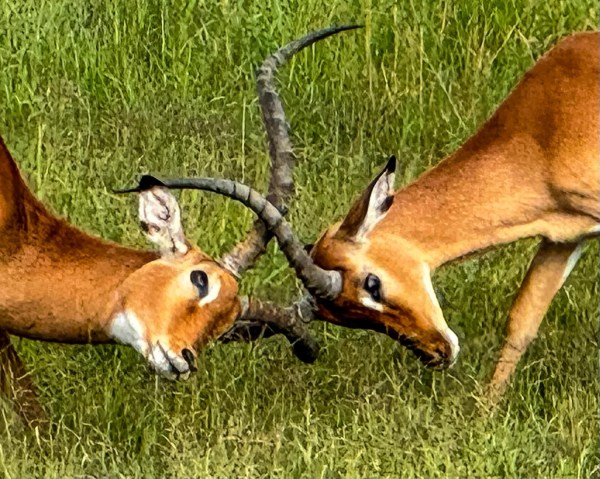
Many graceful impalas leaping across the plains everywhere we turned. Hard to believe those tiny legs can run up to 100 mph. Our first thought is oh how beautiful and our second was these are dinner for the lions if they cant run fast enough.

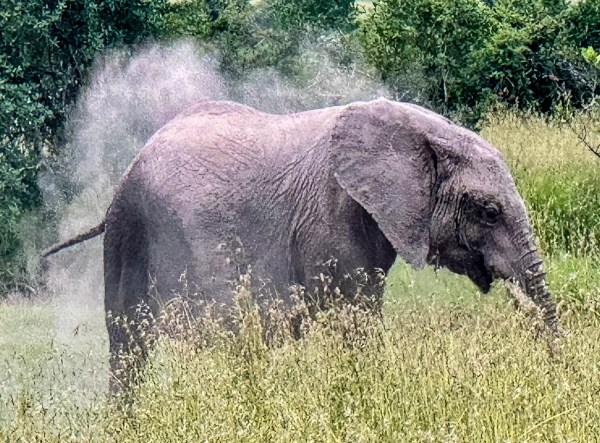
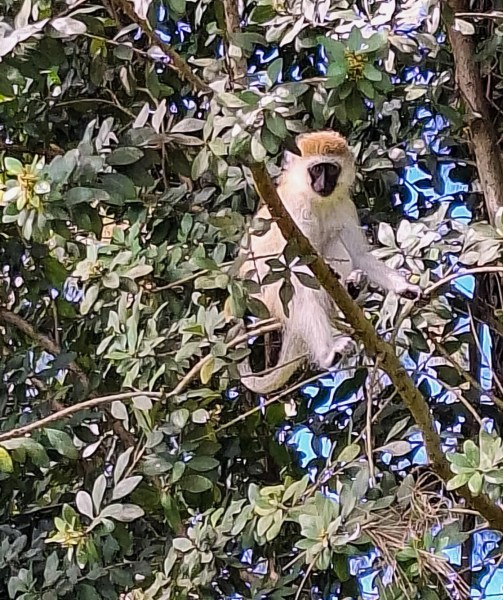
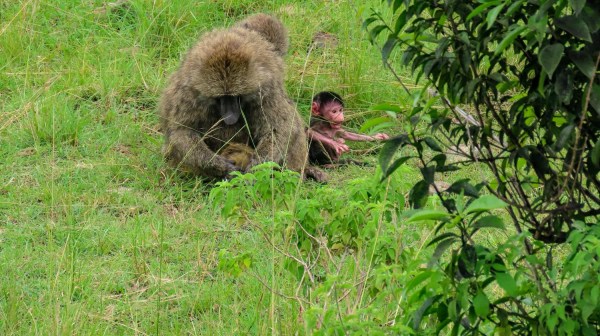
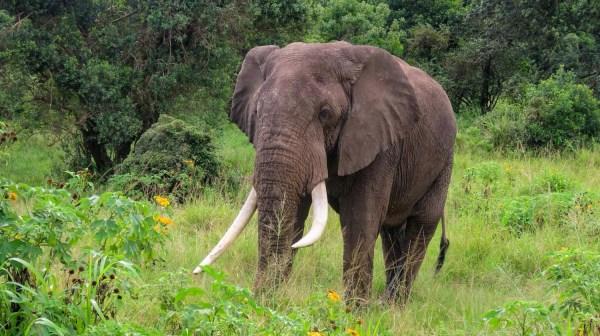
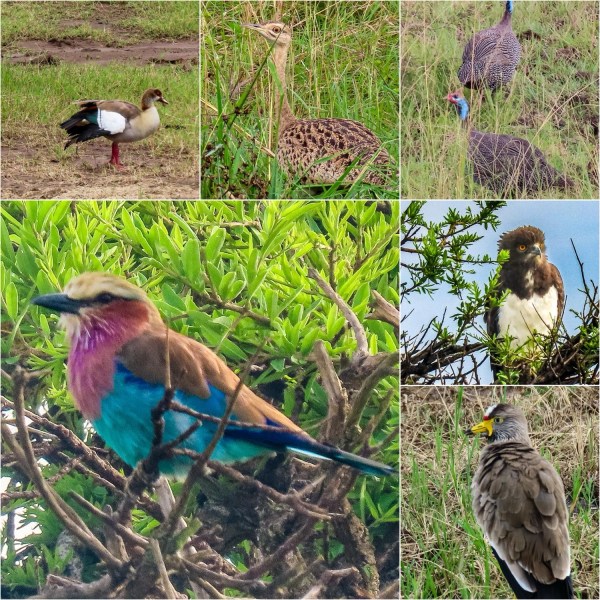
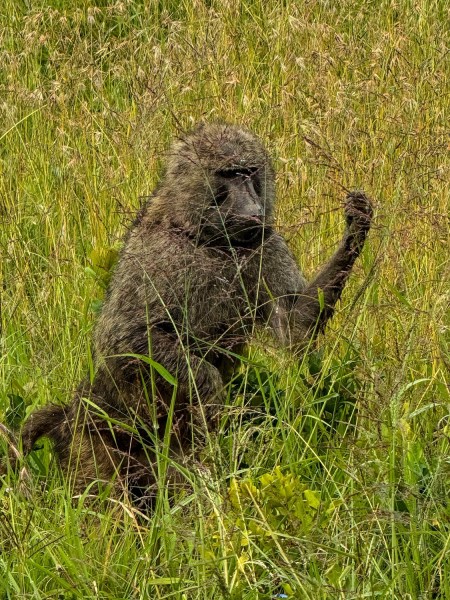
African Bush Elephants, those gentle giants, lumbered through the landscape of thick bushes. A different contrast to the flat grassy land of Maasai Mara. Many different bird species were spotted, even an African eagle, although not as majestic as the one in the USA. More baboons and a Vervet monkey as well. He was a pretty white/creamy color with a black face.

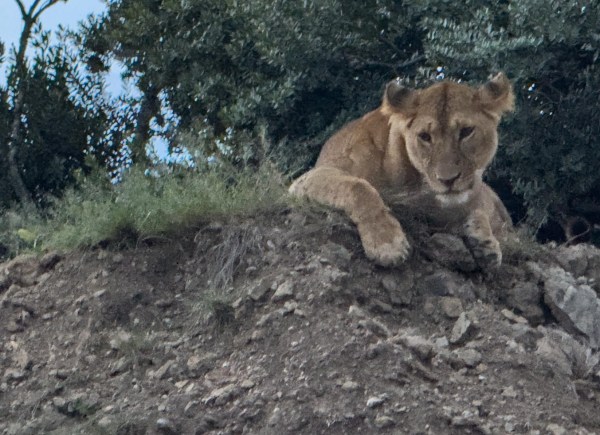
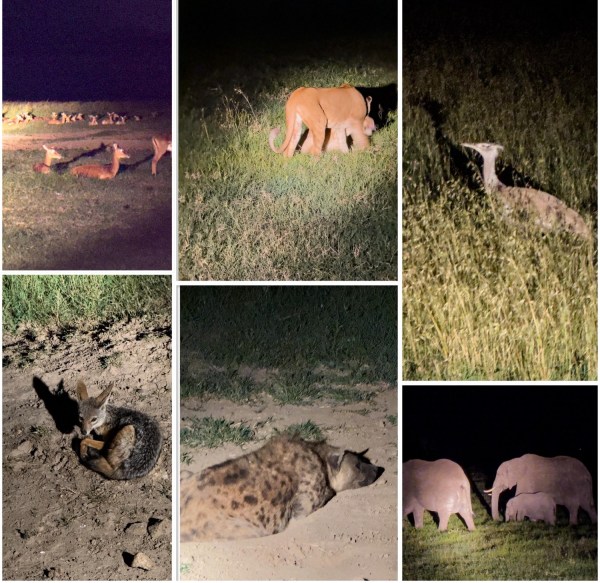
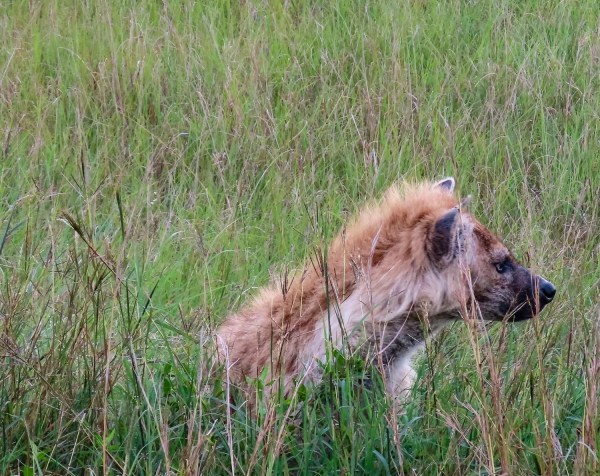
As night fell, we decided to take a night drive. It wasnt as great as I expected but what we saw were these same animals with different behavior. During the day, the lions sleep a lot. Tonight, a lone lioness was spotted surveying her territory from a distant hill, while watching a playful trio of lions wrestling amongst themselves. We saw several hyena’s and babies catching some shut-eye on the side of the road and a majestic Kori Bustard strutting its stuff. Each encounter felt special. We woke up a black-backed jackal napping in the moonlight and followed an elephant family, all adding to this nocturnal landscape.

Our evening coming to an end, we decided to let the animals rest. We headed back to the tent for our last evening. We will have a short game drive in the morning on our way to the airport.
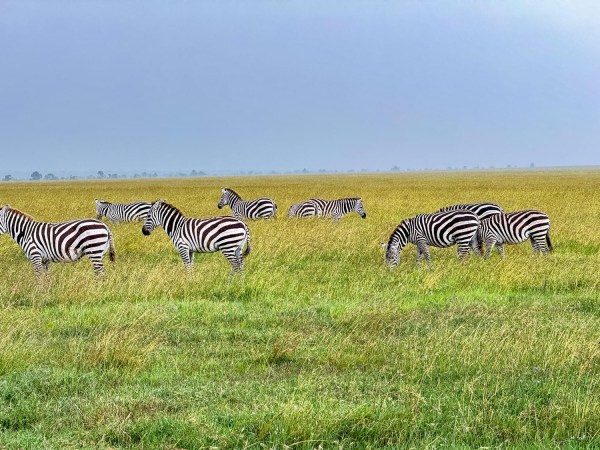
Up bright and early after an amazing breakfast and kenyan coffee, we spent about an hour looking for these majestic animals on the way to the airstrip. A sudden downpour caught us by surprise and we had to shut the roof and close the windows. That didnt stop the animals from grazing where they were.

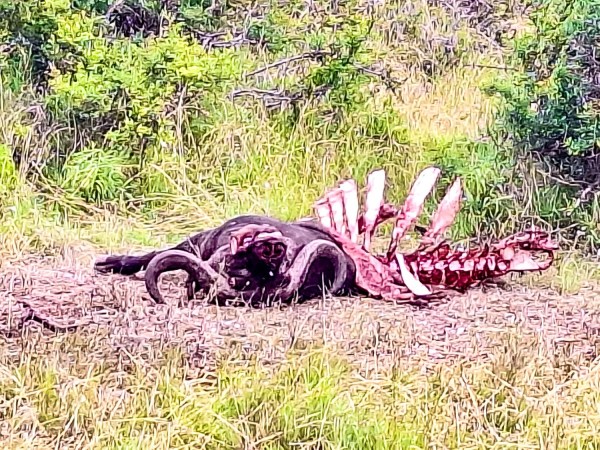
As the skies started to clear and we moved on, we spotted a hulking Cape Buffalo staring us down. Even the rain wasn’t stopping him. Our exploration also led us to a somber yet important place: a graveyard with headstones marking the final resting place of rhinos who had fallen victim to poaching or otherwise died of old age.

Our two nights at Ol Pajeta were like a fascinating epilogue to the grand safari story that began in the Maasai Mara. It was a beautiful blend of wildlife encounters, conservation efforts, and a healthy dose of unexpected moments, like the surprise animal in our friends bed! Nanyuki may not have had the same sheer volume of animals, but it left a distinct mark on our memories, reminding us of the importance of protecting these incredible creatures and their habitats.
We boarded our plane and headed back to Nairobi. Two more nights and then sadly our safari portion of this trip is officially over. Although, we will spend some time in South Africa before rejoining our ship.


May God bless you always!
CHuck & Lea Ann
 WorldTravelReynolds