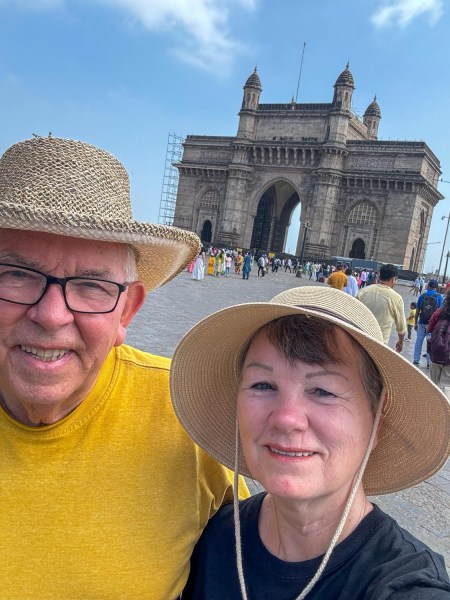
After a 3 day exhausting trip to the amazing Taj Mahal, we are up too early for a tour of Mumbai. Having never been here but seeing Mumbai through the eyes of our traveling friends, Jessica and Tom (www.worldwidewaftage.com), we weren’t too excited about visiting. They spent a year here during Covid in 2020, unable to leave their hotel room. I think it would have drove me crazy but they persevered and moved on to their next location as soon as they were allowed, which was South Africa.
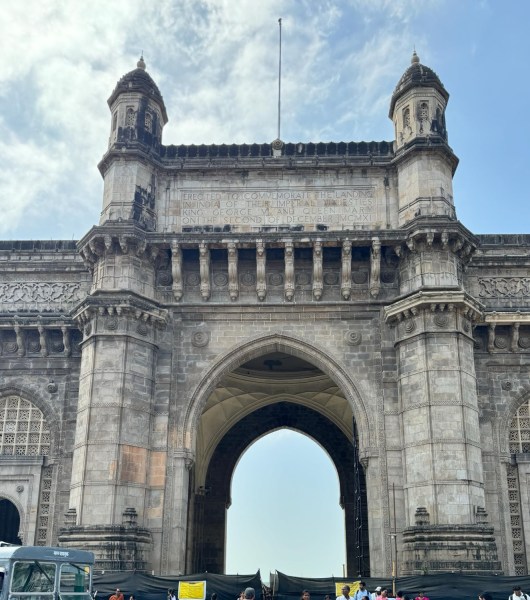
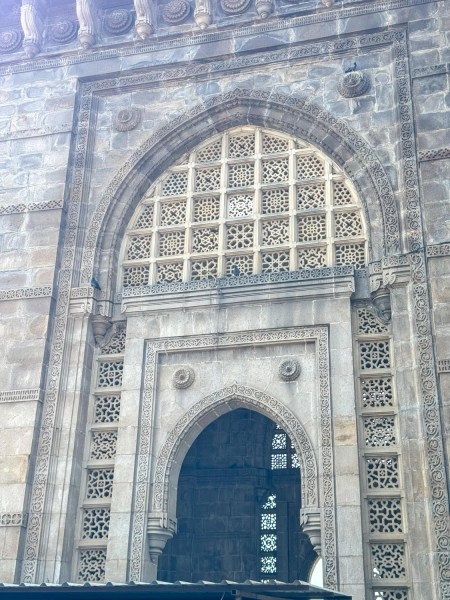
Tomorrow I’ll give more statistics on Mumbai and India in general. Today began at the iconic Gateway of India, a majestic archway overlooking the Arabian Sea. The hot sun beat down on us like a sauna as we walked around and admired this large monument steeped in history.
Erected in 1924, the Gateway of India commemorates the 1911 visit of King George V and Queen Mary, the first British monarch to set foot in India. The royal couple, however, only saw a cardboard model, as construction took a painstaking thirteen years to complete. Designed in the Indo-Saracenic style, the Gateway blends elements of Hindu and Muslim architecture, a symbolic fusion reflecting India’s rich heritage. Originally intended as a ceremonial entrance for Viceroys and dignitaries, the Gateway took on a poignant new meaning in 1948. It became the very spot where the last British troops departed India, marking the end of colonial rule.
Standing there, amidst the throngs of tourists, fluttering pigeons and locals selling goods or photos of people in front of the Gateway, (literally everywhere) we couldn’t help but feel the weight of history. The Gateway of India is a powerful symbol, a testament to both the grandeur of the British Raj and the eventual triumph of Indian independence. We are continually learning more about history around the world than we ever intended.
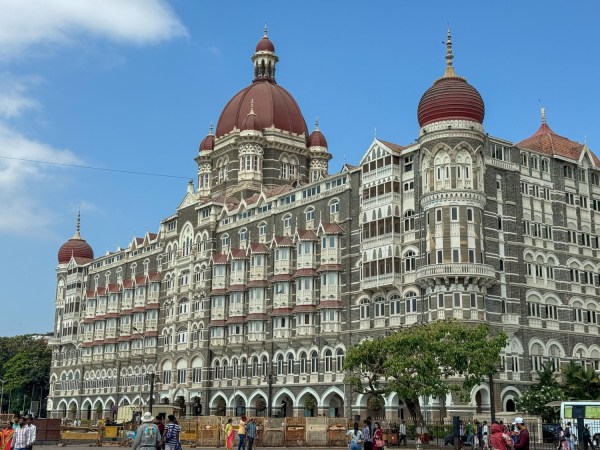
Up next was the Taj Mahal Palace, its handsome exterior a testament to a bygone era of luxury and a little lost with all the rundown buildings near it. The architecure was beautiful. It would have been nice to stay long enough to see the inside.
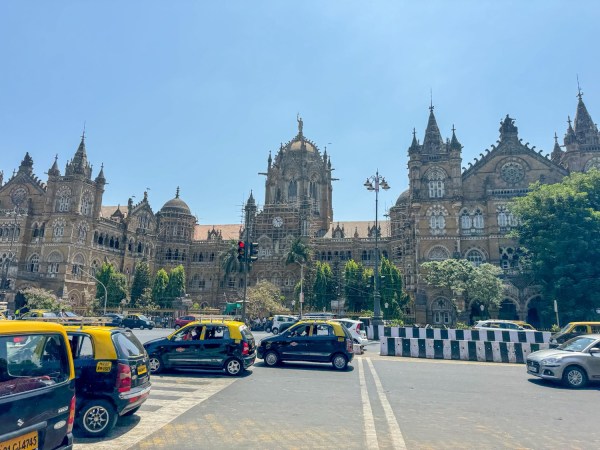
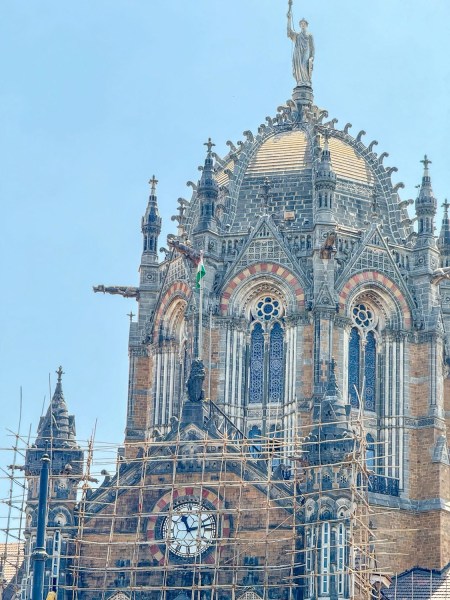
Next stop: Chhatrapati Shivaji Terminus, a UNESCO World Heritage Site that left us speechless. This architectural marvel, a blend of Victorian Gothic and Mughal styles, was an amazing piece of architecture. Have I mentioned I love architecture? 🤗
Construction of the Chhatrapati Shivaji Terminus (originally named Victoria Terminus) began in 1878. It was a monumental undertaking, taking ten years to complete and costing a staggering sum for the time – over 250,000 pounds sterling!(USD $300,000), the building was intended to be a symbol of British power and prestige in India.
Stevens (the architect) wasn’t subtle in his design. He drew inspiration from Victorian Gothic Revival architecture, a style popular in Britain during the reign of Queen Victoria. Think pointed arches, ribbed vaults, and towering spires – all features readily apparent in the station’s facade. But Stevens also incorporated elements of traditional Indian palace architecture, such as the central dome and the horseshoe-shaped arches. This fusion of styles was meant to showcase the vastness of the British Empire, with Britain at the helm and India as a jewel in its crown. (Remember these when you view the photos.)
However, the story doesn’t end there. In 1996, the station’s name was officially changed from Victoria Terminus to Chhatrapati Shivaji Terminus. This marked a significant shift. Chhatrapati Shivaji was a 17th-century Maratha warrior king, revered for his fight against Mughal rule and his establishment of the Maratha Empire. Renaming the station was a powerful act, a symbolic reclaiming of Indian heritage and a way to honor a national hero.
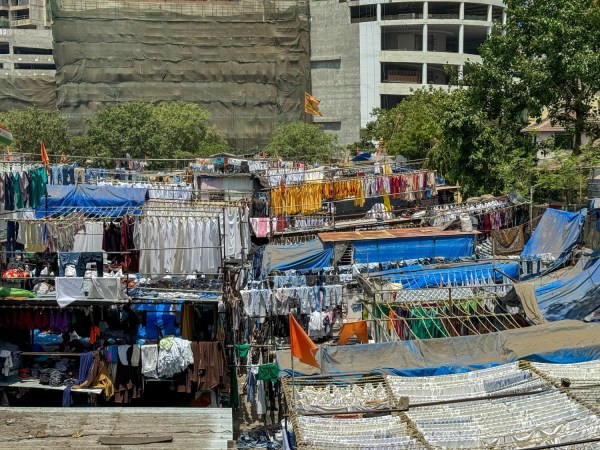
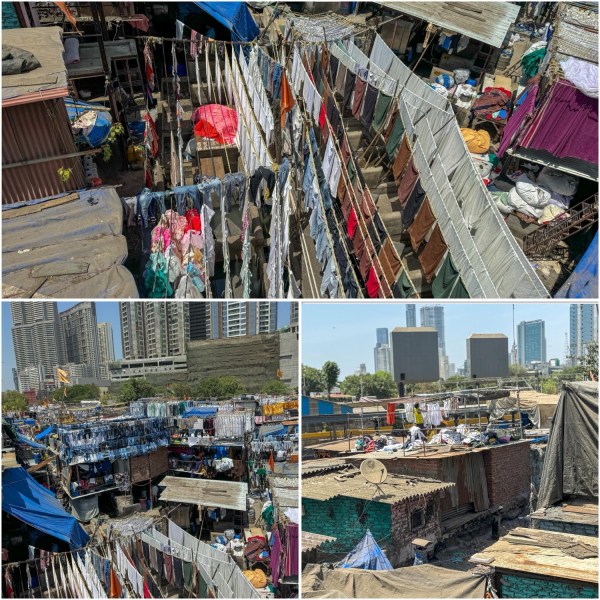
But Mumbai isn’t all grandeur. We ventured into the Dhobi Ghaat, a massive open-air laundry where mountains of colorful clothes stretched as far as the eye could see. It was a fascinating glimpse into a traditional way of life, but also a stark reminder of the city’s sheer density. The workers pick up the clothes door to door, label, sort by color and wash them. Then they are hung out to dry. Once dried, they are neatly folded and delivered back within 3 days. Our guide said he’s been using their service for 6 years and hasn’t had anything lost yet! Wish our ships laundry could say the same!

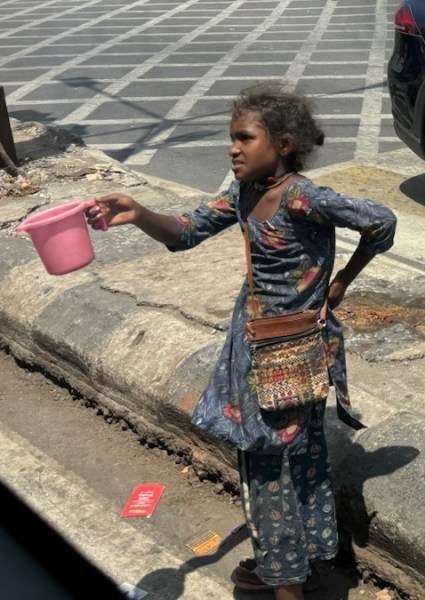
Our hearts ached as we passed a young girl, her eyes filled with despair, holding out a bucket to collect money. Poverty, a harsh reality in Mumbai, cast a shadow on our day. What’s worse is we’re told the girl is used as a ploy to obtain cash from tourists and will not see any of the money. How sad.
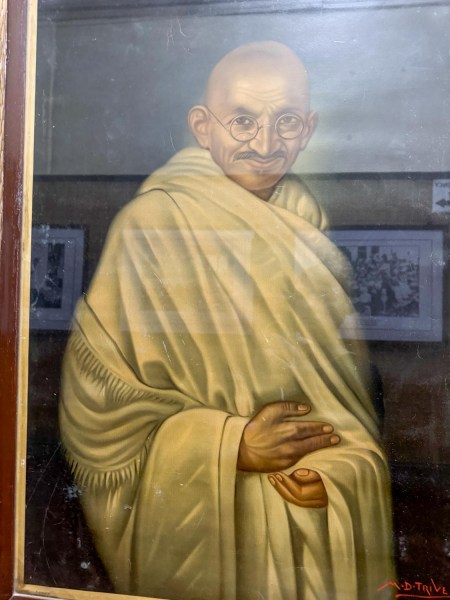
Moving on, we found ourselves at Mani Bhavan, the former residence of Mahatma Gandhi. The simple rooms resonated with a sense of peace, a stark contrast to the bustling streets outside.
After the opulence of the Taj, we sought a different kind of inspiration at Mani Bhavan. This unassuming two-story building was once the residence of Mahatma Gandhi, the preeminent leader of India’s independence movement.
The most difficult was walking up the 4 flights of stairs to start our tour. Chucks wasn’t happy! Inside Mani Bhavan we found that Gandhi lived here for seventeen years, from 1917 to 1934. These were pivotal years in India’s struggle for freedom, and Mani Bhavan became the focal point of Gandhi’s political activities in Mumbai.

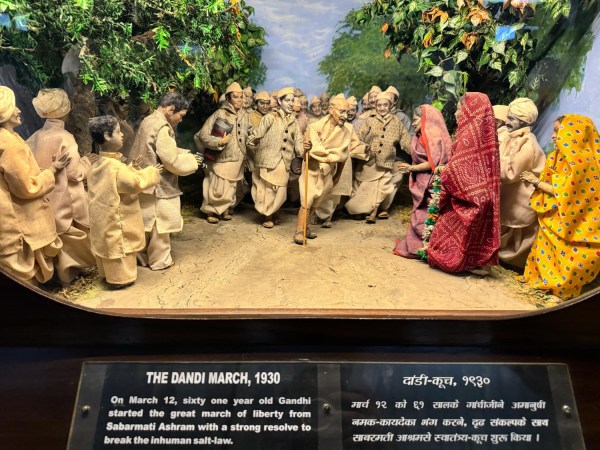
The museum on the upper floors meticulously chronicles Gandhi’s life and philosophy. Photographs, letters, and artifacts paint a vivid picture of his dedication to Satyagraha, the principle of non-violent resistance. Exhibits explored Gandhi’s campaigns against social injustice. We saw models intricately done to show a visual of Ghandi’s life.

Mani Bhavan wasn’t just a house, it was a hub for freedom fighters and activists. Here, strategies were planned, meetings were held, and the fight for an independent India took root. I was impressed with what we learned through this museum, never before understanding Ghandi’s work.
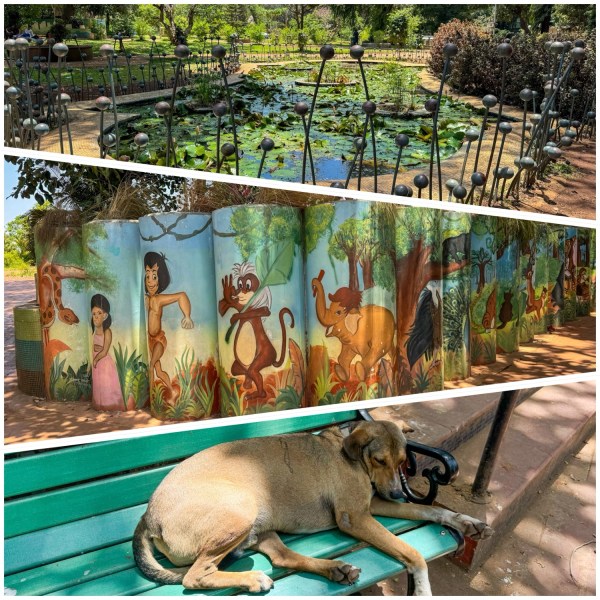
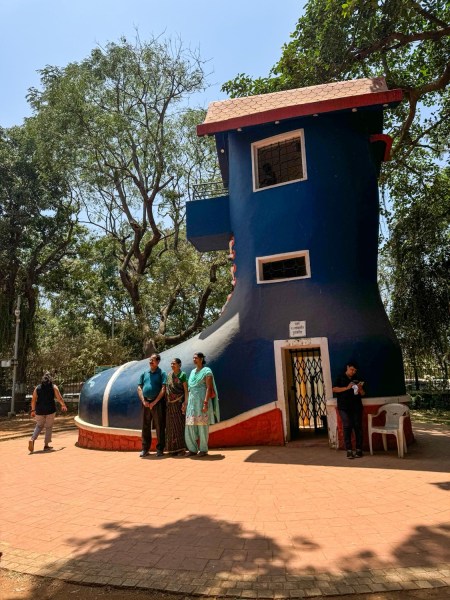
Later, we wandered through Kamla Nehru Park, a green oasis amidst the city life.
Laughter of children playing mingled with the chirping of birds had us looking up in trees to catch a glimpse or photo of the beautiful birds here in India. We saw them but not close enough for photos.
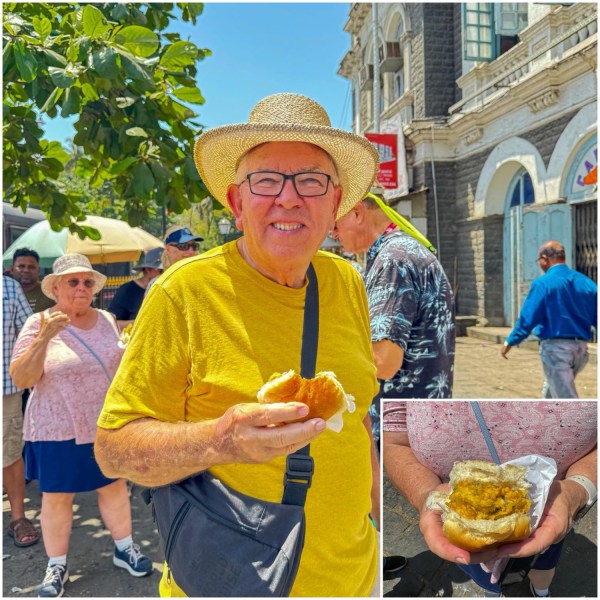
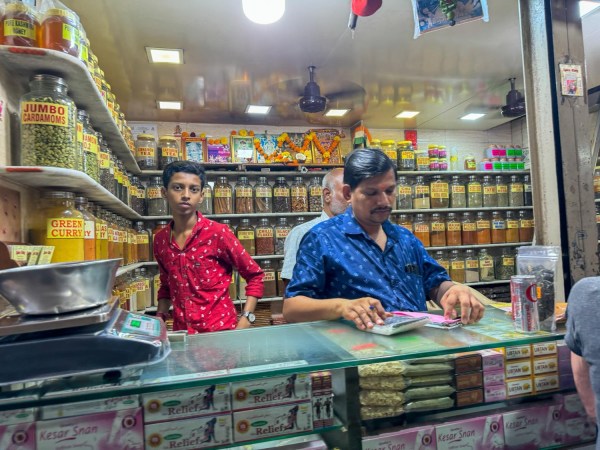
Mumbai wouldn’t be Mumbai without a dose of its unique markets. Just like every city we have been to, we entered another marketplace, a combination of sights and smells you wouldn’t believe. Vendors hawked everything from fresh produce and spices to clothing and household items. We even saw stalls selling live birds, puppies, and kittens all from cages! It was a sensory and smell overload, almost unbearable. We started with the sweet smells of fresh mangos, they are in season now, then the spices of curry are sucked up your nose until you reach the alleyway of rotted food. And as if that wasn’t enough, the disgusting smell of cat urine was just overwhelming. The good news, if any, was we weren’t at the fish market. My friend said she was gagging. I was close.
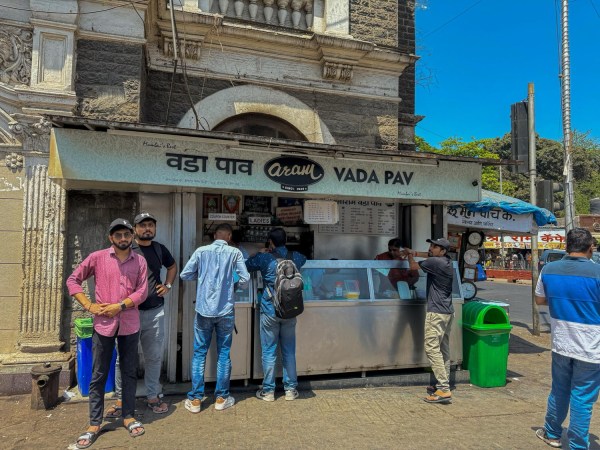
We didn’t find Mumbai to be that great. However, the people are so friendly, most of them speak English, even wanting pictures of us. So I can’t say it’s not a friendly place to visit. The poverty is what got us. Remember the movie “slum dog millionaire ?” It may not be a true story but there is a place here with slums. It’s an actual place. It was so sad to see and made me appreciate what I have. It has changed my outlook on life for sure. We have nothing to complain about!
May God bless you always!
Chuck and Lea Ann
 WorldTravelReynolds