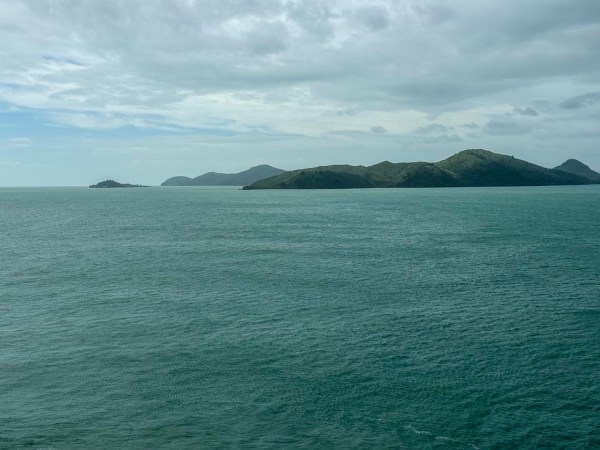
We didn’t have a tour today but that didn’t mean we didn’t have a great time. We spent most of the day wandering around the beach and the fresh water lagoon as well as a little shopping and browsing.
Right at the edge of the Whitsunday Islands, Airlie Beach is more about tourism than anything. Volcanic activity formed these Islands, the backdrop to Airlie Beach. Captain Cook charted the area in 1770, but European settlement began in the early 1900s. One of the first settlers, Thomas Abell, arrived in 1904 and cultivated the land, which was then dense rainforest.

The year 1935 marked a turning point. The Queensland government offered beachfront land for sale, and the area was officially named Airlie Beach, likely a tribute to Abell’s Scottish roots. Tourism in the 1950s began to develop as basic amenities become available to cater to visitors and by 1963, ferries were brought in to move tourists from other islands to Airlie beach helping tourism to bloom.
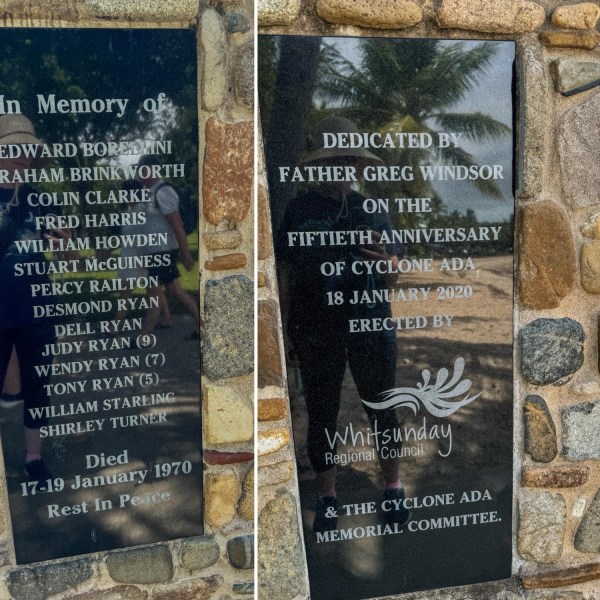
In 1970, Cyclone Ada, a ferocious Category 4 storm, slammed into the Whitsunday Islands. Packing winds estimated at 220 kilometers per hour (140 mph), Ada caused widespread devastation. Up to 80% of buildings in Airlie Beach were damaged or destroyed. Vital infrastructure like roads and bridges were washed away and iconic buildings destroyed. Tragically, 14 lives were lost, 12 of these at sea. The cyclone was a surprise since no warning systems were in place. The ones at sea were in fishing boats, yachts and small boats. A nice memorial was placed at the entrance of the park.

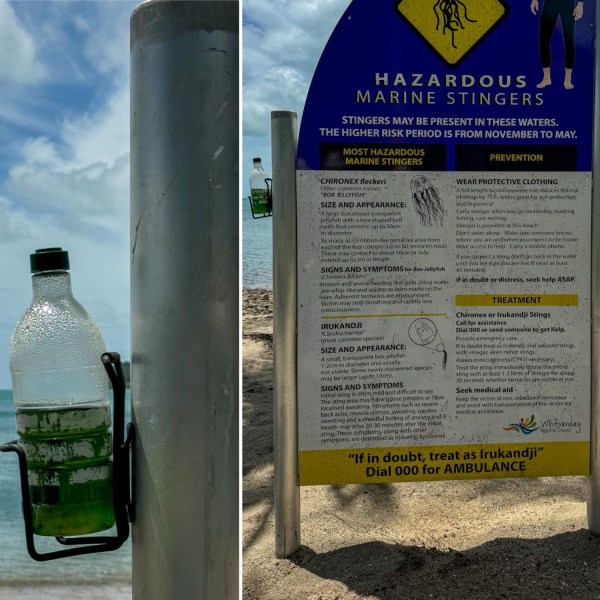
Fast forward to 2001, and Airlie Beach saw another transformation with the creation of the man-made lagoon. This project provided a safe haven for swimming, free from the stingers that can be present in the ocean. The lagoon became a focal point, surrounded by restaurants, shops, and hotels.

Today, Airlie Beach offers the best of both worlds: a relaxed atmosphere steeped in history and a focal point for adventures on the Great Barrier Reef.

Back to the stingers. They are called Box Jellyfish because they are square, 30 cm in diameter (almost a foot) and about 15 ribbon like tentacles on each side of the “box” making up to about 60 stinging tentacles. This is why they build the fresh water lagoon. It’s actually a lagoon like swimming pool. Very pretty.
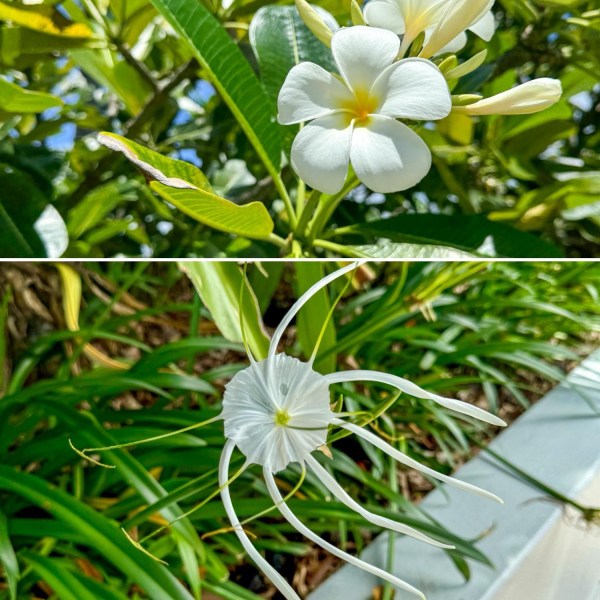
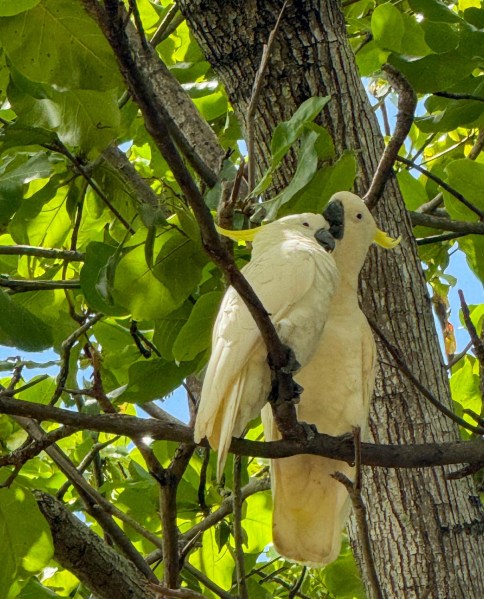
After we had a drink at McDonald’s and took photos of birds and flowers, we decided to head back to the ship. Tomorrow we will be in Yorkeys Knob, Australia. Our last stop in this beautiful country.

May God bless you always.
Chuck & Lea Ann
 WorldTravelReynolds