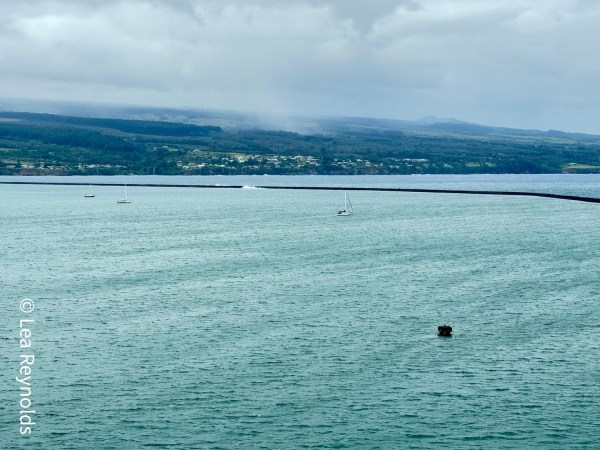
After 5 days, we finally made it to land in Hilo, Hawaii. The waves were pretty rough yesterday. We all walked like we were drunken sailors from one side of the ship to the other. All day yesterday we were watching the TV screens due to a medical evacuation attempt by Coast Guard. An individual on our ship needed urgent medical attention and they called the Coast Guard to try to assist but after several attempts, the fog being to dense, the helicopter couldnt land. So, the captain put the ship in full gear to get to land as fast as possible. The patient was safely removed from the ship this morning and hopefully doing well.
The weather didn’t look very promising when we woke up this morning but as the day went on, it got a little better. We didnt have anything planned at this port. The main attraction here is the volcano and we will see it tomorrow. We will be on the same island, just the other side.

Hilo is located on the windward side of the island, the side that gets more moisture, hence the lush, green, tropical beauty you see everywhere. It’s the oldest city in the Hawaiian Islands and the names means “to twist, or braid”, but since history here has been passed down orally rather than written, apparently the reason why Hilo was called that has been lost.
The city began around 1100 AD when inhabitants arrived from Polynesia. It was the political center during the time of King Kamehameha, warrior, diplomat, and leader who unified the islands into a single kingdom in 1820. By the late 1800s the main source of revenue was sugar cane, with workers coming from China, Japan, the Philippines, Korea, and even as far as Portugal, to fulfil three to five year contracts doing exhaustive and sometimes brutal labor.

Sugar plantations closed down in are 1990’s. It may surprise you to know that one of the largest cattle ranches in the U.S. is located on the Big Island. Parker Ranch was founded in 1847 and is headquartered in Waimea. It covers over 130,000 acres (52,600 hectares) and runs around 26,000 head of cattle.

Hilo itself has been damaged twice by major tsunamis in the 20th century, the largest, in 1946, sending a 46 ft (14 m) wall of water crashing in.

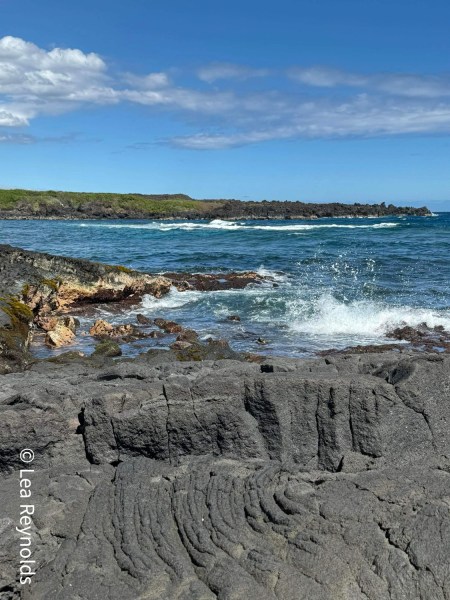
It’s also suffered from earthquakes and lava flows but the people keep rebuilding and currently Hilo is known as a shipping center for orchids, papaya and macadamia nuts, besides a tourist destination.
Hawaii Island is home to the world’s tallest mountain, Mauna Kea, and here you thought that record went to Mount Everest. The trick is you have to measure Mauna Kea from its underwater base to the top to get its height of 33,481 ft (10,205 m), versus Everest’s 29,032 ft (8,849 m), it’s just that half of the mountain here is below the ocean surface. Another geologic fact to know is that Hilo is located on two shield volcanoes, the dormant Mauna Kea and the active Mauna Loa. And since I know what your next question will be, shield volcanoes have gently sloping sides due to the watery consistency of the basaltic lava that flows from them, they typically build up slowly, are slow moving and don’t have violent eruptions.
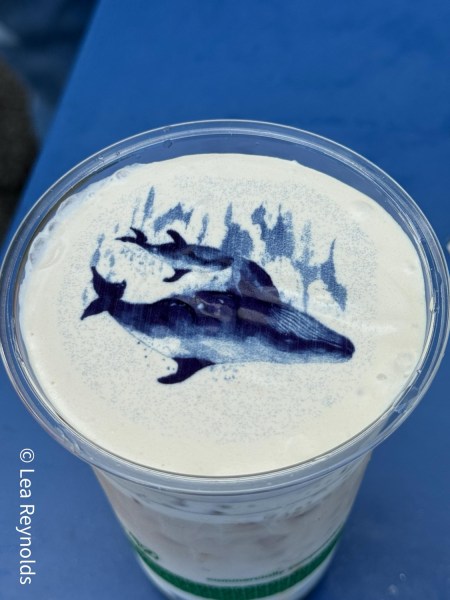
With no eruptions today, we didn’t plan anything 😂. We took a bus downtown to the Farmers Market and wandered around to see all the neat stuff people had for sale then stopped for a Boba tea. We relaxed in front of the small shop and people watched for a long time.
We then headed back to attend a Polynesian and Hawaiian performance put on by local cultural dancers and singers. They even taught some people how to dance the Hula. What a fun time that was! Did you know that Hilo has the largest Hula competition in the world held here in April? Might need to come back for that sometime.
Dinner with friends to catch up on our day and then early to bed. We are in Kailau Kona tomorrow. They are serving us Kona coffee early in the morning.
May God Bless you alwyas!
Chuck & Lea Ann
 WorldTravelReynolds