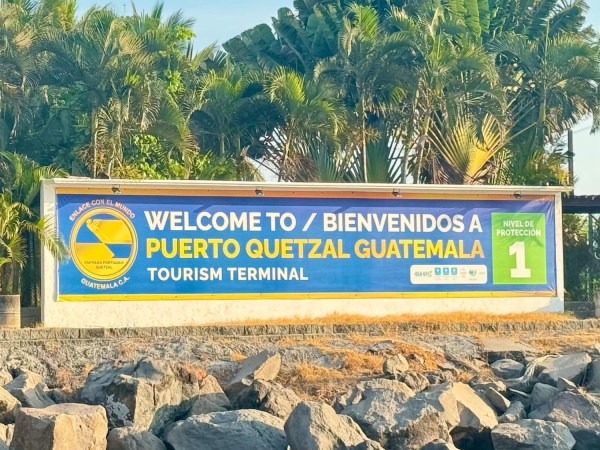
Guatemala wasn’t on our original itinerary for Central America, however due to Nicaragua changing their port restrictions, meaning we cant go, we were changed to Puerto Quetzal, Guatemala. Chuck and I talked about this country on our travel itinerary but have never been so this was exciting. We decided to hop on a tour that visited Antigua and here we go!
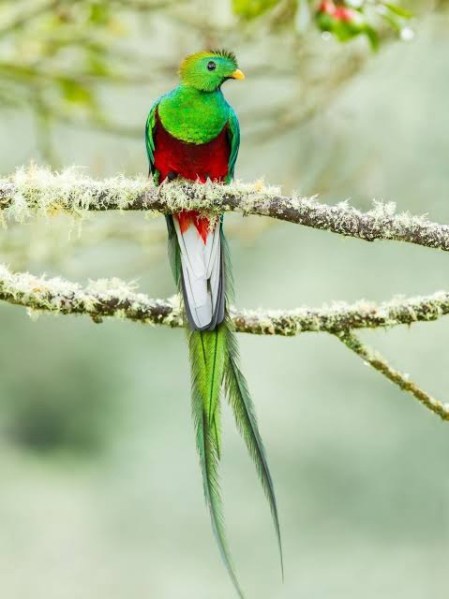
Just a quick note on Puerto Quetzal which is pretty much just a gateway to the country’s inland attractions and an hour from Antigua. It is Guatemala’s largest Pacific port and is named after the country’s beloved Resplendent Quetzal, that’s the actual name of the bird, the only one of its species with that adjective in front. We looked but didn’t have the privilege of seeing this beautiful species.
– means fire
However, here in Guatemala it is much more than just a spectacularly long-tailed, colorful bird, it’s a source of national pride and a symbol of the country, you’ll even find its images on Guatemalan currency.

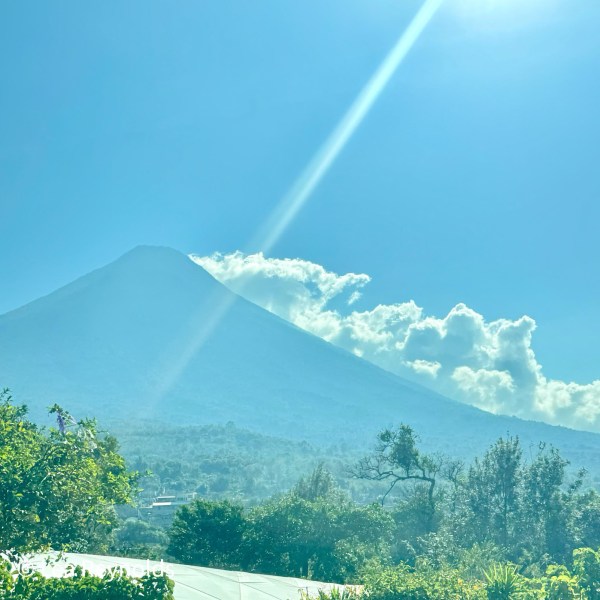
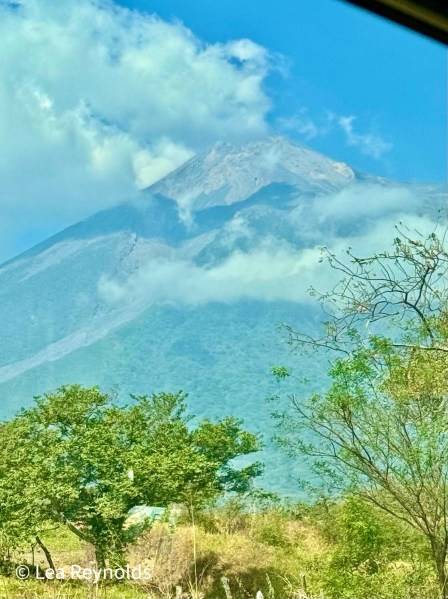
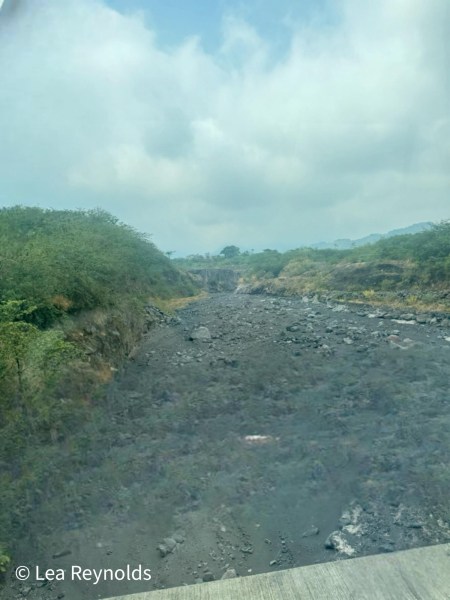
Antigua is where we were headed and is located on a lovely, scenic site between three volcanos. Fuego, Agua and Acetenango. We saw two of the three, Fuego and Agua. Fuego was the most recent active volcano that destroyed much of the city. The name means fire and for good reason. In the 2018 eruption, it killed 200 people and over 260 still missing. While driving our guide showed us areas where the black lava rock just took over. One was a river and others were areas where homes once were.
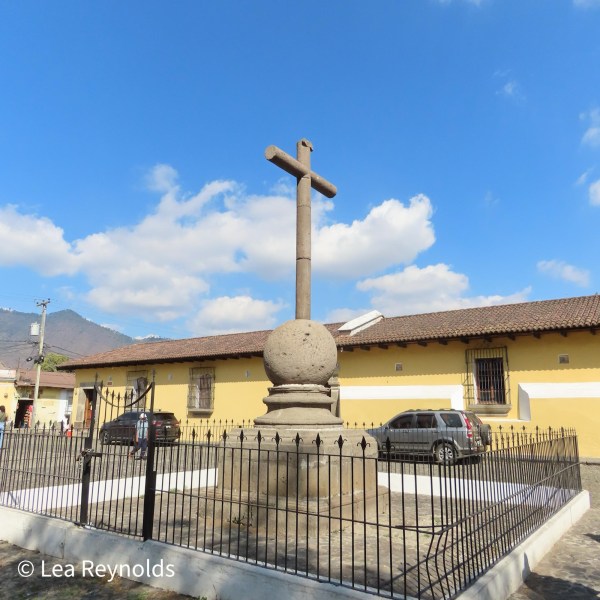

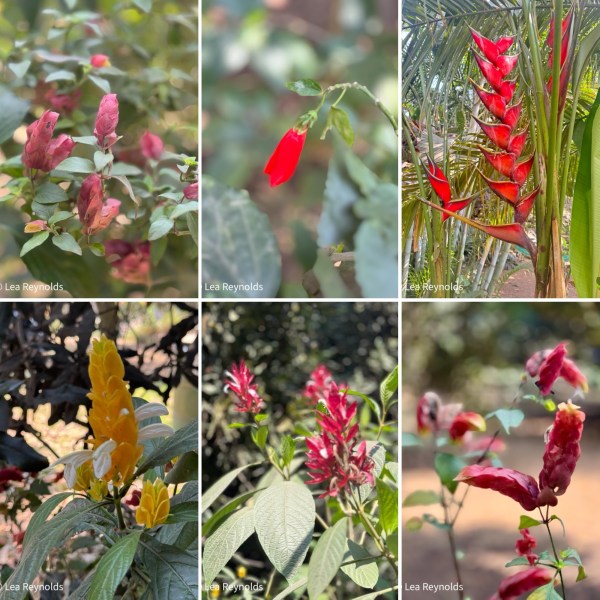
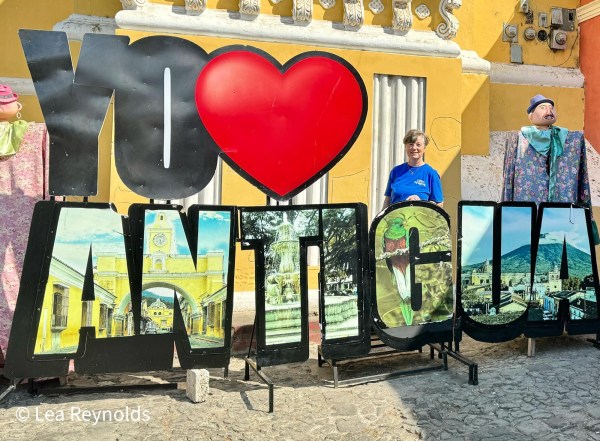
The 500 year-old city is 5,019 ft above sea level. It’s a UNESCO World Heritage Site that was originally laid out on a Renaissance grid system, one of the first of it’s kind in the Americas, with cobbled streets, colorful buildings, lots of church ruins, and brilliant flowers. Our friends Lori and Karl have spent quite a bit of time here and gave us just as much information as the guide who lives here.
In the area in 1524, a settlement named Santiago de los Caballeros was founded but was soon destroyed by angry indigenous people. It was built a second time in a nearby location but destroyed again by an earthquake and landslide, then finally moved to the present site in 1543. It became the capital of the Spanish Captaincy-General of Guatemala during colonial days, a huge geographic area which covered all of Central America down to Panama, and then north into southern Mexico.
With so many volcanos in the area it shouldn’t be surprising that it’s earthquake prone, with several causing damage over the years until in 1773 so much destruction was inflicted by the Santa Marta earthquakes that the powers that be decided they’d had enough and moved the capital to what would become Guatemala City.
Santiago de los Caballeros then became known as “La Antigua Guatemala”, later shortened to just La Antigua, which means “the old one”.
The once-thriving city was mostly abandoned after that until the mid-1800s when agriculture production brought new investments to the area. It’s partially thanks to that abandonment, plus protective regulations put in place in 1944, that many of the old buildings, fountains and ruins have survived.
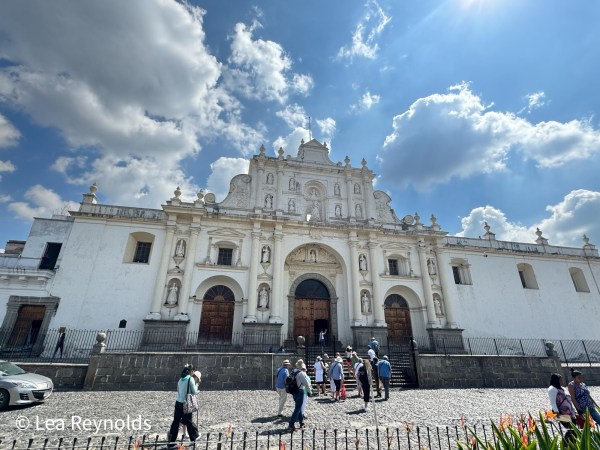
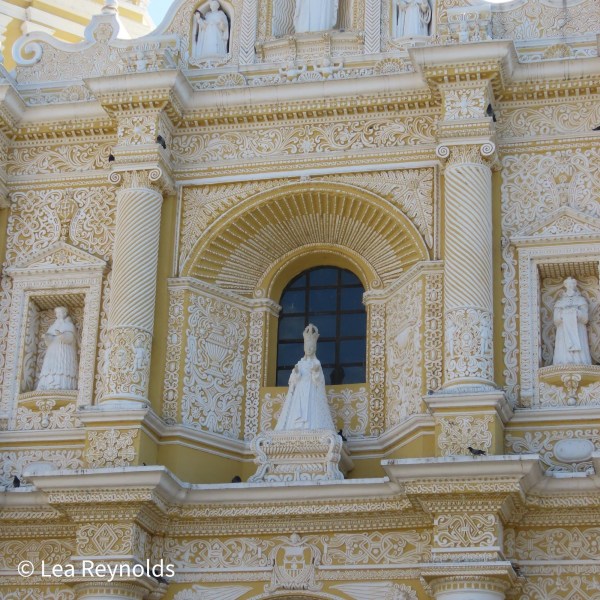
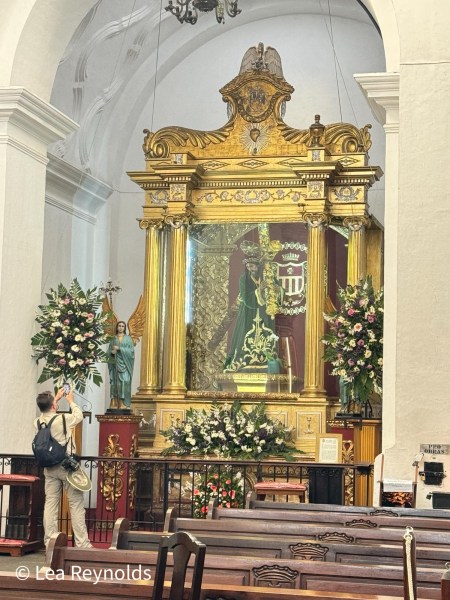
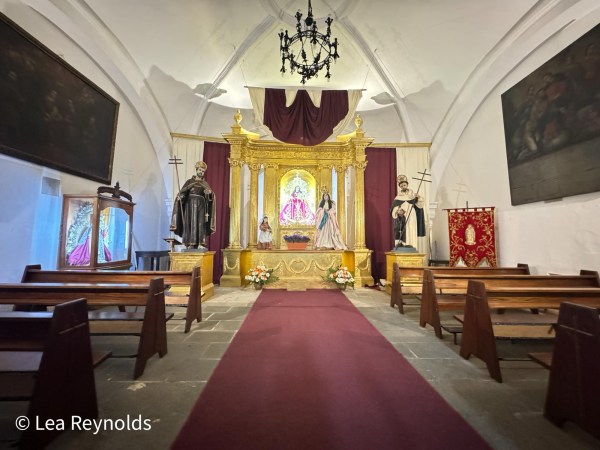
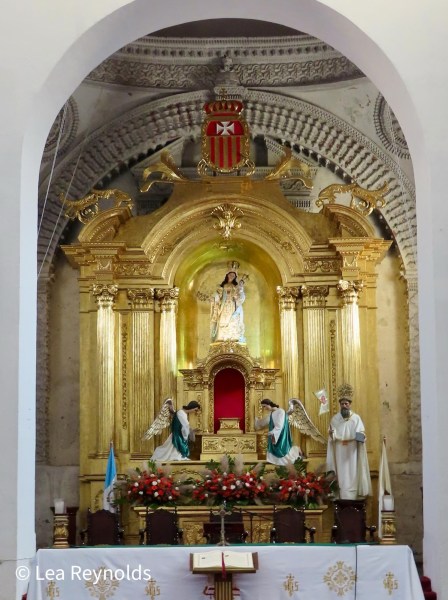
We visiting several churches, the first one was La Merced Church. It is a large Baroque place of worship that actually survived the 1773 earthquake and this soft yellow building is still in use today, with bells that ring for funerals and weddings. Damaged but partially rebuilt after 1773 is the Antigua Cathedral, what’s still there is an impressive sight.
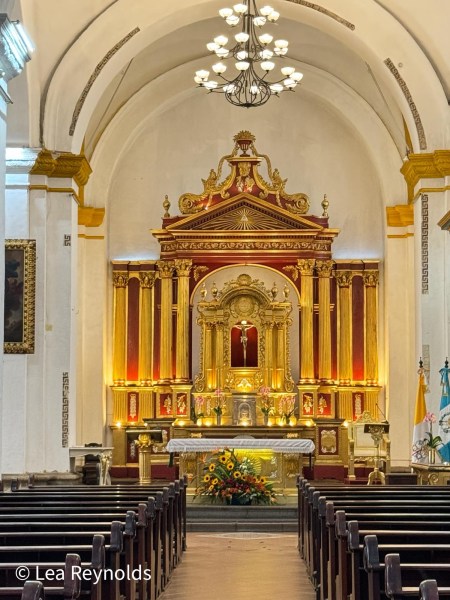
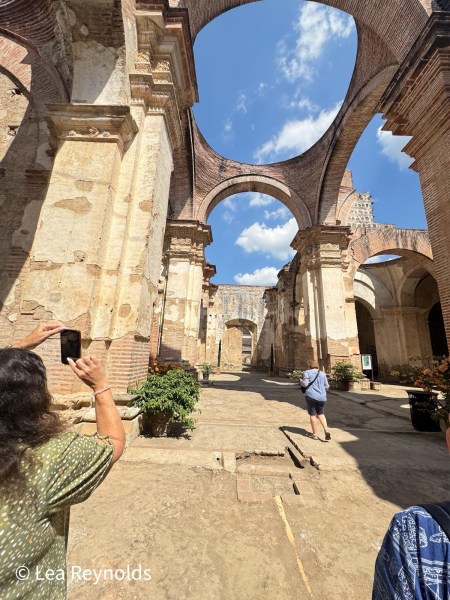
Another Church, the Cathedral of San Jose was first built in 1545, but damaged many times by earthquakes. Only 15% of the building is standing and useful today after the 1773 earthquake. The cathedral expands across a large section of the city and the other 85% are in ruins. It is the former grand Metropolitan Cathedral. Apparently earthquakes are still happening here, we just don’t feel them.
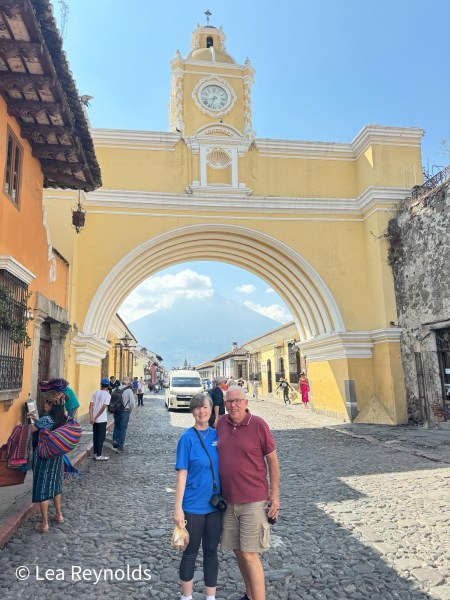
The most iconic spot in all of Antigua is probably the Santa Catalina Arch, one of the oldest structures in Guatemala. Taking a picture in front of this yellow and white span with Agua Volcano in the background is pretty much obligatory when you visit. And that we did. The volcano was almost visible and what fun we had taking the photos.

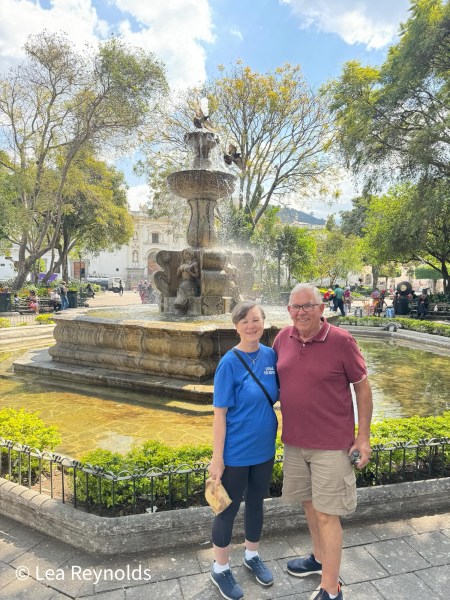
Parque Central is of course the center of town, it’s a green space with fountains surrounded by historic buildings and a great place to people watch.

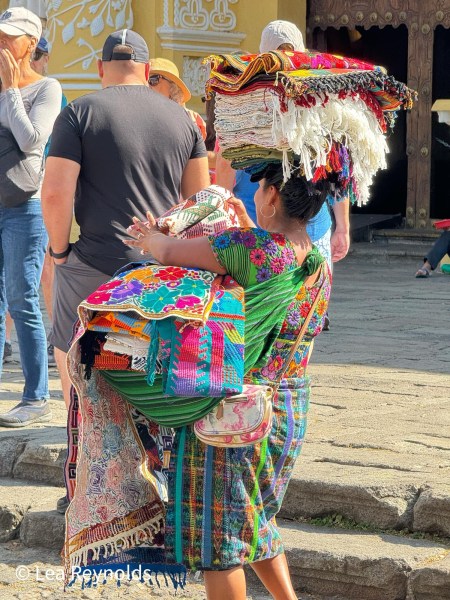
We stopped for quick shopping of coffee, chocolate and my christmas ornament at Nim Pot. It was a cute store with some very traditional goods. Some in our group picked up some bags and wraps as well.

Back on the bus to our next stop, the Macadamia nut farm. We love macadamia nuts and I remember when making a cake for Chucks dad, because these were his favorite, it cost me a fortune but he loved it and that’s all that matters!
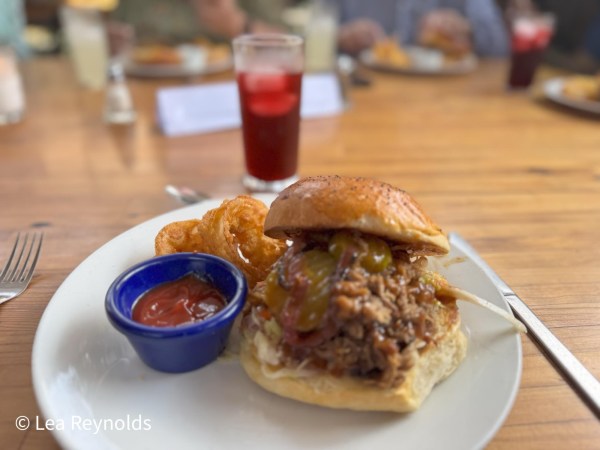
The place was called Valhalla. Not only did we have a tour of how the nuts are grown and produced but we had a wonderful lunch of Barbecue and some Macadamia nut pancakes. The owners here were so nice and accommodating.
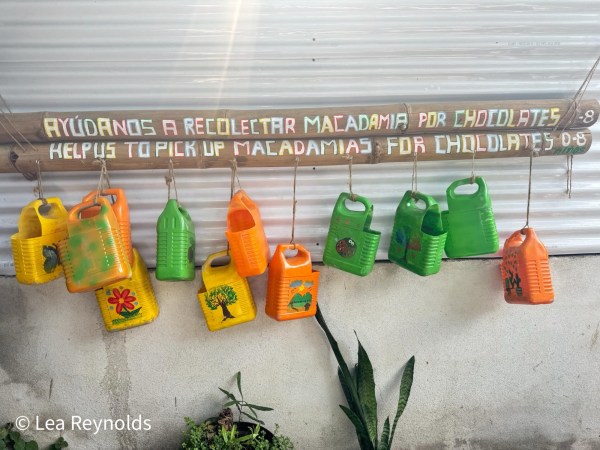
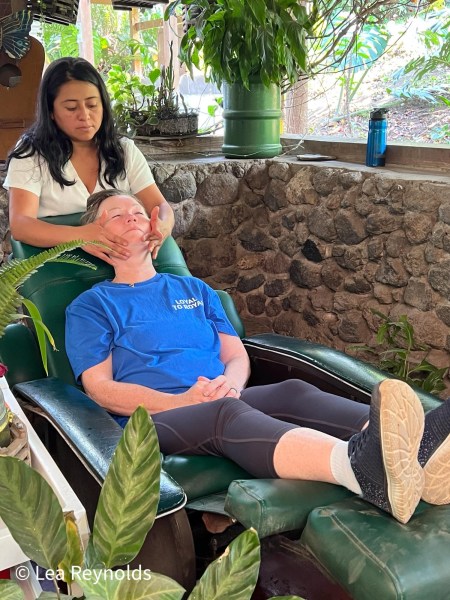
We bought some nuts, $5 a bag and some macadamia nut chocolates! Some ladies, including myself even received a facile with the nut oil. It was very relaxing.

The macadamia nut trees start producing after 3-6 years. This is when the flowers start and then another 5-7 months until the nuts are big enough to fall from the tree or be picked.
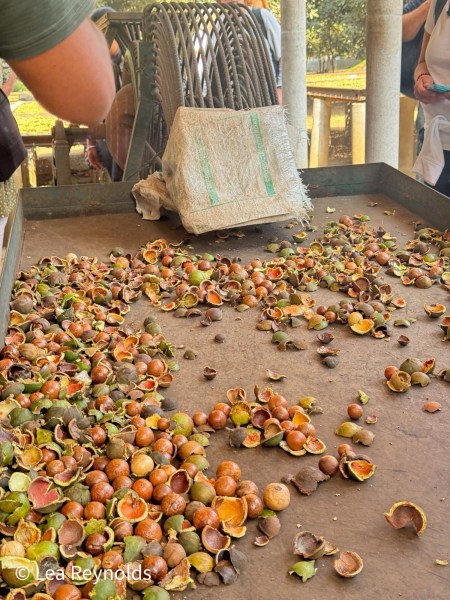
After picked, they are sun dried on these beds that they use a rake manually to rotate so they bake evenly. This takes about 5-7 days. At this stage you can hear them rattle when you shake them in the shell.
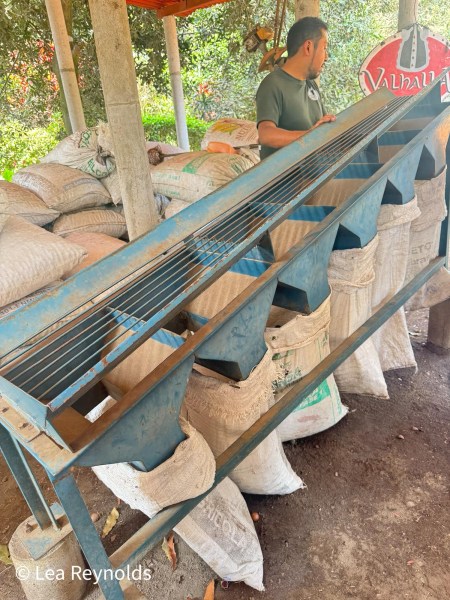
The first process is to remove from the green shell. They have a homemade machine he called a MacGyver. It separates the outshell from the inner shell. They are then poured into a separating device with bags that sort them by size. A very simple process. I asked what they did with all the shells since they can pile up quickly and they use them to make wooden goods for the market. The final process is to bake them in an oven for 7 days on very low temperatures.
We received samples of the nuts and chocolates and of course we had to buy some.
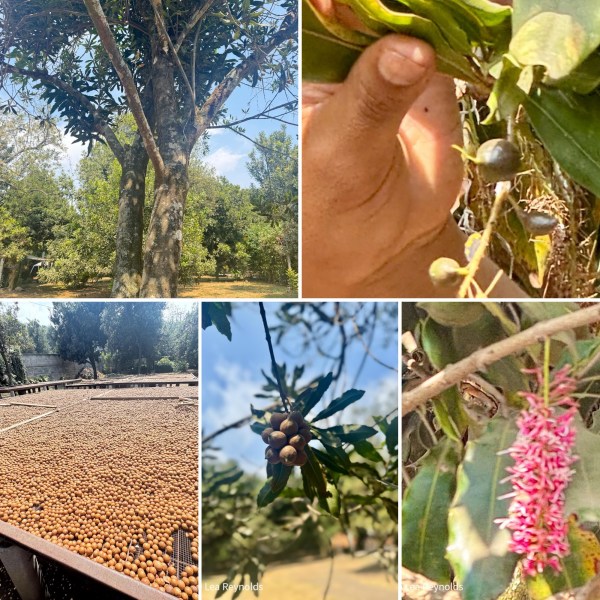
We also learned that the co-op has provided over 1 million trees to many of the poorer communities in Guatemala and Nicaragua. This helps them benefit from constant income, although very little. The families are given 10 trees a year, taught how to take care of them, grow them and get a production of goods. The trees will produce for 200 years!
On our trip back to the ship, our bus was shaking so bad we thought we had a flat tire. Chuck said the tires needed aligned. If the driver slowed down, it didn’t shake as bad. I wanted a massage but not that way!
We are rounding up our first full segment, the Americas cruise. It was from December 10 – February 11th. 64 days of cruising. WOW! We start our next segment on the 11th out of Los Angeles. It will be the Asia Pacific segment from Los Angeles to Dubai. Very excited for this one. We are headed to the Great Barrier Reef in Australia and the Great Wall of China.
We still have 3 more stops on this segment so we are in Cabo San Lucas in a couple of days. We have been to this port twice so far and the weather was too bad for us to get off the ship. Crossing our fingers and hoping for good enough weather this time to be able to visit this beautiful island in Mexico.

May God bless you always.
Chuck & Lea Ann
 WorldTravelReynolds
I hate to mention this since we missed Cabo the last cruise due to a hurricane, but… they have been having record amounts of rain from San Diego to north of LA, with mudslides and flooding. Right now, Cabo doesn’t look too bad. Hope you make it. Enjoy it double for us!
Blessings,
Susan Green
“Commit your way unto the Lord, trust also in Him, and He shall bring it to pass.” Psalm 37:5
LikeLiked by 1 person