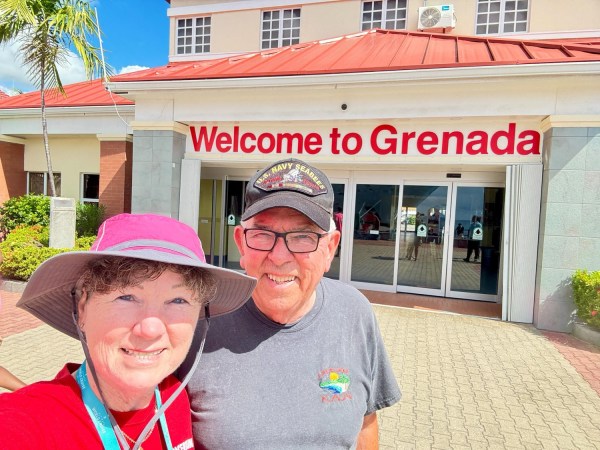
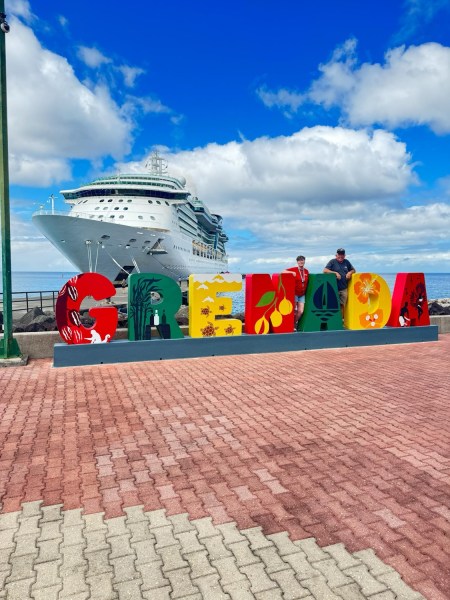
We arrived to dark clouds and rain in this beautiful tropical island. As with all the other islands the rain comes and goes so after breakfast we had some beautiful blue skies to explore in.

We didn’t plan an excursion here mainly due to the fact not much was offered and the ones that were, involved around nutmeg. They call Grenada the spice island because it is a major exporter of nutmeg, 40% of the world’s annual crop is grown here, along with cinnamon, cloves, turmeric and cocoa.

What we did first was hop onboard the Discovery Train for a narrated ride from the terminal around the city for about 45 minutes. Traffic was horrendous but the ride was nice.
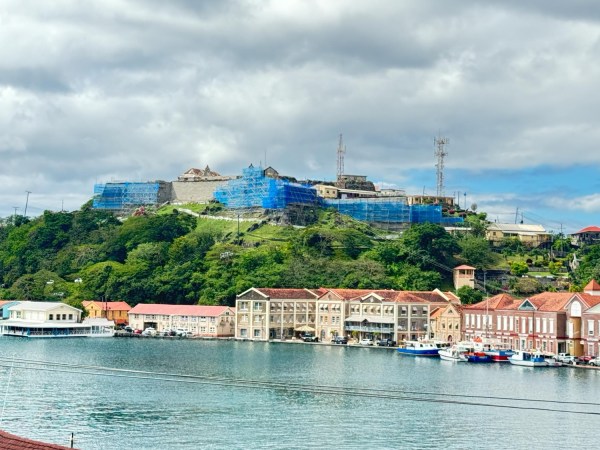
We made it up to the the tallest point near Fort George. It is the oldest citadel on the island, established in 1705 by the French, and sits on a high point in the city. This is where Prime Minister Maurice George was assassinated in 1983. He was involved in many protests for liberation and anti government and was jailed several times for going against Deputy Prime Minister Bernard Coard. Partly as a result of Bishop’s murder by Coards firing squad, the Organization of Eastern Caribbean States (OECS) and the nations of Barbados and Jamaica appealed to the United States for assistance, as did Sir Paul Scoon, Governor-General of Grenada, and U.S. President Ronald Reagan launched an invasion.
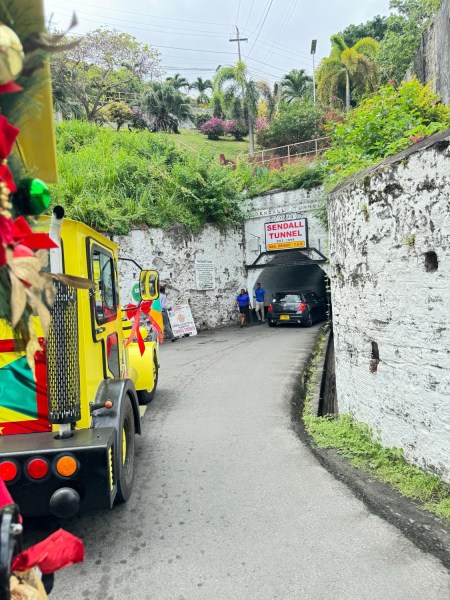
Near Fort George we traveled through the Sendal Tunnel. It is a short 340 ft long tunnel and was constructed in the 19th century for horse drawn carriages to pass through two different parts of the city. Not much to it but part of its history.
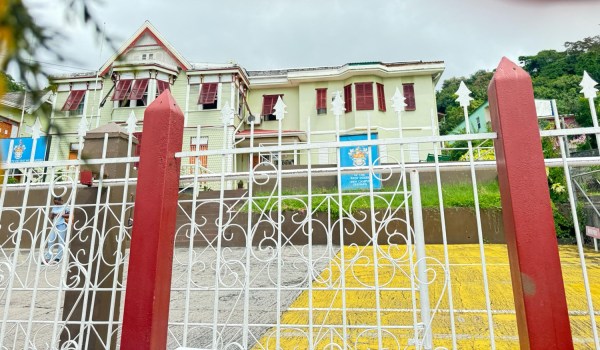
In 1498 Columbus actually sailed here and named the island Concepcion, then a year later another group of explorers renamed in Mayo. When the French arrived they changed it to “Le Grenade” then it became Grenada under the British, Interesting legend here, in 1651 a group of indigenous Carib people who had “sold” the island to the French went to battle against them. Their last stand was in northern Grenada near what is now the village of Sauteurs.
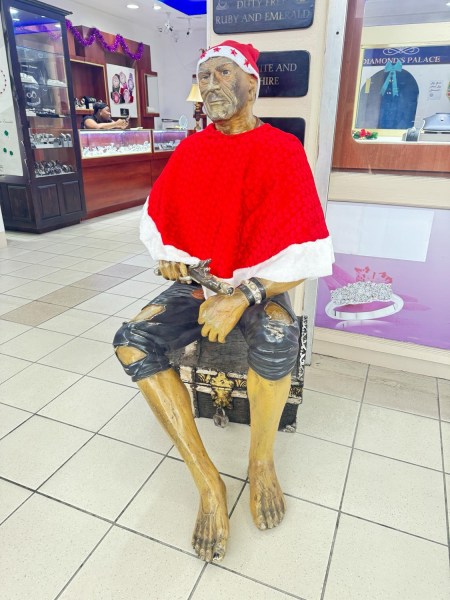
Knowing they were going to lose, around 40 Carib survivors decided to leap from a clif to their deaths rather than be enslaved to the French. Unsurprisingly the name Sauteurs means “leapers” in French. The location was on the north side of the island, over an hours drive so we didn’t see the plaque.

The British ended up with control of the island in 1763 after it was ceded to them in the Treaty of Paris, so this picturesque city has a blend of English, French and West Indian history with a good bit of colonial architecture.
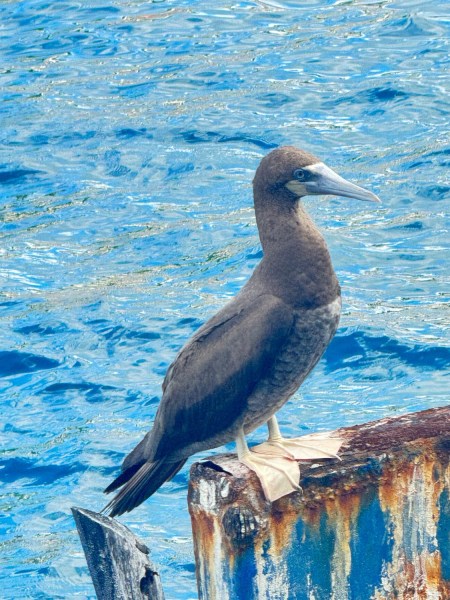
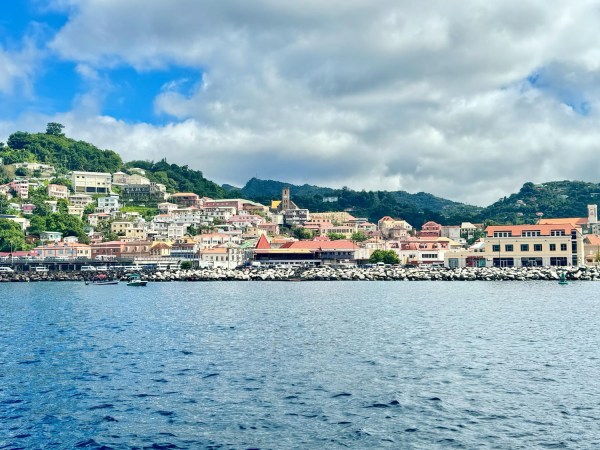
St. George’s seems an enjoyable place to wander or hit the beach but beyond that not much here. Thank you Laurie for the valuable information.
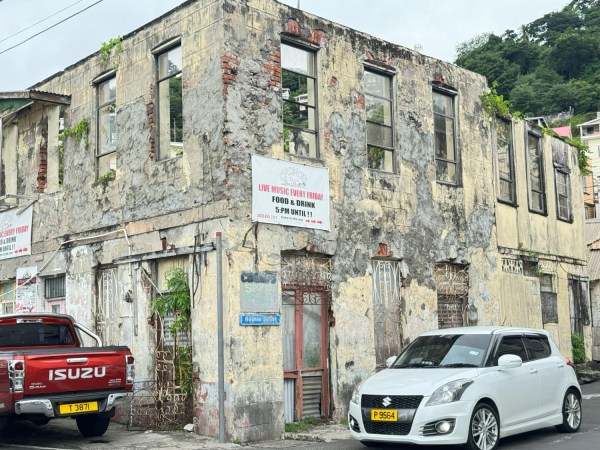
We ended our day back at the ship early. We enjoyed the rest of the day relaxing.
A sea day tomorrow then we are at Devils island in French Guiana on Saturday.

May God bless you all!
Chuck and Lea Ann
 WorldTravelReynolds