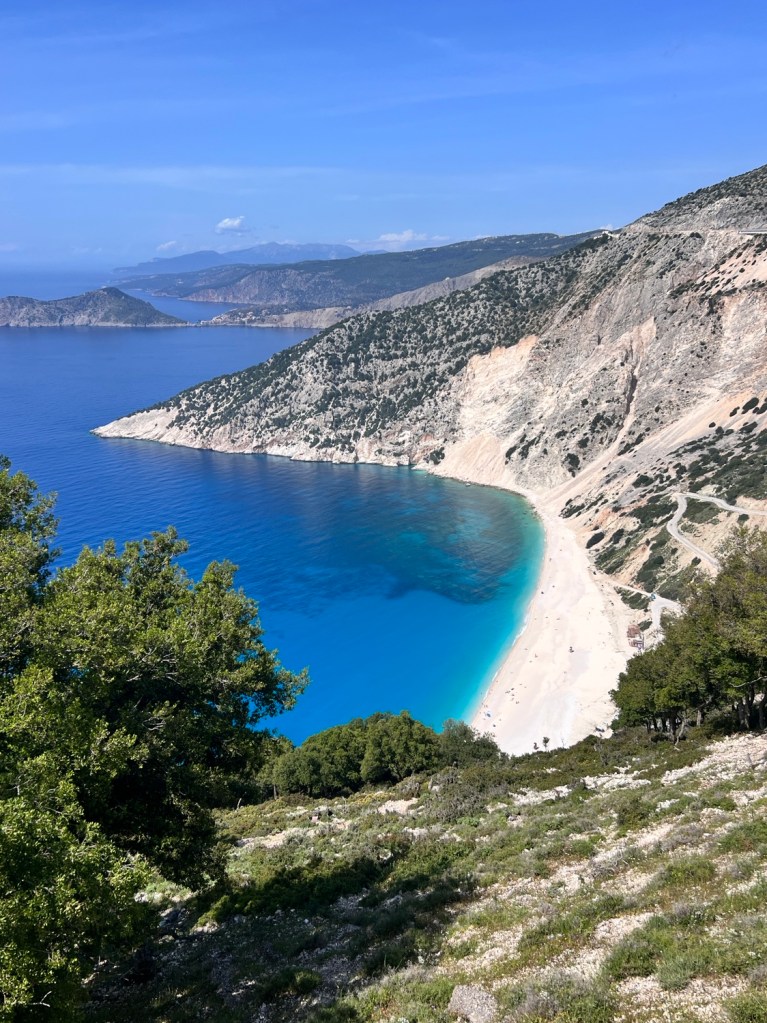
We are still enjoying some great weather for a change. It’s nice to be able to see these beautiful islands in Greece in the warm sunshine vs. the cold rain as we have experience the first few stops. Today we are taking an excursion from Argostoli up to Kefalonia village. The tour was amazing and it did not disappoint.

Argostoli is the capital of Kefalonia, one of the Ionian Islands in Greece. It is a beautiful city with a long history, dating back to the 7th century BC.
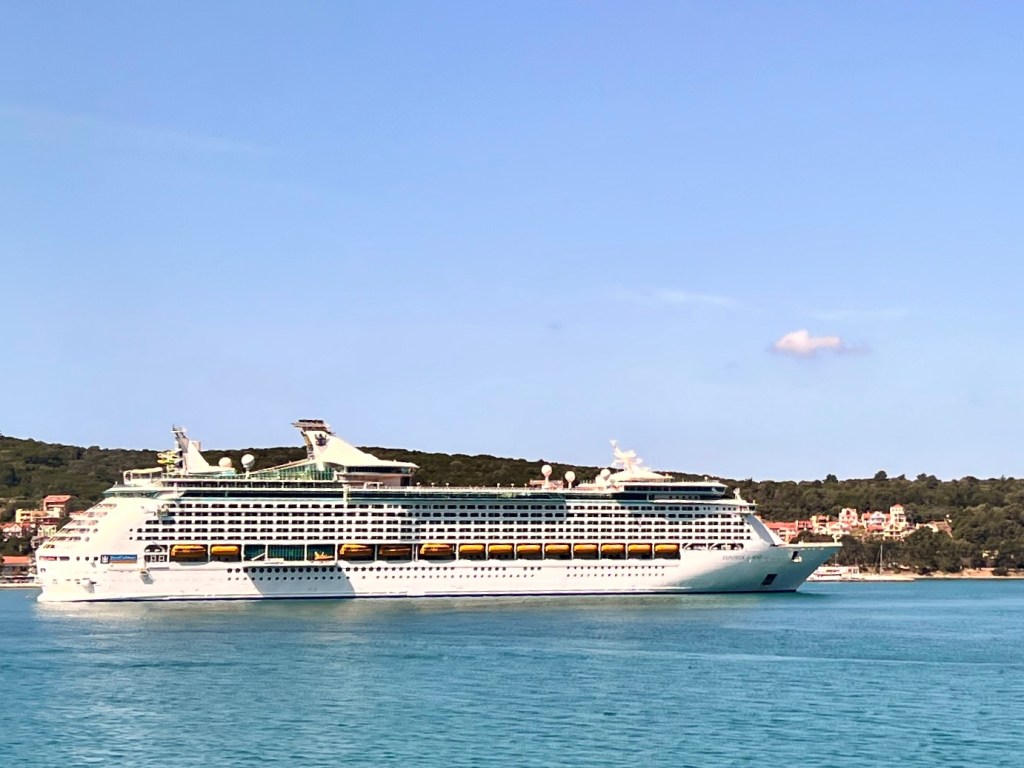
Our first stop was the fish traps. These are large, circular structures made of stone that are used to catch fish. Their type of fish is Sea Bass and Sea Bream. These traps are everywhere and a large part of their production industry.
After some very windy roads and narrow bridges, we made it to Kefalonia Village in about an hour. Chuck couldn’t understand how we were moving up the mountain but when we stopped at the village, we were still at sea level. I don’t know the answer to that either. This is a traditional Greek village located in the mountains above Argostoli. The village is known for its whitewashed houses, cobblestone streets, and Byzantine churches. We walked around quite a bit, enjoyed the local drink of Ouzo and some more meze of olives, cheese and bread.
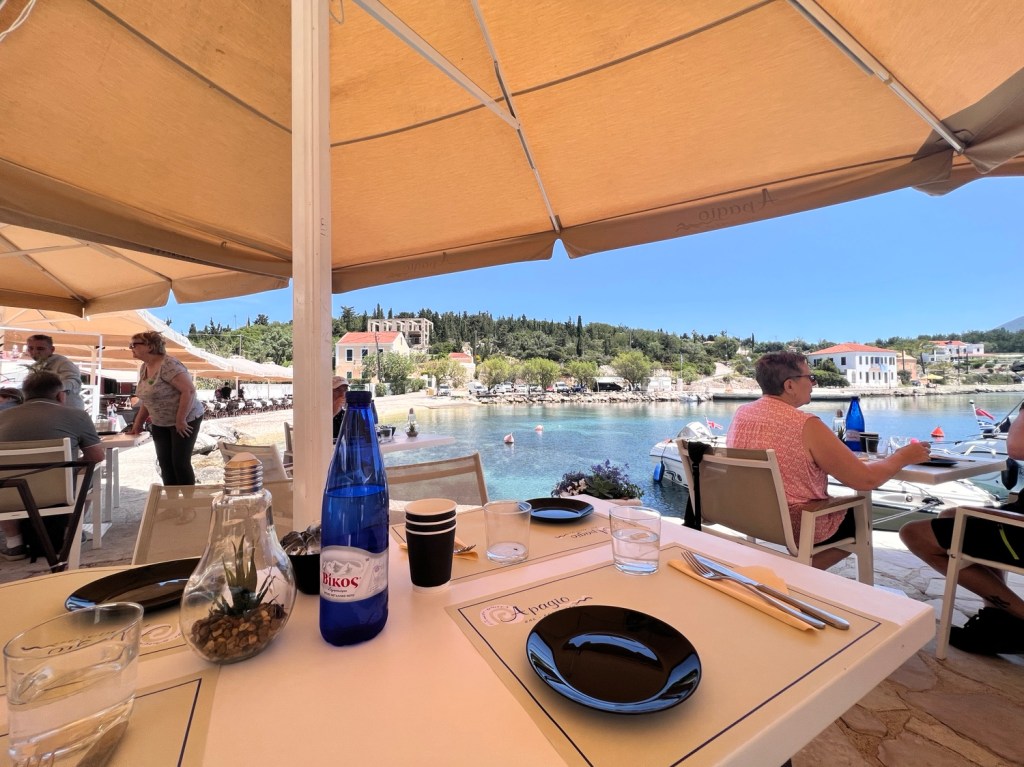
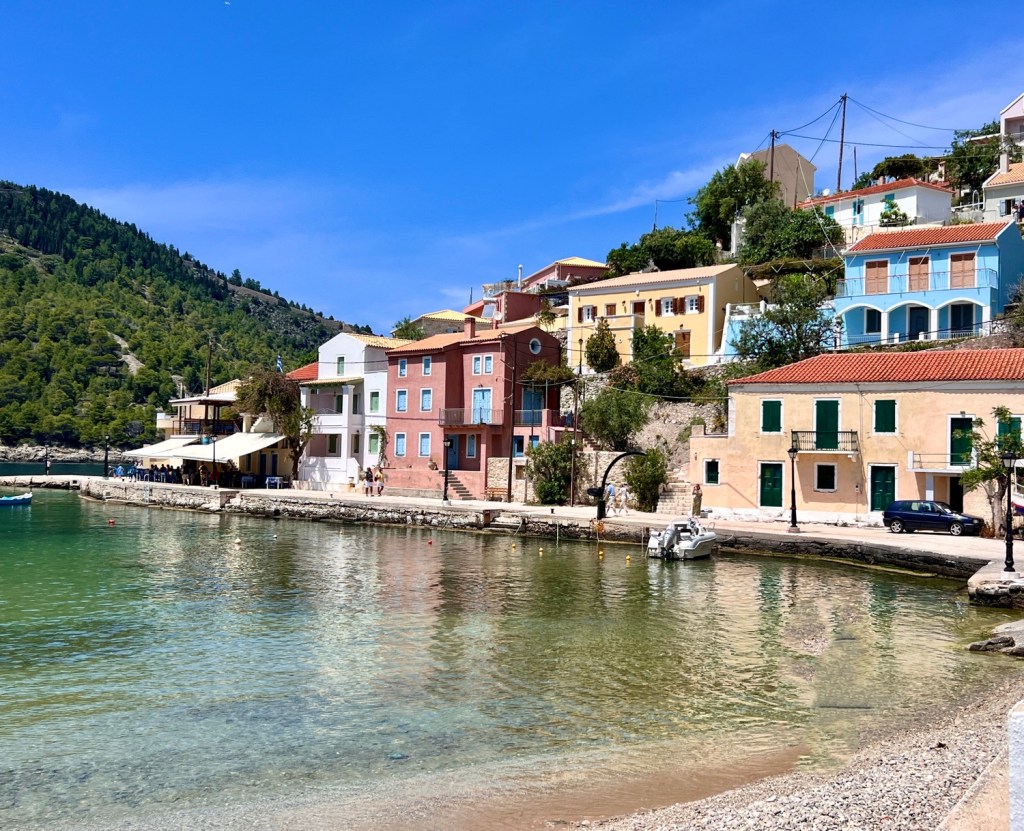
The water here is just absolutely beautiful! You can just sit and stare at it for hours. However, I’m afraid the bus might leave us so maybe another time!
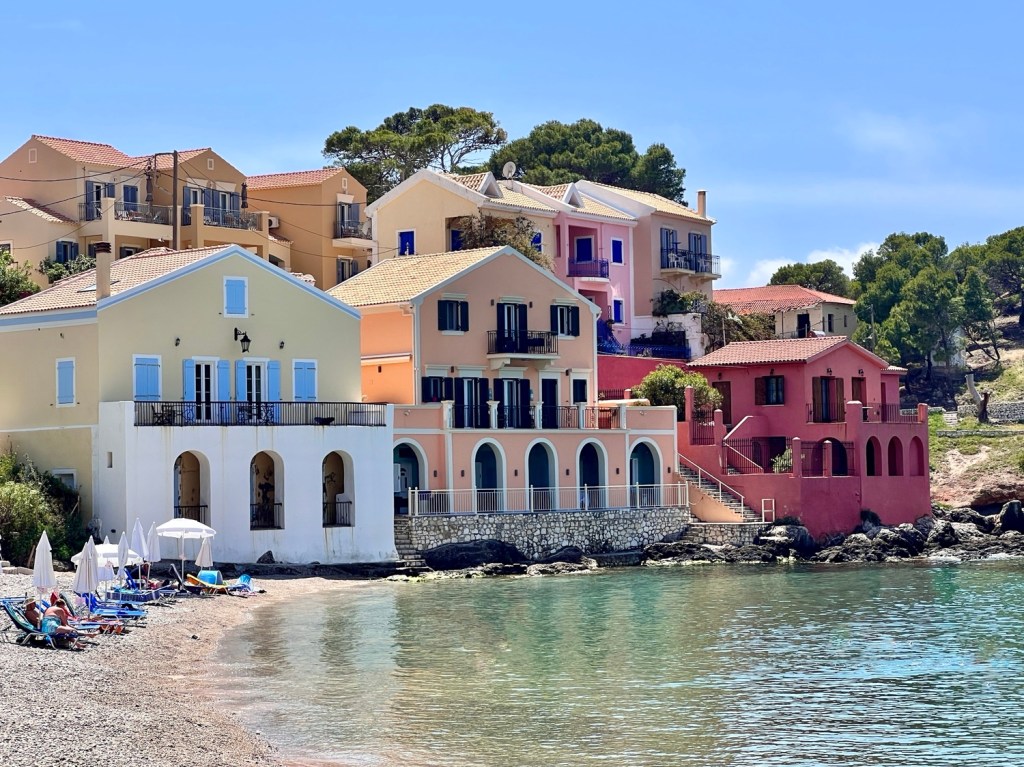
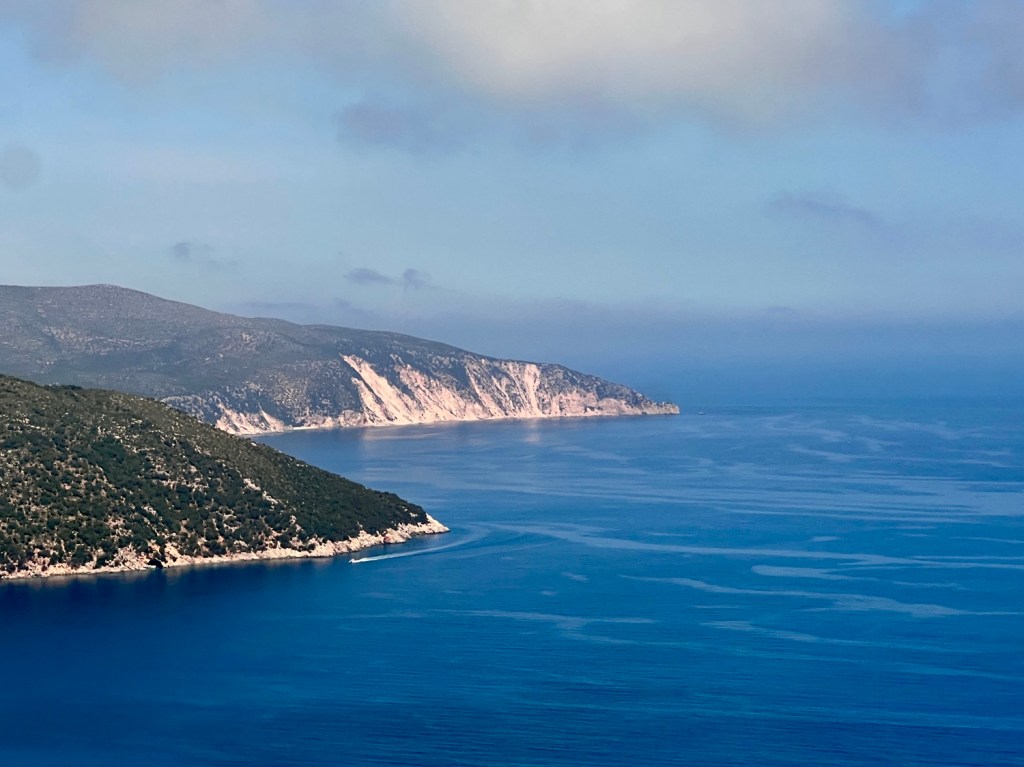
After visiting the village, we headed to the beaches. Kefalonia has some of the most beautiful beaches in Greece. Of some of these we visited Myrtos Beach, Assos and Fiskardo Beach. All beautiful but Myrtos was mesmerizing. It was difficult to stop staring in the deep blue Ionian sea and leave. This is a place we would love to visit on our own in the future.
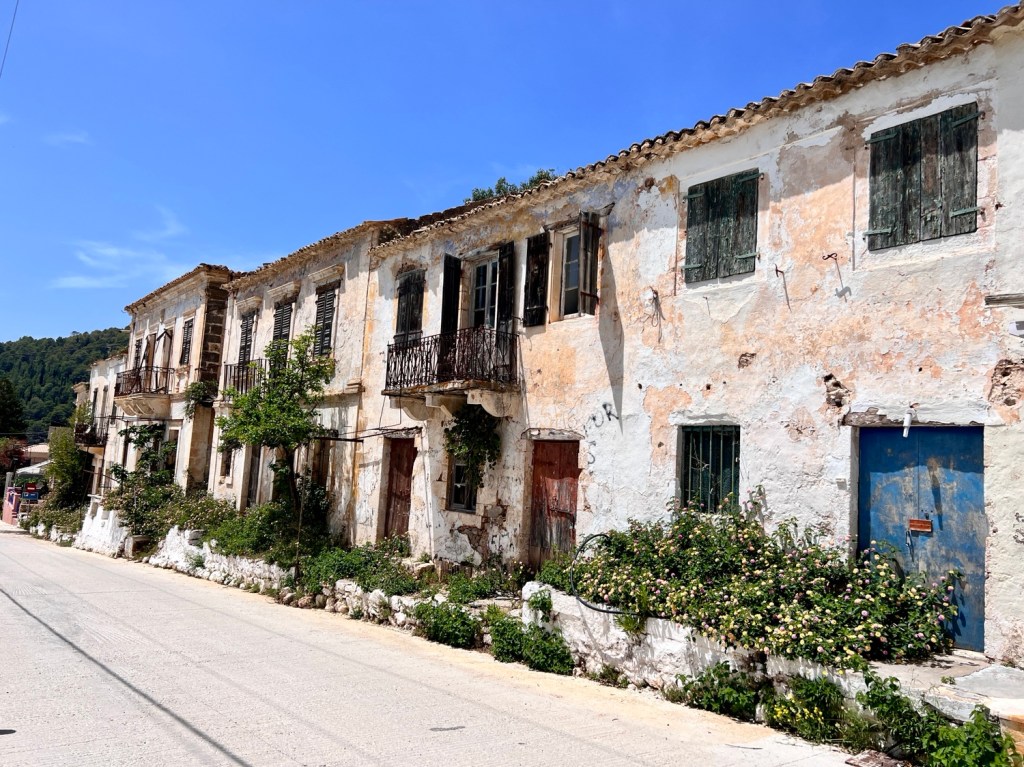
While visiting Kefalonia and Argostoli, we learned that in 1953 there was an earthquake that devastated the island.Between 445 and 800 people were killed, and over 100,000 were left homeless. In Argostoli it destroyed most of the city’s buildings. Some of these building are still standing today in their original form.
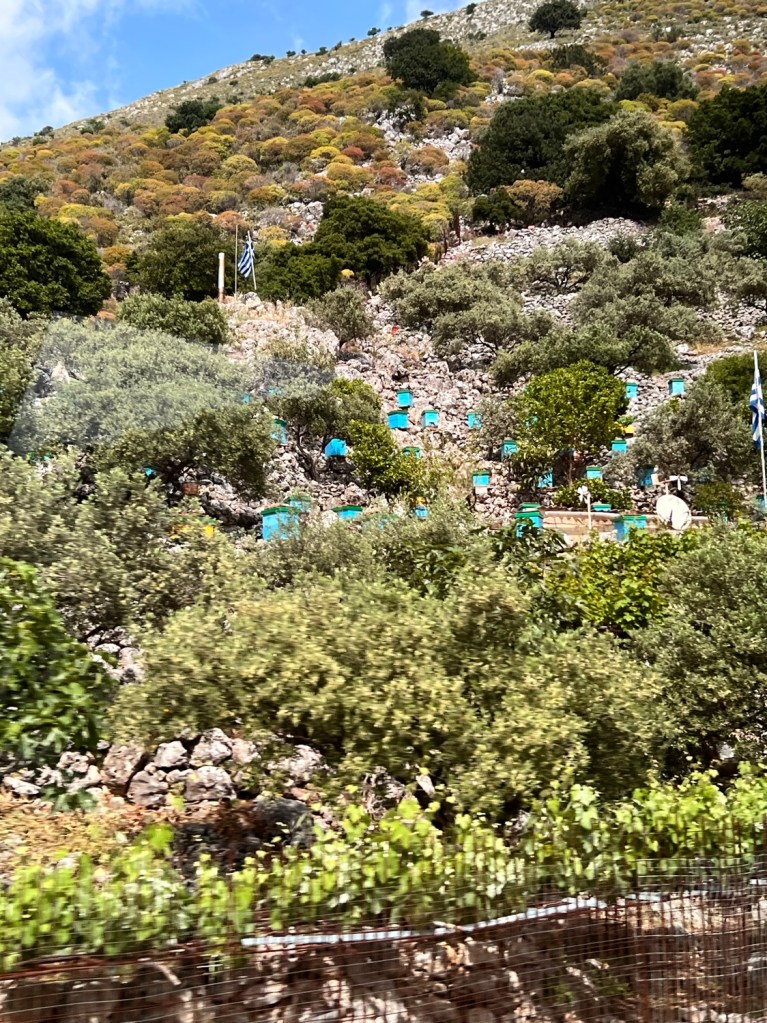
Another interesting thing we learned was about how bees are a vital part of their economy. The bees are a mix of different species, including the Italian bee, the Caucasian bee, and the Carniolan bee. The Italian bee is the most common. Guess there are no greek bees? These honeybees are responsible for pollinating many of the island’s crops, including citrus fruits, olives, and grapes. Interesting that they pollinate the olives. The pollination process is important for the production of these crops, and the bees play a vital role in the Kefalonia agricultural economy.
Some fun facts:
- The island is home to a large population of wild boars.
- Kefalonia is the birthplace of the Greek poet Andreas Kalvos.
- The island was used as a filming location for the movie “Captain Corelli’s Mandolin”.
- Kefalonia is a popular destination for windsurfing and kitesurfing.
- The island is home to a number of caves, including Melissani Cave and Drogarati Cave.
We loved this trip to one of Greeces’ most popular islands and look forward to visiting again.
May God bless you always!
Chuck & Lea Ann
 WorldTravelReynolds