 |
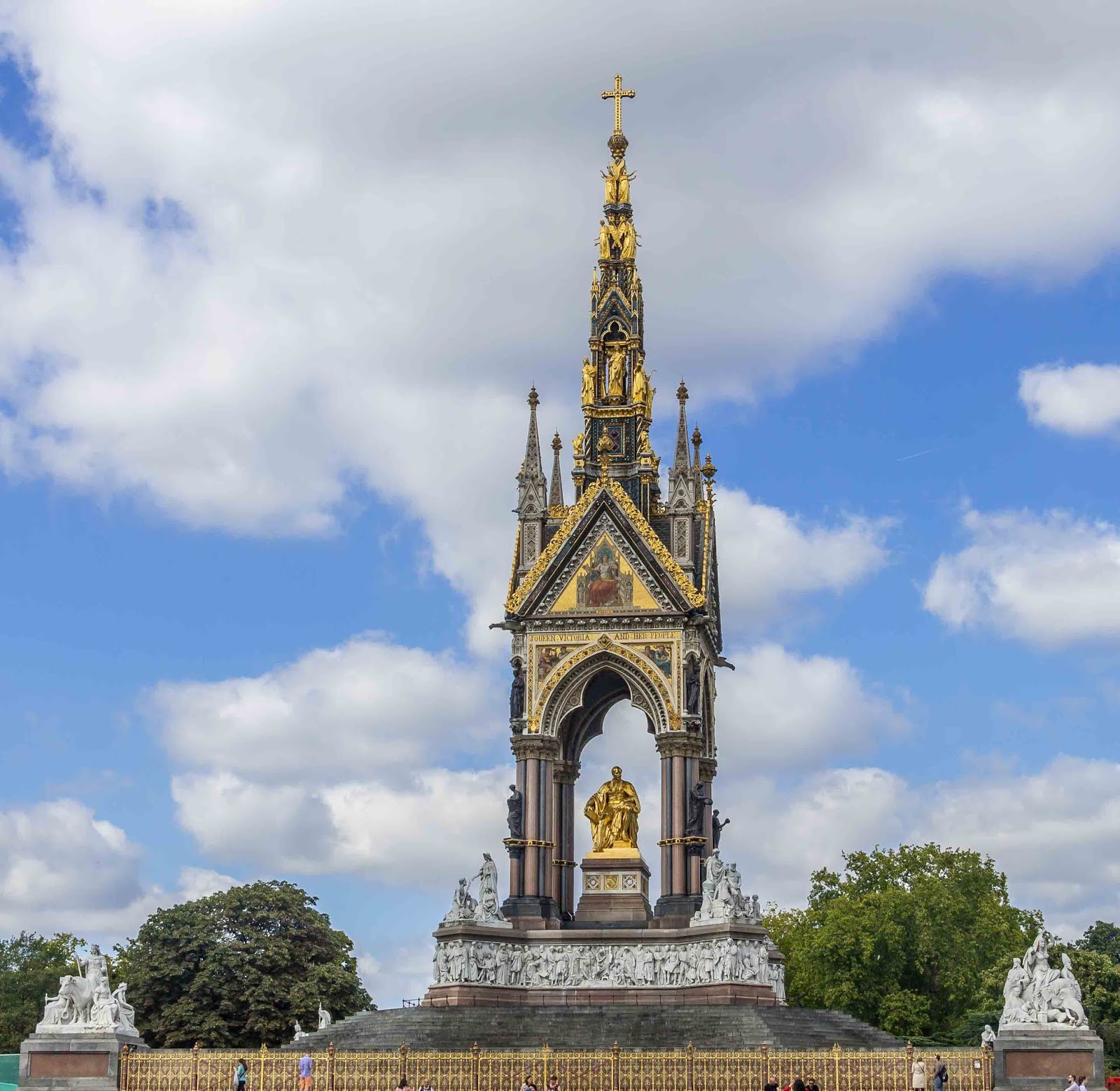
| Prince Albert Memorial |
Who knew that having something shipped to us would have to endure such a huge price for customs tax. The Aleve (Naproxen) we ordered from the Canadian pharmacy cost 100 capsules at $23 (since we must have a prescription here to purchase it) but we received a cute little letter from the post office saying we must pay a fee for VAT aka customs tax at another $41.
So, the tax cost more than the drug I should have bought in the U.S. for less than $20. Next time, I will bring more than just one small bottle with us. The prescriptions have been more of a headache than we would have imagined. I’m so thankful to my doctor for hearing me when I asked to be taken off of 3 other drugs that I really didn’t think were necessary.
 |
I am down to 3 prescription drugs and Chuck only takes 1. Imagine the headache if we took more.
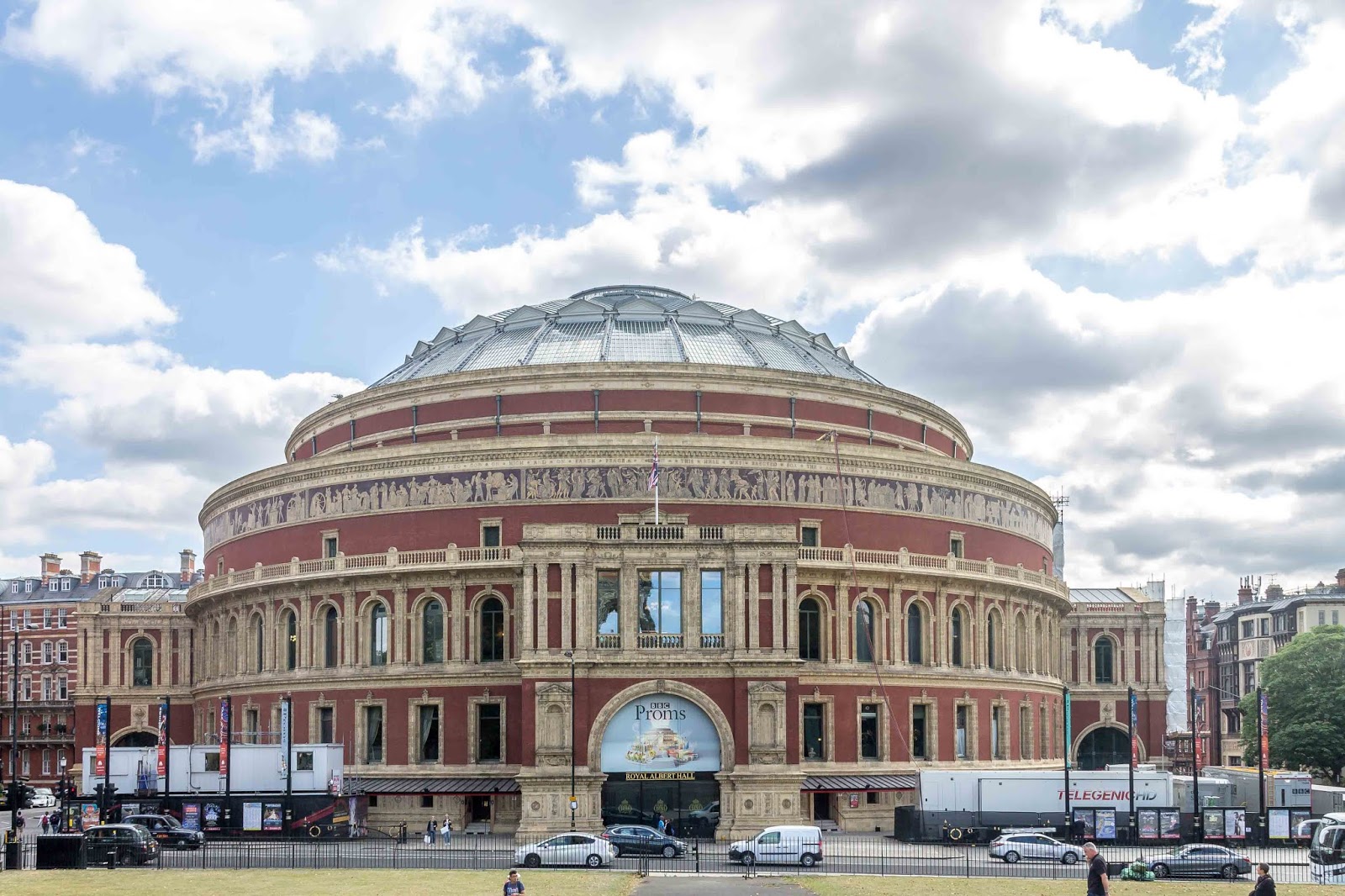 |
| Royal Albert Hall (Music) |
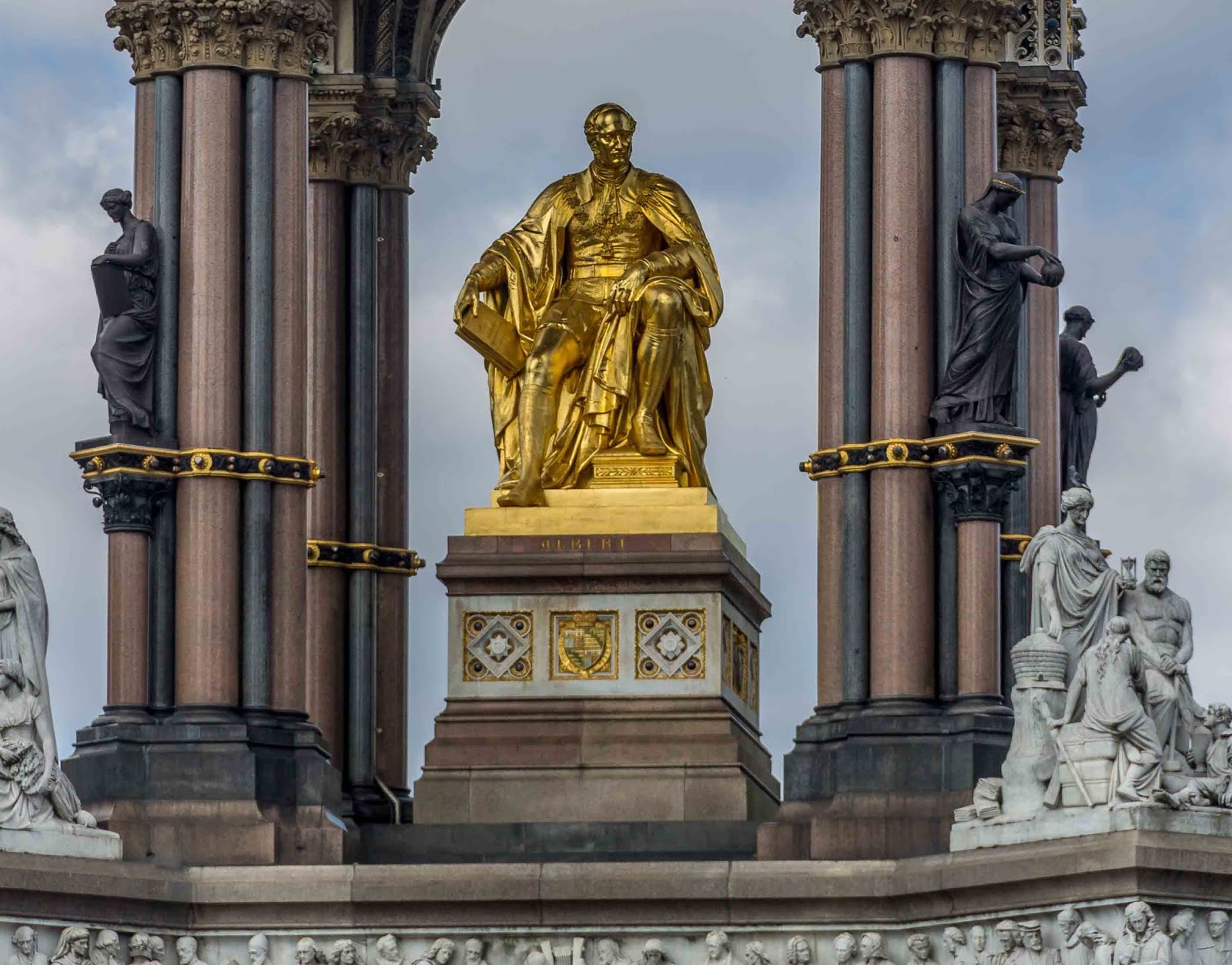
Back to our exploring… While walking towards Princess Diana’s memorial fountain we found many other memorials along the way. The Prince Albert memorial was magnificent. The memorial was commissioned by Queen Victoria in memory of her beloved husband Prince Albert, who died in 1861.
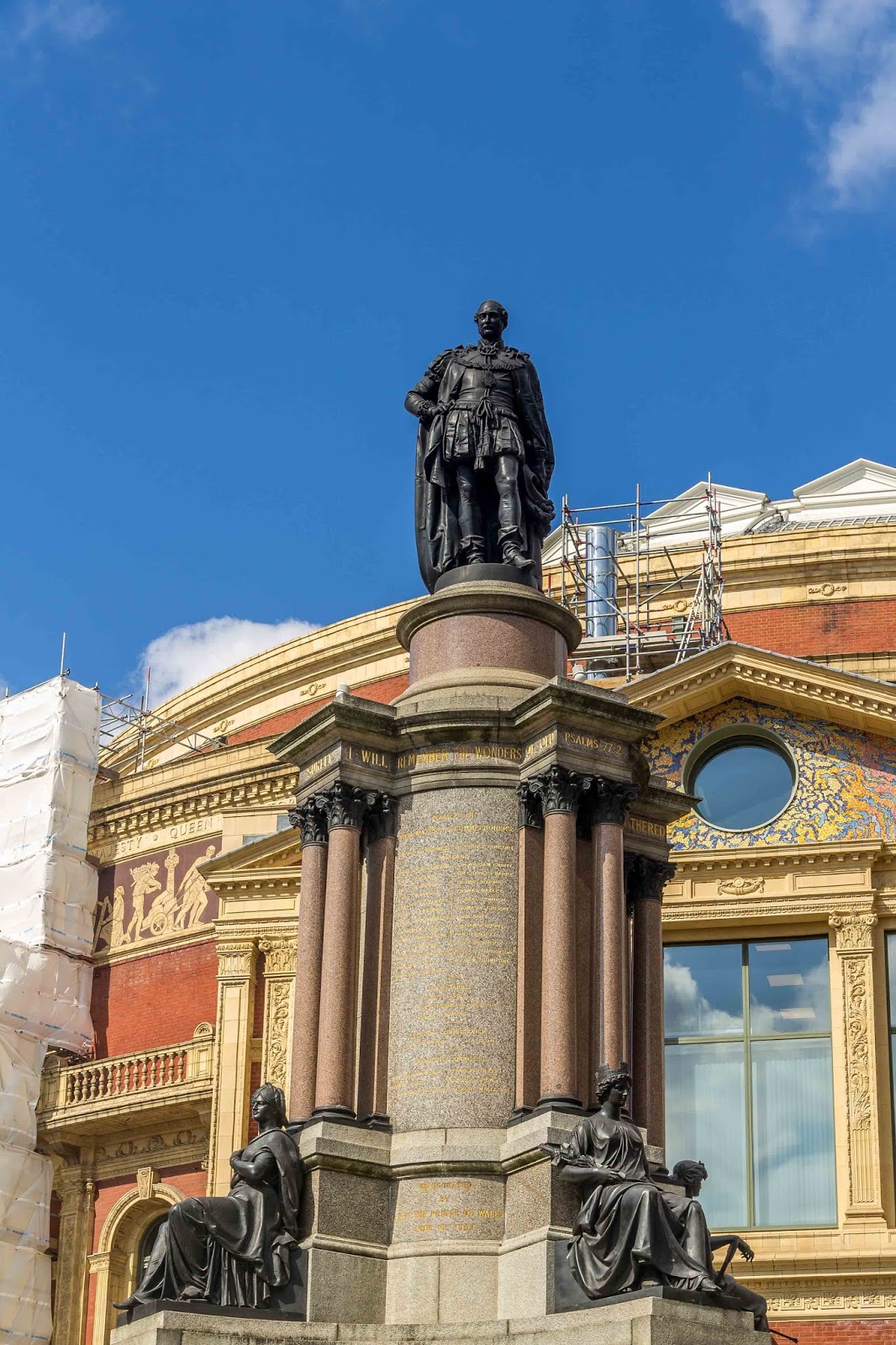 |
| Prince Albert Statue in front of the Hall. |
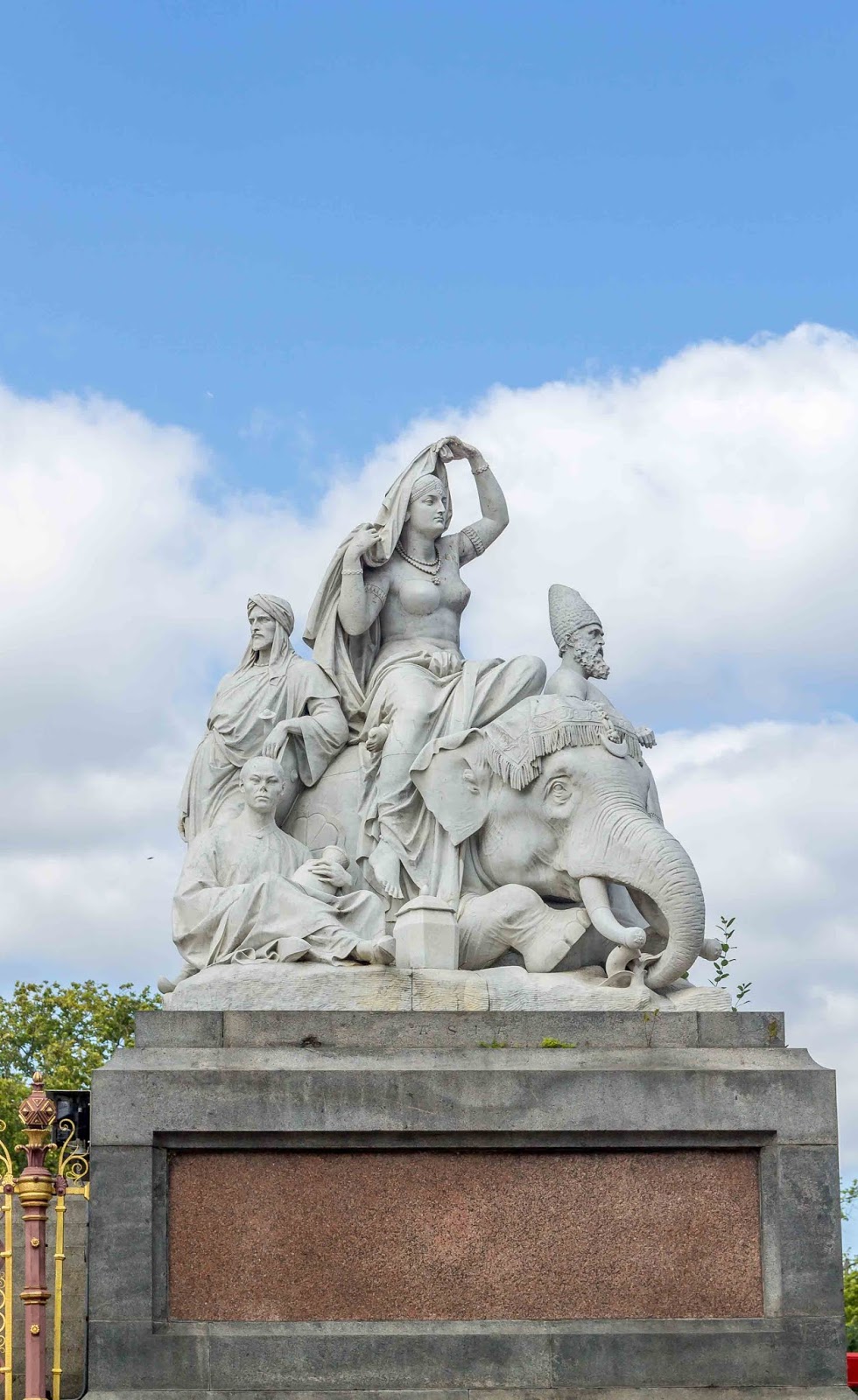
It’s in the form of a canopy surrounded by a lot of gold features. On each corner there are four groups representing the traditional four continents: Africa, the Americas, Asia and Europe, each continent-group including several ethnic figures and a large animal: A camel for Africa, a bison for the Americas, an elephant for Asia and a bull for Europe.
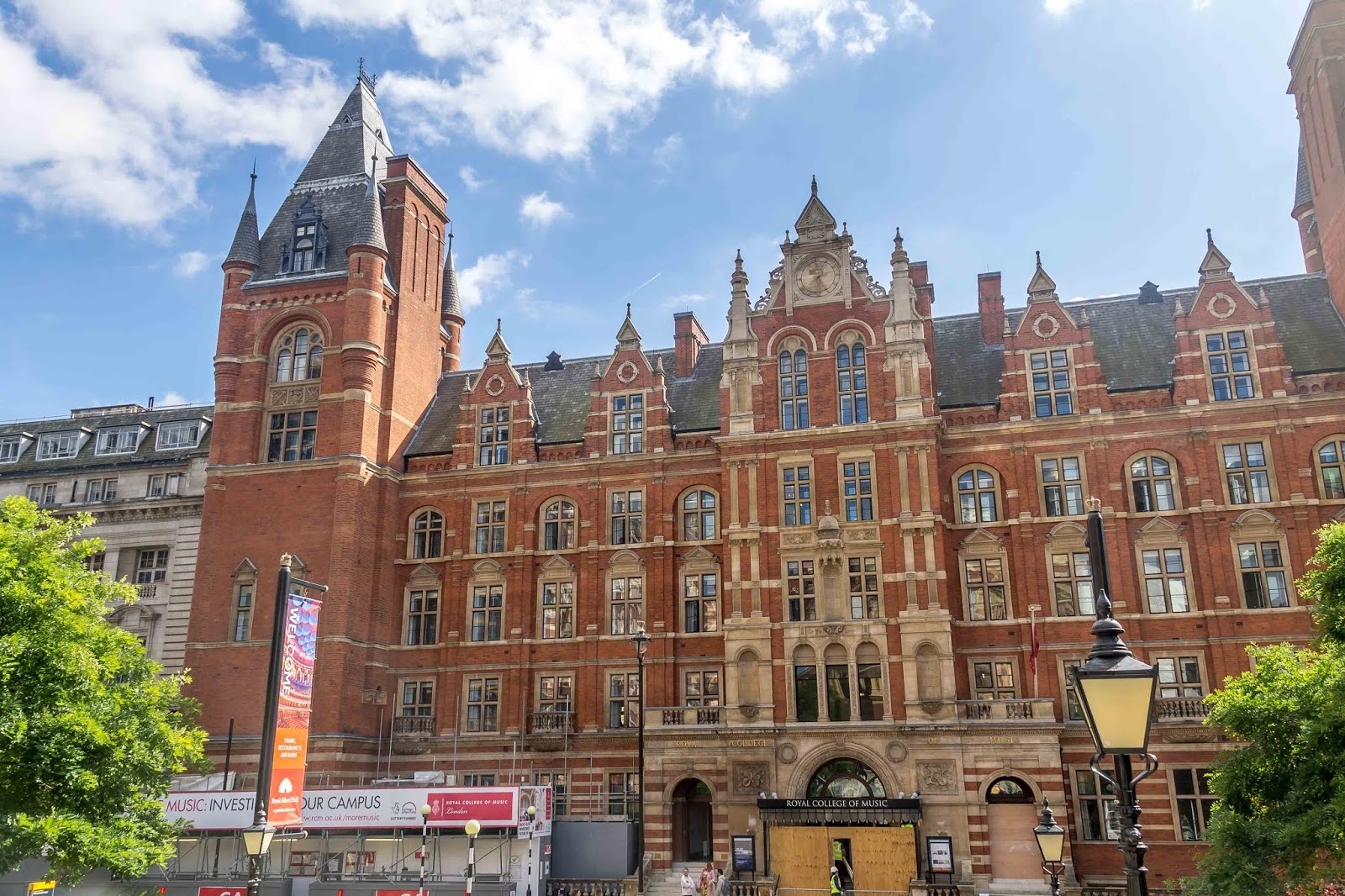 |
| Royal College of Music |
The Prince Albert memorial faces the Royal Albert Hall, which is a concert hall. One of the United Kingdom’s most treasured and distinctive buildings, it is a registered charity held in trust for the nation, as it receives no public or government funding. It can seat 5,267 people per performance. There is also a musical arts college just beside the hall.
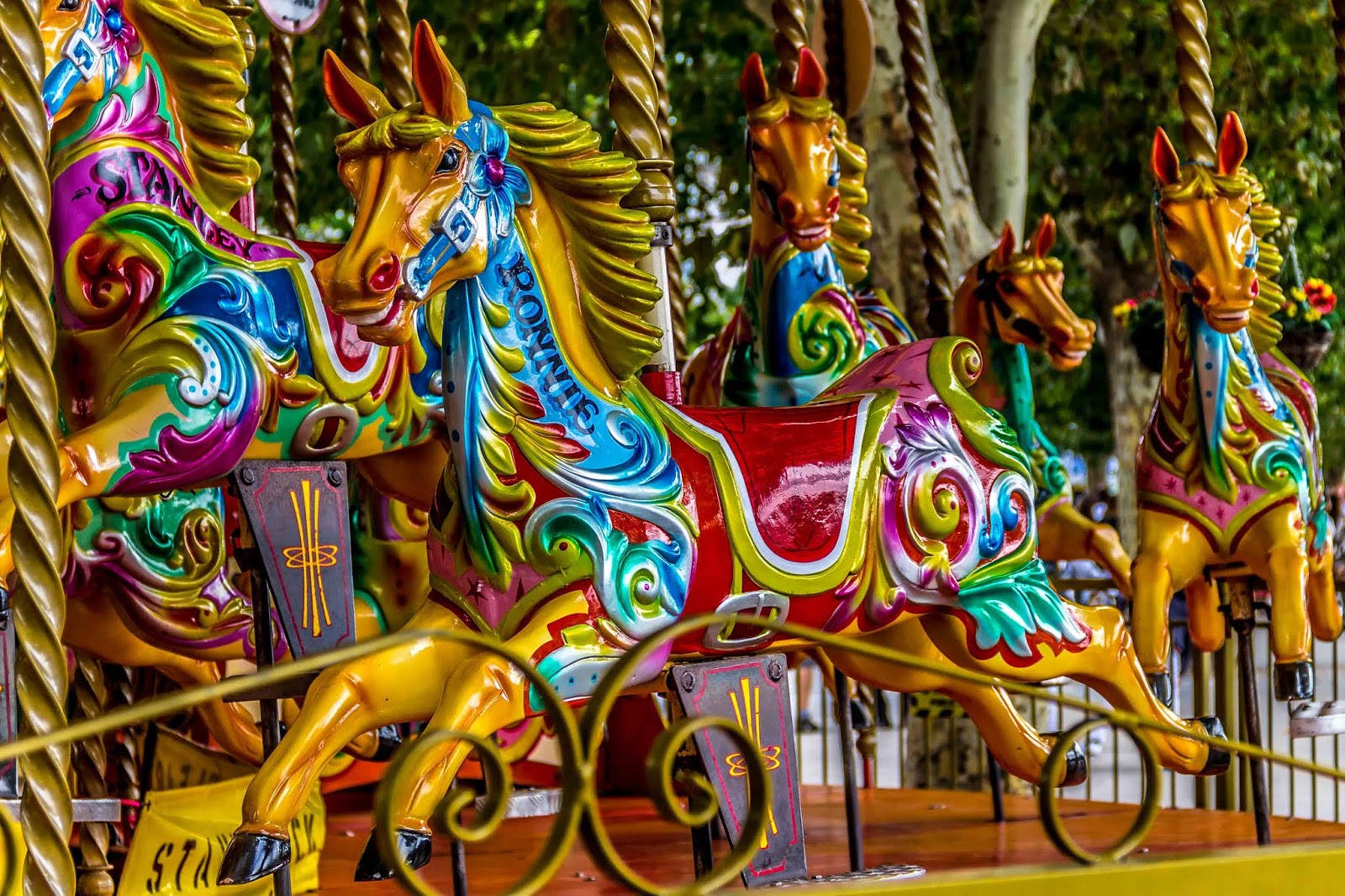 |
| Colorful Carousel |
We happened up on a little festival walking along the Thames River that had jugglers, artists, carousel and lots of food.
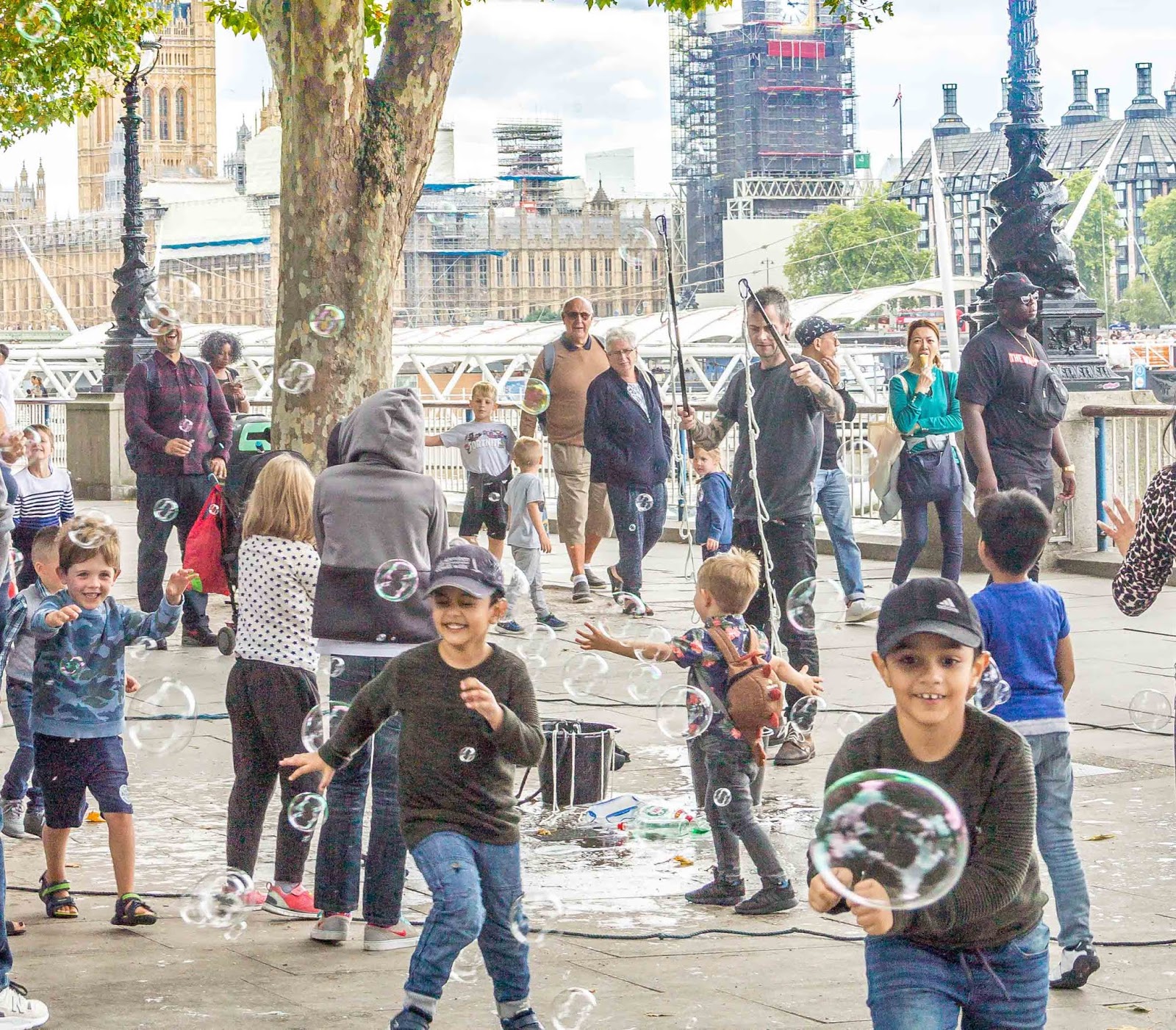 |
| Kids and bubbles! A great combination. |
We enjoyed watching the kids laughing and playing without a care in the world.
 |
| Juggler that tried to be a comedian, didn’t always work! |
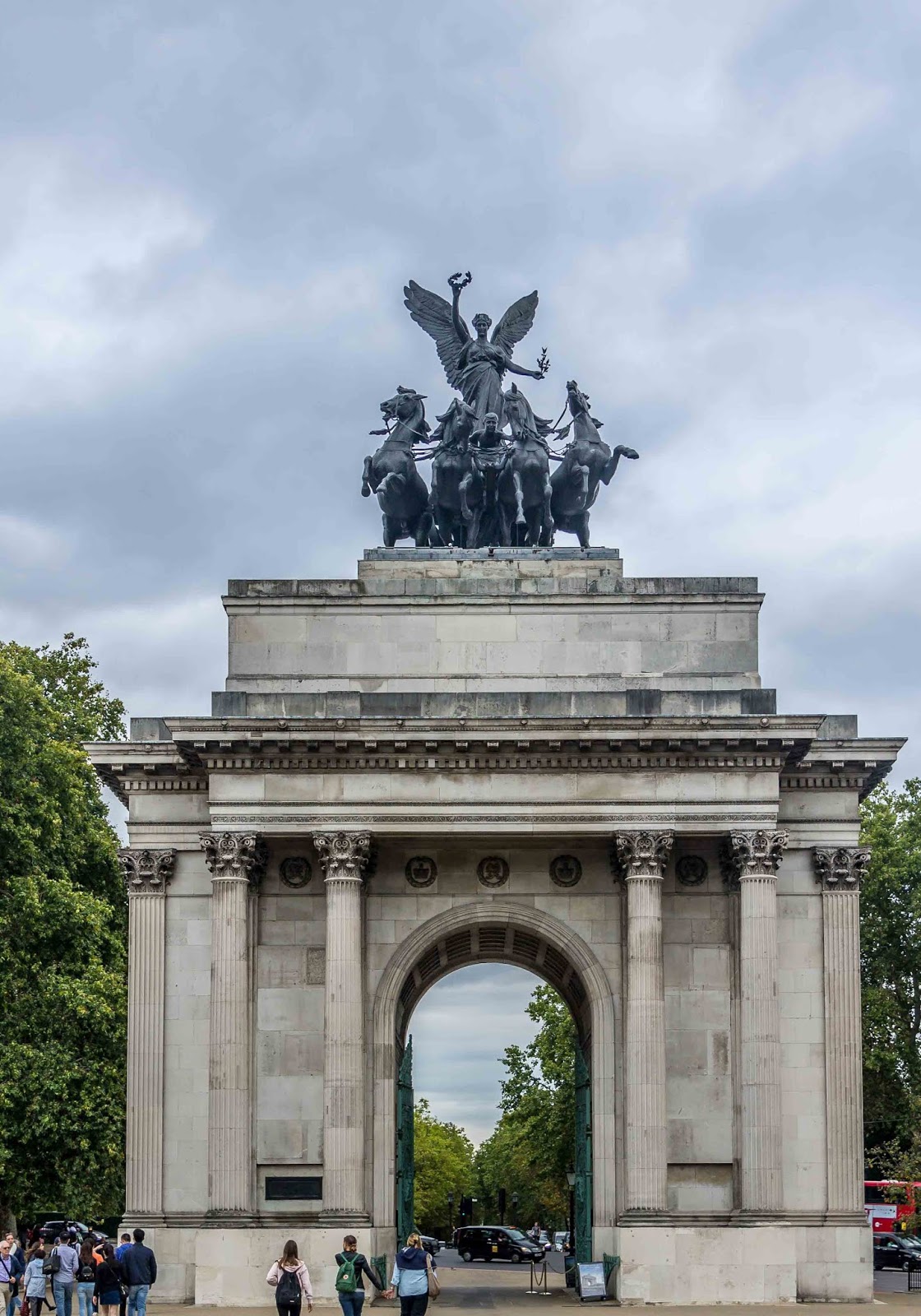
Our last trek on our 6 mile walk was to view the Wellington Arch.
 |
| Wellington Arch |
We thought it was just an arch similar to the ones in Paris but the entire area had many war memorials.
 |
| Four horse Chariot atop the Wellington Arch |
It was interesting to read all about some of the wars that England and its Allies fought.
 |
| Duke of Wellington Equestrian Statue |
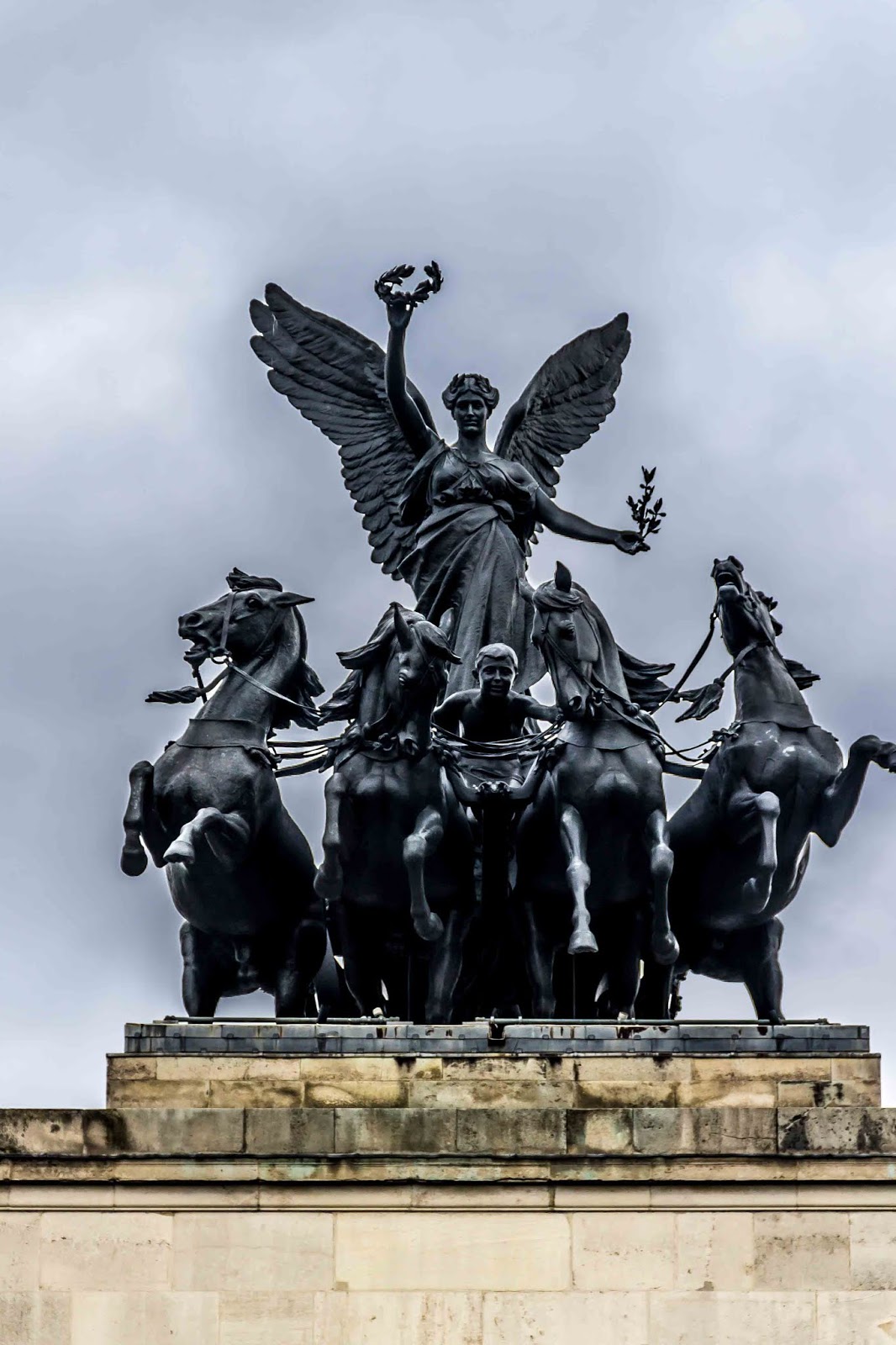
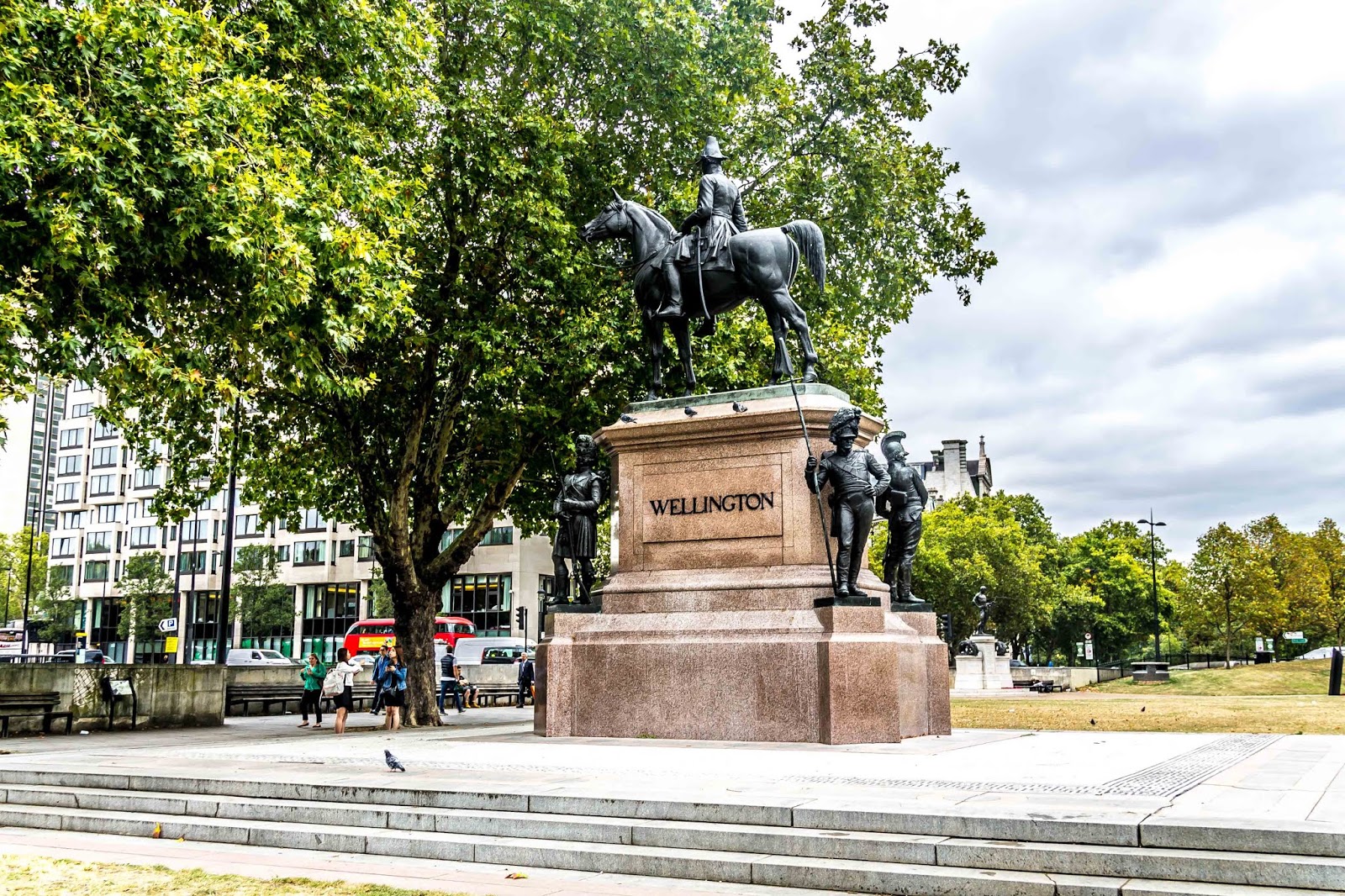
The Wellington Arch, also known as Constitution Arch stands on a large traffic island with crossings for pedestrian access. (There were as many bicycles coming towards us as people. Had to be careful not to get run over!) In the late 1800’s it originally supported a colossal equestrian statue of the 1st Duke of Wellington, as a result of which it has acquired the name “the Wellington Arch”.
 |
| Australian War Memorial |
An ancient bronze four-horse chariot replaced it in 1912 and the Equestrian Statue was moved nearby. The Wellington Arch and Marble Arch were planned in 1825 by George IV to commemorate Britain’s victories in the Napoleonic Wars.
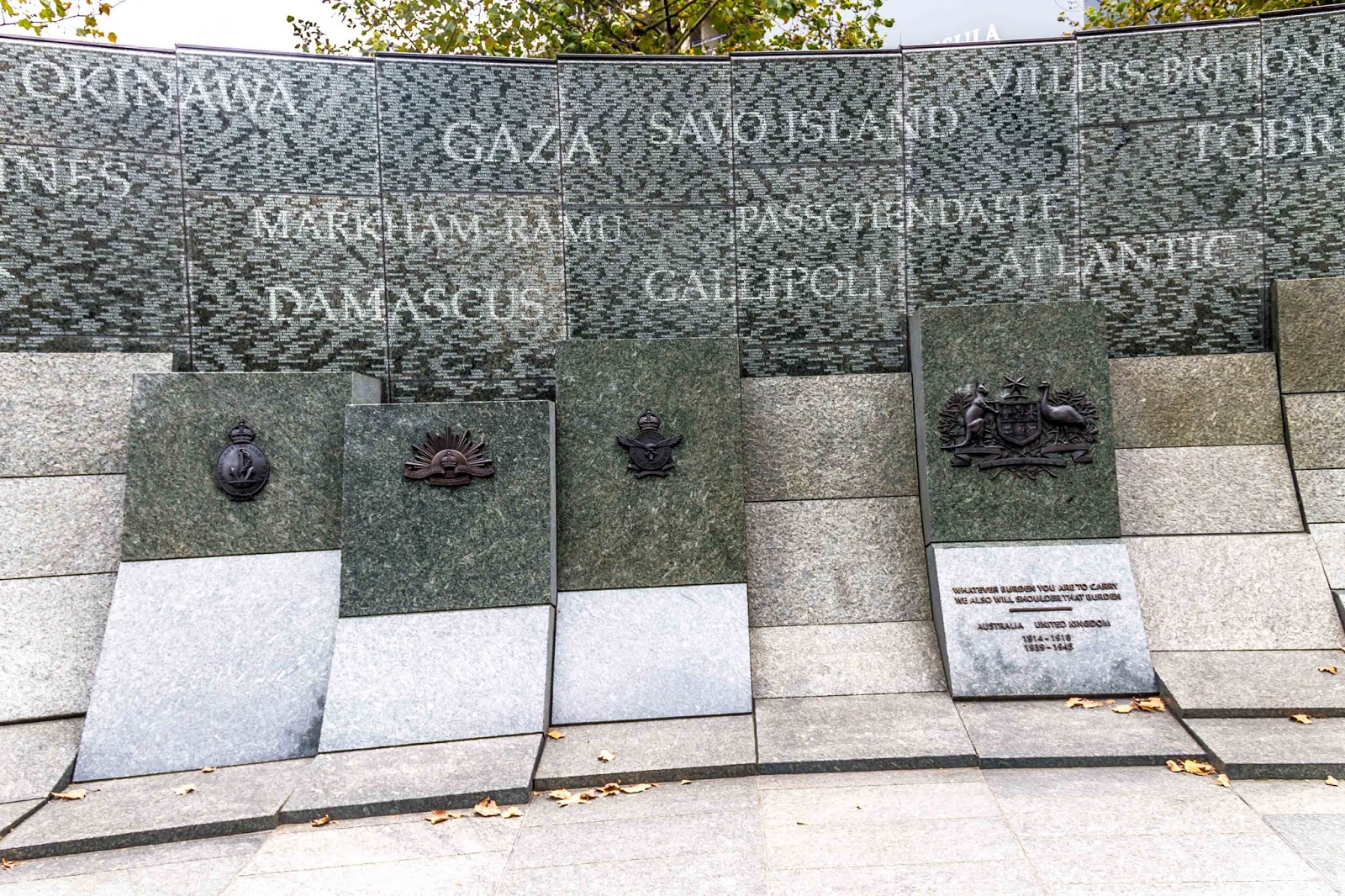 |
| Towns engraved in the granite are where the soldiers were born |
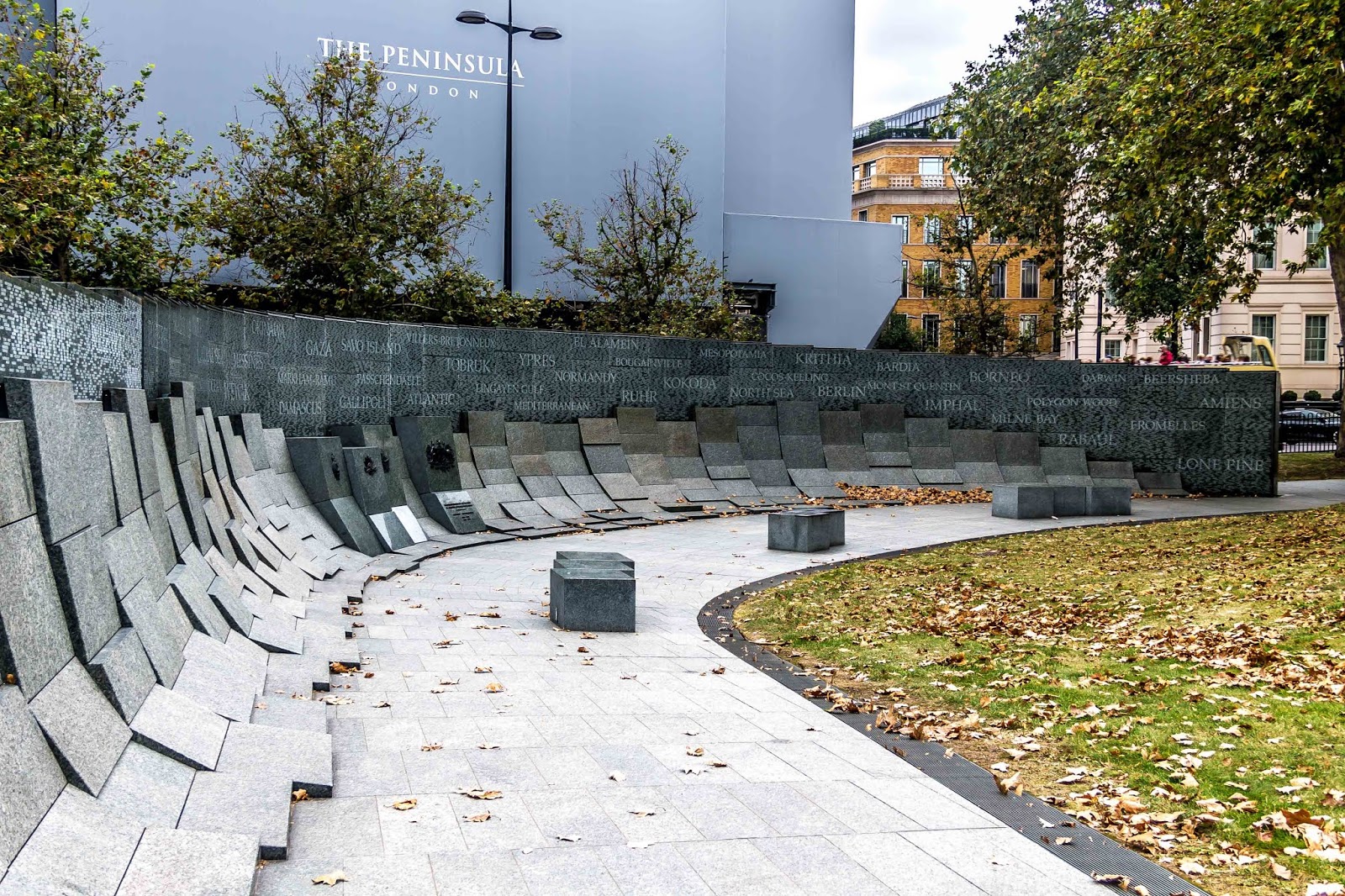
We’ll find the Marble Arch and add it to our collection of photos. In the area around the Arch, there are 4 memorials. 1) The Australian War Memorial was dedicated in 2003 to the 102,000 Australian lives lost in the First and Second World Wars. The granite stones are inscribed with the names of 23,844 towns in which the Australian soldiers were born, in Australia, the UK and elsewhere. Parts of some town names are picked out in bolder type, creating the names of 47 battles in which Australia was involved in a larger font. It was a beautiful memorial.
 |
| New Zealand War Memorial |
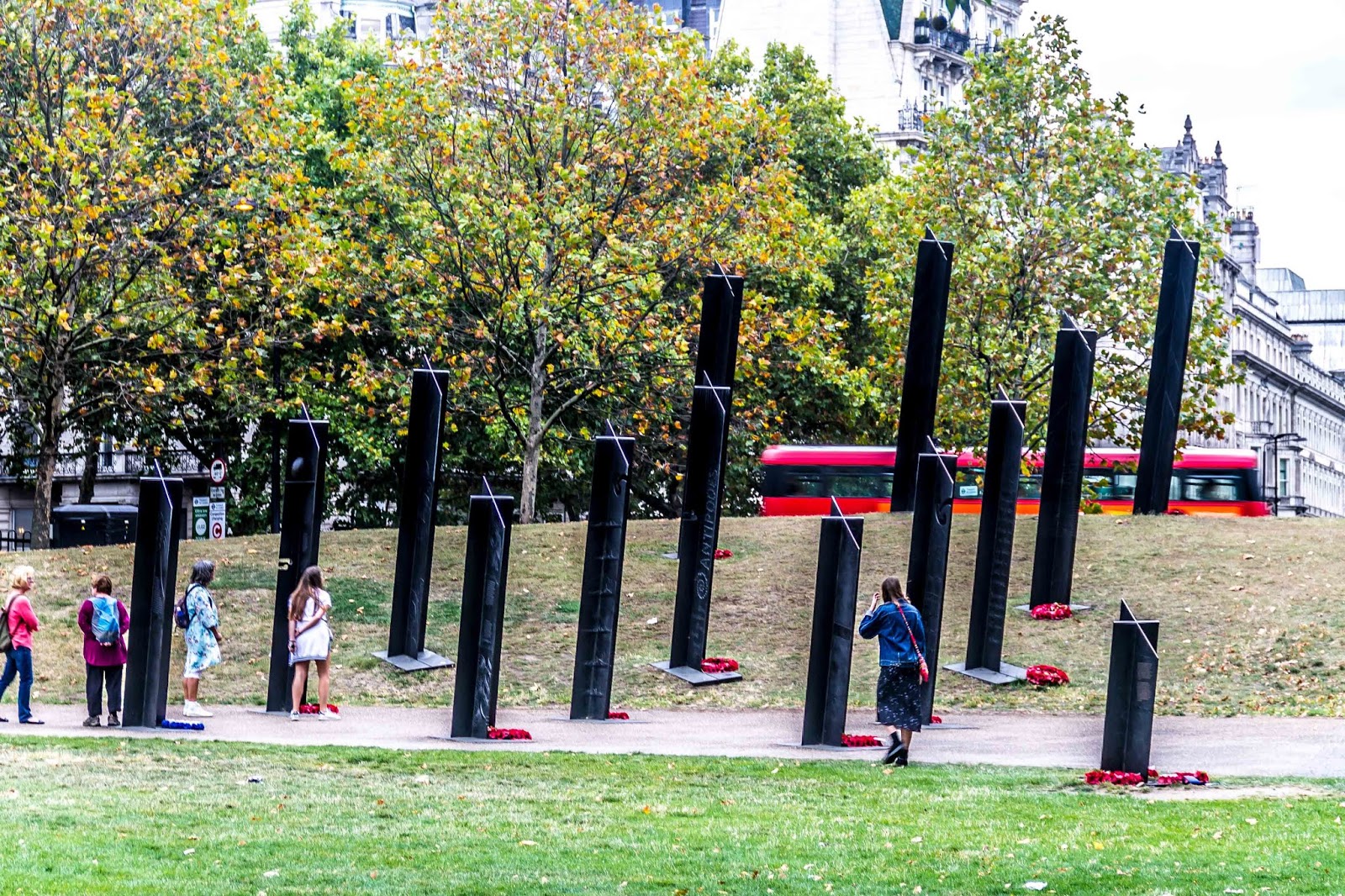
2) The New Zealand War Memorial was established in 2006 to commemorate “the enduring bond between New Zealand and the United Kingdom”, and the lives lost by the two countries during the two World Wars.
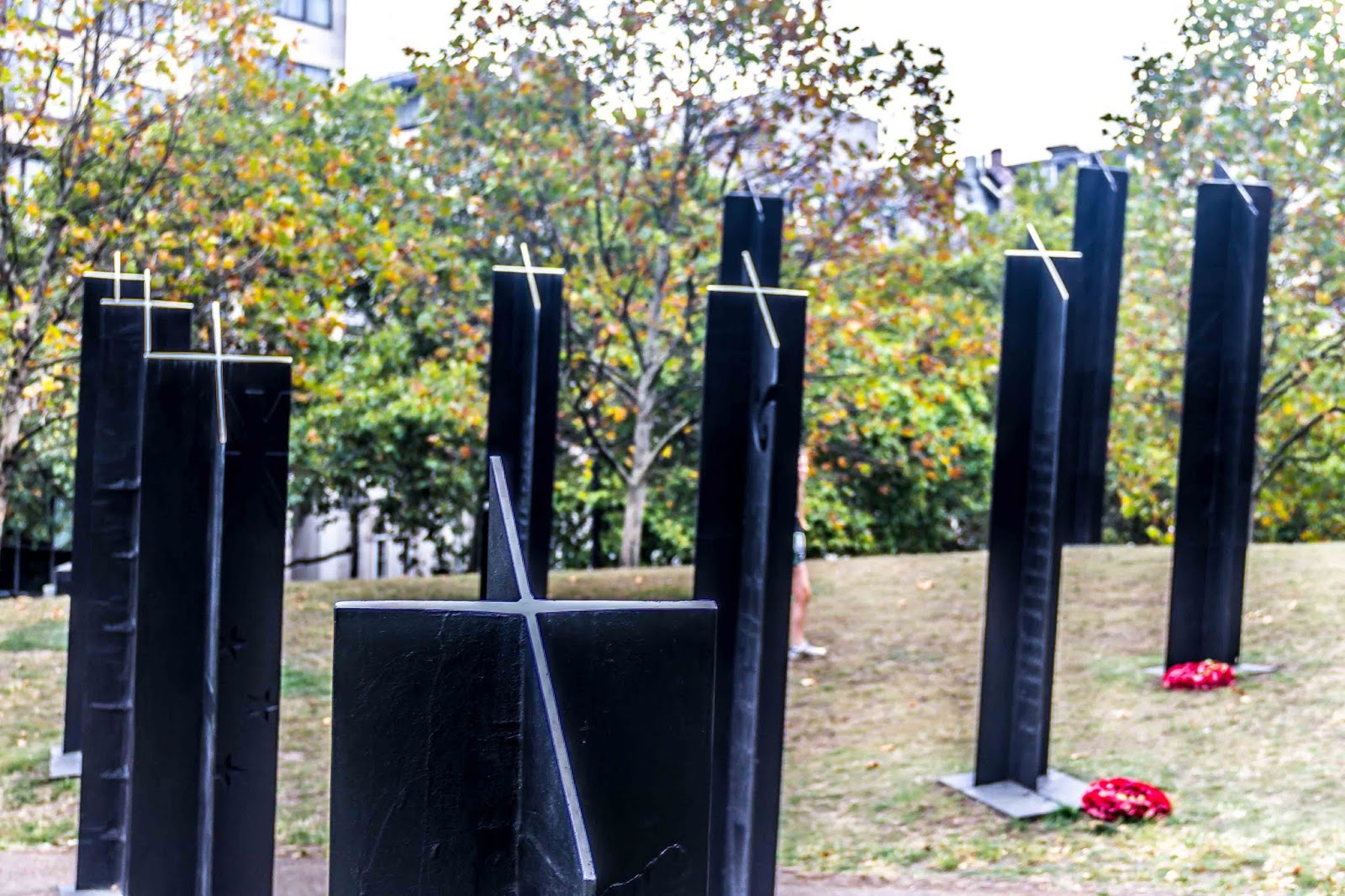
I especially liked the design. As you look from afar, it looked as if multiple crosses were erected at an angle on the metal beams.
 |
| Royal Artillery Memorial |
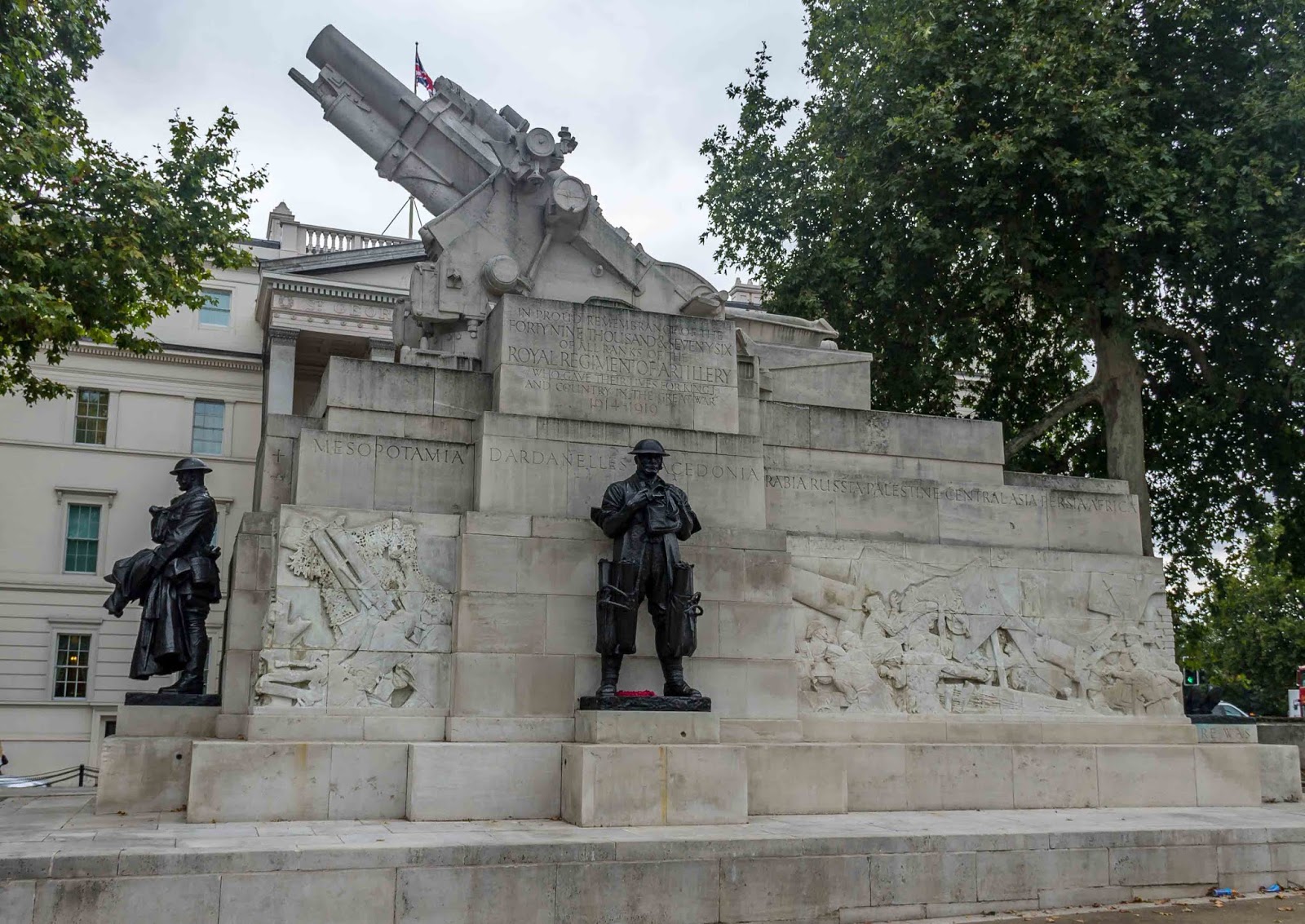
3) The Royal Artillery memorial was dedicated in 2009 to the First World War casualties of the Royal Regiment of Artillery. This War, which took place between 1914 and 1918, saw the extensive use of artillery.
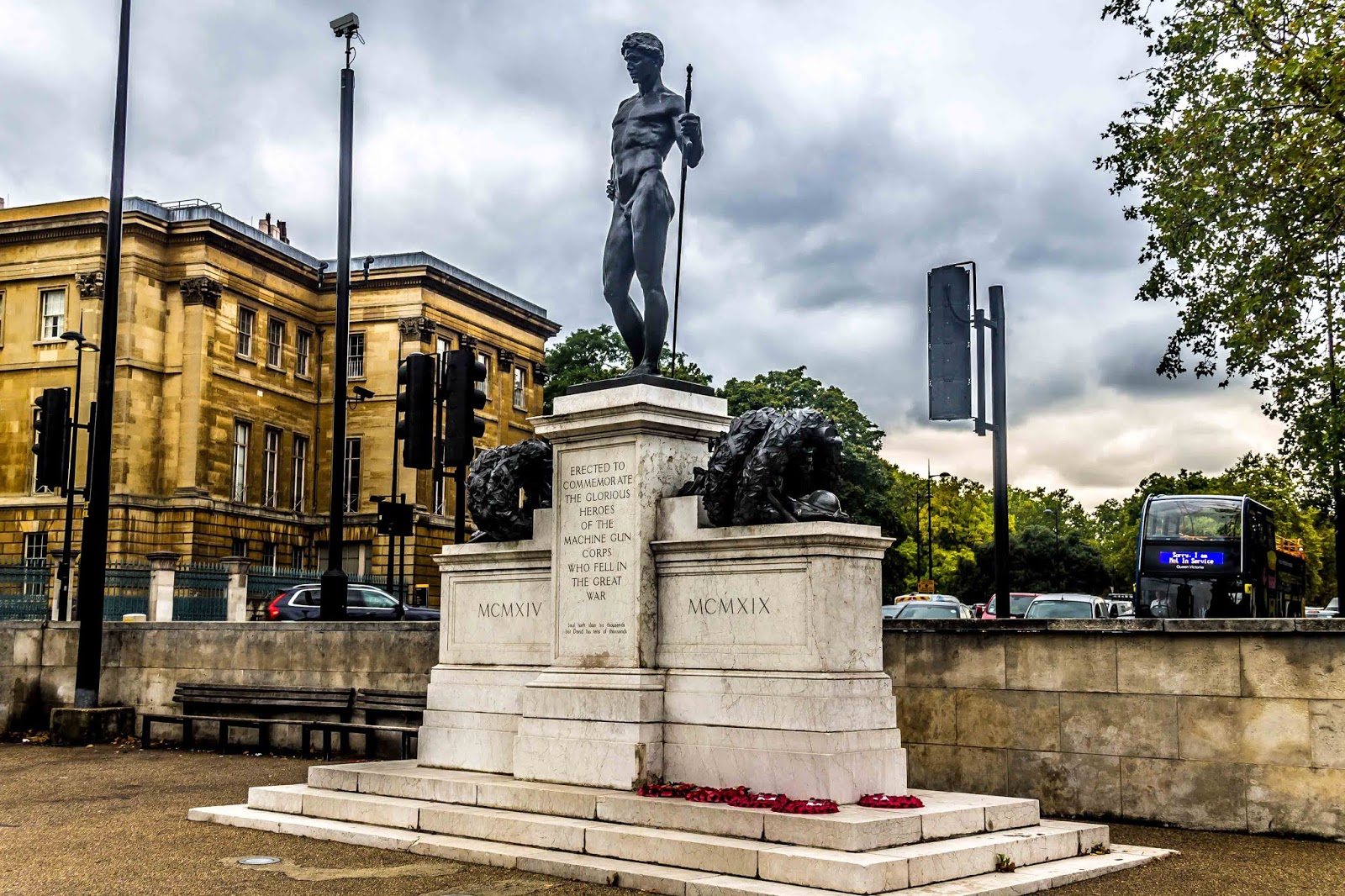 |
| The Machine Gun Corp memorial (David with Goliaths sword) |
These guns were a key element of the conflict: over half the casualties in the war were caused by artillery; 49,076 members of the Royal Artillery died during the conflict. The memorial told a story of how they died. Very moving.
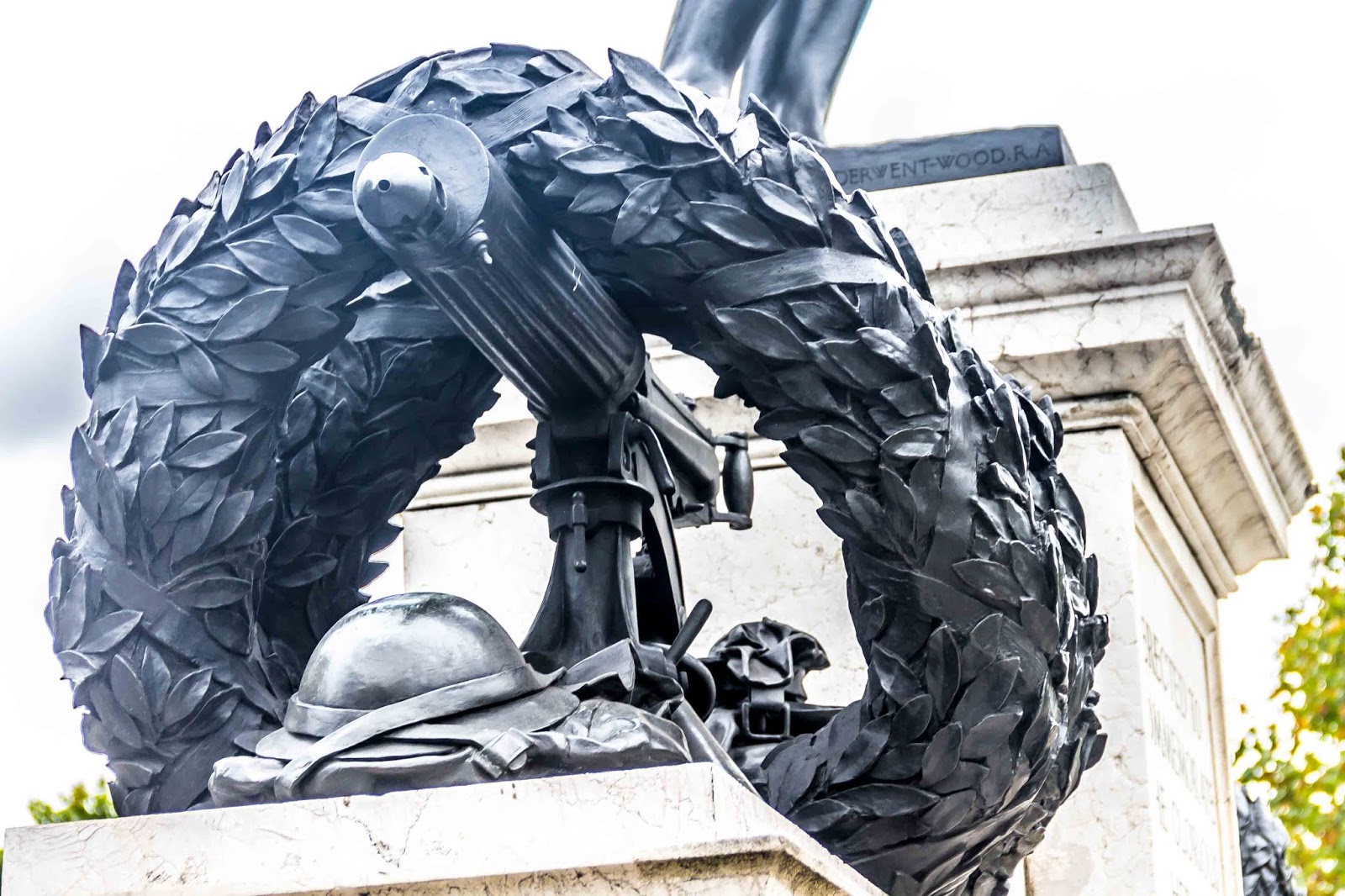 |
| Vickers machine gun wreathed in laurels located on each side of the memorial. |
4) The Machine Gun Corps memorial
also known as The Boy David, is a memorial to the casualties of the Machine Gun Corps in the First World War. It was erected to commemorate the glorious heroes of the machine gun corp who fell in the great war. There is a bible quote on the front 1 Samuel 18:7: “Saul has slain his thousands but David his tens of thousands”. Between 1915 and 1922, some 170,000 served in the Corps, of whom 2,800 were killed and 48,000 were wounded, missing or prisoners-of-war. The high casualty rate of the Corps, nearly 30%, arose from the exposed position from which it typically fought, leading to its nickname, “The Suicide Club”. WorldTravelReynolds