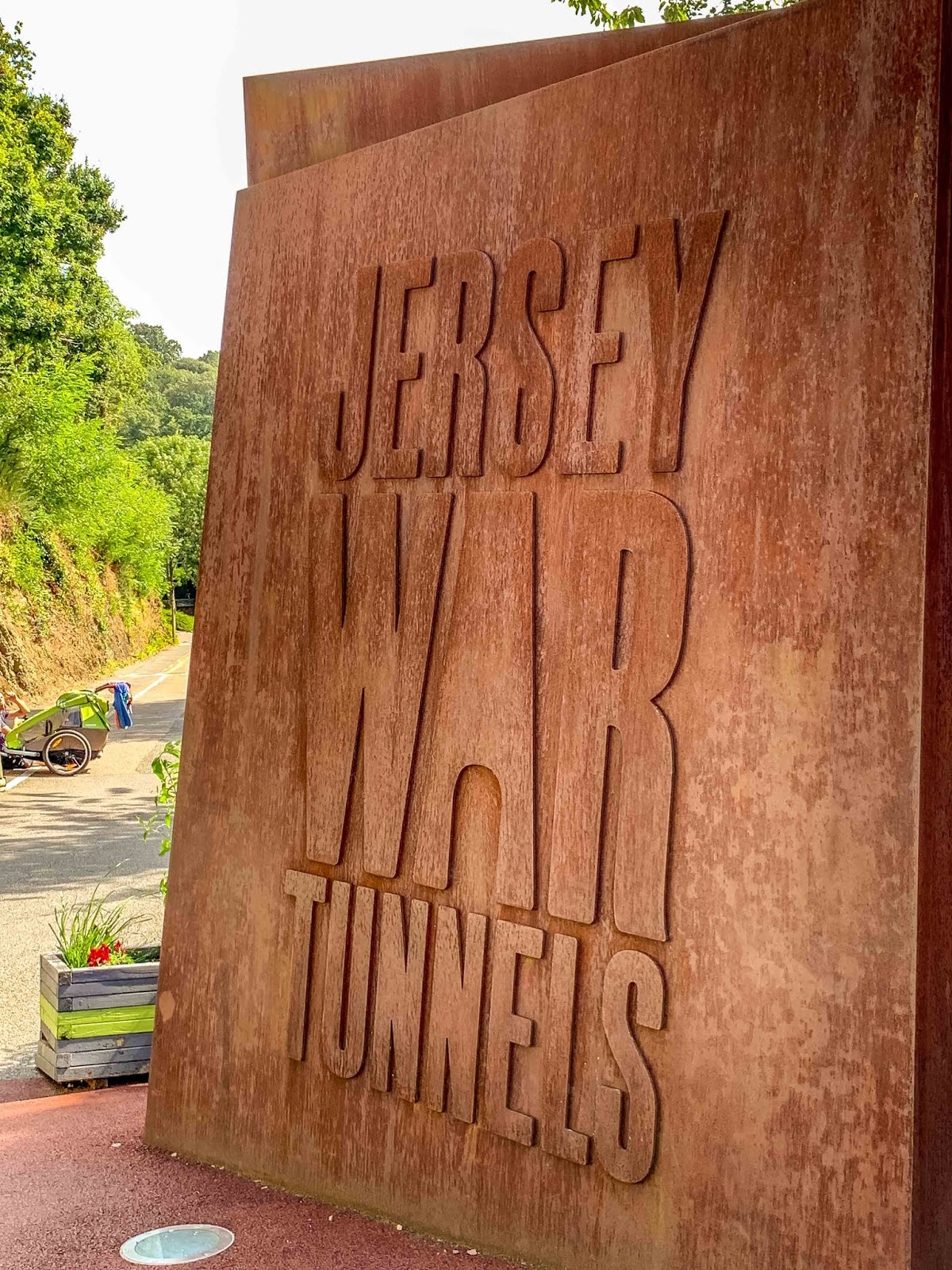
This is probably our last tour of anything of significance on Jersey. We will begin washing, cleaning and packing to prepare for our departure on Wednesday morning.
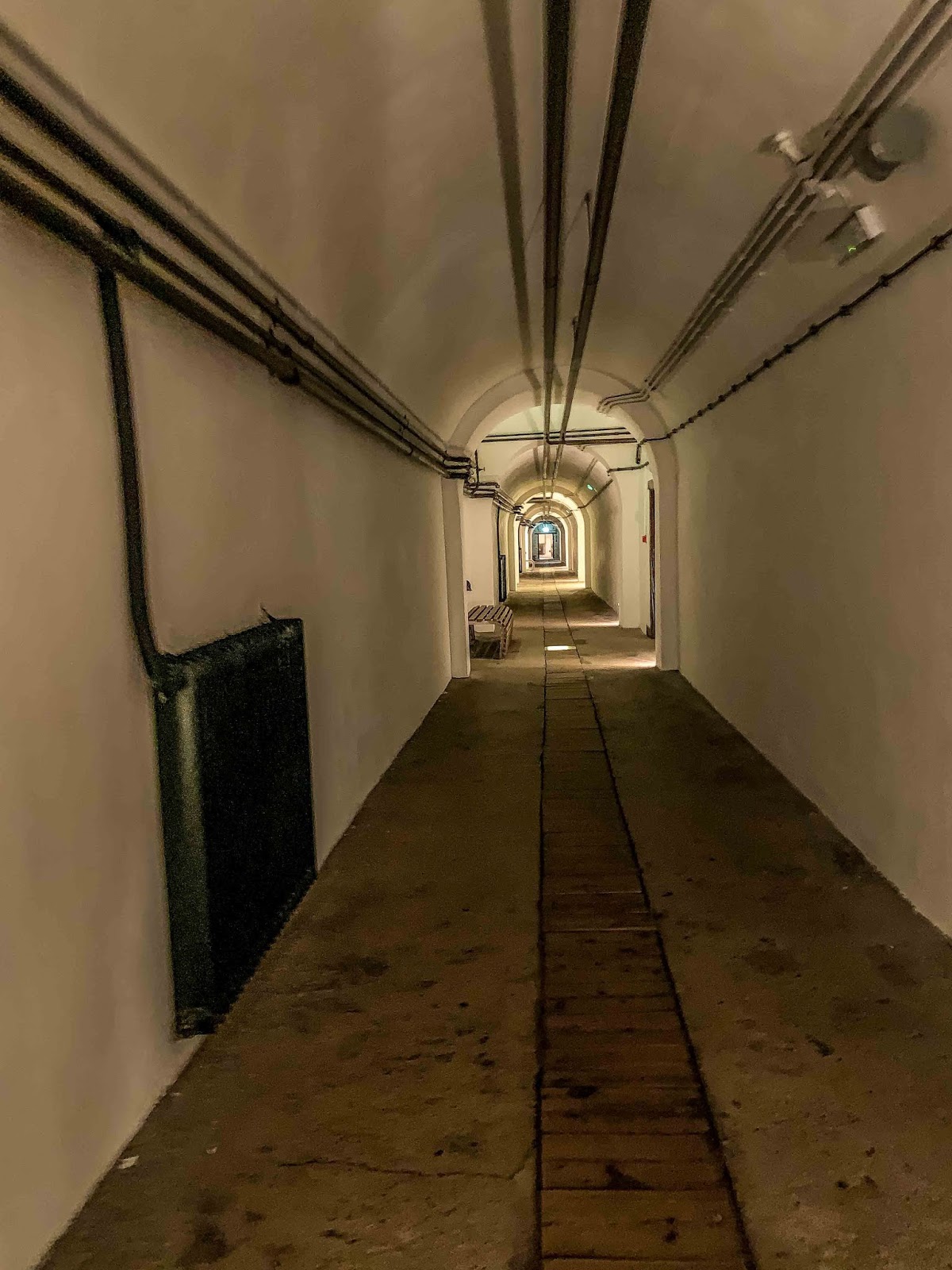 |
| The beginning of the finished tunnels |
This is the part I dislike the most. Not only is it a little tedious, it’s a sad time. We don’t want to leave. We have fallen in love with this island. Its beautiful, its safe, the people are amazing and the entire atmosphere is inviting.
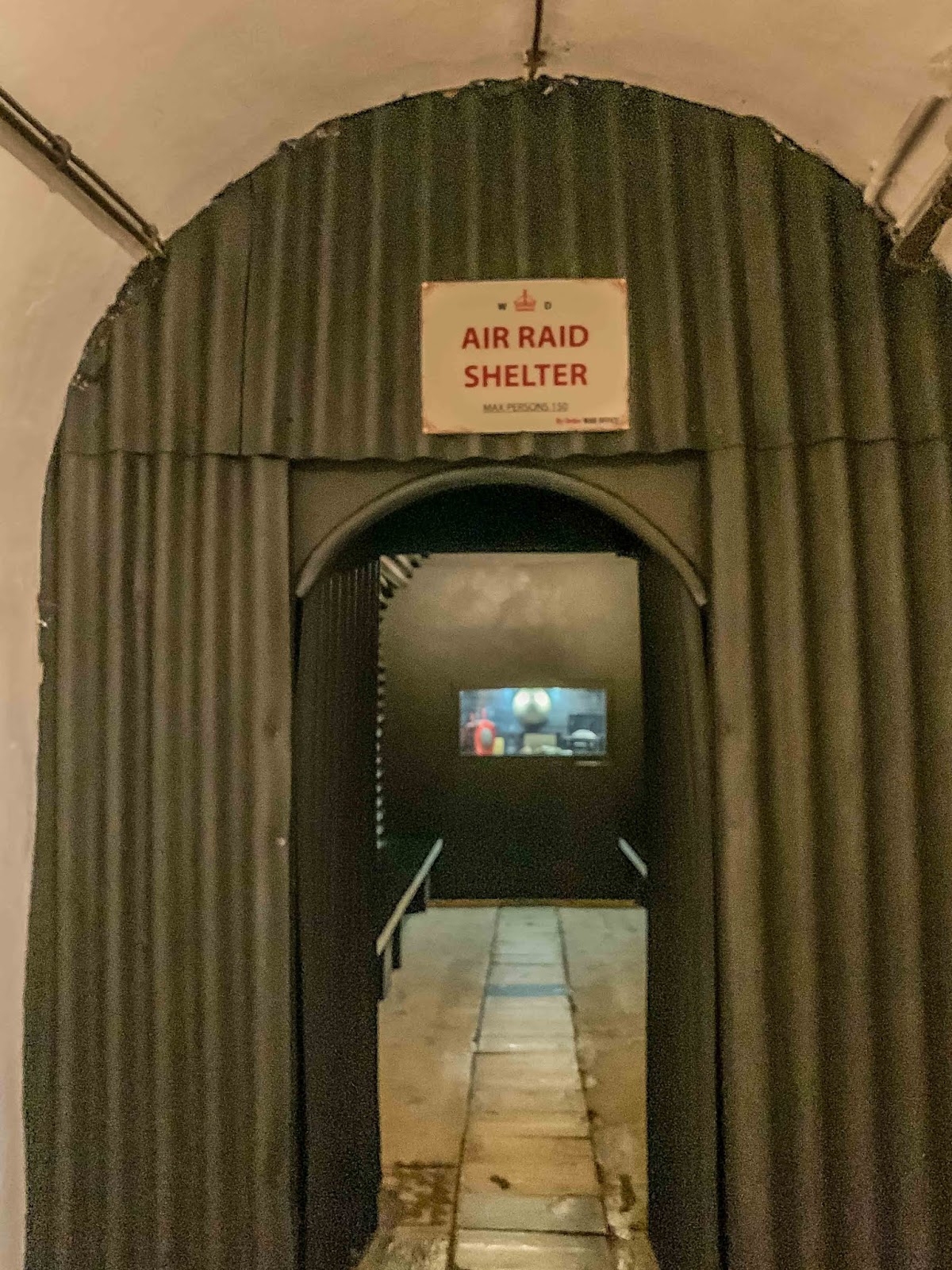 |
| Air Raid Shelter |
We hope our future adventures turn out as well. When talking to natives in Jersey we always ask where should we go and what should we see and they always, without a doubt, brought up the Jersey War Tunnels. So, we finally made it and it was very interesting and moving.
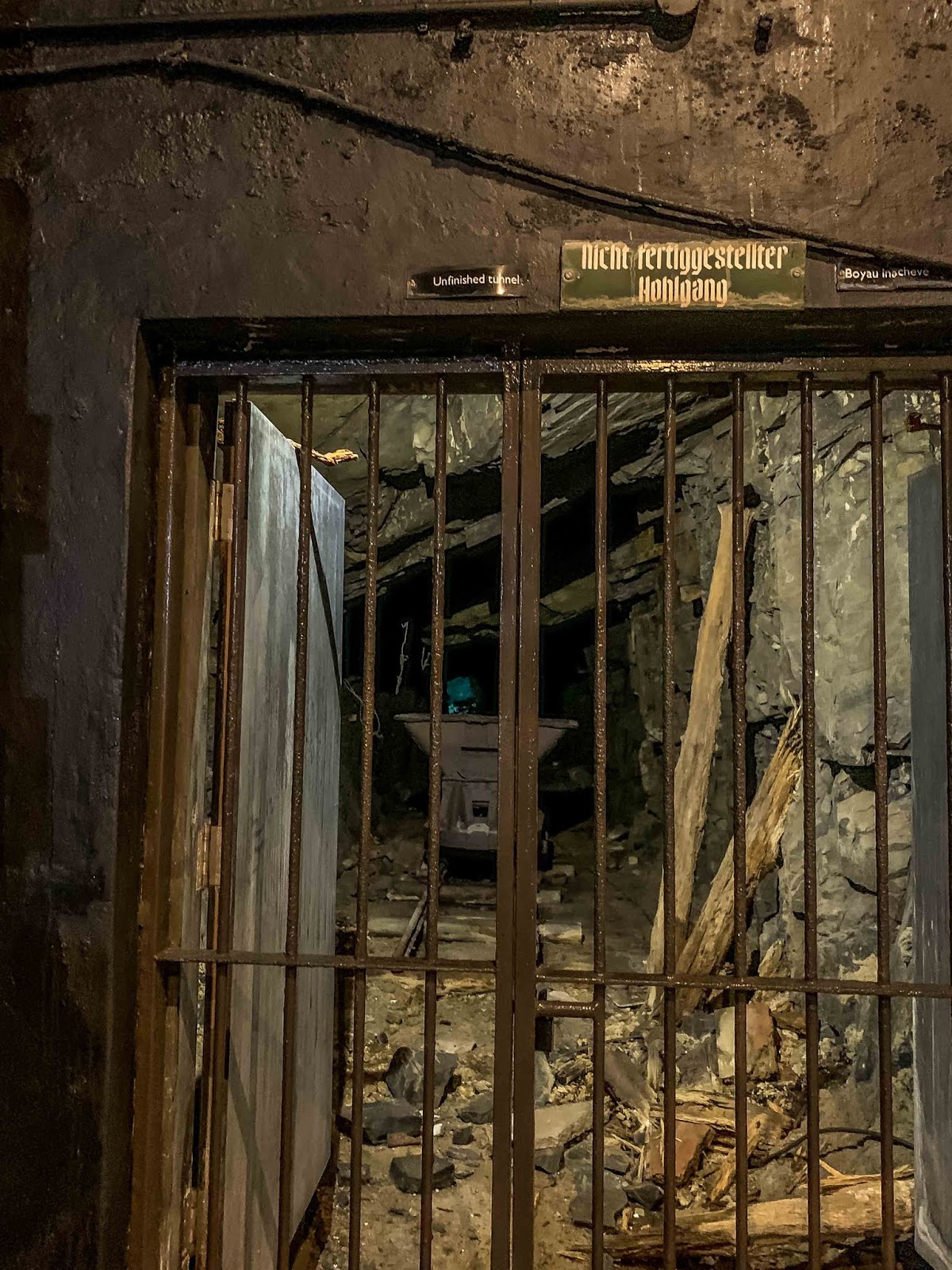 |
| One of many unfinished tunnels blocked off. The tunnels were fragile when being built and at times rocks would fall on the workers who brought their own head protection if they could. |
The tunnels actually have 3 names. Hohlgangsanlage 8 (often abbreviated to Ho8), German Underground Hospital and the Jersey War Tunnels. It is most commonly called the latter.
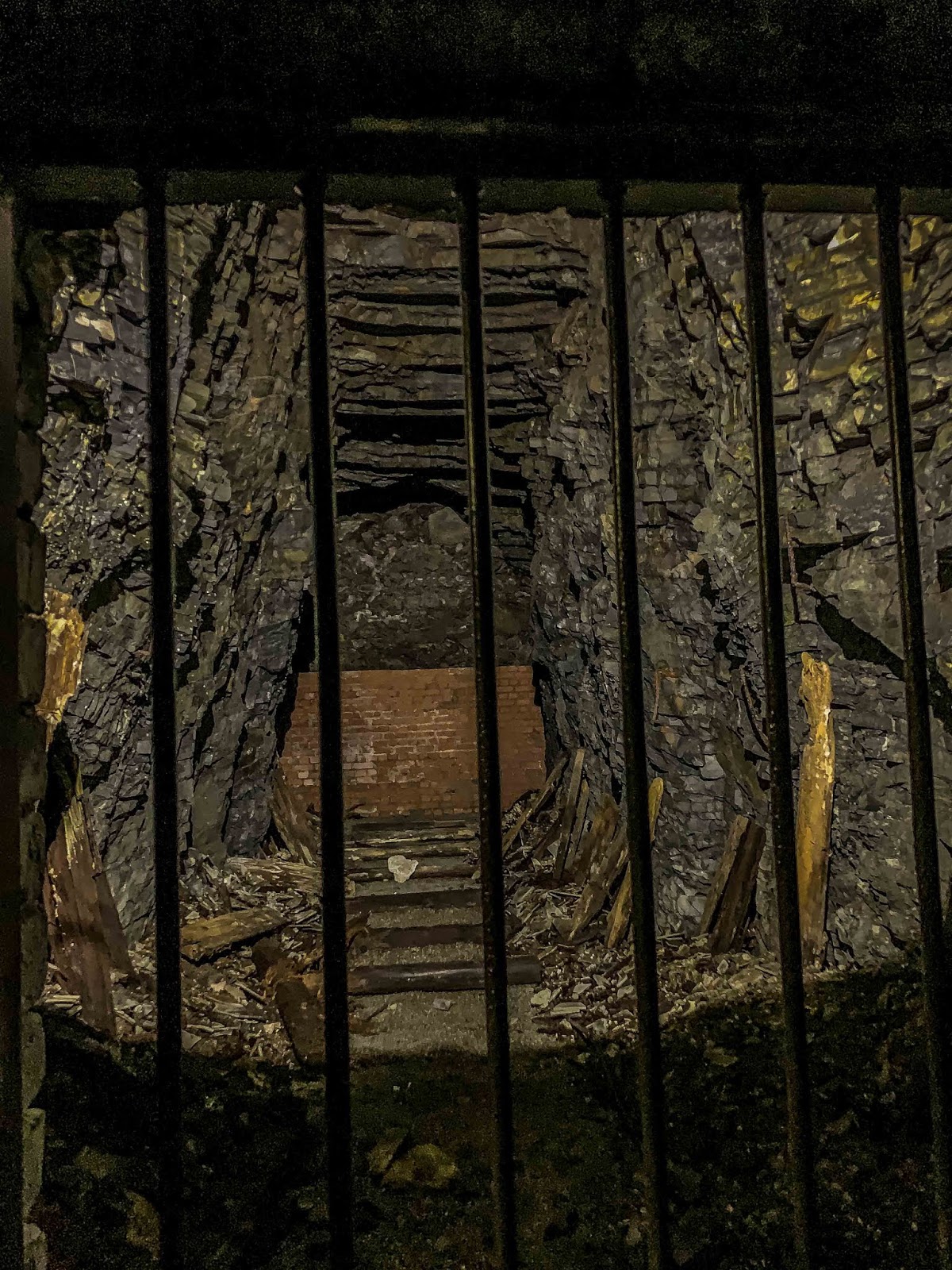
To explain it in short form, it was a partially completed underground hospital complex built by German occupying forces during the occupation of Jersey during World War II. Over 1 km (1,100 yd) of tunnels were completed.
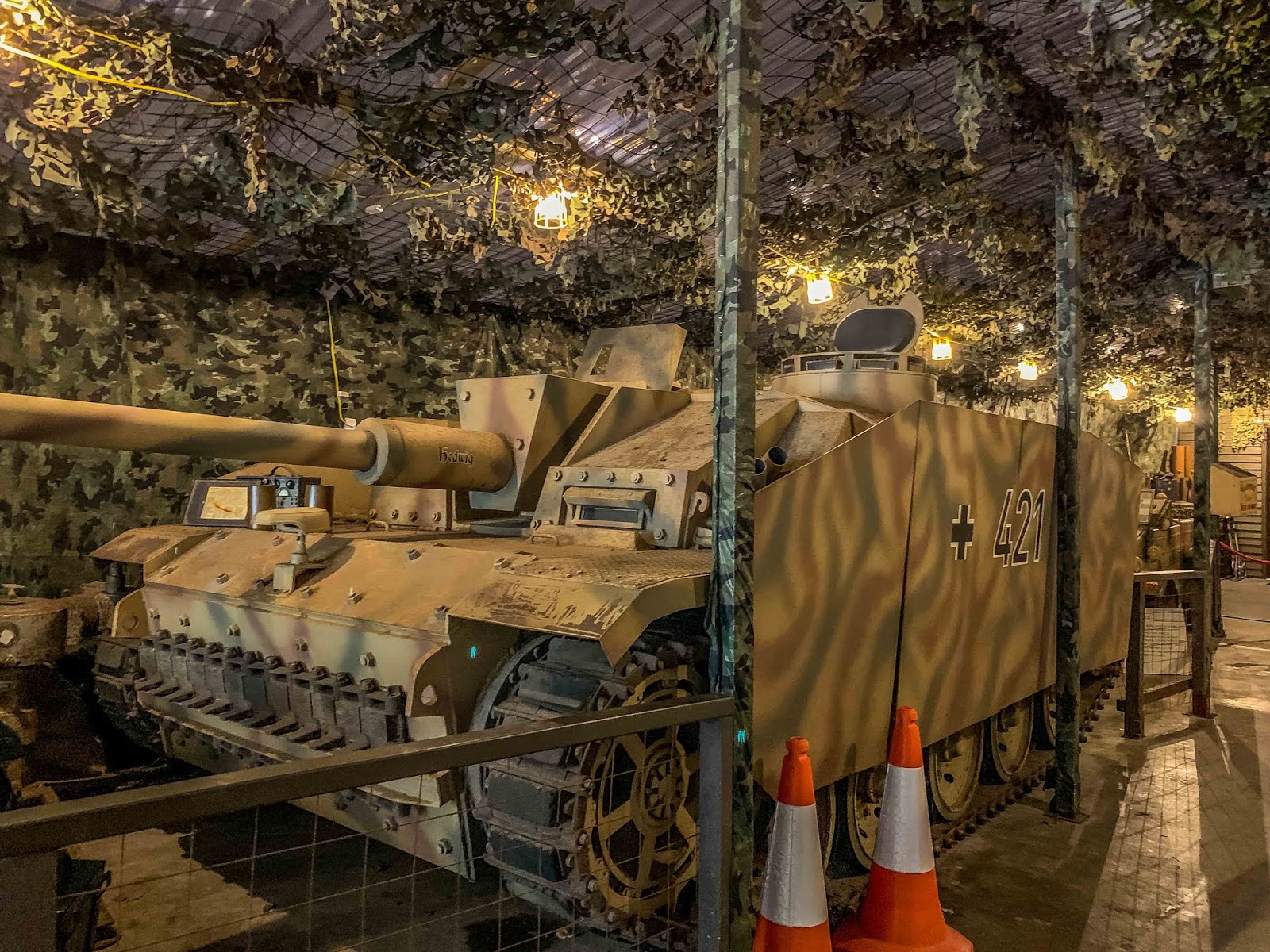 |
| Stug III[1] tank destroyer |
At the beginning of the occupation, Hitler’s October 1941 order to fortify the Channel Islands (as part of the Atlantic Wall), work began on a string of fortifications all around Jersey. Ho8 was intended to be a vast network of underground tunnels that would allow the German occupying infantry to withstand Allied air raids and bombardment if they were invaded.
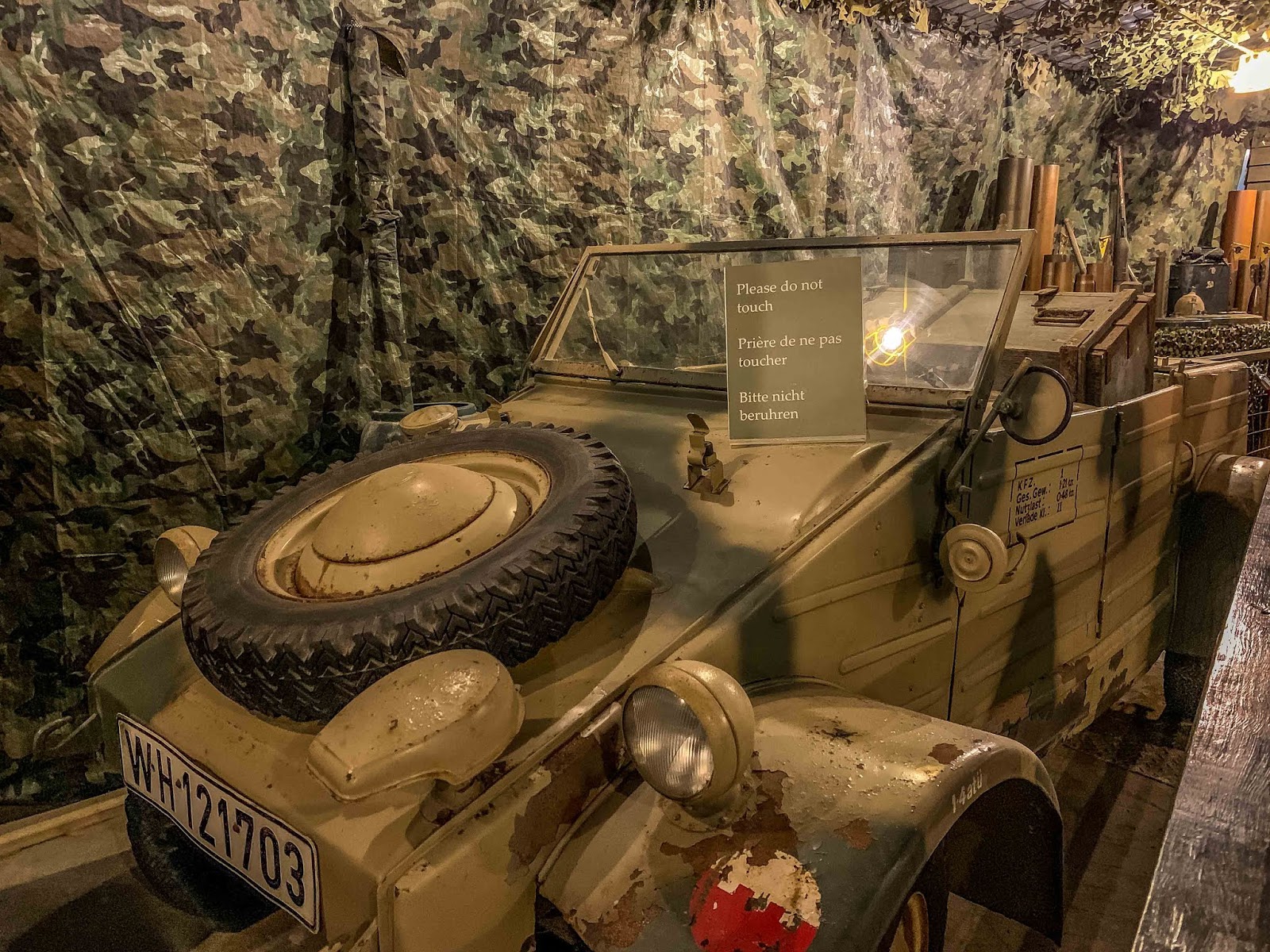 |
| Volkswagen Kubelwagen – meaning bucket seat car – this was the Germans “Jeep” |
Forced laborers, as well as paid laborers and skilled workers, were shipped in to Jersey and put to work building the complex.
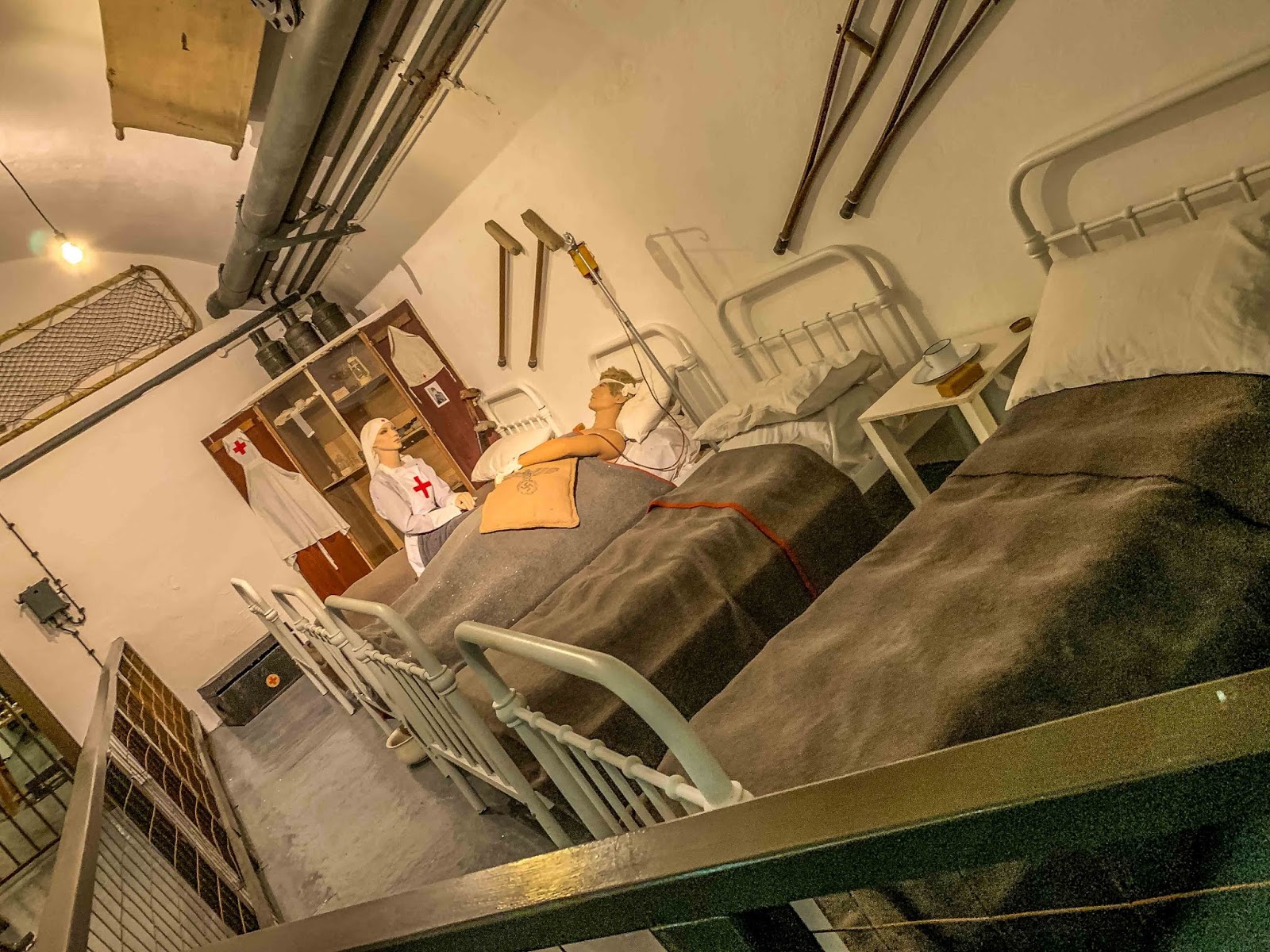 |
| Hospital |
Conditions were terrible, although Russian and Ukrainian POWs were treated the worst, with cases of malnutrition, death by exhaustion and disease among them becoming common.
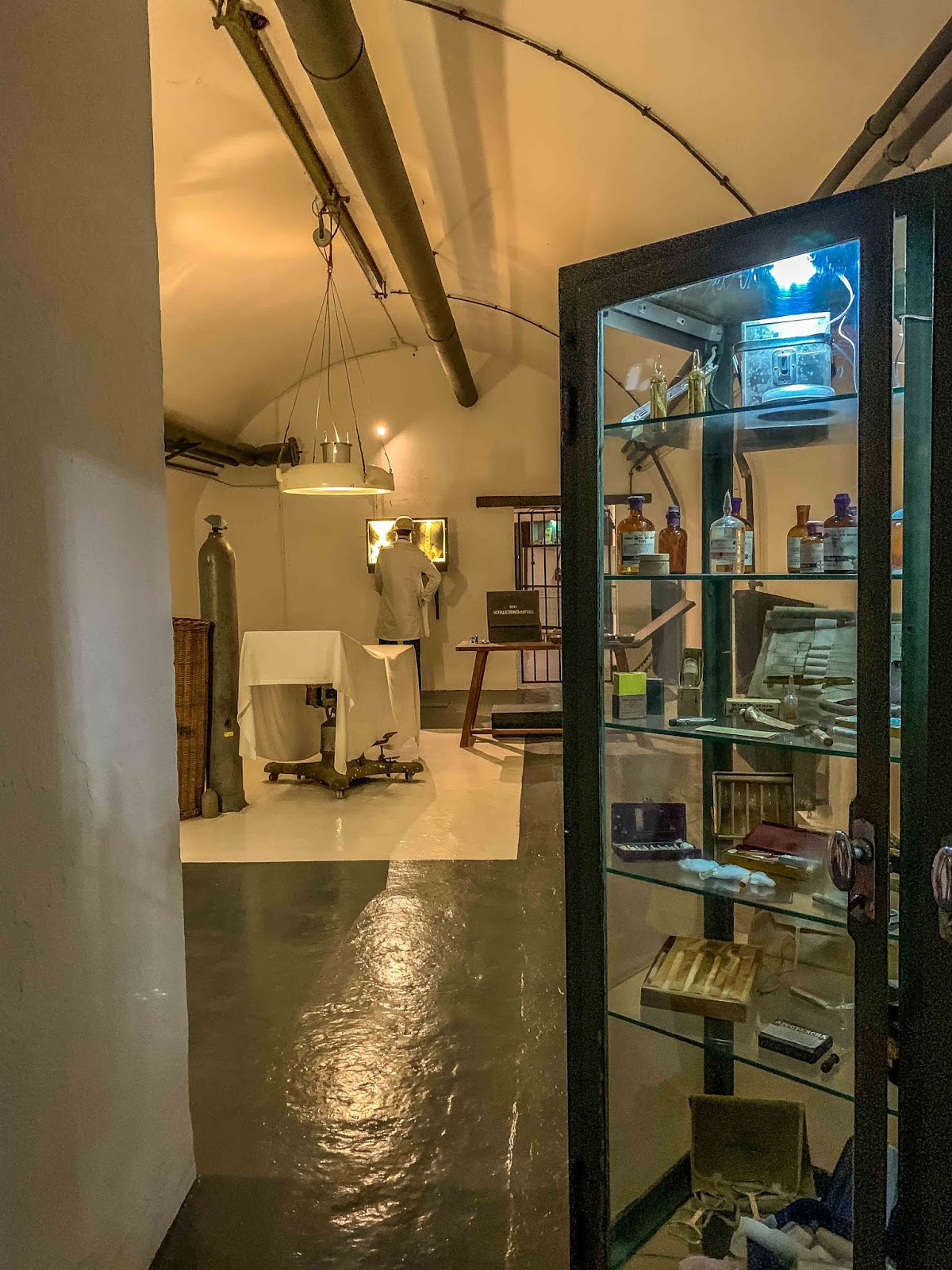 |
| Operating room (Theatre) |
On the other hand, the voluntary workers often had much better conditions, being offered over four times the wages that they would have earned working in similar jobs for the States of Jersey, and often receiving extra food rations, which was vital during that time for their families.
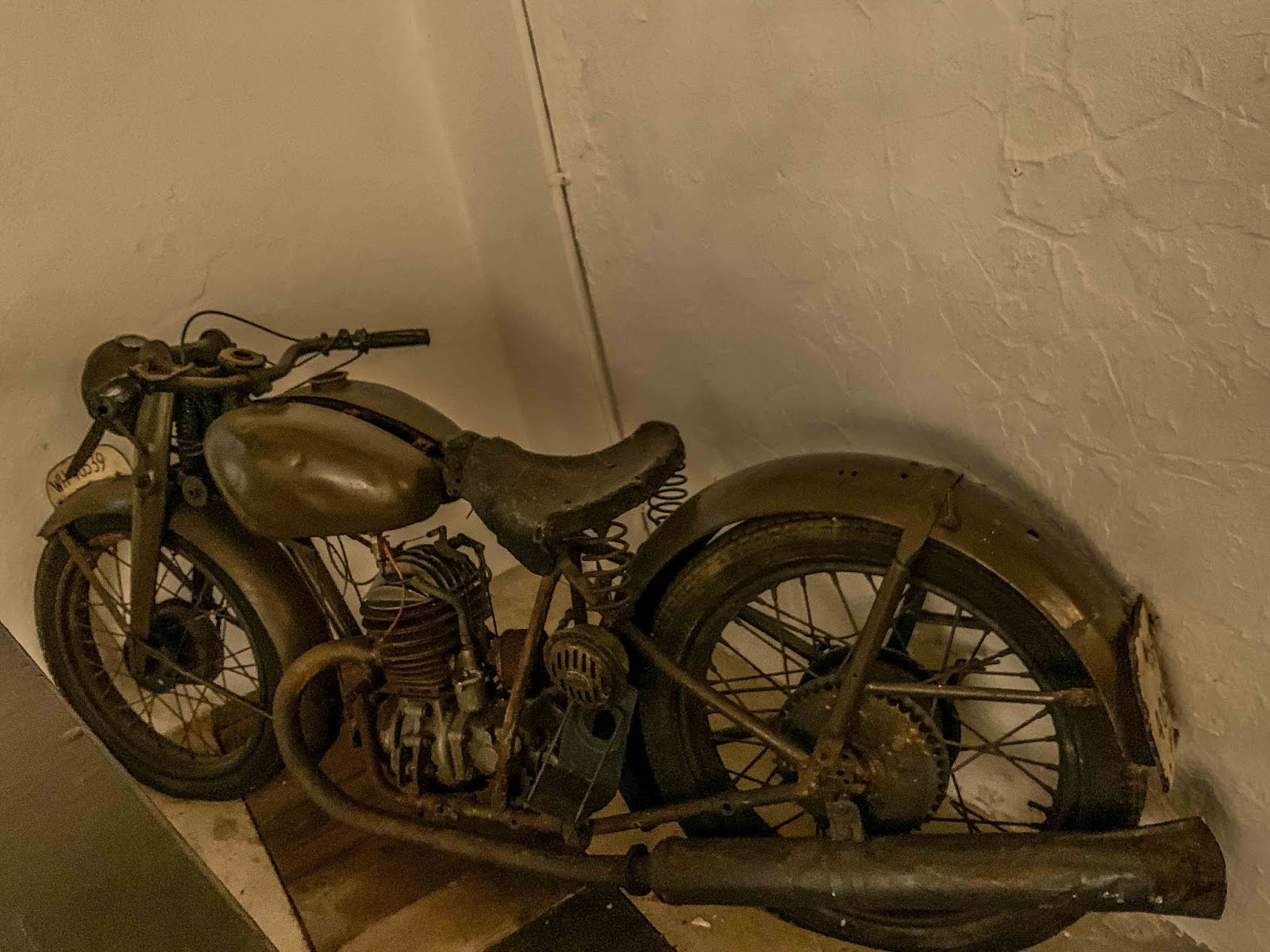 |
| Puch 250 S4 Military Motorcycle |
In late 1943, with the threat of an Allied invasion of Europe (Operation Overlord) becoming clear, Ho8 was to be converted into a casualty clearing station and emergency hospital.
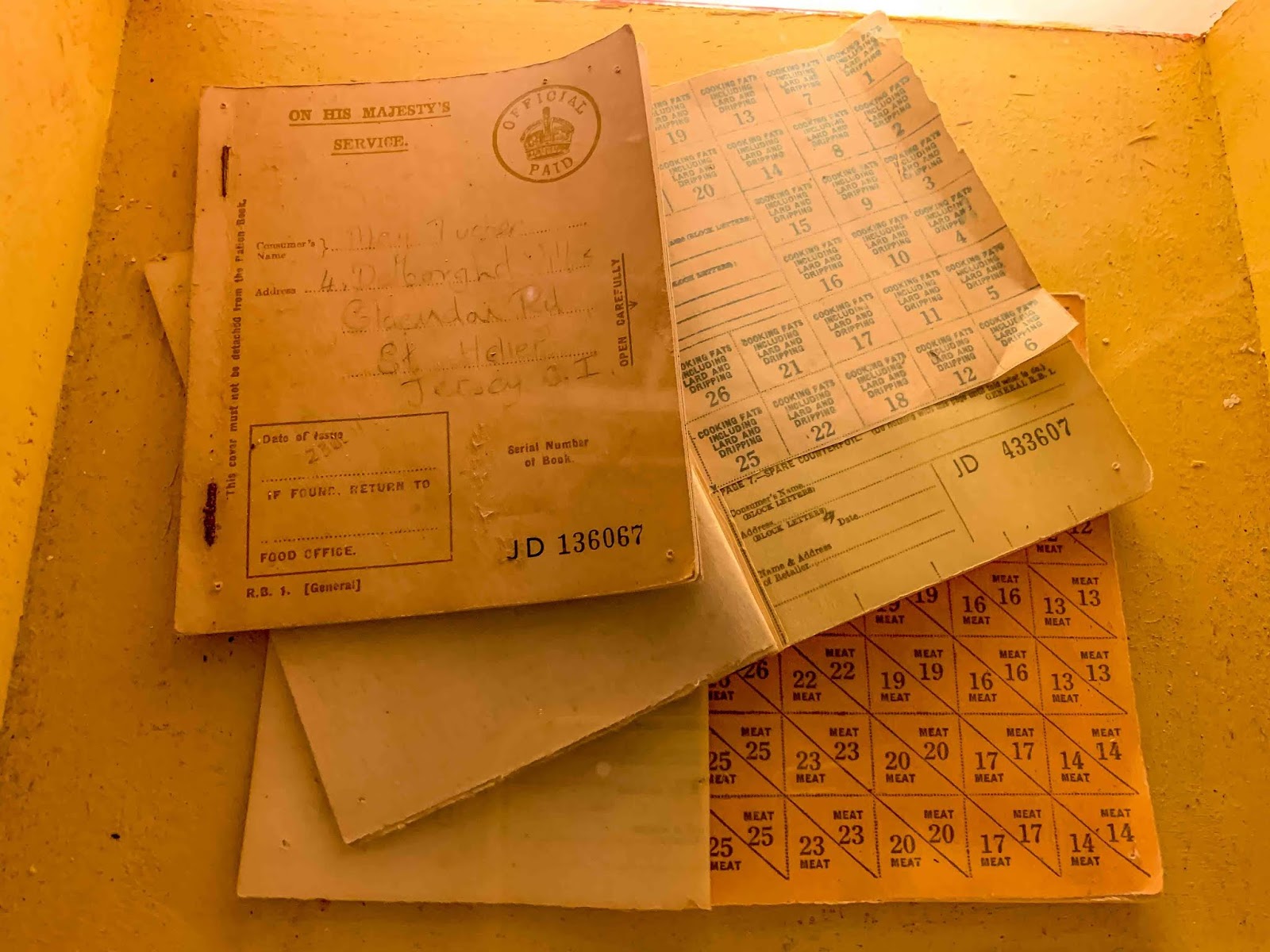 |
| Ration coupons utilized during the occupation. The amount your family received depended on your nationality |
The hospital had 500 beds for patients, with a full heating and air conditioning system.
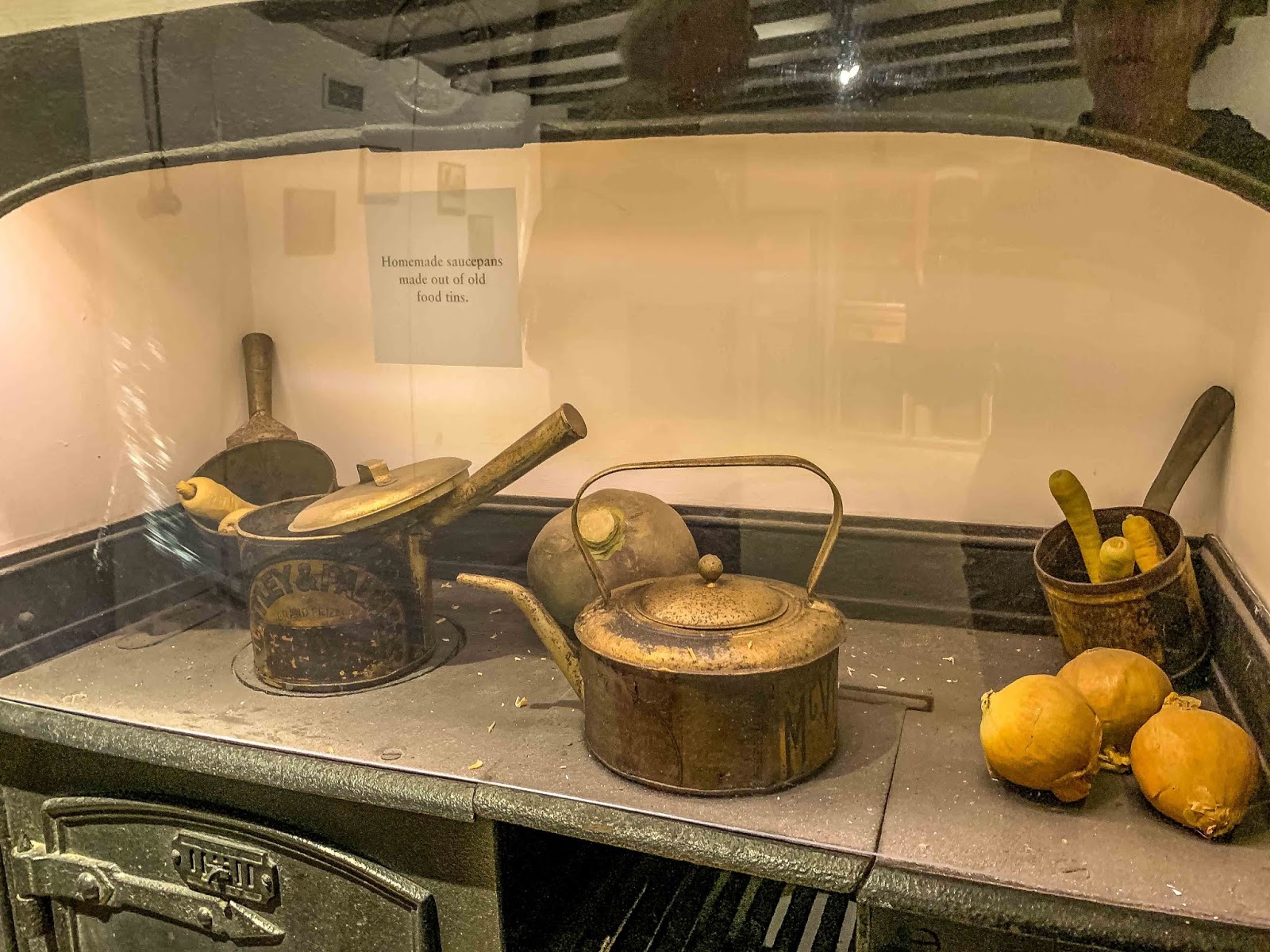 |
| As life became tougher, sauce pans were made from food tins |
(No heat was on today as we were really cold by the time we finished the tour.) A system of gas-proof doors was installed to maintain a clean airflow in the tunnels, and a fully equipped operating room (theatre as its called here in Jersey) was installed.
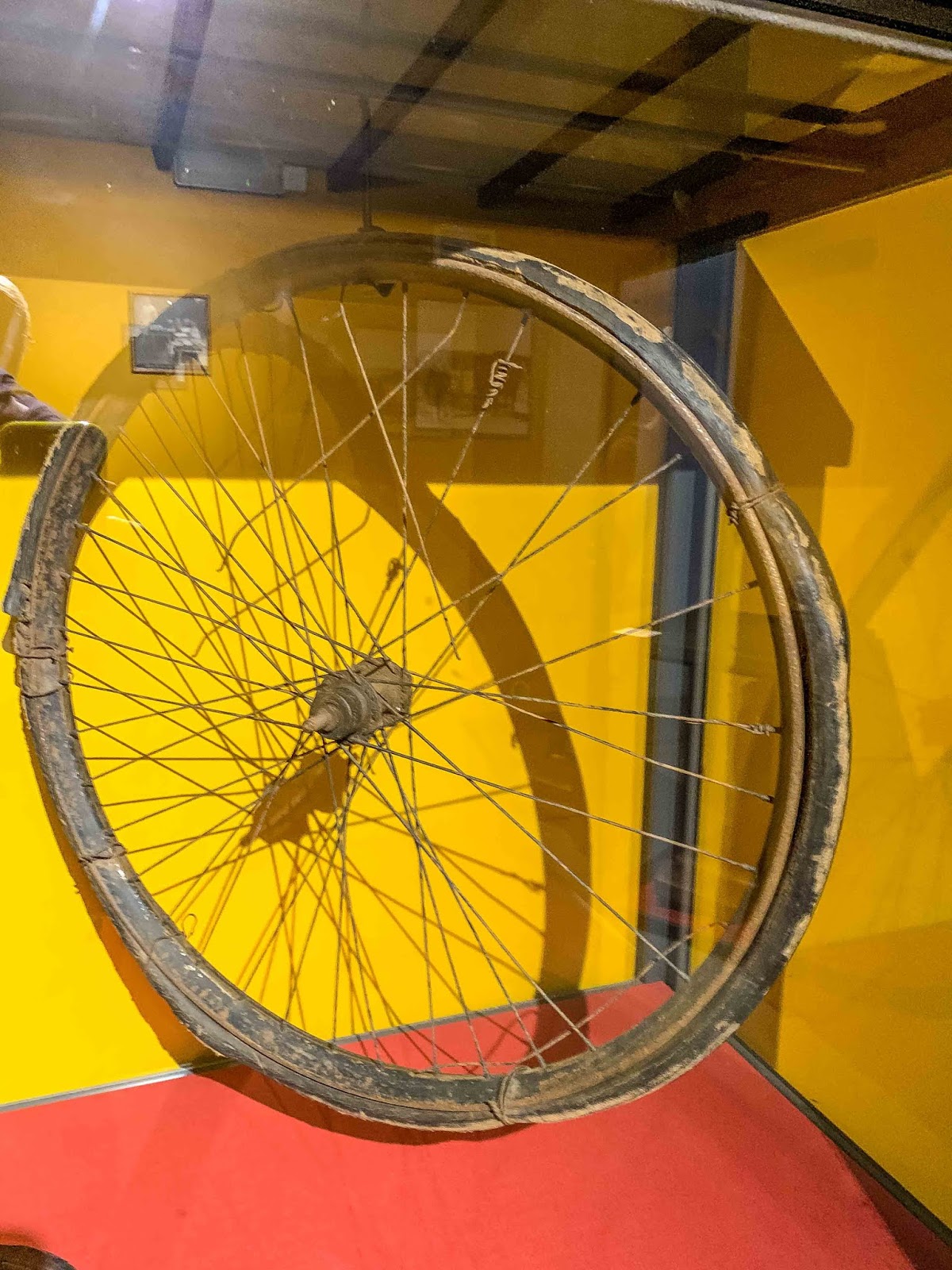 |
| Bicycle tires were made from garden hose pipes when no supply was left |
Unfinished tunnels were sealed off.
Despite the huge preparations and fortifications made to the Channel Islands, none were ever utilized.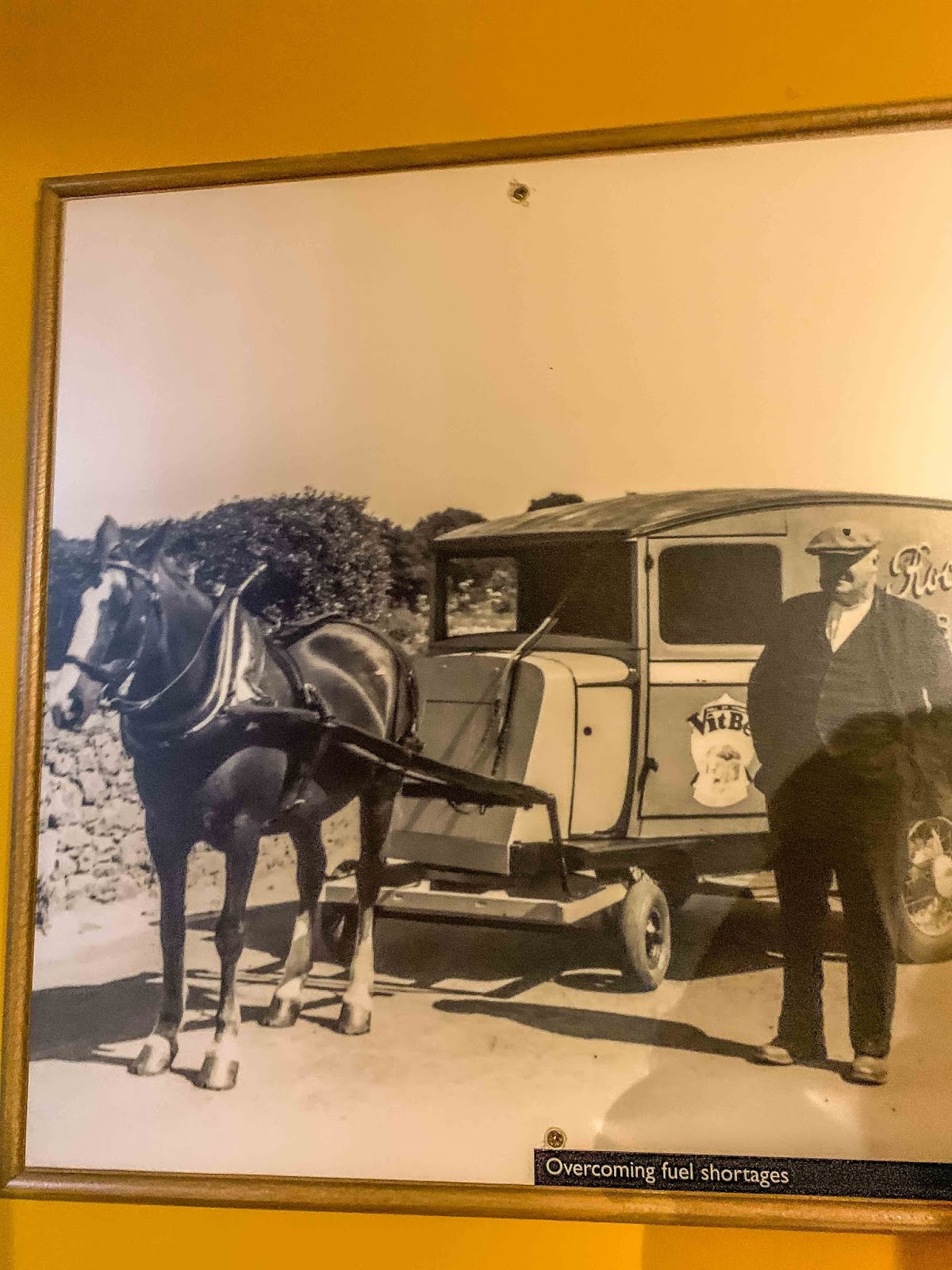 |
| Horses were used to pull cars when shortages of fuel became apparent |
The occupying forces in the Channel Islands surrendered on 9 May 1945 (one day after the rest of the German forces surrendered).
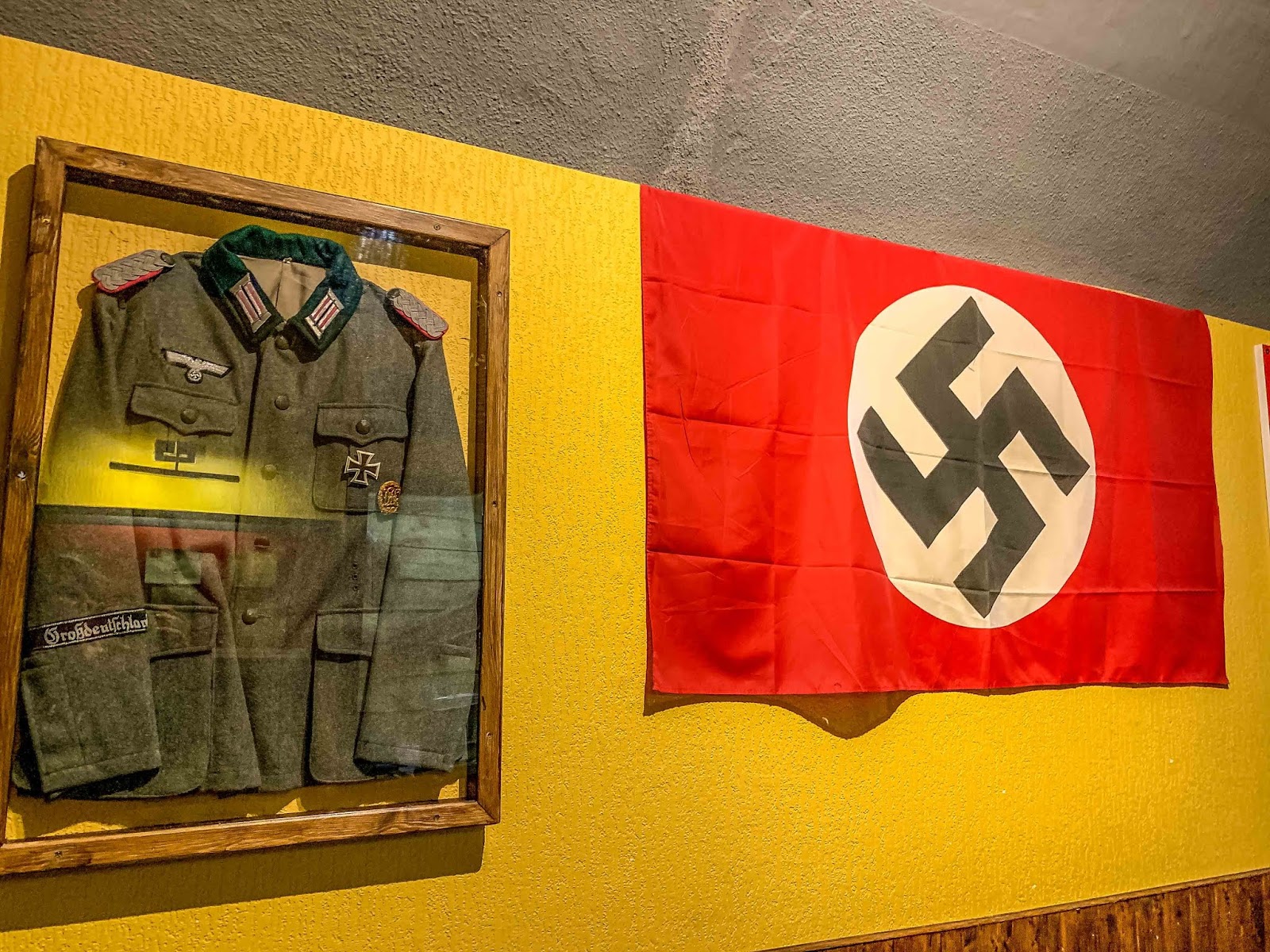 |
| German uniforms and swastika flag |
Ho8 fell into disuse, with British soldiers and souvenir hunters stripping the tunnels of equipment.
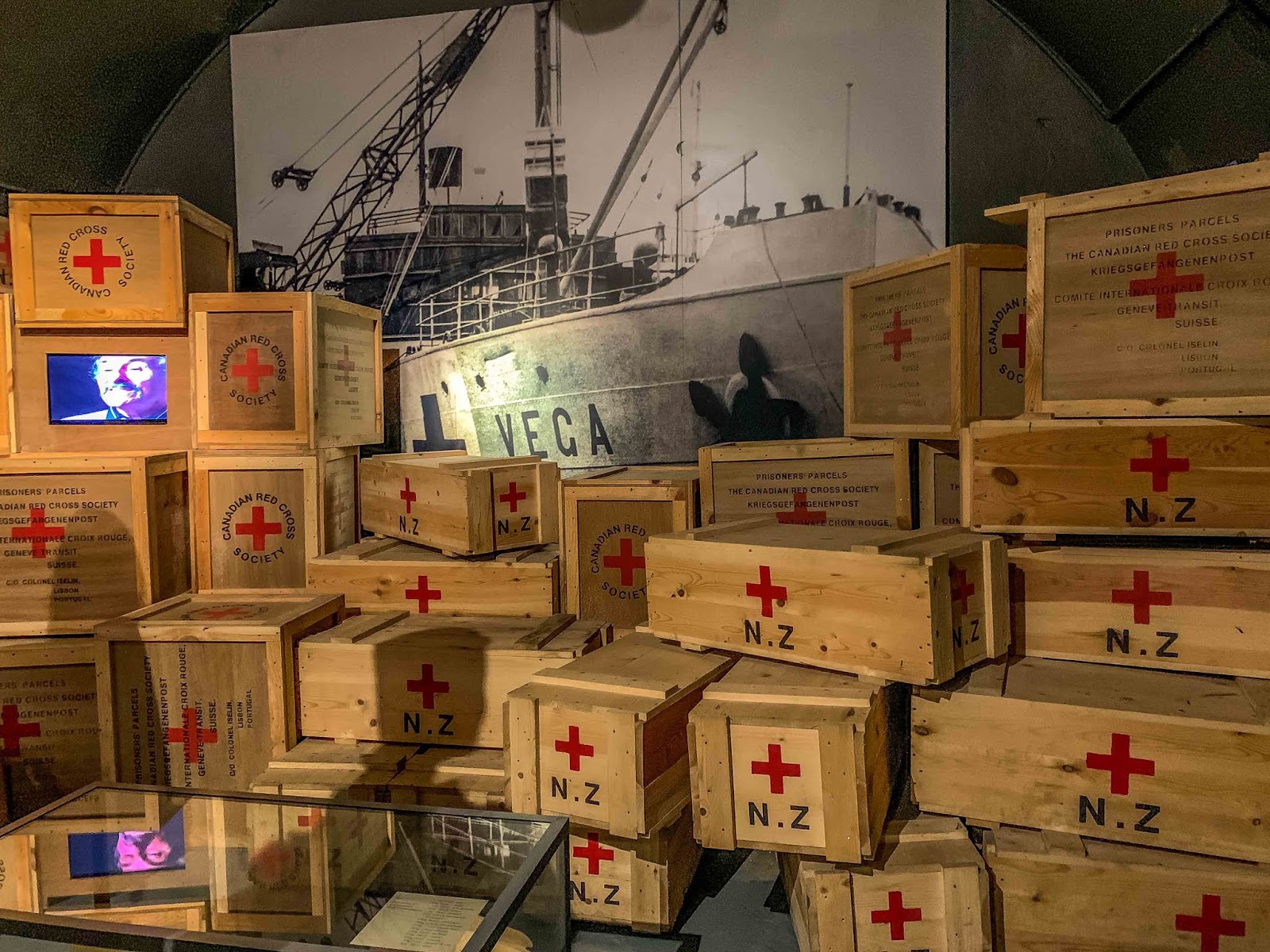 |
| Supplies brought over on the SS Vega that saved many lives |
What we saw in the tunnel as it is today (a museum) was a story set in photos and artifacts of the beginning of the occupation in 1941 to Liberation in 1946. There were stories being told by people that lived through it along with letters about the extreme hardships during that time frame.
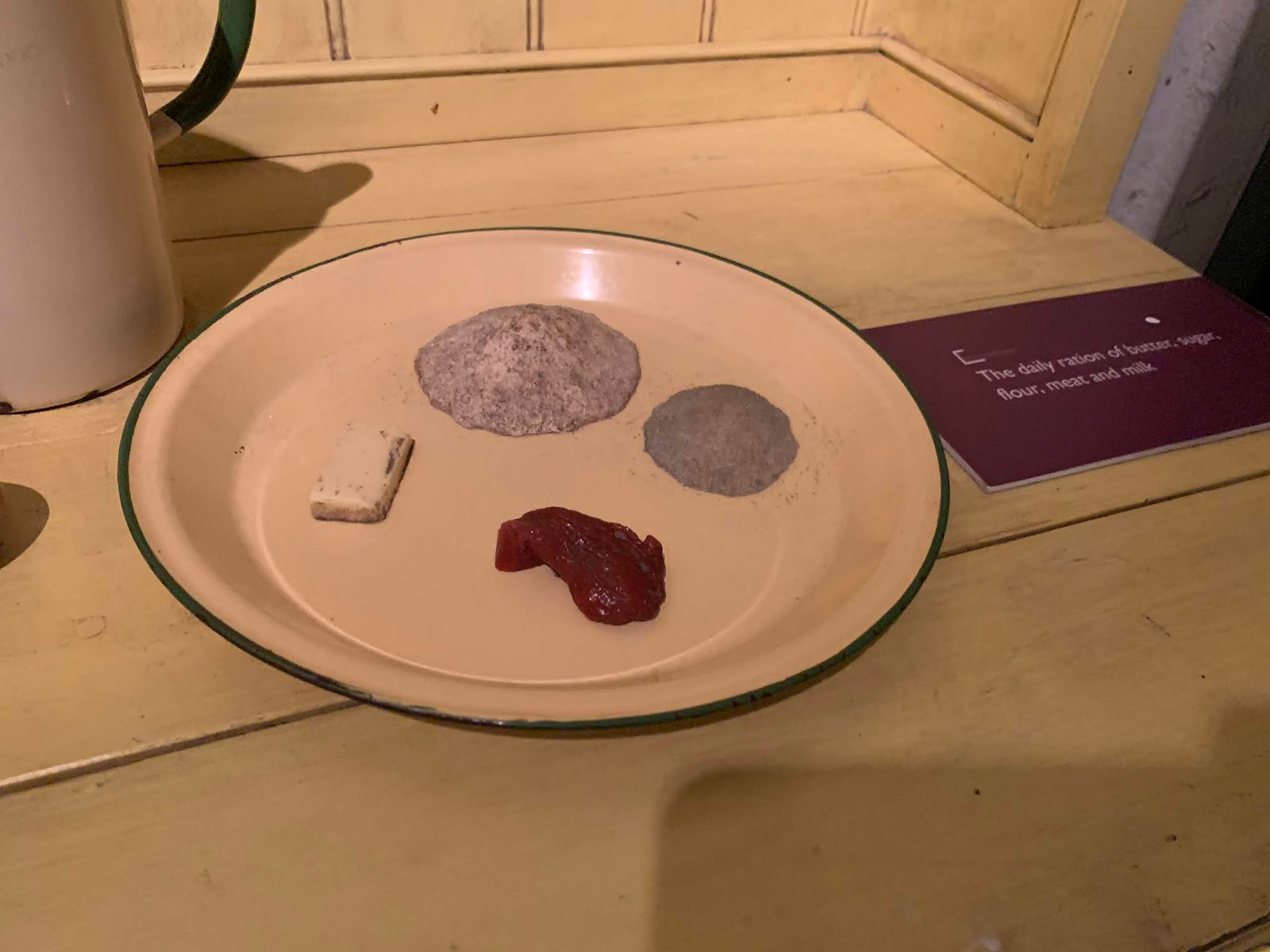 |
| The daily ration of butter, sugar, flour, meat and milk |
It showed what they did under Hitlers reign in order to survive that devastating time. Some stories included bribing islanders with special treatment or more rations to provide them with information on other islanders that were not abiding by Hitlers rules. Even though their neighbors may be severely punished or killed, some islanders were writing letters about their neighbors, mostly because they were starving and needed to feed their family.
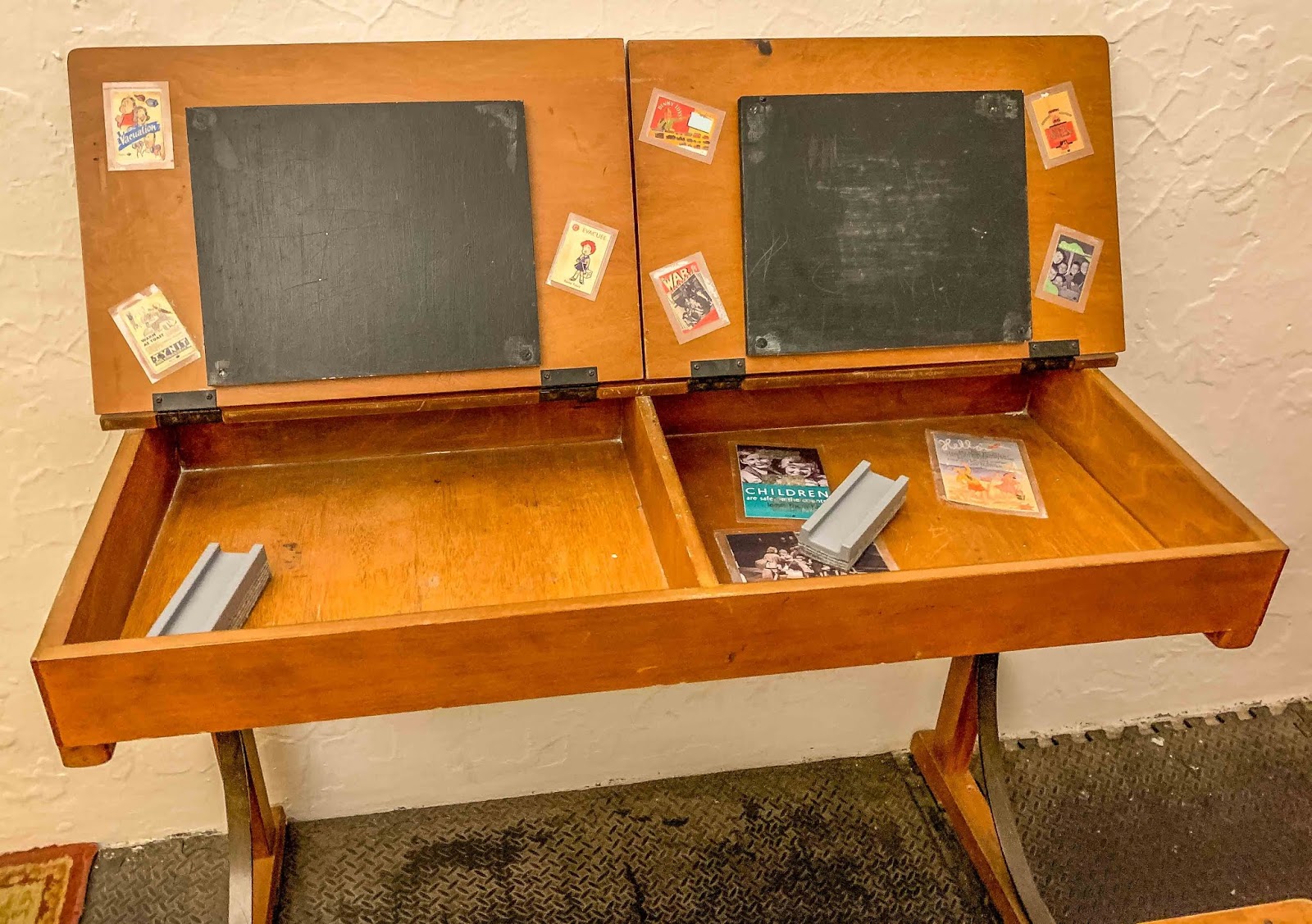 |
| Due to shortage of supplies, slates were used in schools. The school age of graduation was increased to 15 to try and keep children from getting into trouble. Even with this, 2 – 14 year old girls were jailed for 3 days for spitting cherries on a German soldier |
Some of the postal workers were so concerned with all the letters and betrayal that they steamed open all the letters and held them for 24 hours before delivering them to the German forces. They then warned those that were being ratted out, giving them time to remove the forbidden items.
Each museum or attraction that we visited told a little more or a little different of what life was like as a native of Jersey from the time it was discovered, through the German occupancy up to today. This island is so full of history that any history buff would be in awe.
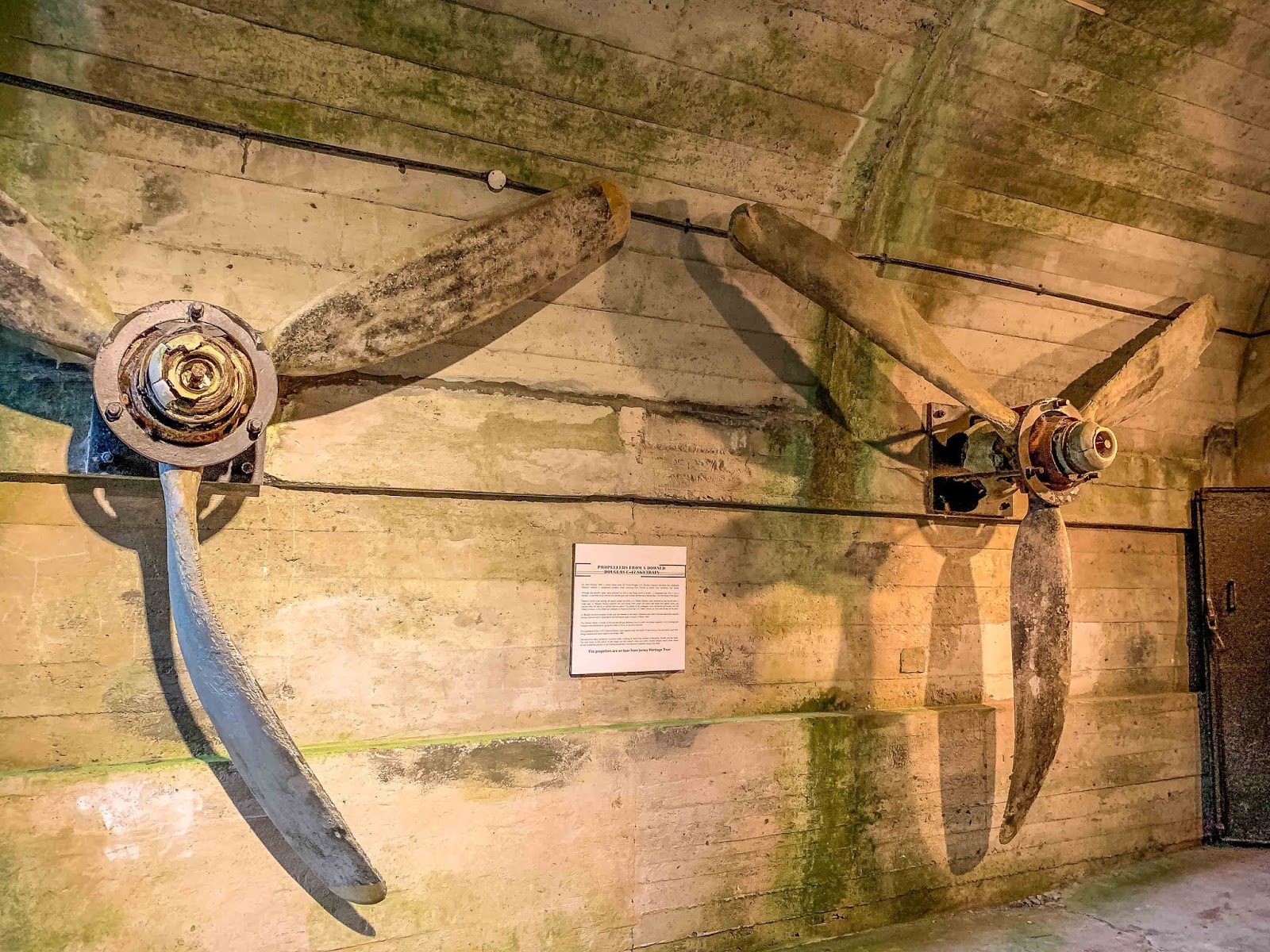 |
| US Army Douglas C-47 Skytrain propellers – While transporting from France to Britain the navigation system failed and the plane flew over Jersey. Although clearly in distress, it was fired upon by the German anti-aircraft guns and it crashed. All drowned except the pilot who became a POW and was released when others were released on Liberation day. The German officer was disciplined for firing upon an aircraft in distress |
I, for one, hated my history classes. Could not stay awake! But, since we have been through all of the history of the Normandy D-Day invasion and the German Occupancy here on Jersey (as part of that same war), I am beginning to appreciate the historical part of our past and how our lives have come to be.
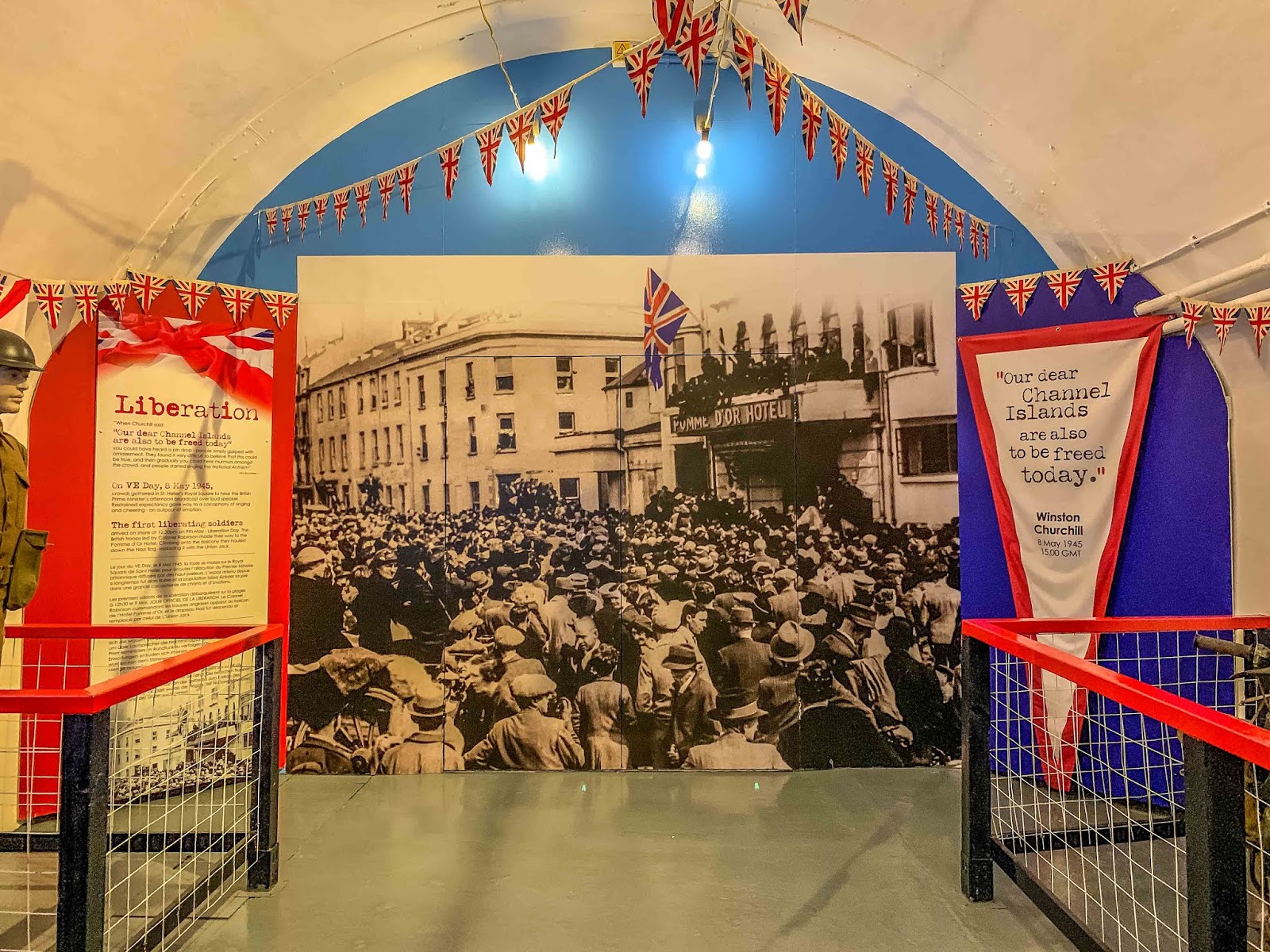 |
| Many pictures such as this were stationed around the tunnels to tell the story. This was Liberation day when the British flag replaced Hitlers German flag |
It is sad when we hear of items back in the USA being “erased” from history books or monuments torn down that are part of ancestral past.
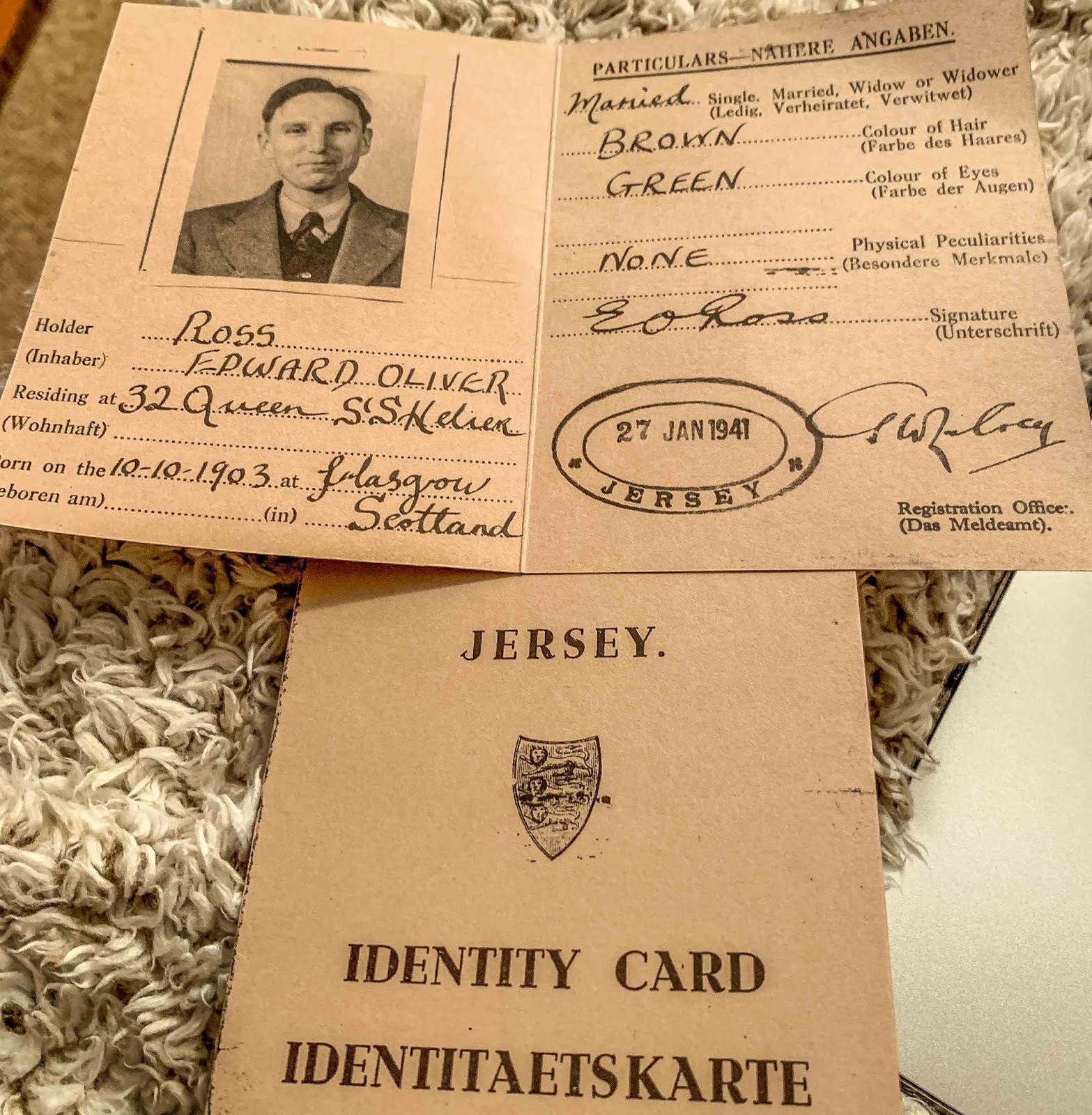 |
| All natives that remained on the island and did not flee to France, were given ID cards such as these when the occupation took over. There were posted rules that were every strict. Included were notices that work hours were 7 am – 7 pm, 7 days a week and curfews were set that no one could leave their homes certain hours of the day. |
If this continues, our future generations will not know what hardships, fear, happiness and joy that our ancestors have all experienced. Jersey has done a great job in keeping the history alive. Well done!
May God bless you all.
Chuck & Lea Ann
 WorldTravelReynolds