 |
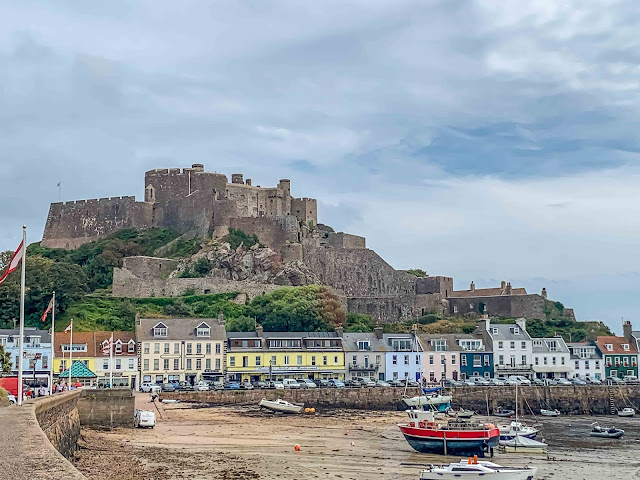
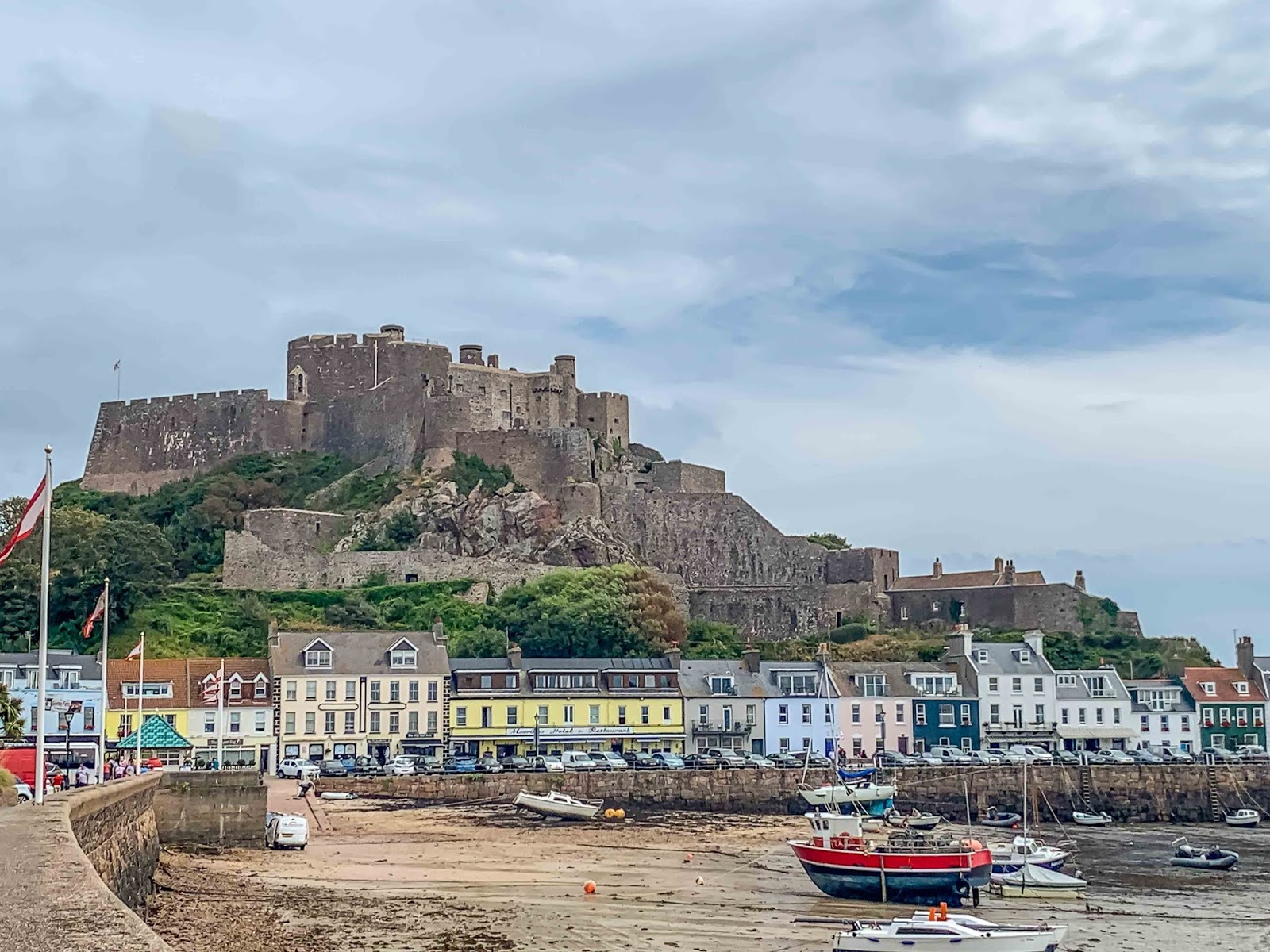
| Mont Orgueil Castle |
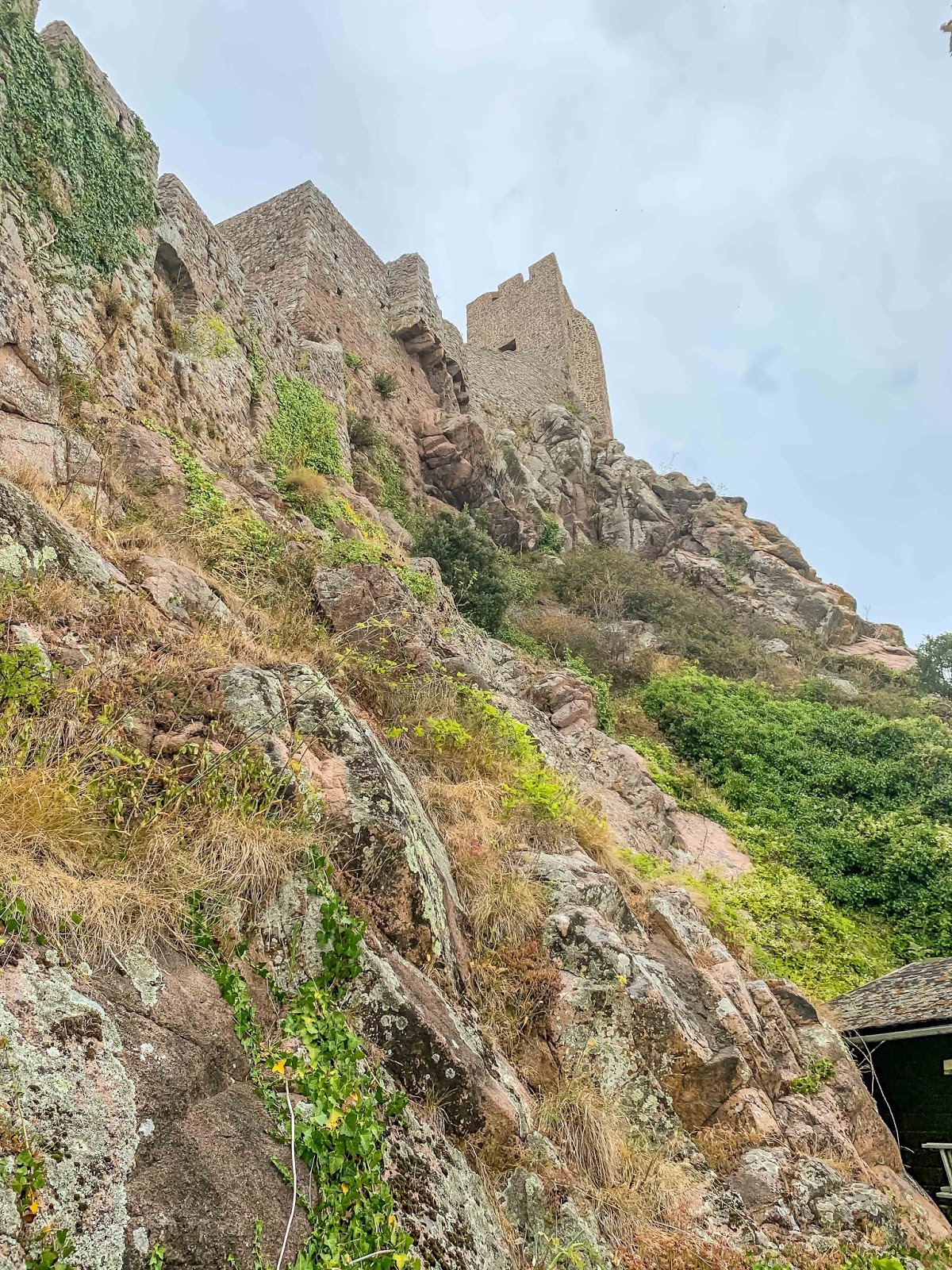
We have seen the last of the castles in Jersey. This one was massive.
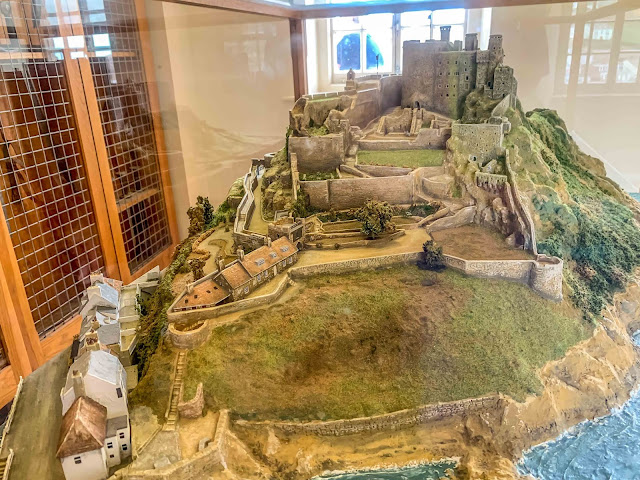 |
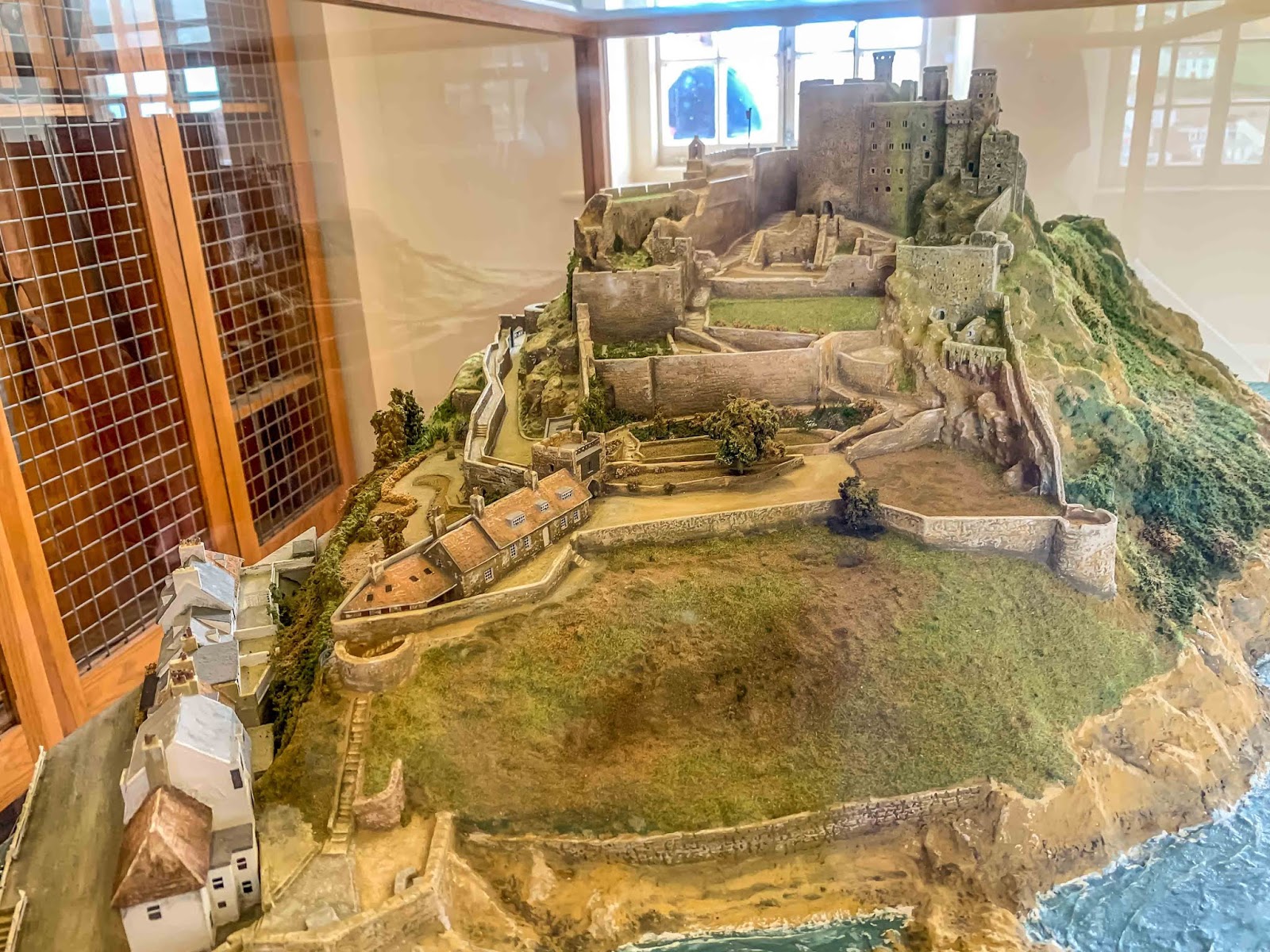
| A replica as looking from the top of the castle. A view to the inside grounds from above. The main fortress at the top of the hill. |
It was the main castle before Elizabeth castle was built to help fend off enemies.
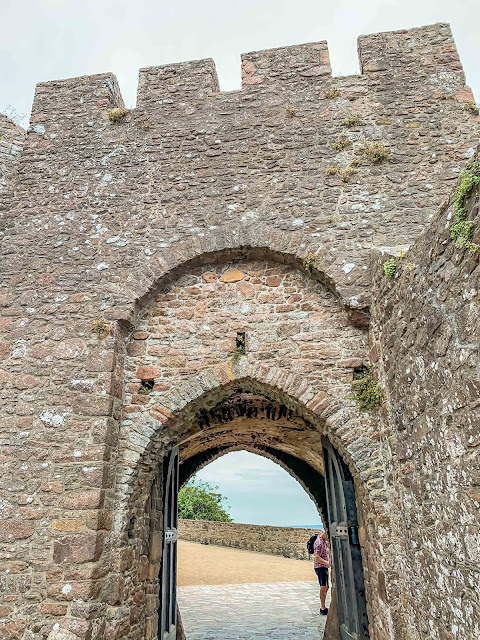 |
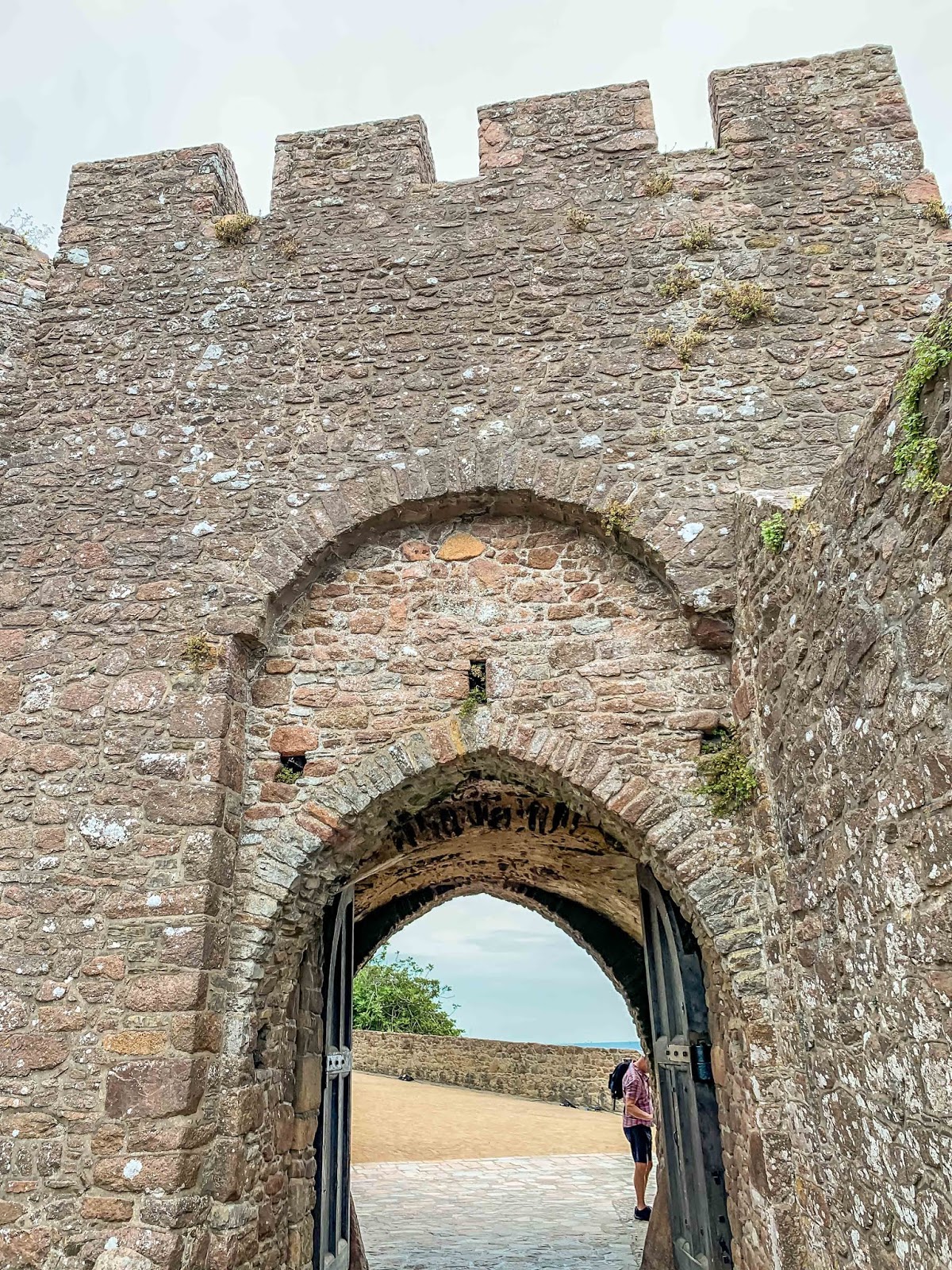
| The Second Gate – The medieval castle was divided up into areas called wards, and access between them was controlled by fortified gates. This gate was built in the 13th century. You approach it by a ramp after crossing a drawbridge. |
This castle contains buildings from the early 13th century up to the German occupation in 1940-1945.
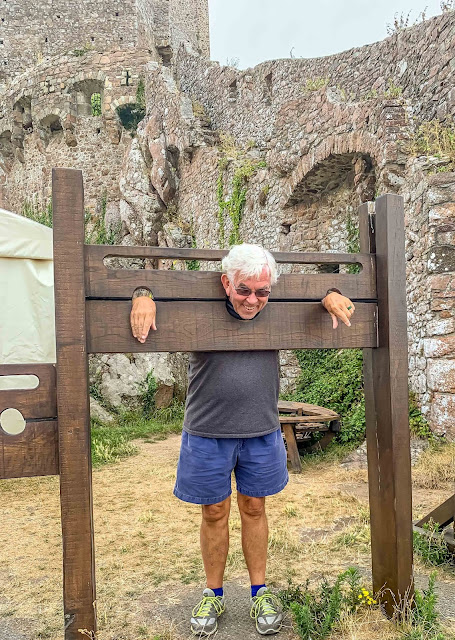 |
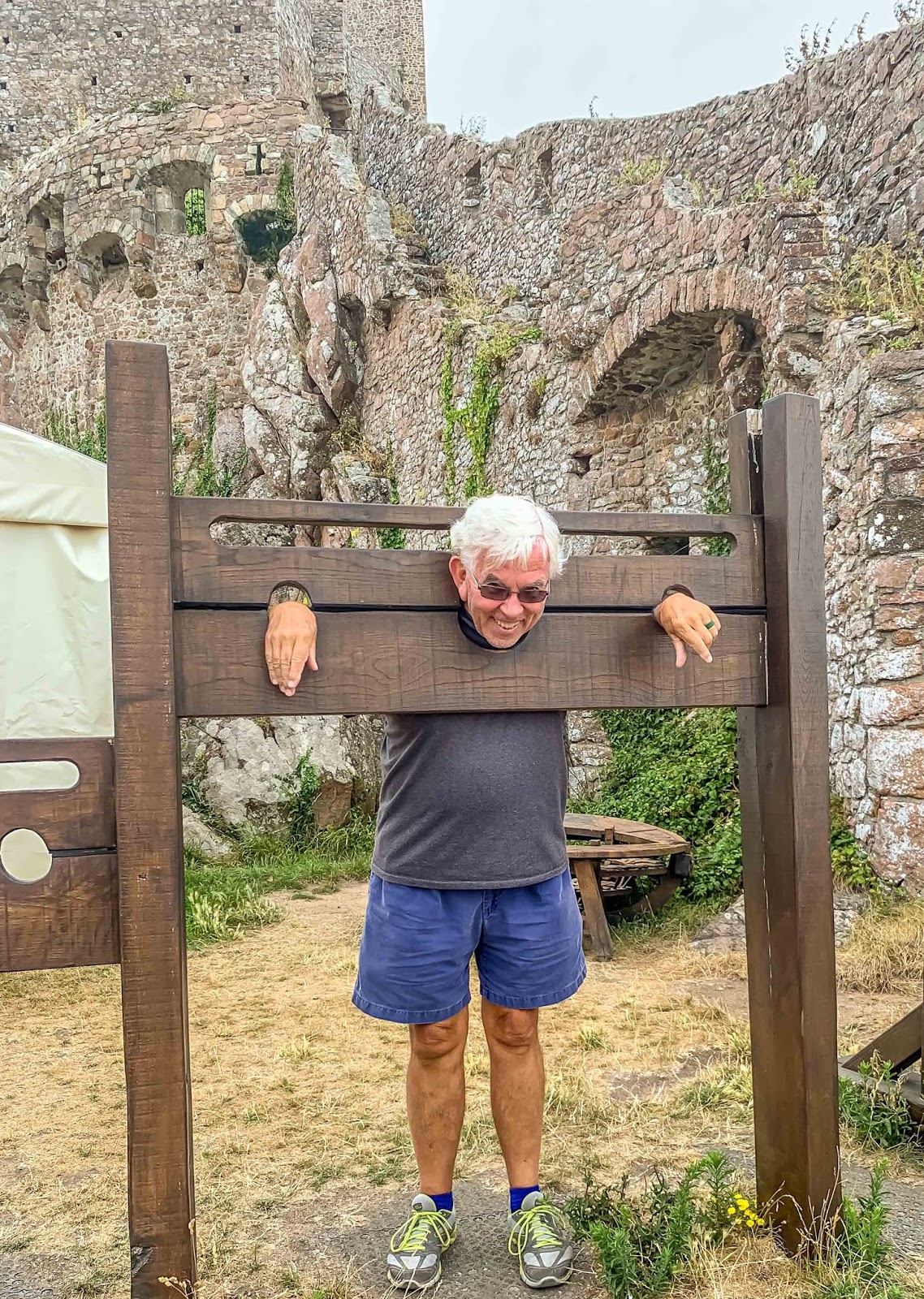
| Chuck’s been a bad boy! It was pretty heavy. I had to lift it to get him out |
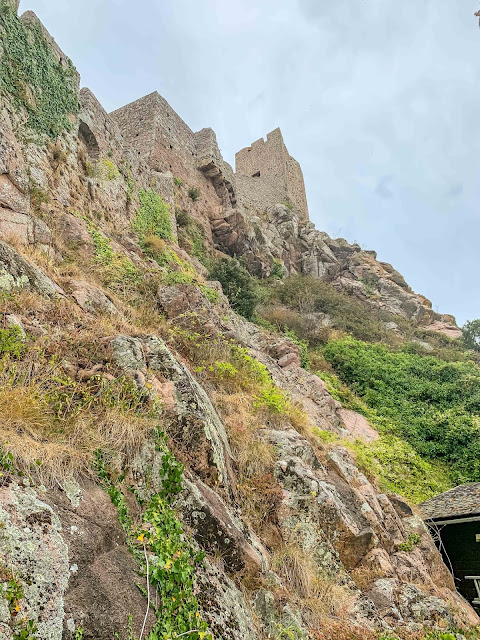 |
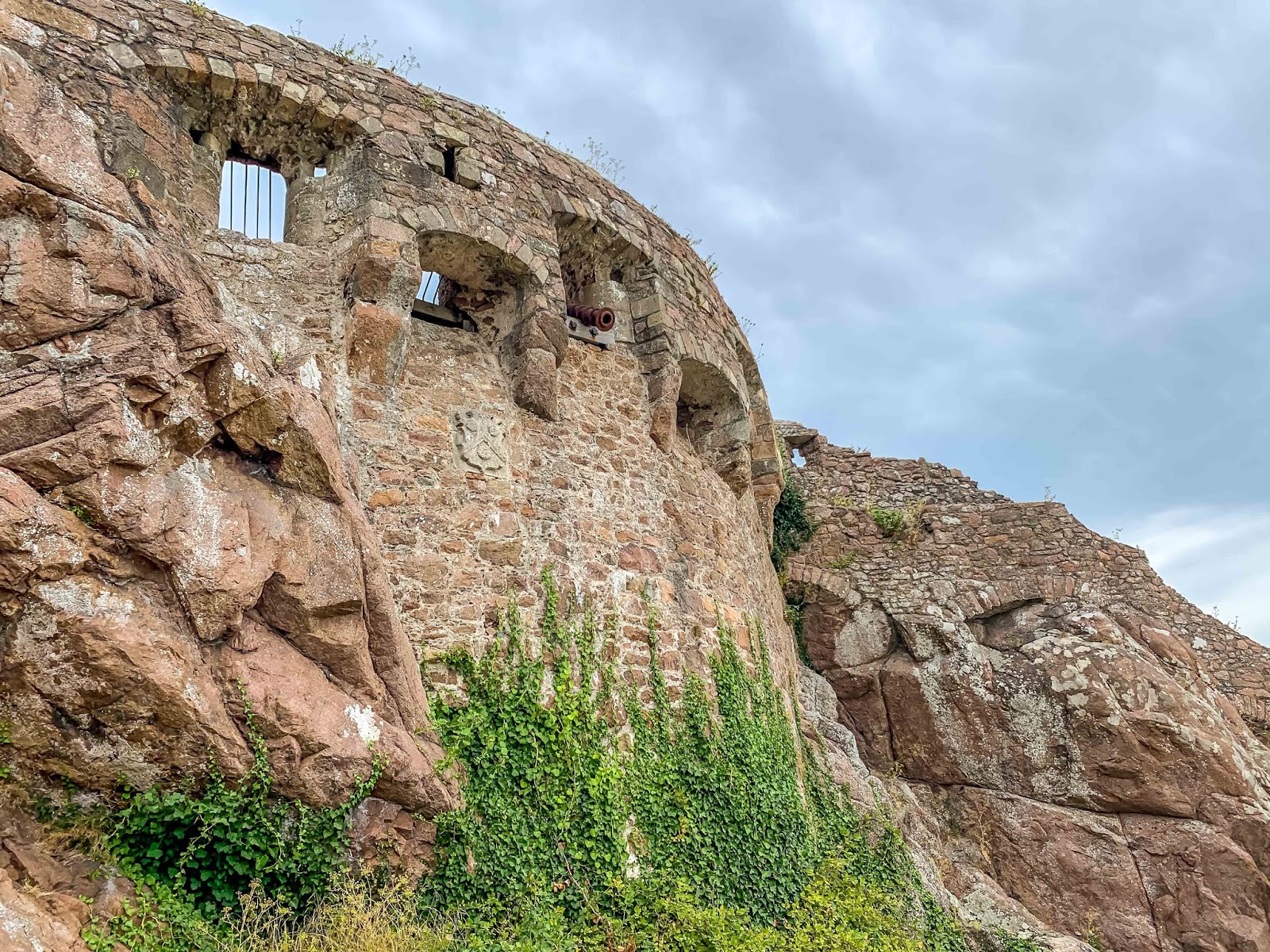
| The Southern Postern – the walls of the castle cling to the seaward side of the steep ridge and are built straight onto the rock, making them virtually impossible to undermine |
There are a maze of rooms, cellars, towers and gun platforms of all periods.
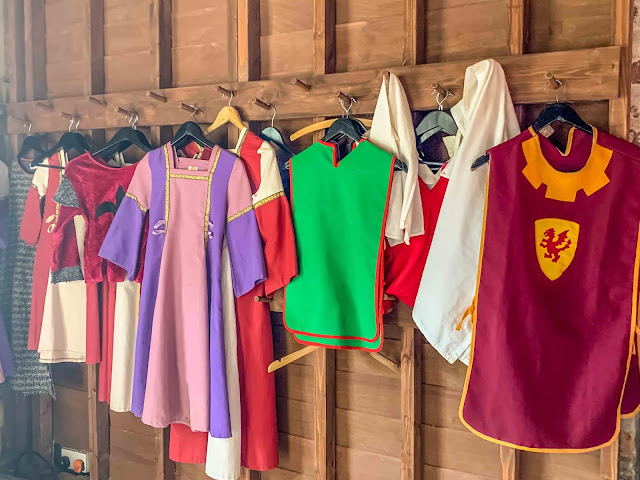 |
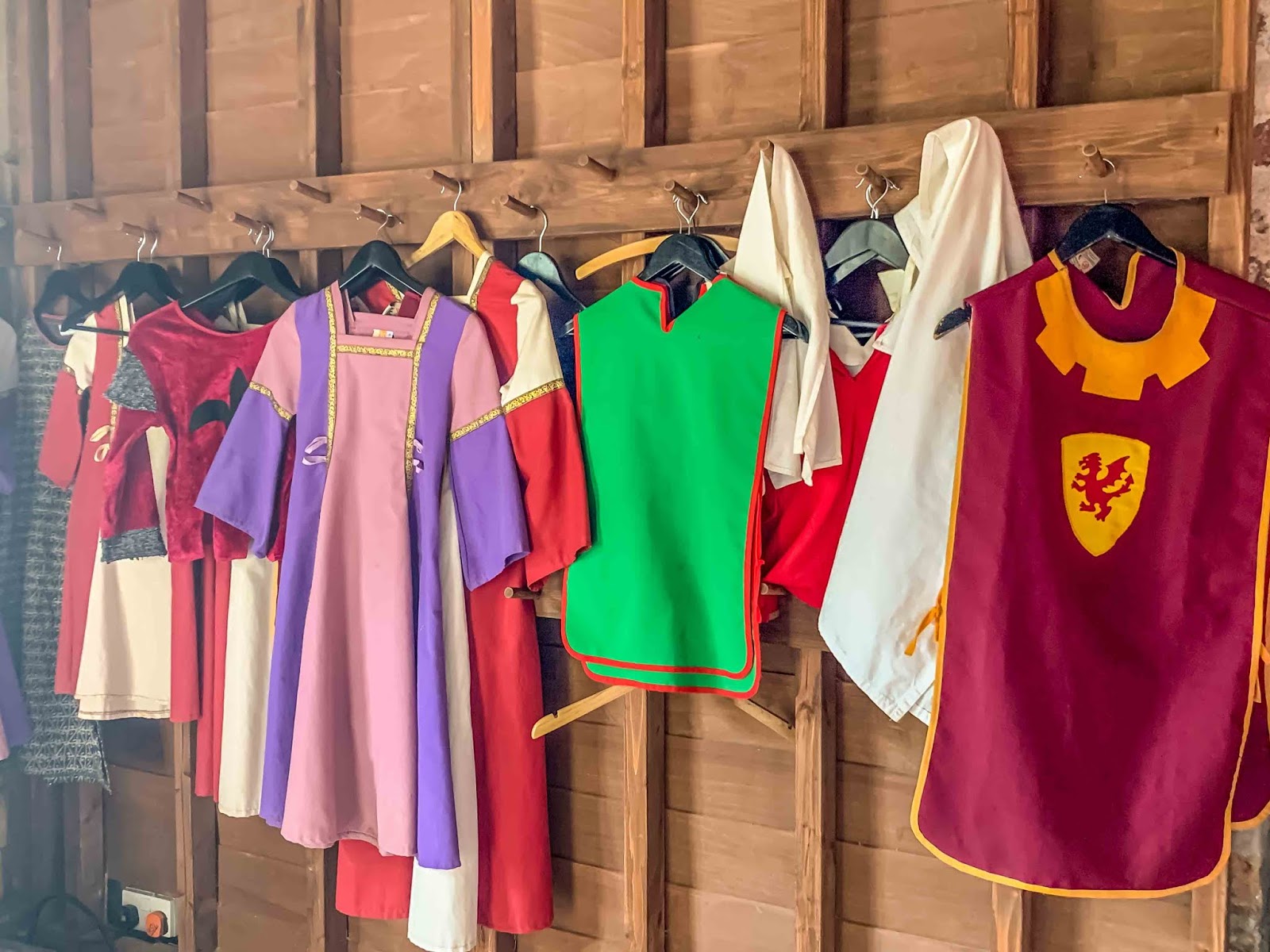
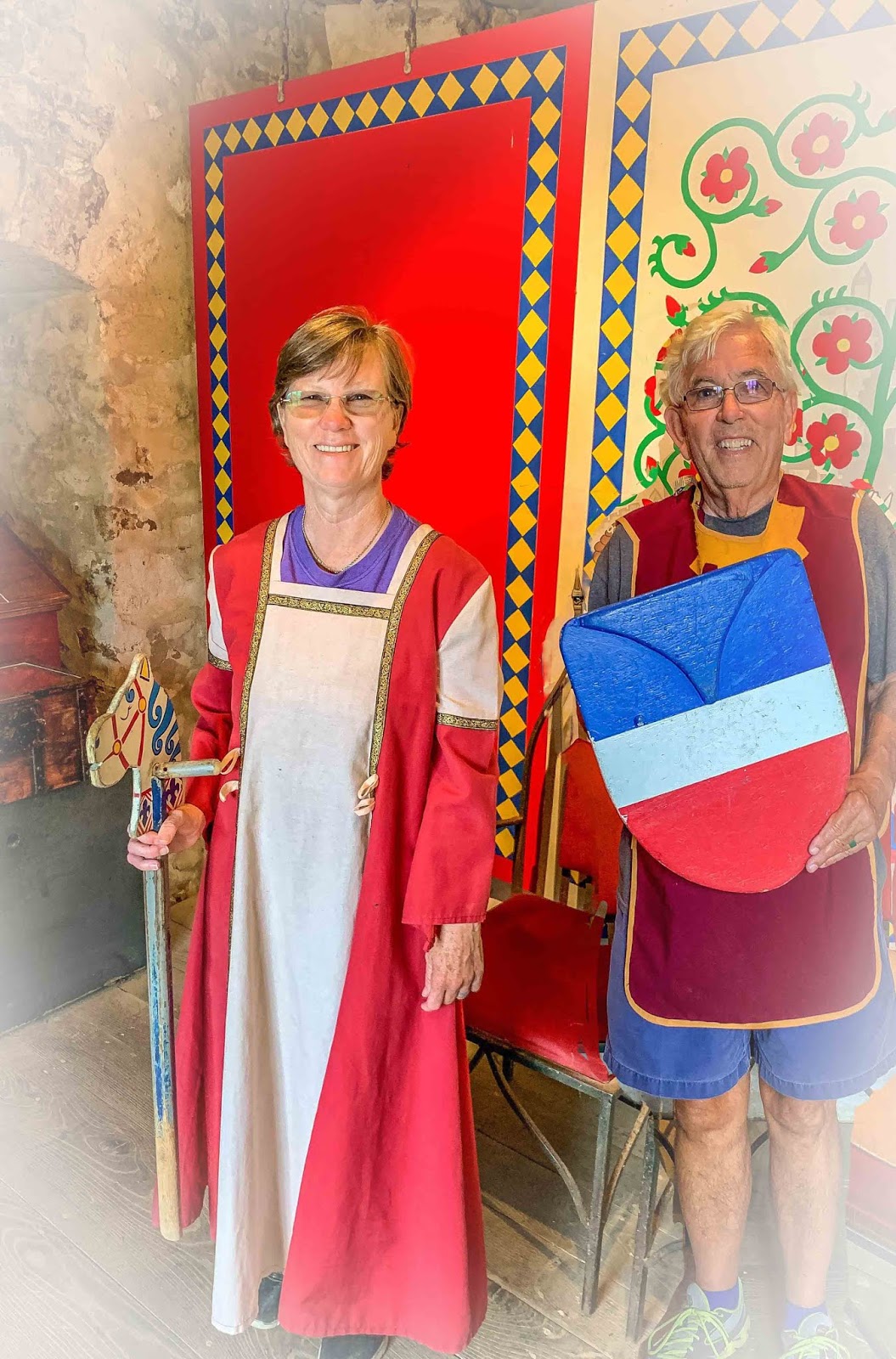
| Clothing for the princesses and knights. Children (and adults) could dress up and wear around the castle |
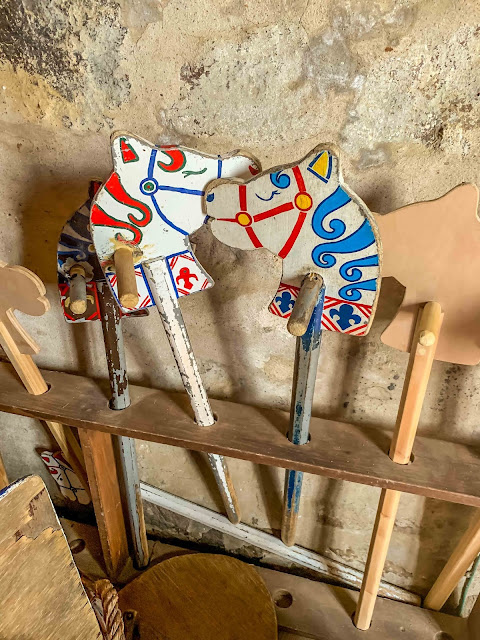 |
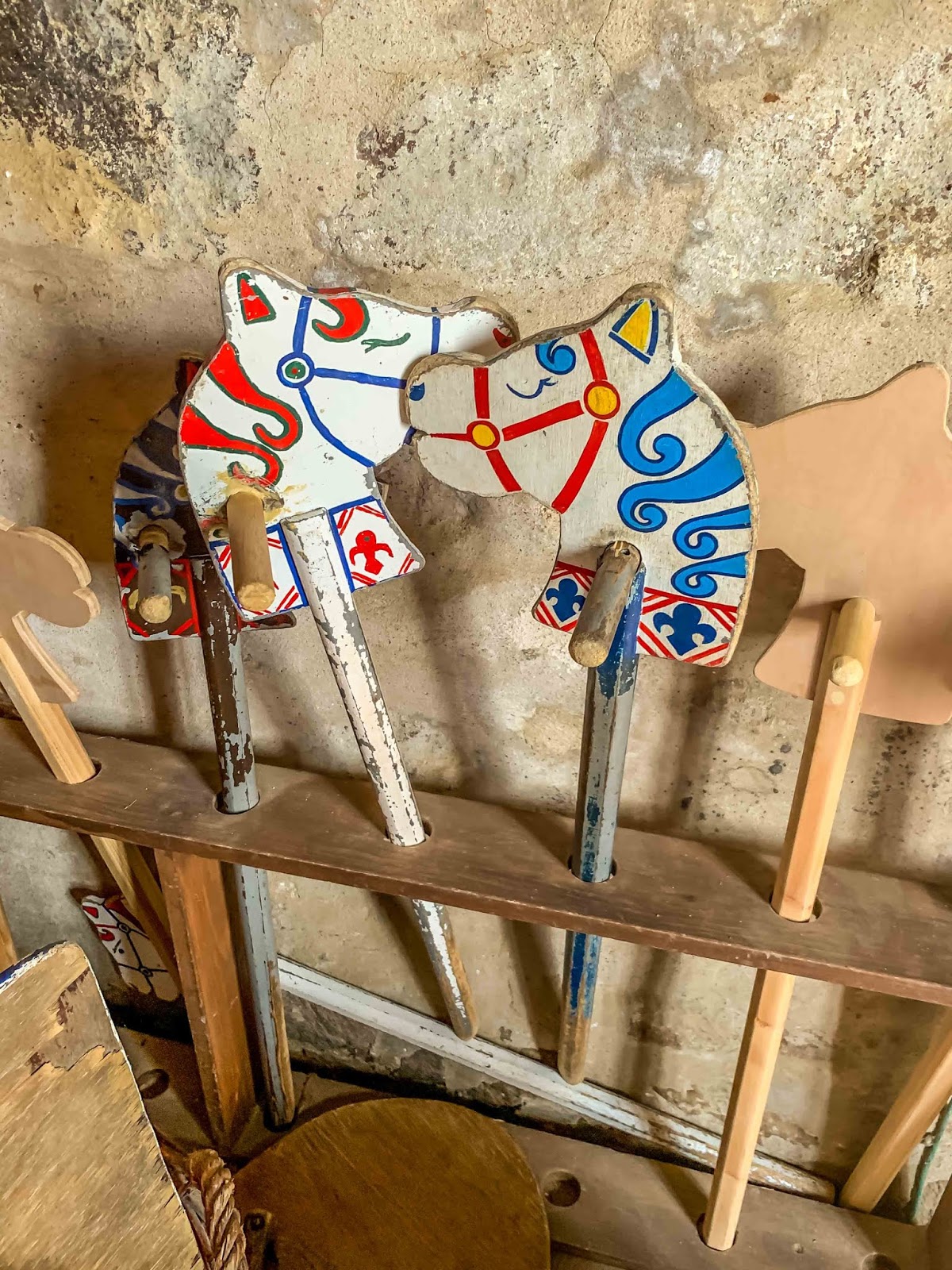
| Part of our dress up – the Knight had to have a horse, right? |
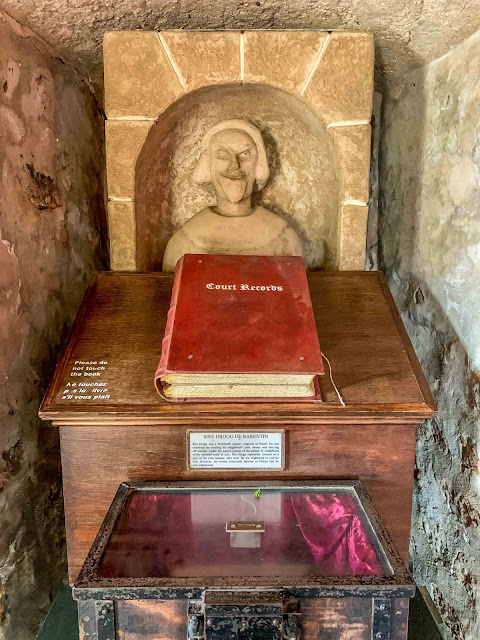 |
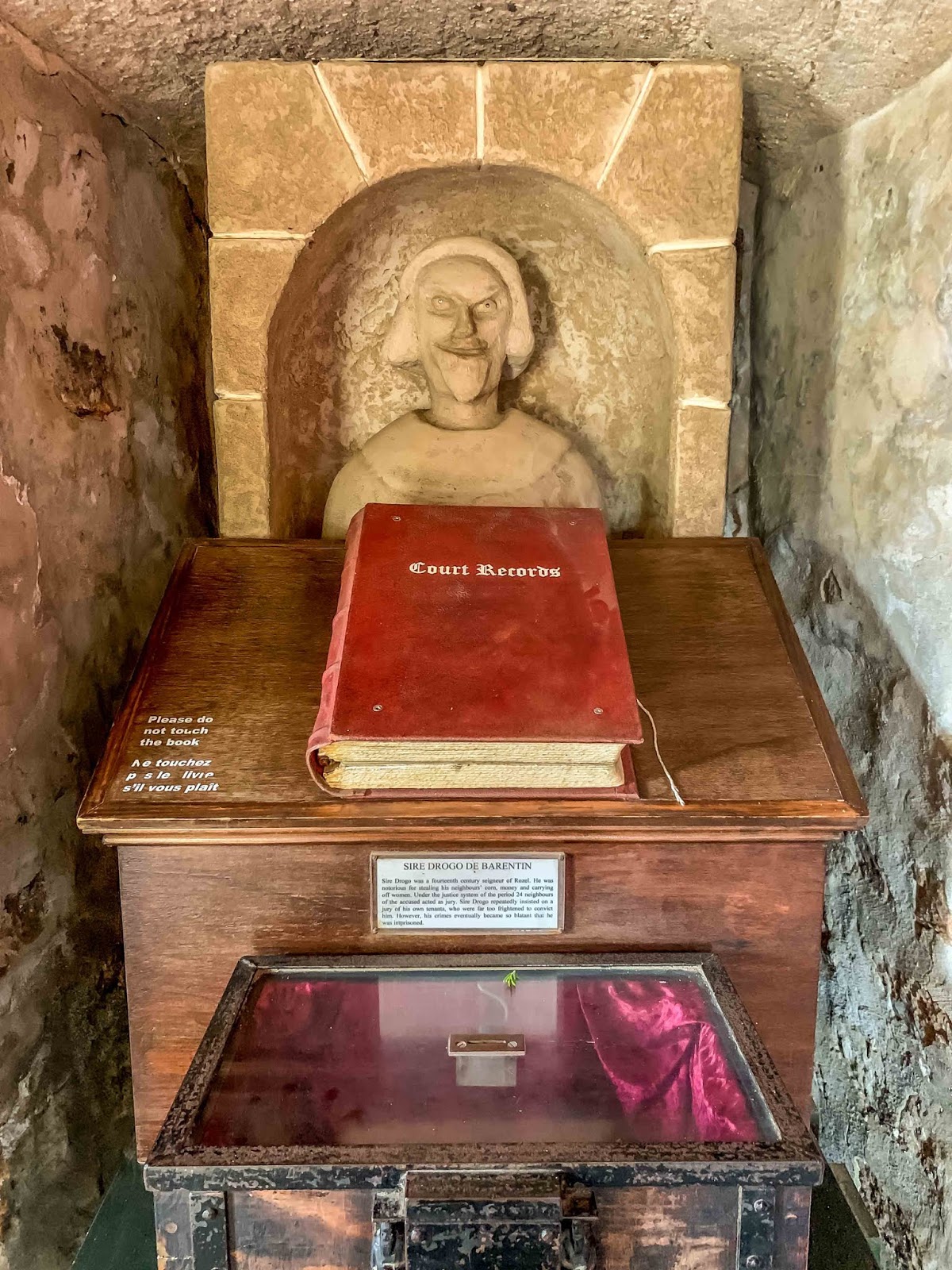
| Court records were used for sire Drogo de Barentin as a jury of his “peers” sentenced him for stealing his neighbors corn, money and carrying off women. |
Some artwork scattered throughout the castle try to help the visitor understand that moment in time and the beautiful panoramic views from the top are amazing.
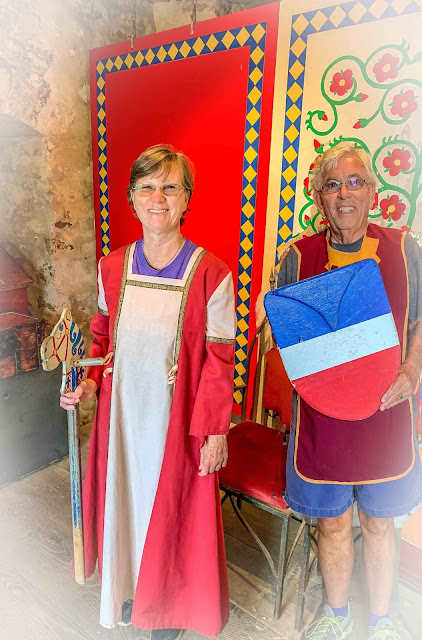 |
| A princess and her knight in shining armor! |
It was definitely a lot of walking up very steep stairs and the twists and turns of the rooms can easily get you confused but never fear you always find your way back outside.
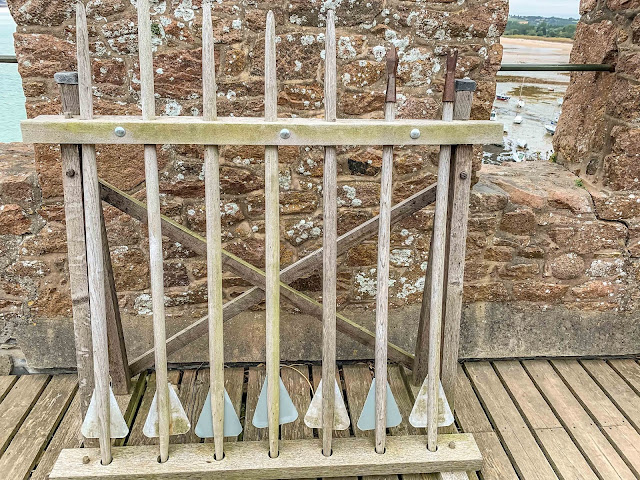 |
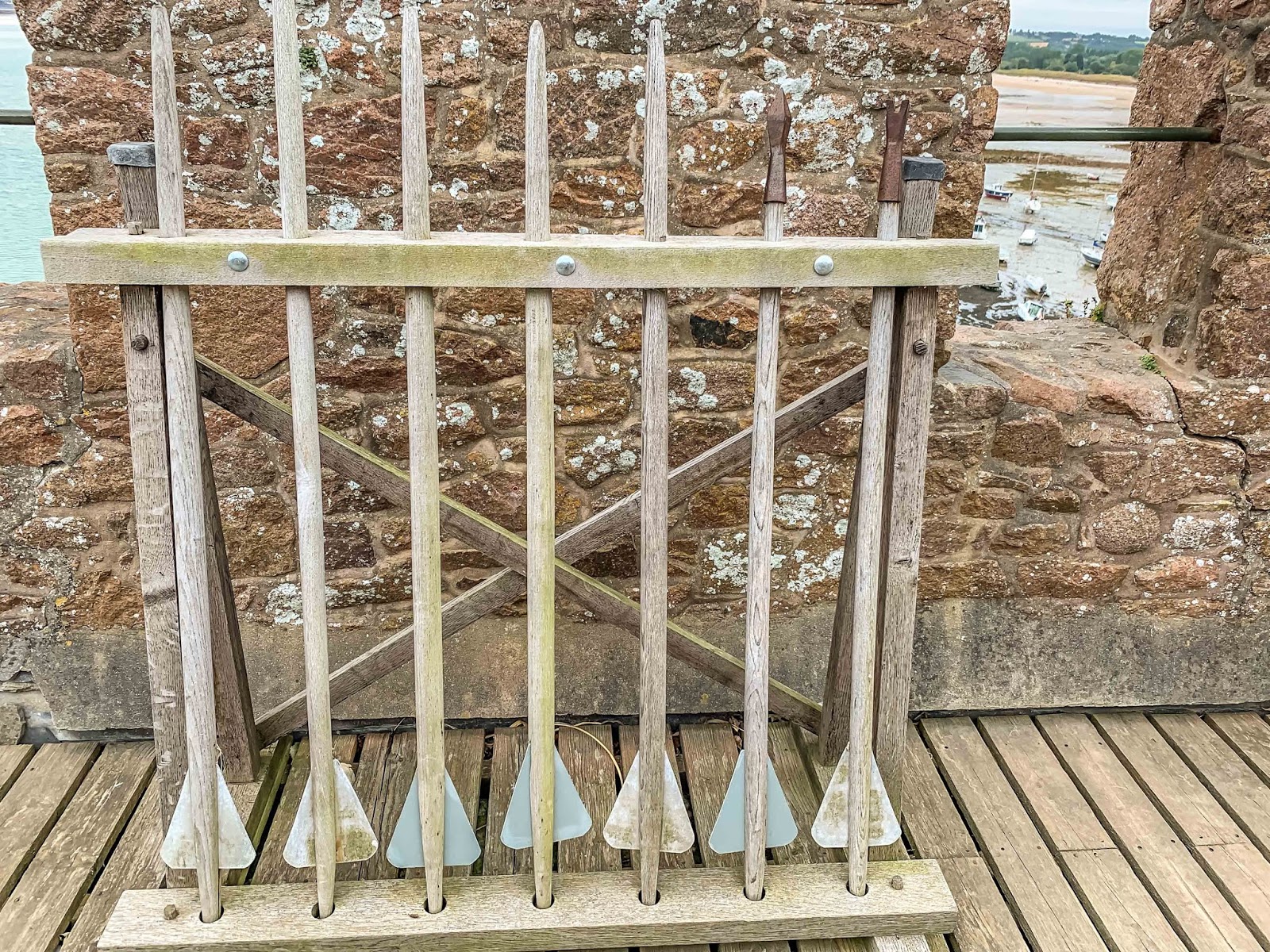
| Medieval Artillery – Arrows used for the Springald |
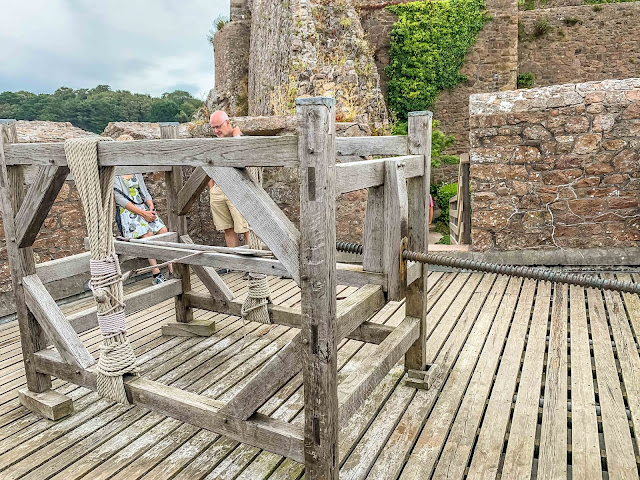 |
| Medieval Artillery- The Springald – Stronger and more powerful use than the crossbows, the arrows could be wound into this device and shot a much longer distance to oncoming ships. These could carry flammable liquid to burst into flames on contact. |
|
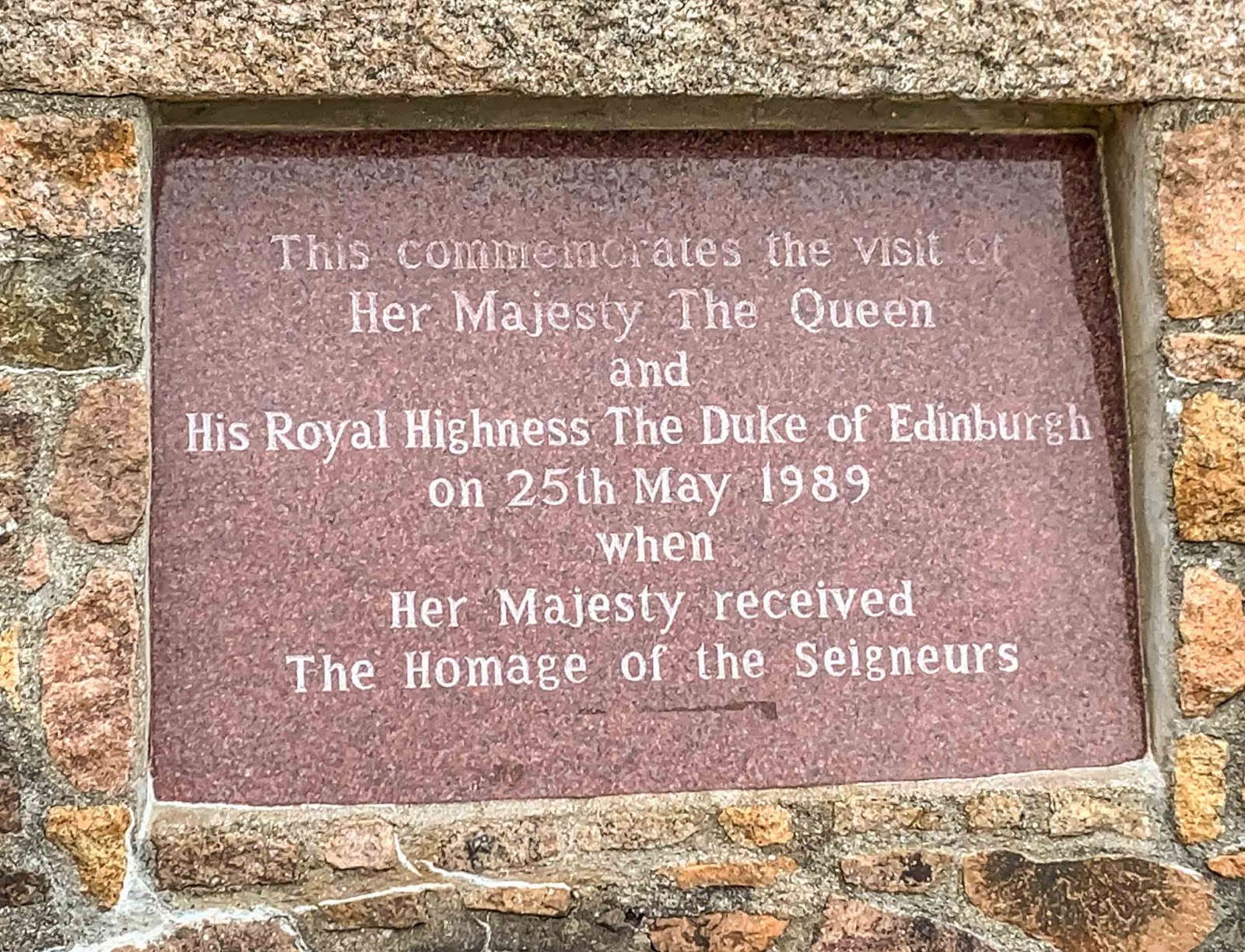
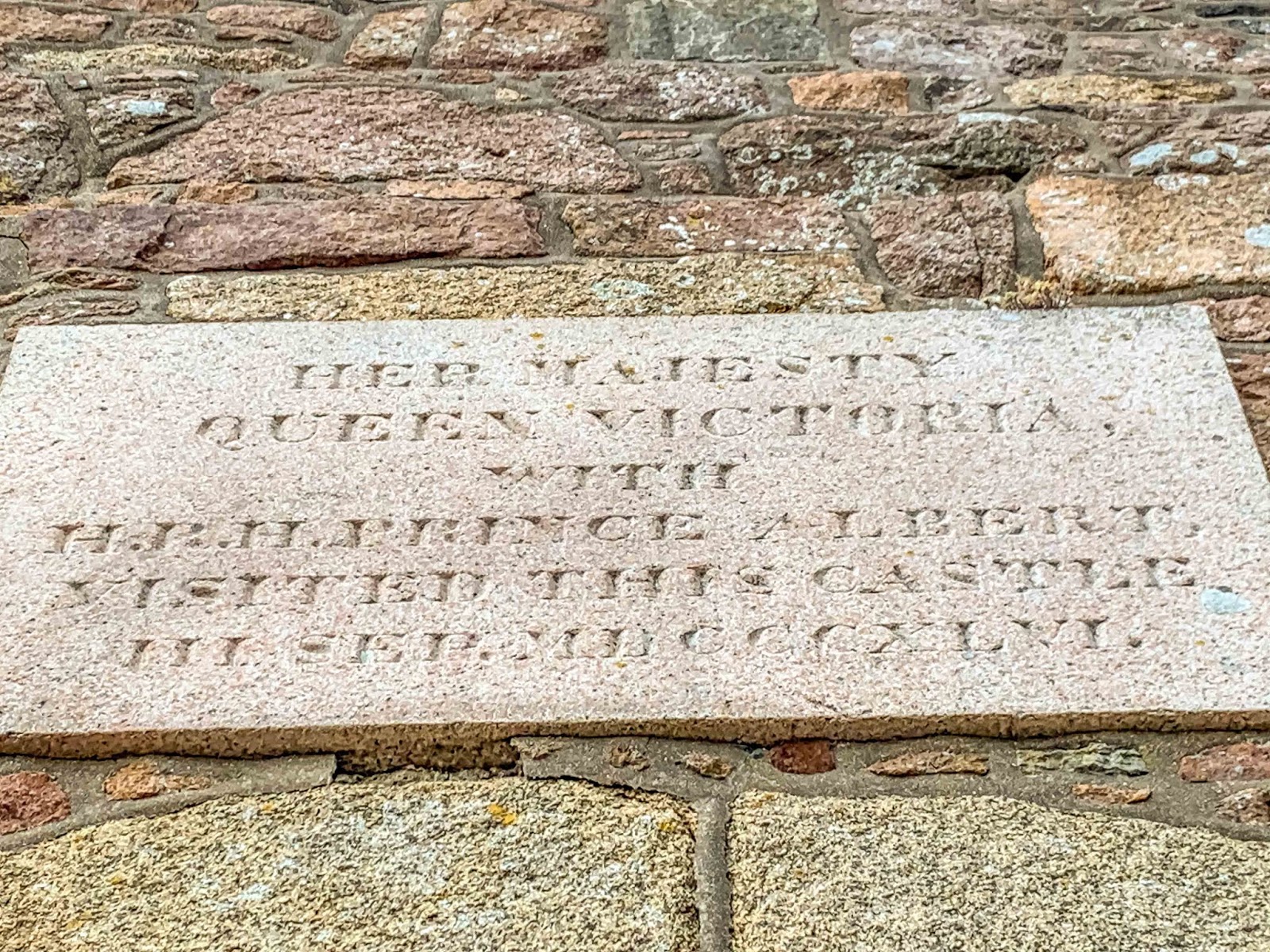
We enjoyed the history and exploring the castle. Both Queen Victoria and Queen Elizabeth had visited the castle at one point in their reign.
 |
| Queen Elizabeth and Prince Philip visited in 1989 |
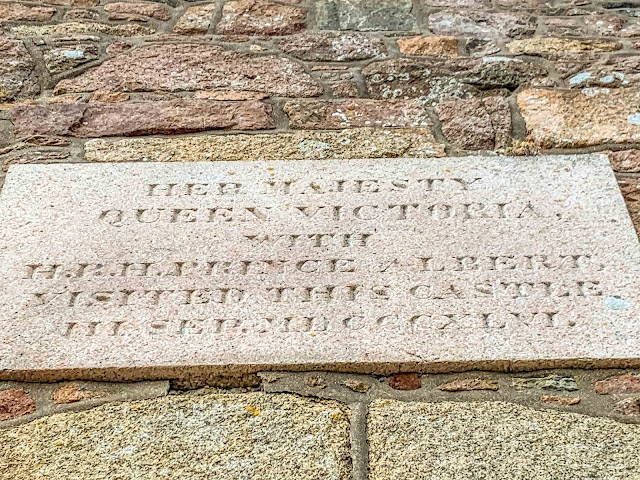 |
| Queen Victoria and Prince Albert visited in 1846. I had to google the roman numerals MDCCCXLVI |
The site had been fortified (strengthen with defense around something to protect it) in the prehistoric period, but the construction of the castle was undertaken following the division of the Duchy of Normandy in 1204.
 |
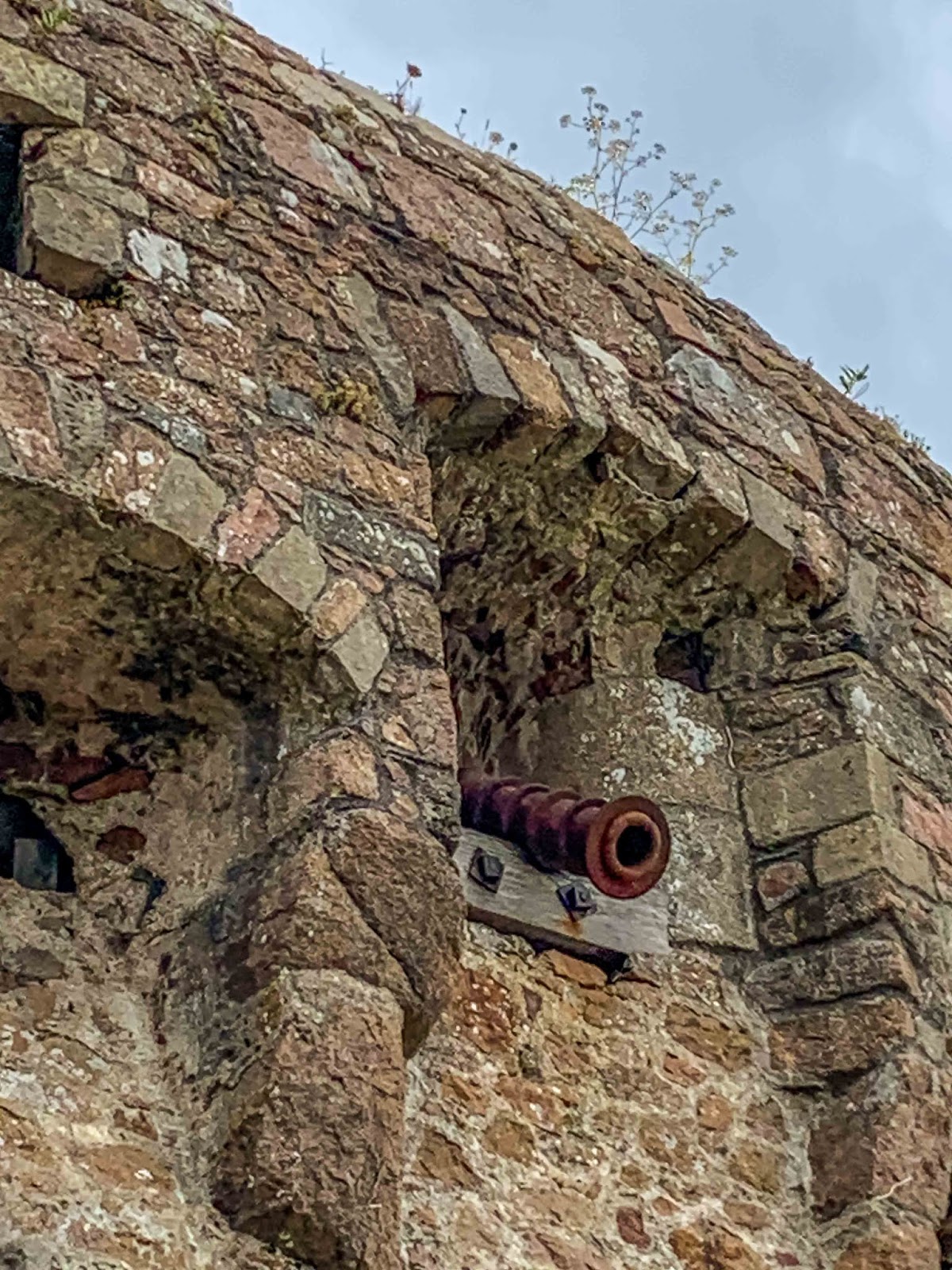
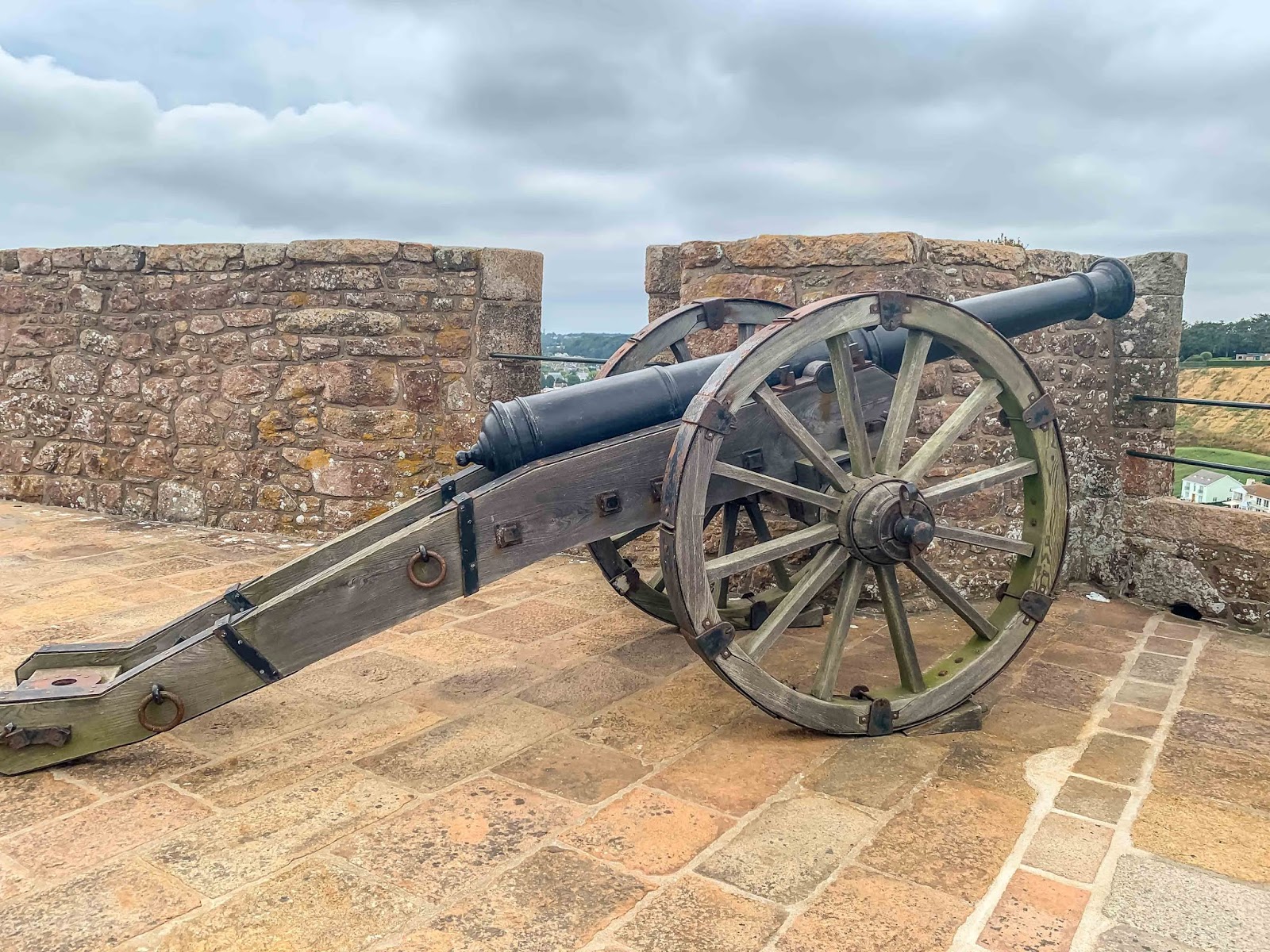
| One of the few cannons peaking out through a porthole |
The castle was the primary defense of Jersey until the development of gunpowder which then rendered the castle ultimately indefensible.
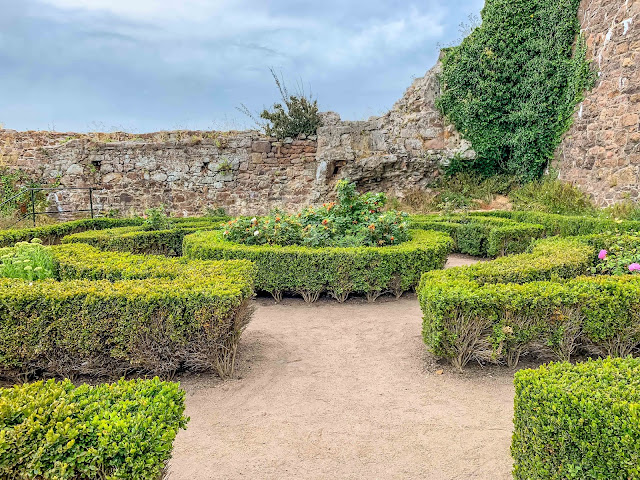 |
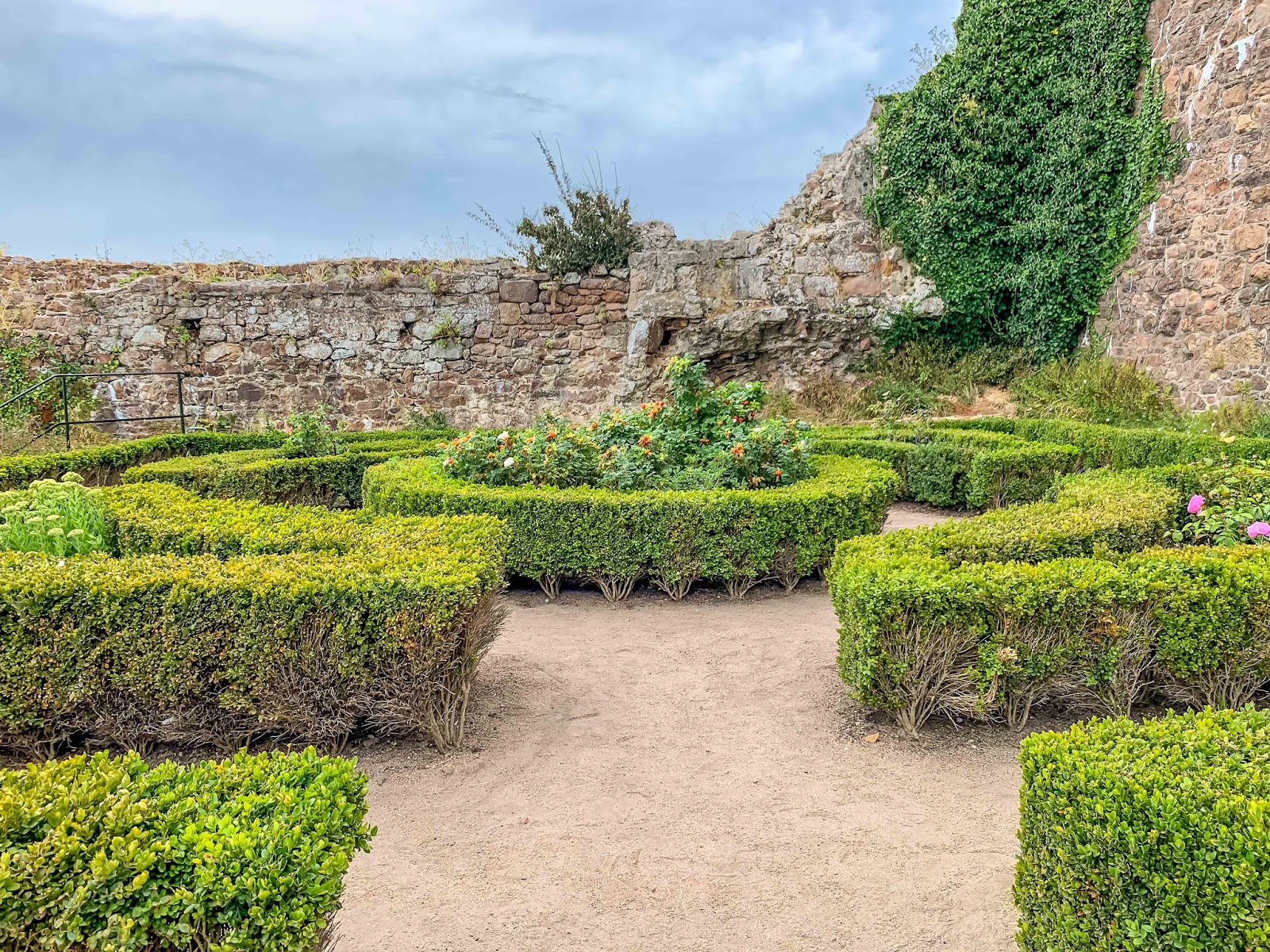
| 17th Century Garden – The Rampart was built for the Queen Elizabeth Gate and this small courtyard contain a formal garden |
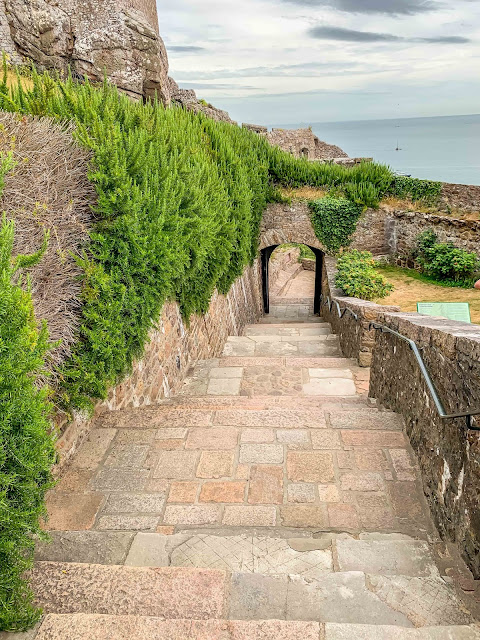 |
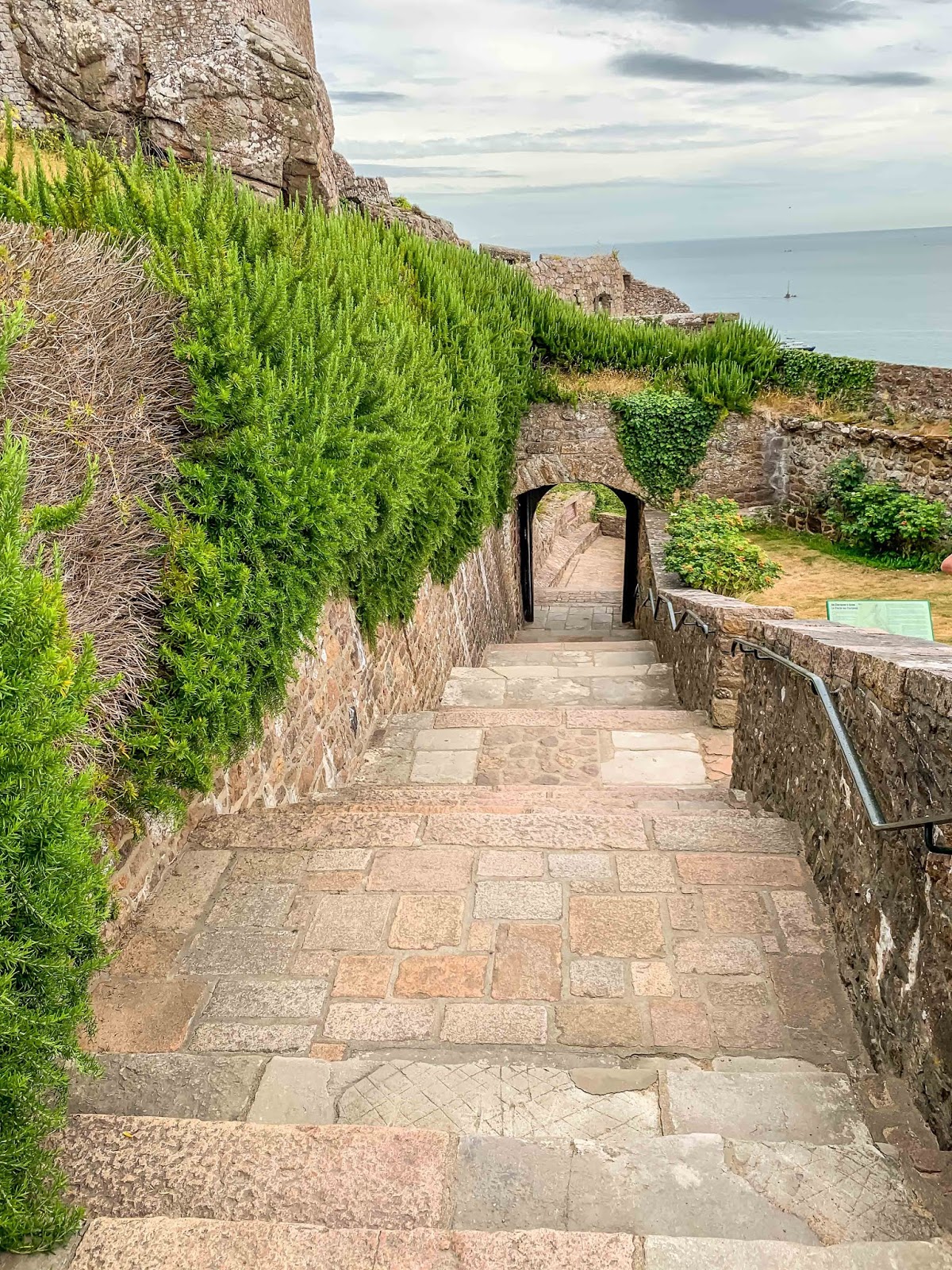
| Path to de Carteret’s Gate – Another barrier protecting the main Queen Elizabeth gate at the top |
Before gunpowder they used crossbows with flaming arrows to fend off the enemy.
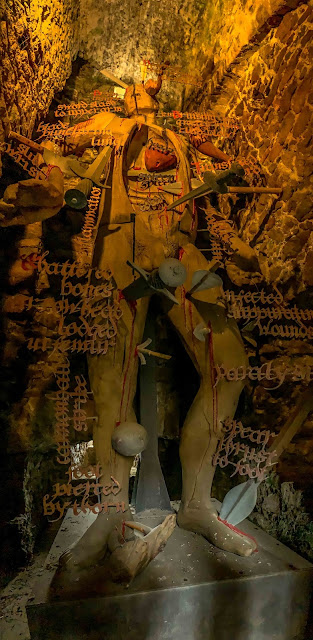 |
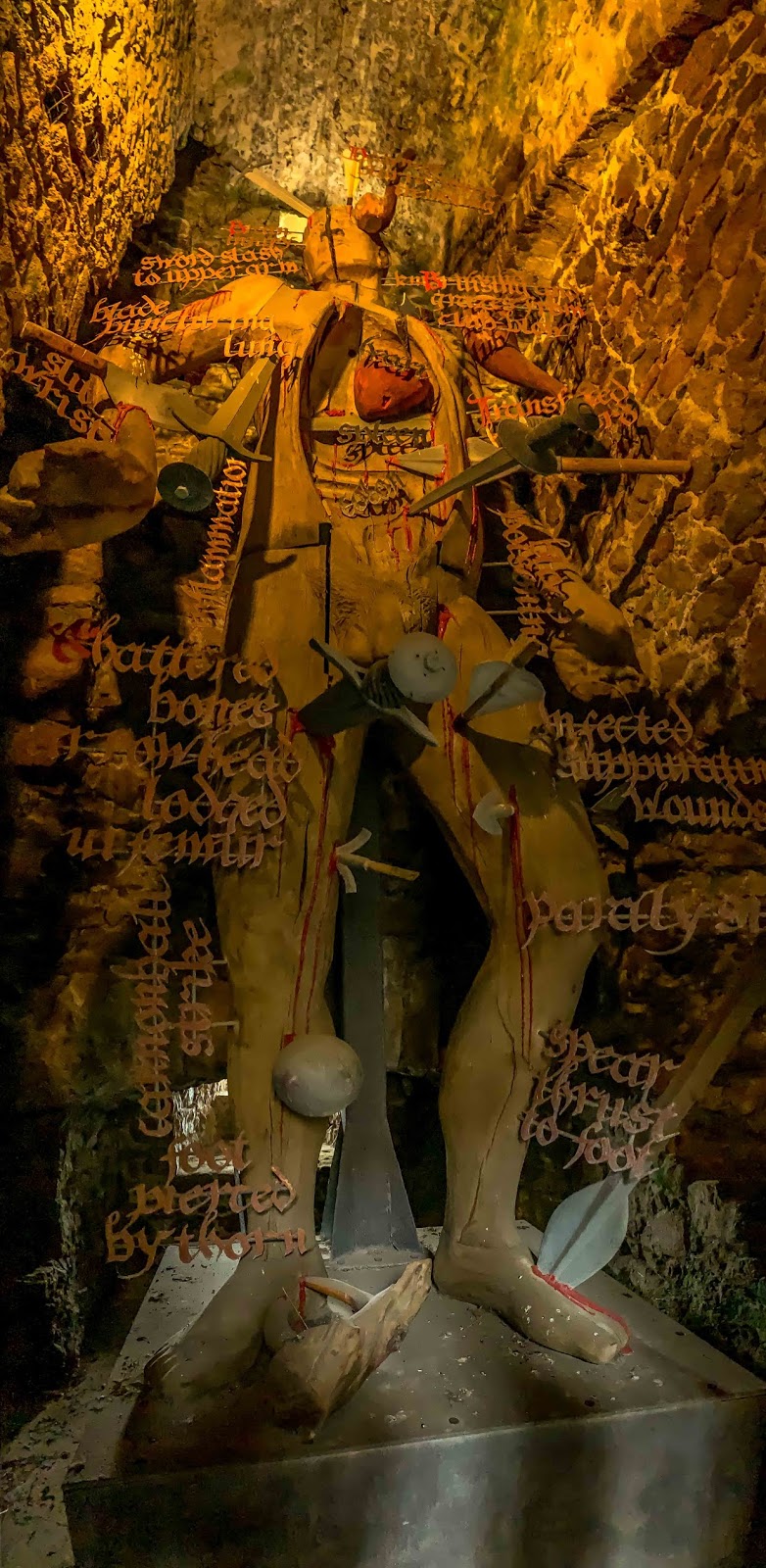
| The Wound Man – This carved oak figure depicts the types of injuries a soldier would receive during war and the castles bloodthirsty past |
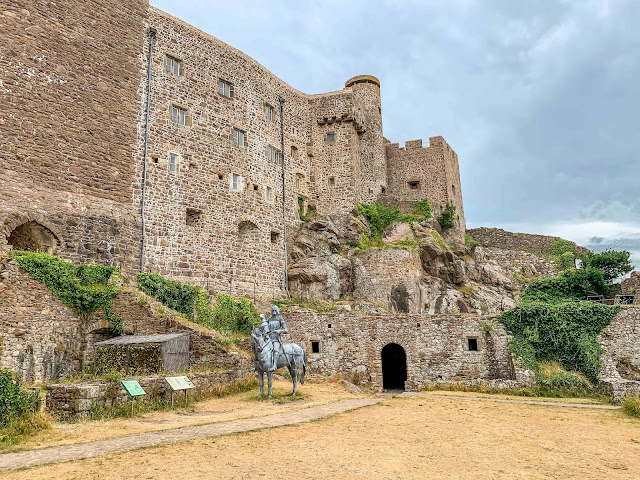 |
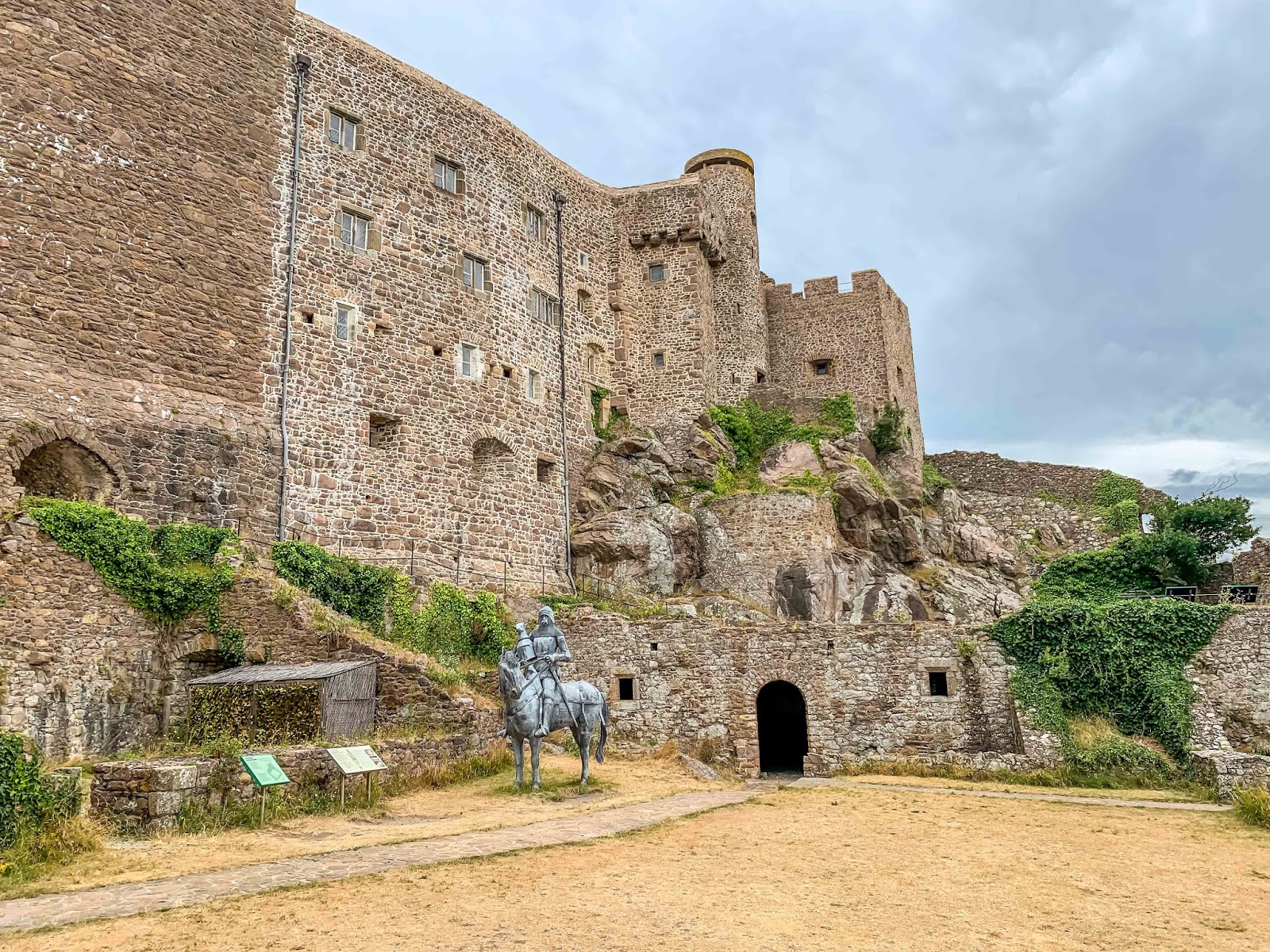
| The Perfect Knight – any soldier that could carry a sword and a lance could be a Knight. The highly sought after were the horses. Good strong steeds were highly sought after. |
Cannons and muskets were introduced in the mid-late 1500’s.
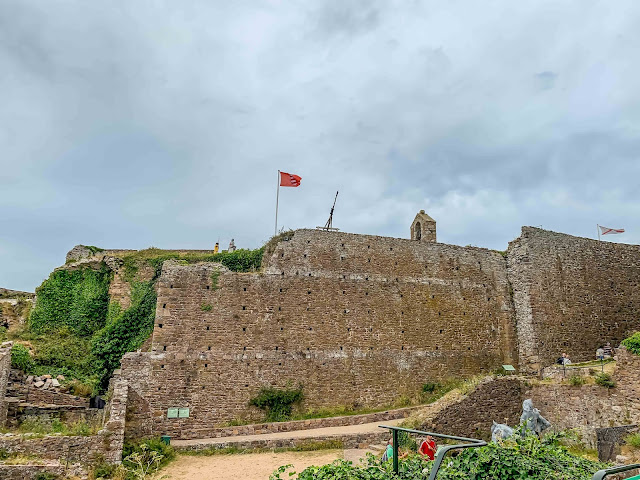 |
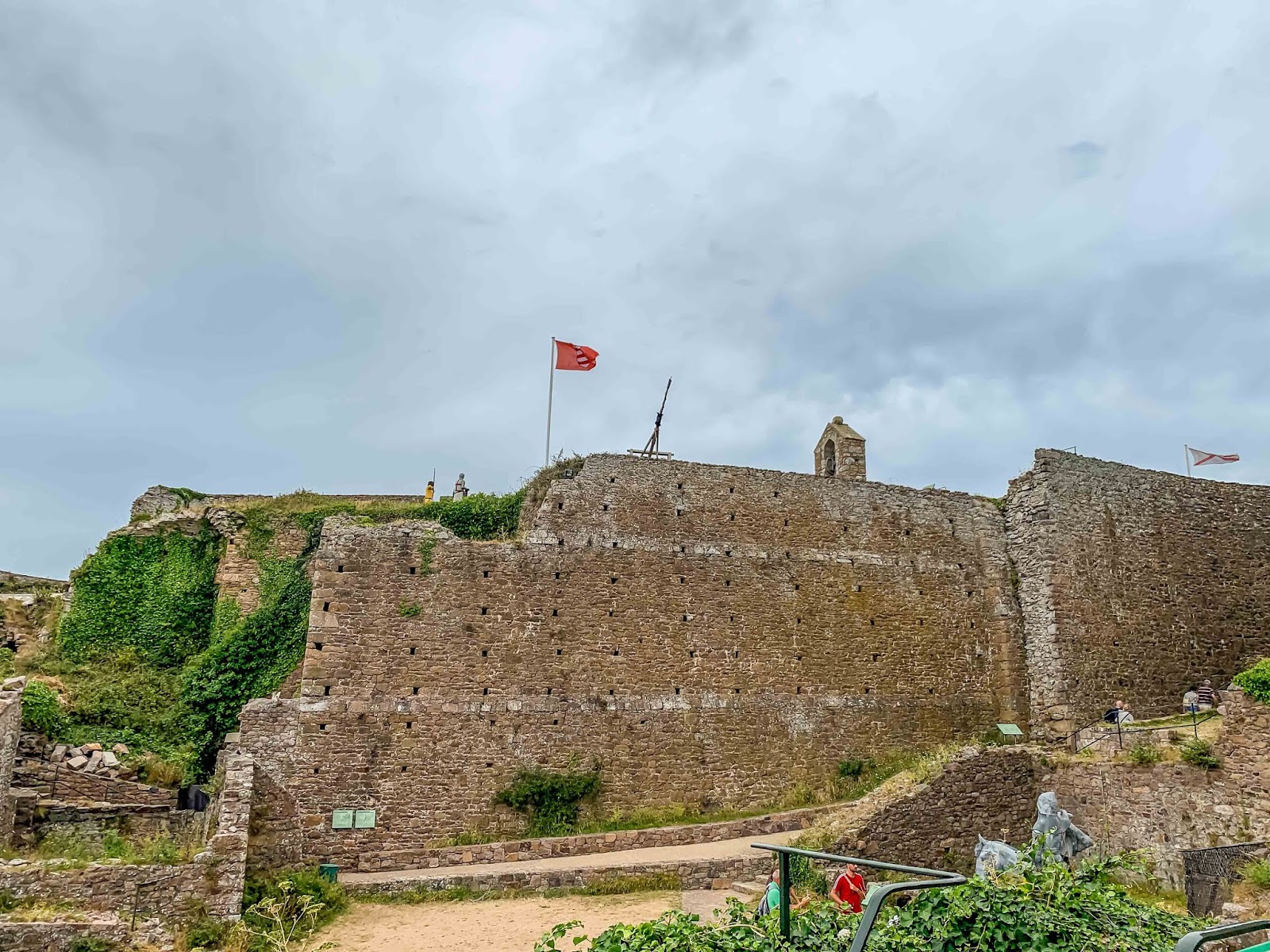
| Putlog Wall – Built during the 2nd half of the 16th century and not completed, this wall was in response to the increased use of the cannon |
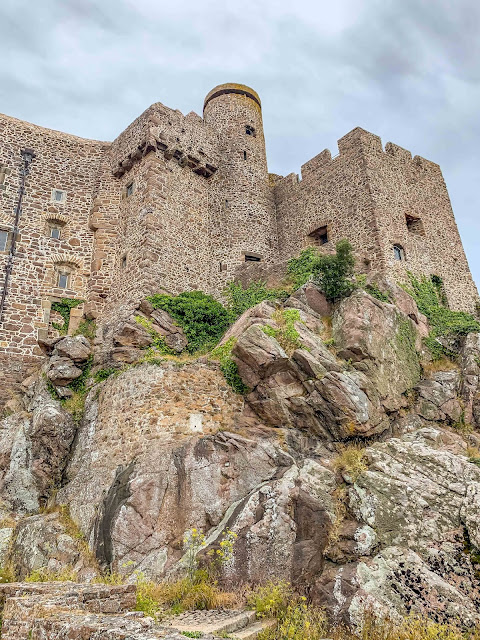 |
| The southern end of “The Keep” |
In a 1600’s discussion on demolishing the castle once the Elizabeth castle was complete was rejected by Sir Walter Raleigh stating “’twere pity to cast it down”.
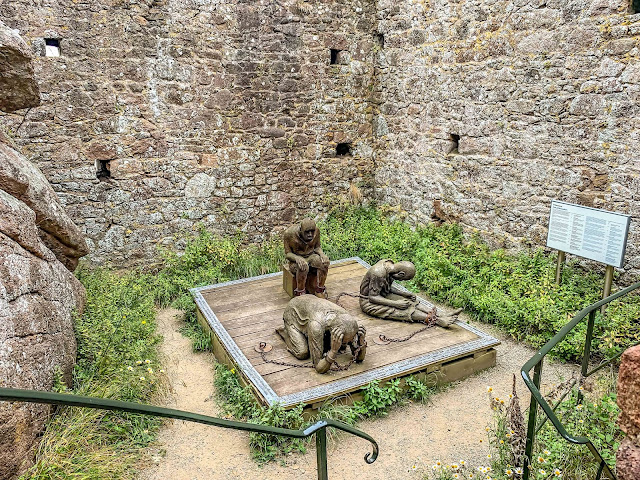 |
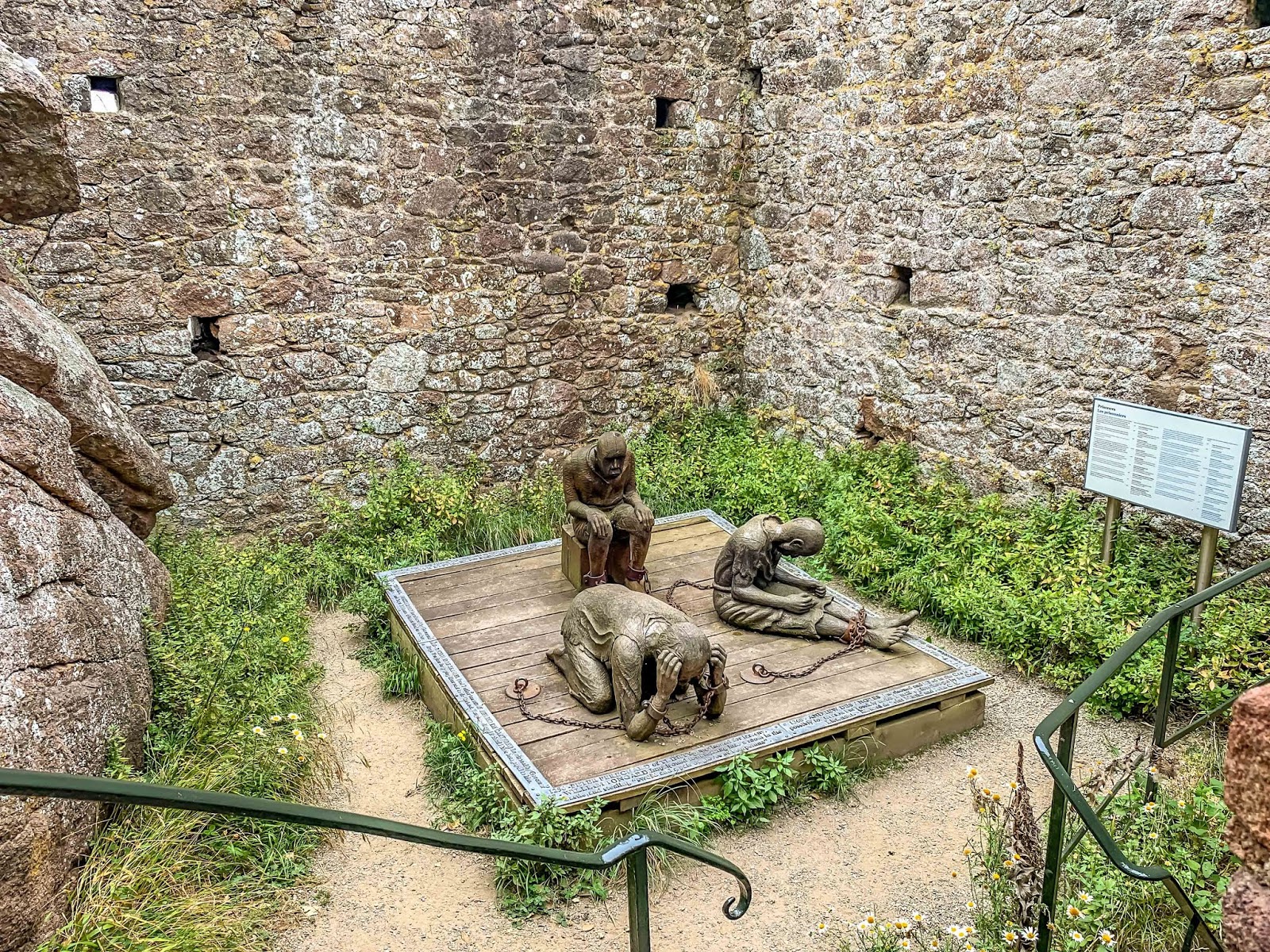
| During the late 16th century, prisoners were kept inside the castle. |
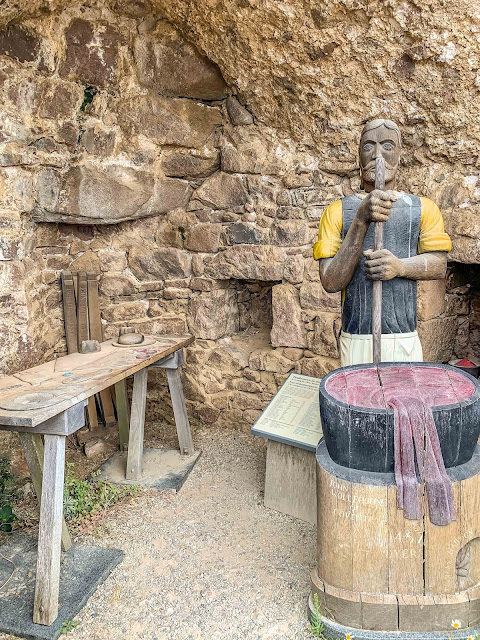 |
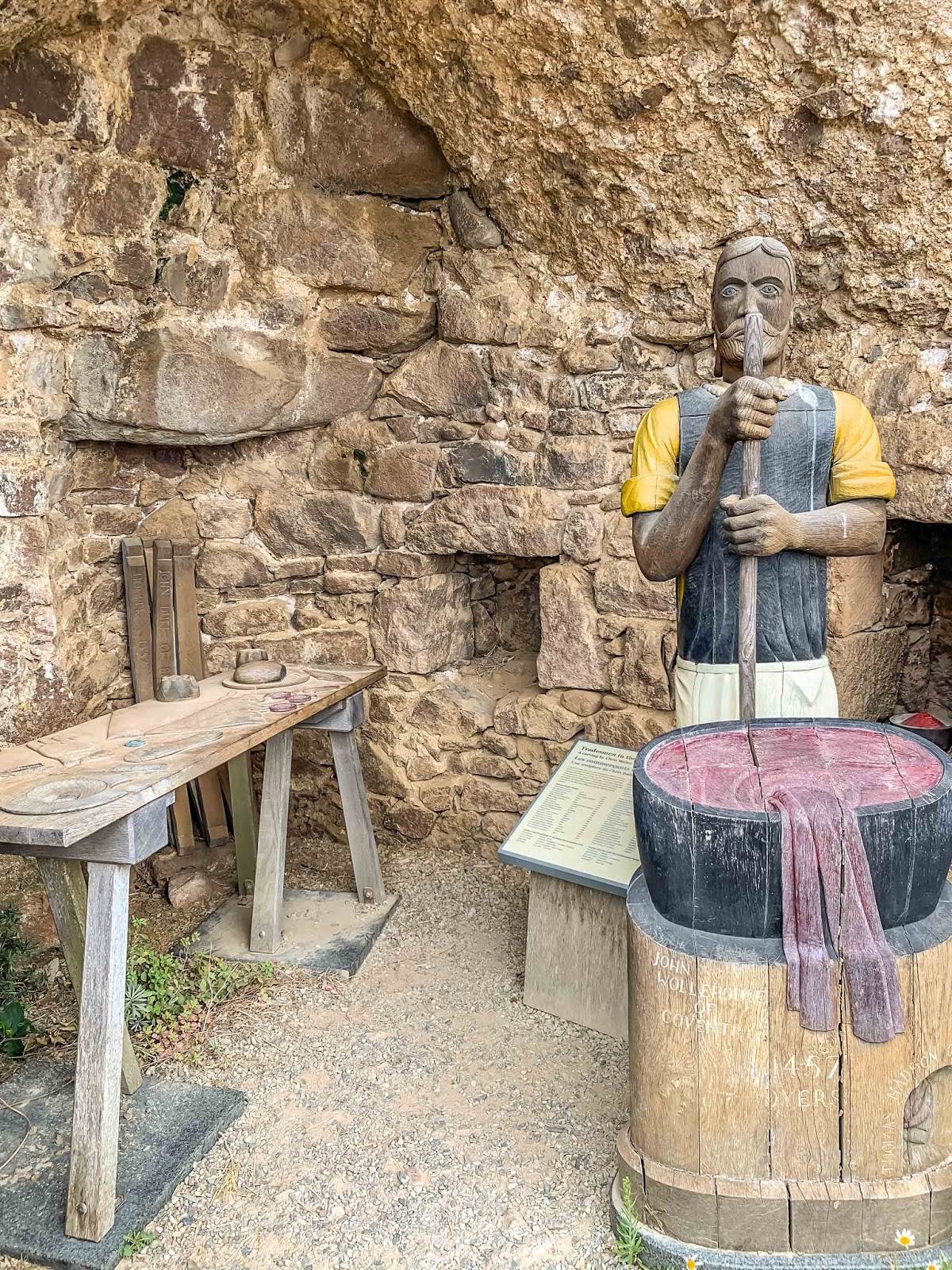
| A carving of tradesmen in the castle. Civilians lived and worked alongside soldiers in the castle. Some were servants while others were visiting tradesmen such as these. |
The castle was then utilized as the islands only prison until the prison in St. Helier was completed in the 17th century.
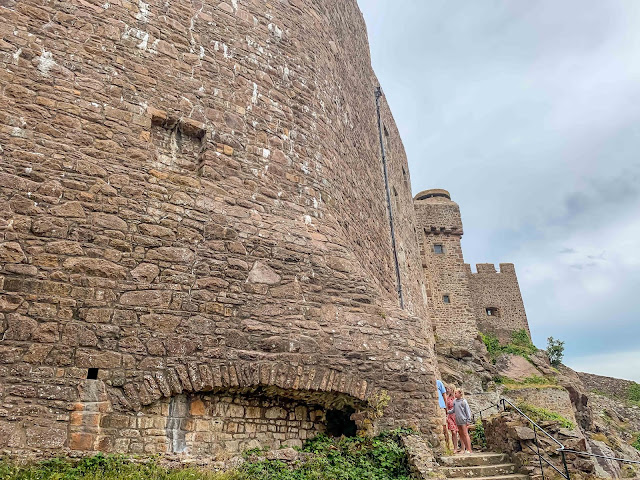 |
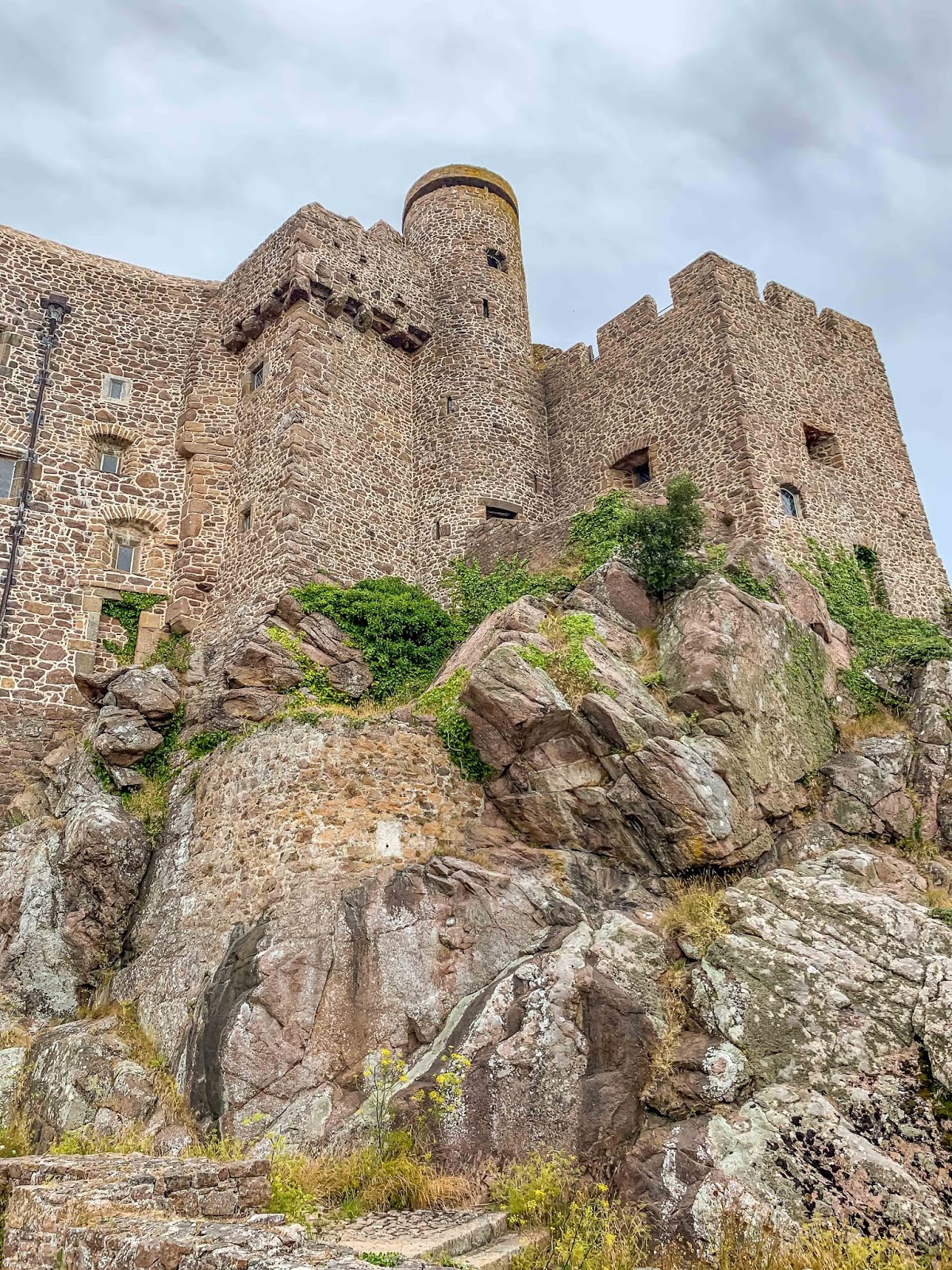
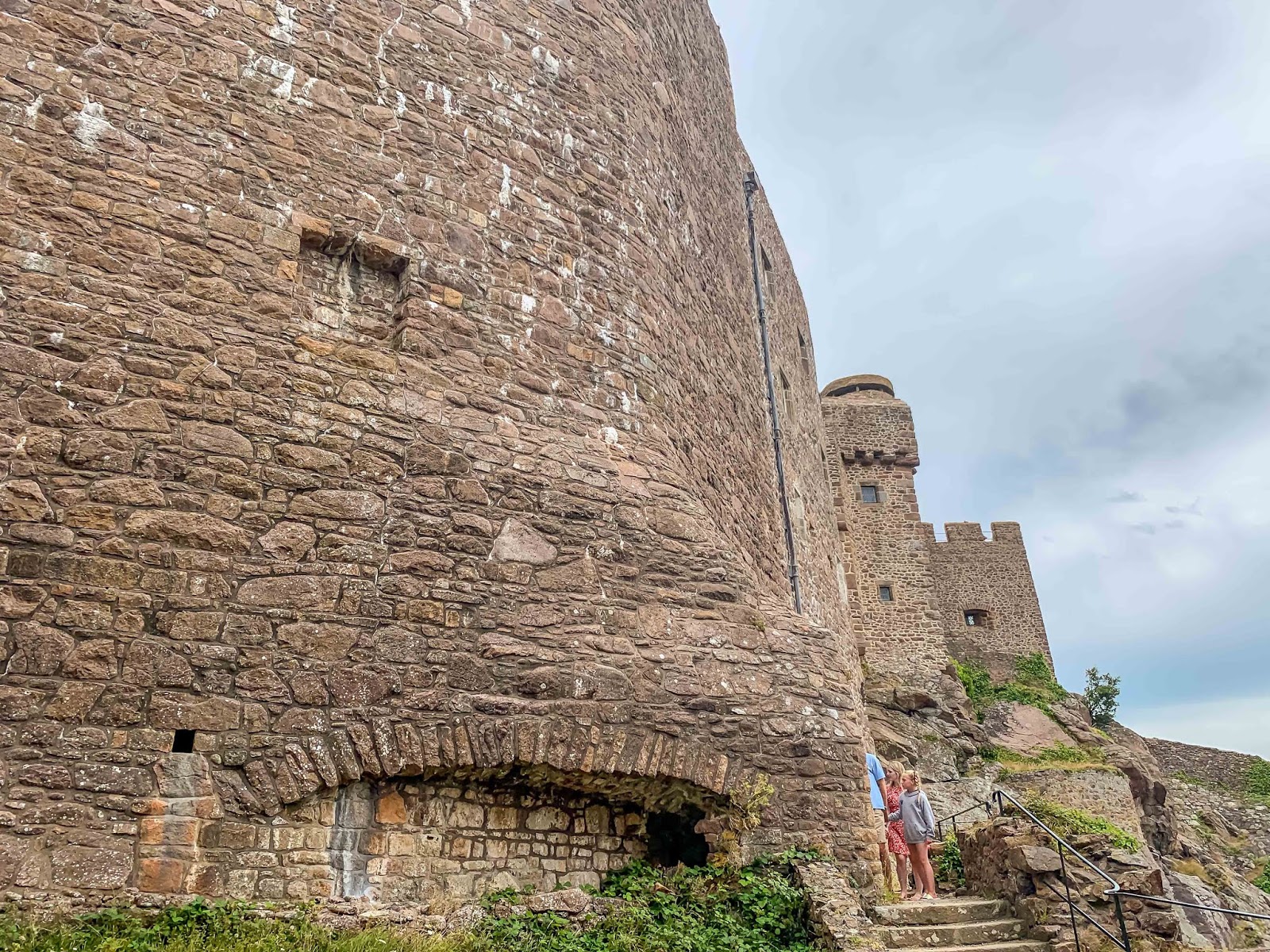
| The Keep – The massive bulk of the castle includes several buildings. This is called “The Keep” which was the best protected part of the castle. |
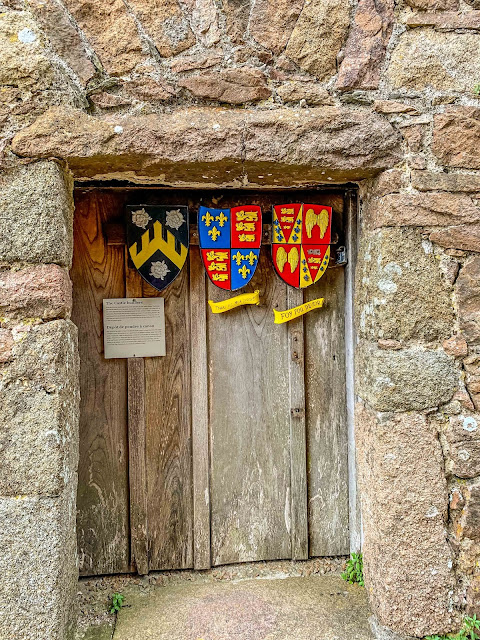 |
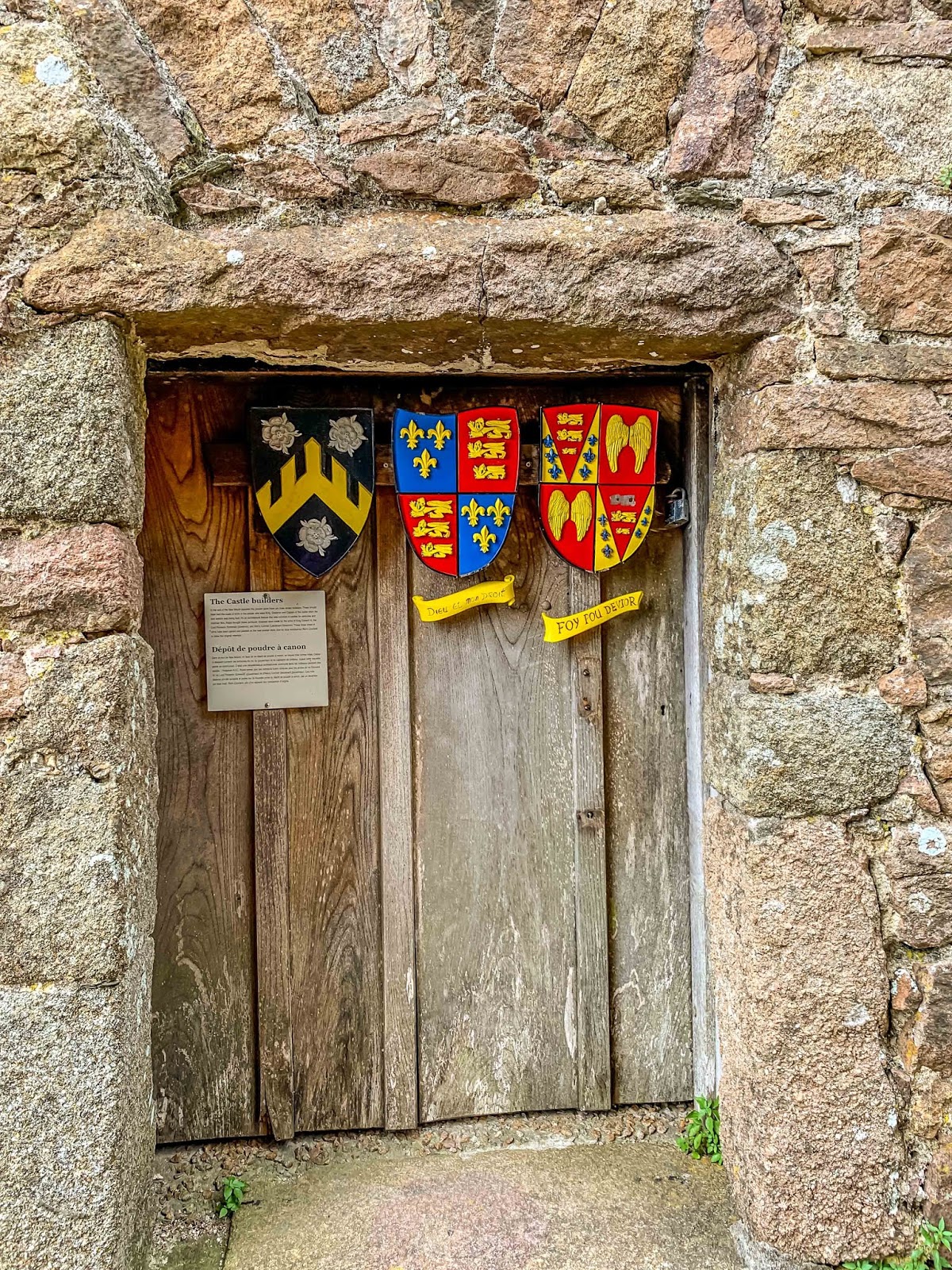
| The Coat of Arms for King Edward VI, Lord Protector Somerset (Governor) and Henry Cornish (Lieutenant Governor) |
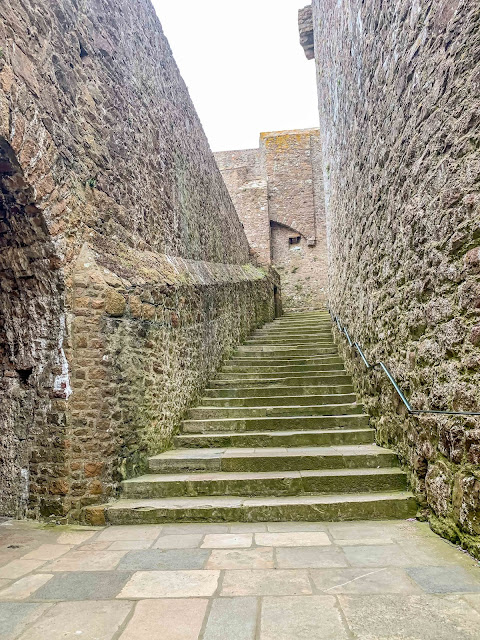 |
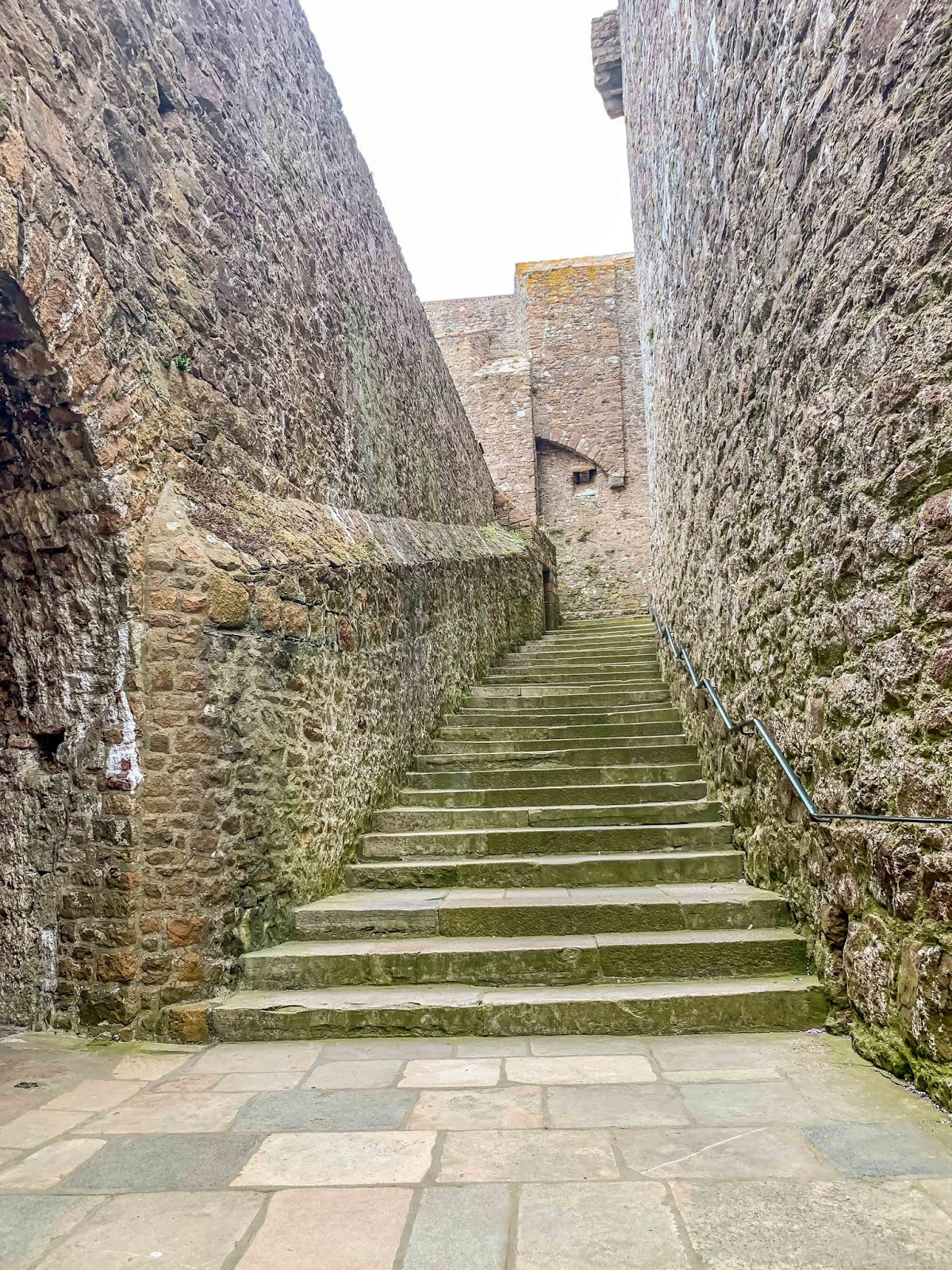
| One of the many sets of steps leading to the top |
With Elizabeth castle in full swing, Mont Orgueil had become dilapidated and unusable so repairs began in the early 1700’s to bring it up to date with the ability to use cannons and more advanced technology for that time period.
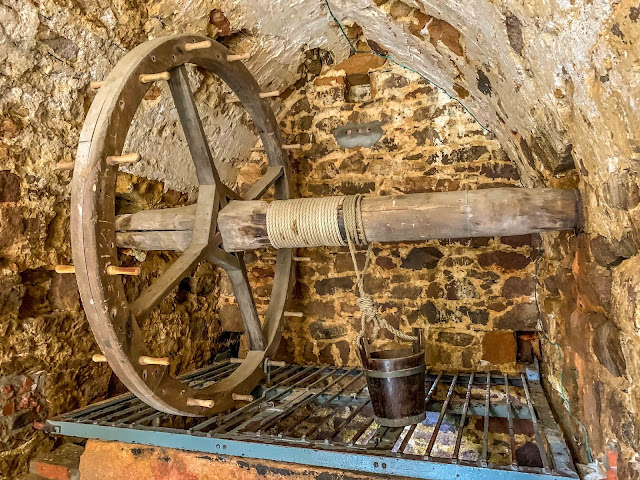 |
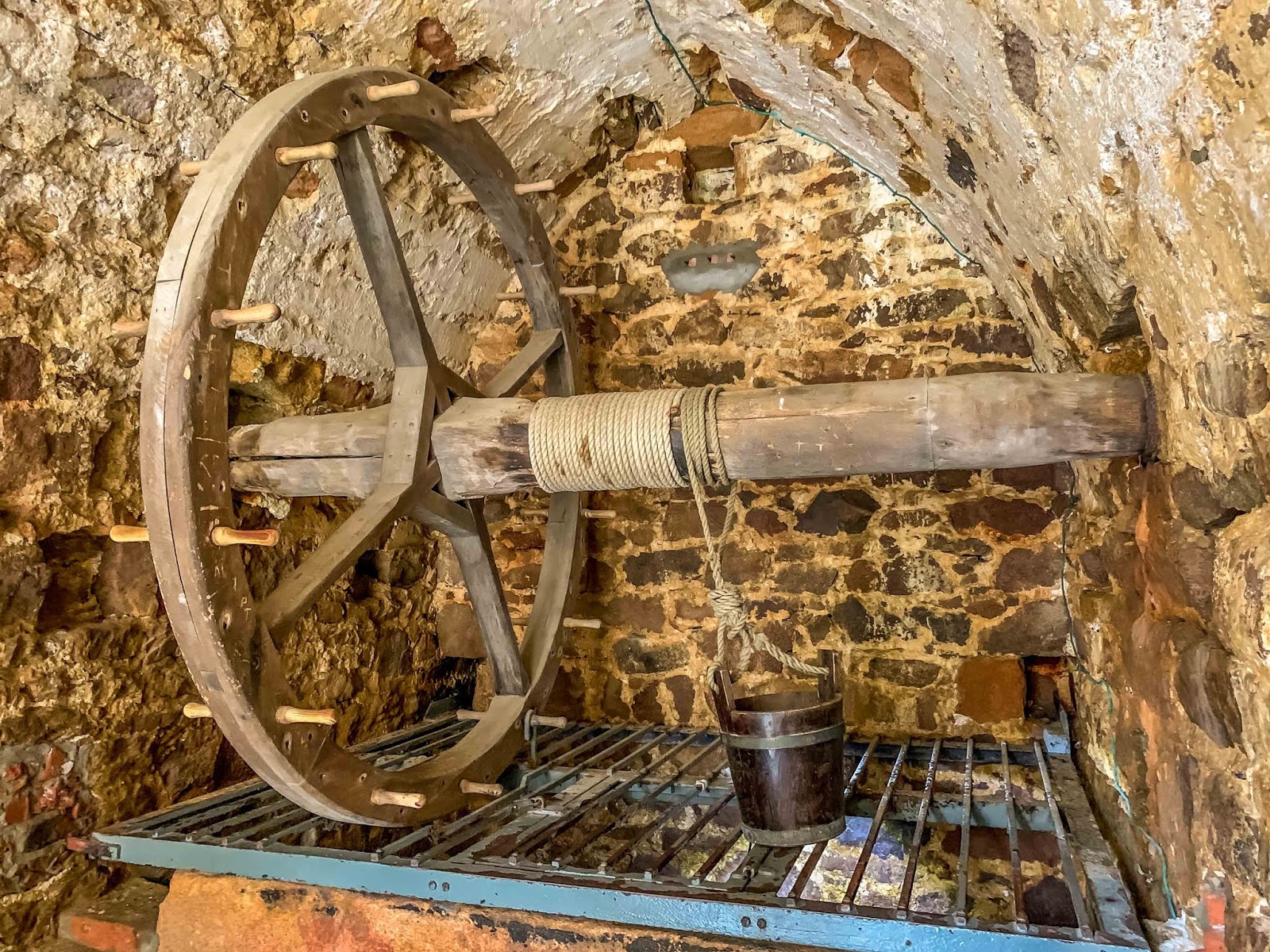
| The Wishing Well tradition dates back to the Celts who threw the spoils of war into lakes and rivers for good luck. Chuck dropped a few coins. It was a long way down! |
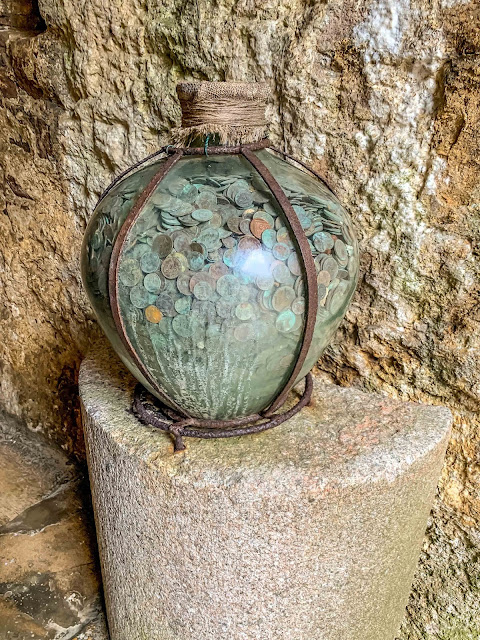 |
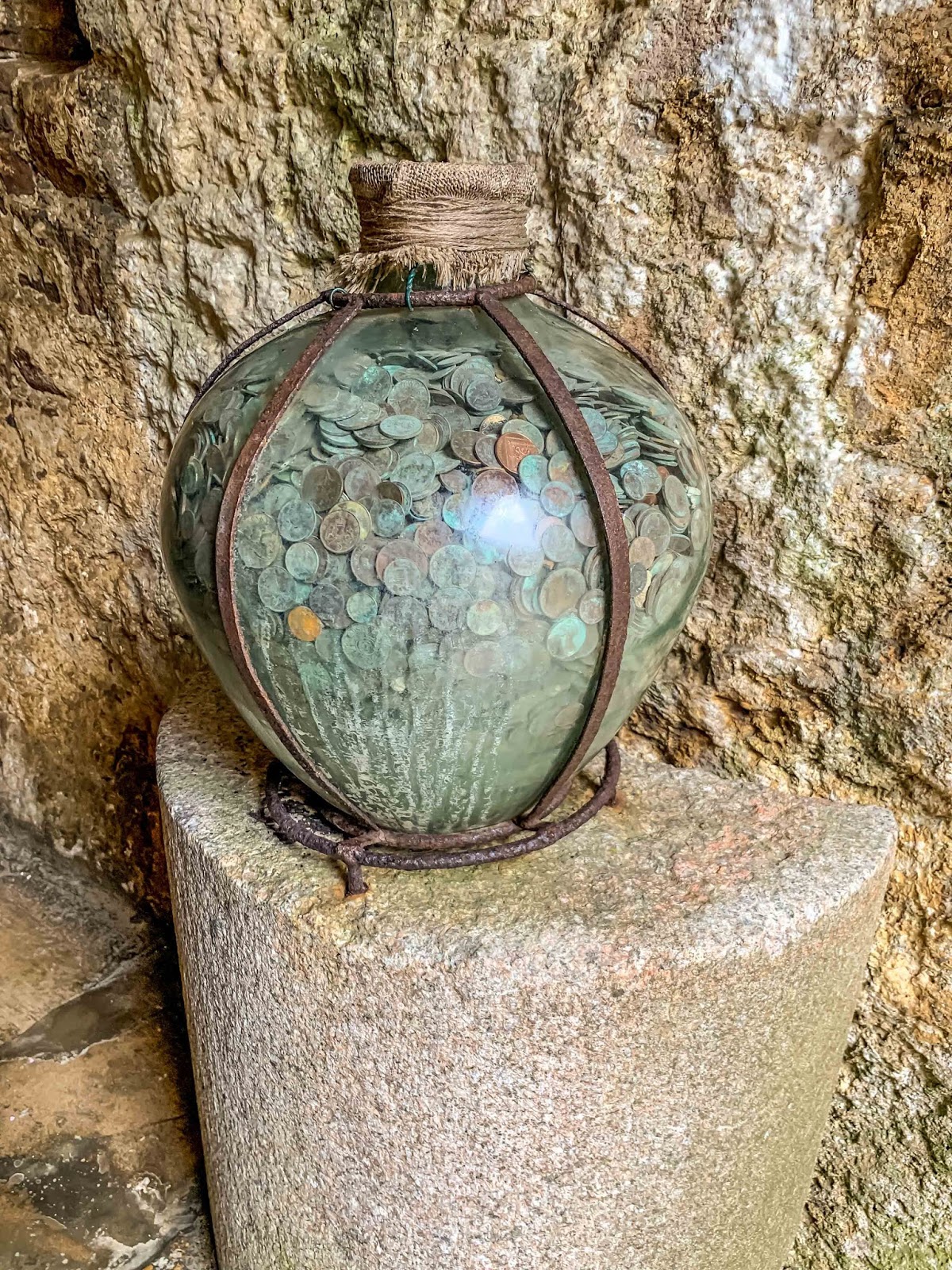
| The coins were removed from the wishing well in 1994. Coins as far back as the last century were found |
Until the second half of the 19th century, the castle was open to the public on one day a year, Easter Monday, and crowds used to flock from all over the island.
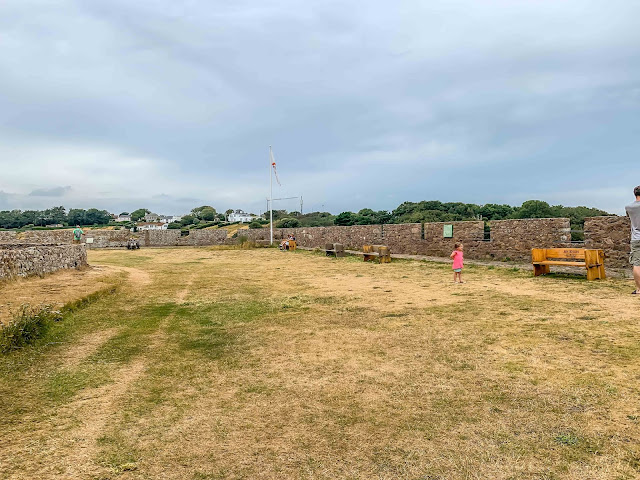 |
| Grand Battery Wall |
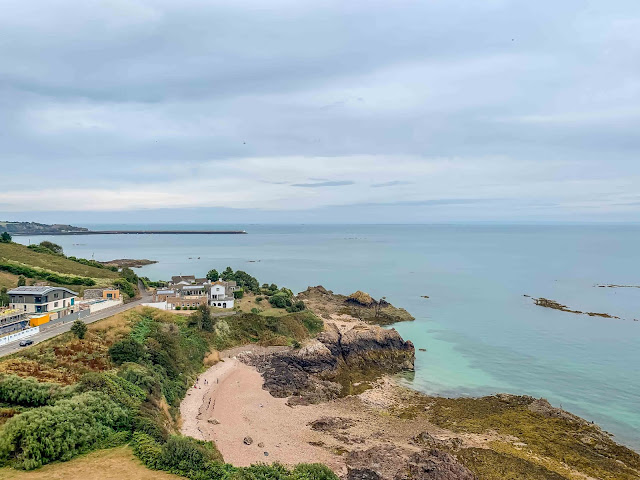 |
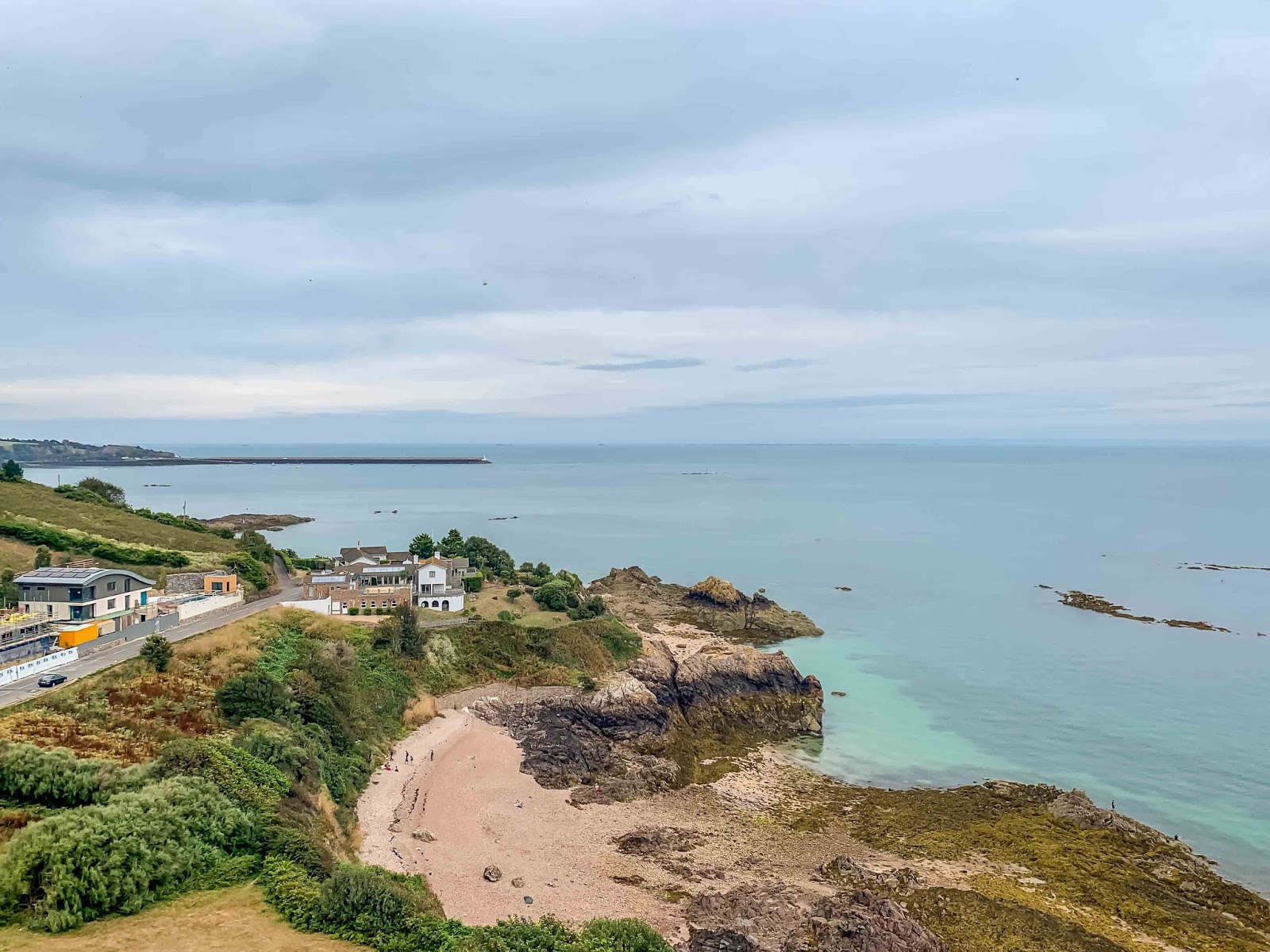
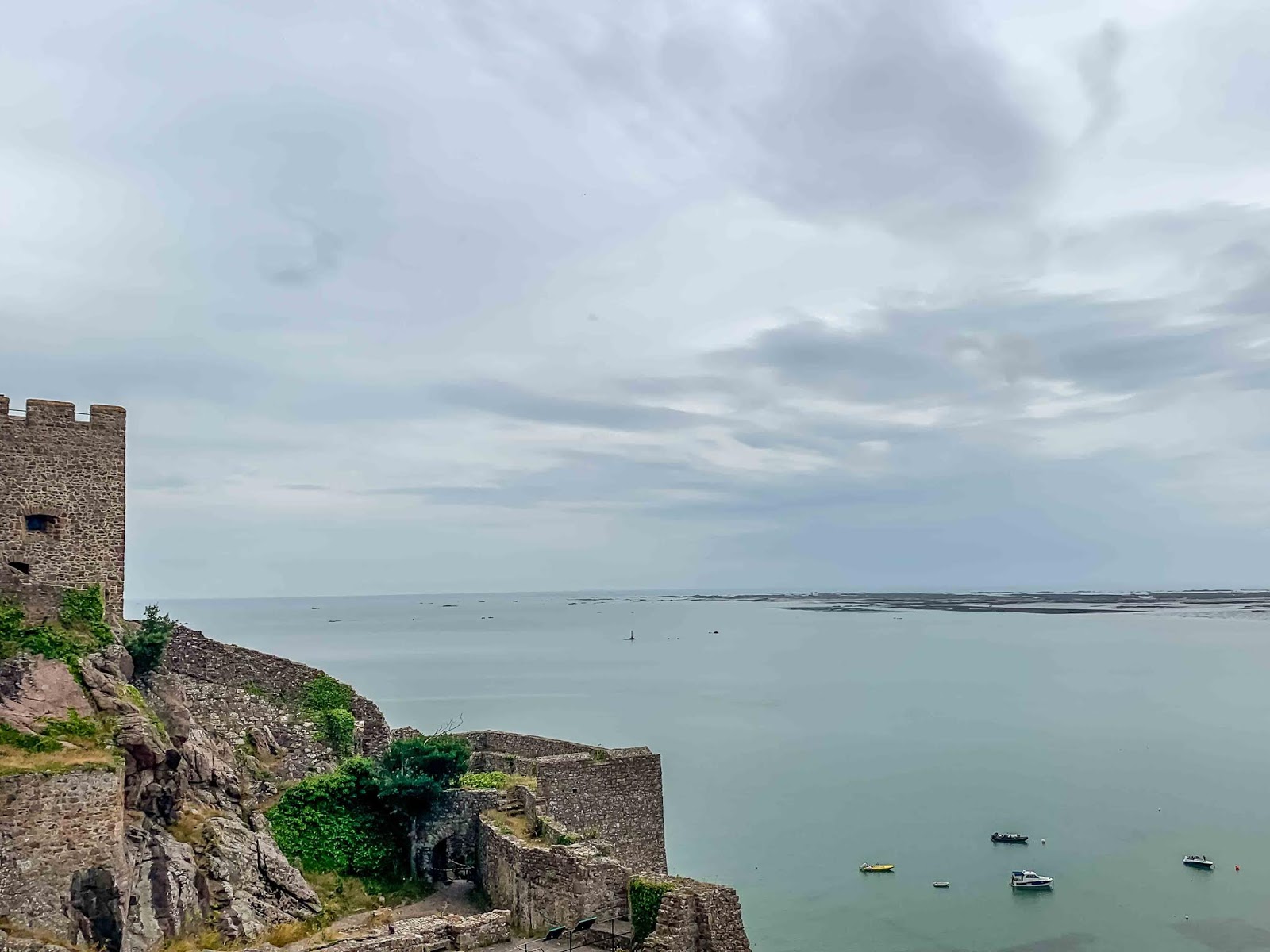
| Northeast view of Channel islands about midway to top of castle. |
In dire state of ruins during its handover to the people of Jersey by the Crown in1907, Mont Orgueil has been managed as a museum site since 1929,
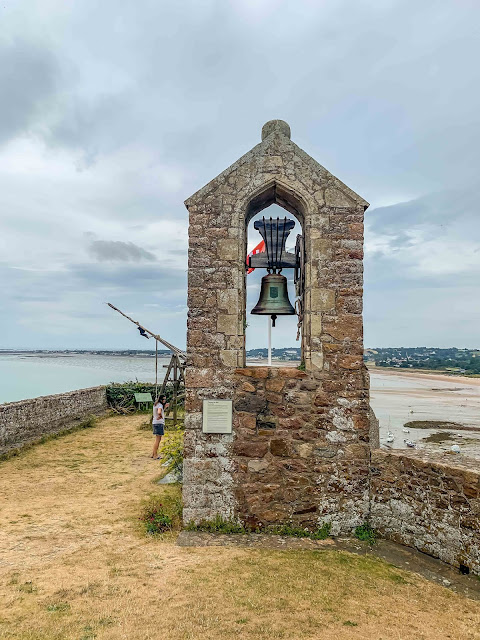 |
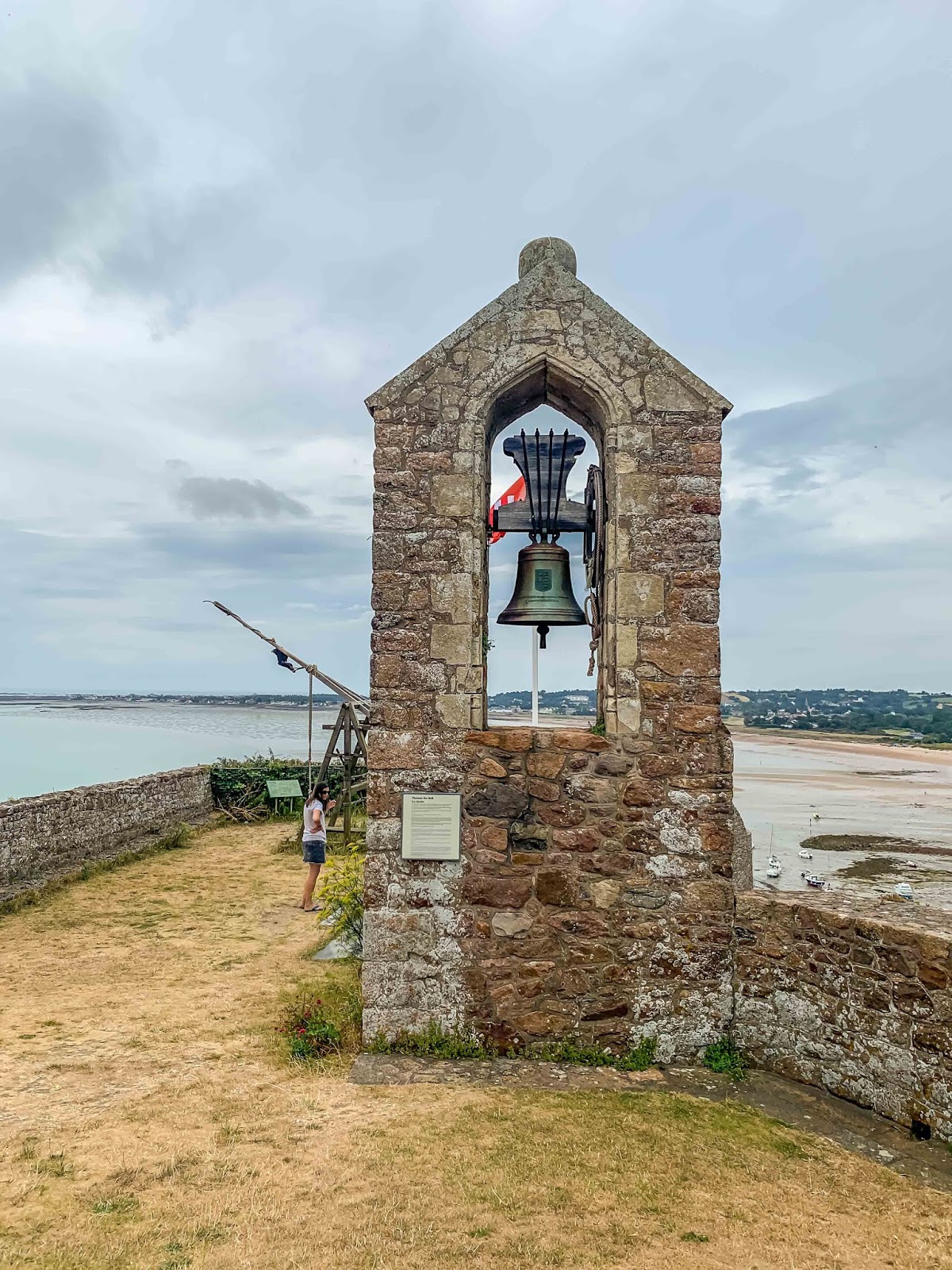
| Thomas the Bell. In a time before clocks in every home or iPhone’s in every hand, a bell was rung each Sunday when it was time for church services or to summon its soldiers to war. |
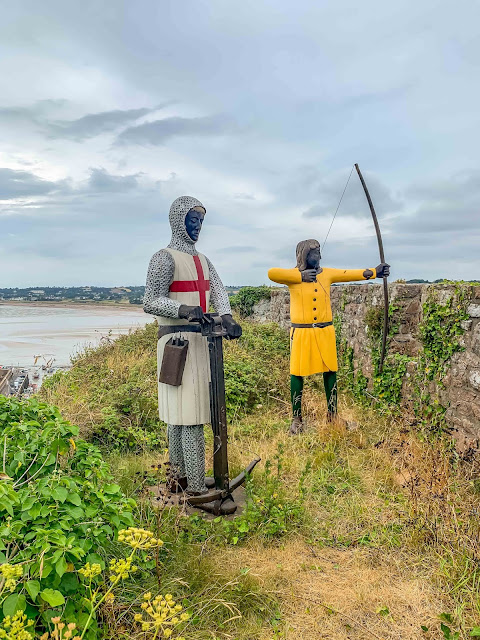 |
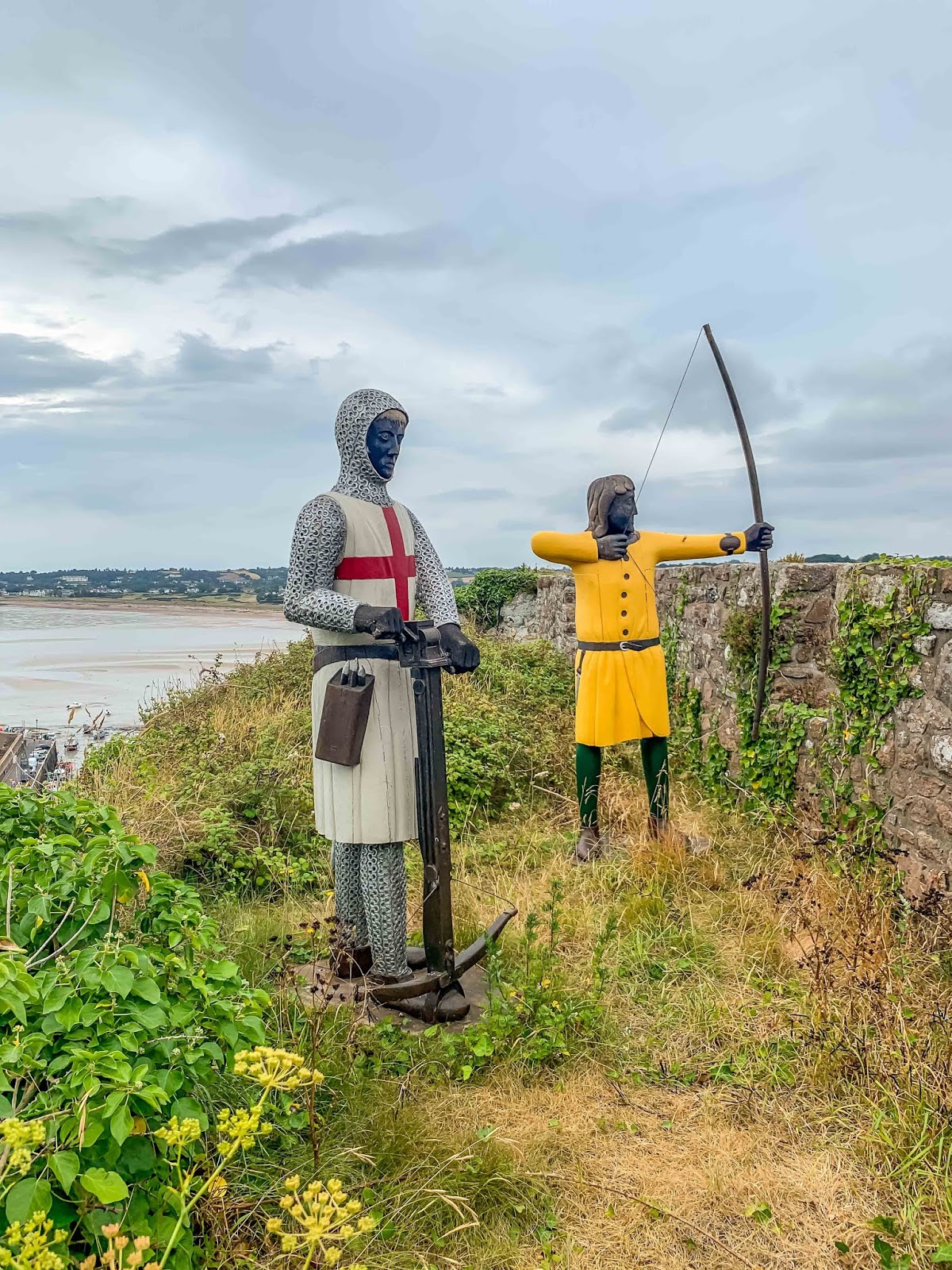
| Crossbowmen were first recorded in 1224. There was a list of names of many that served on the walkway. Notice how one had a crank to load his crossbow. Ingenious! |
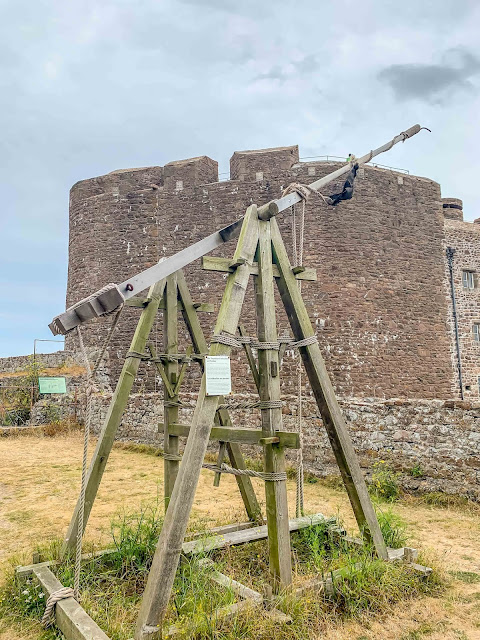 |
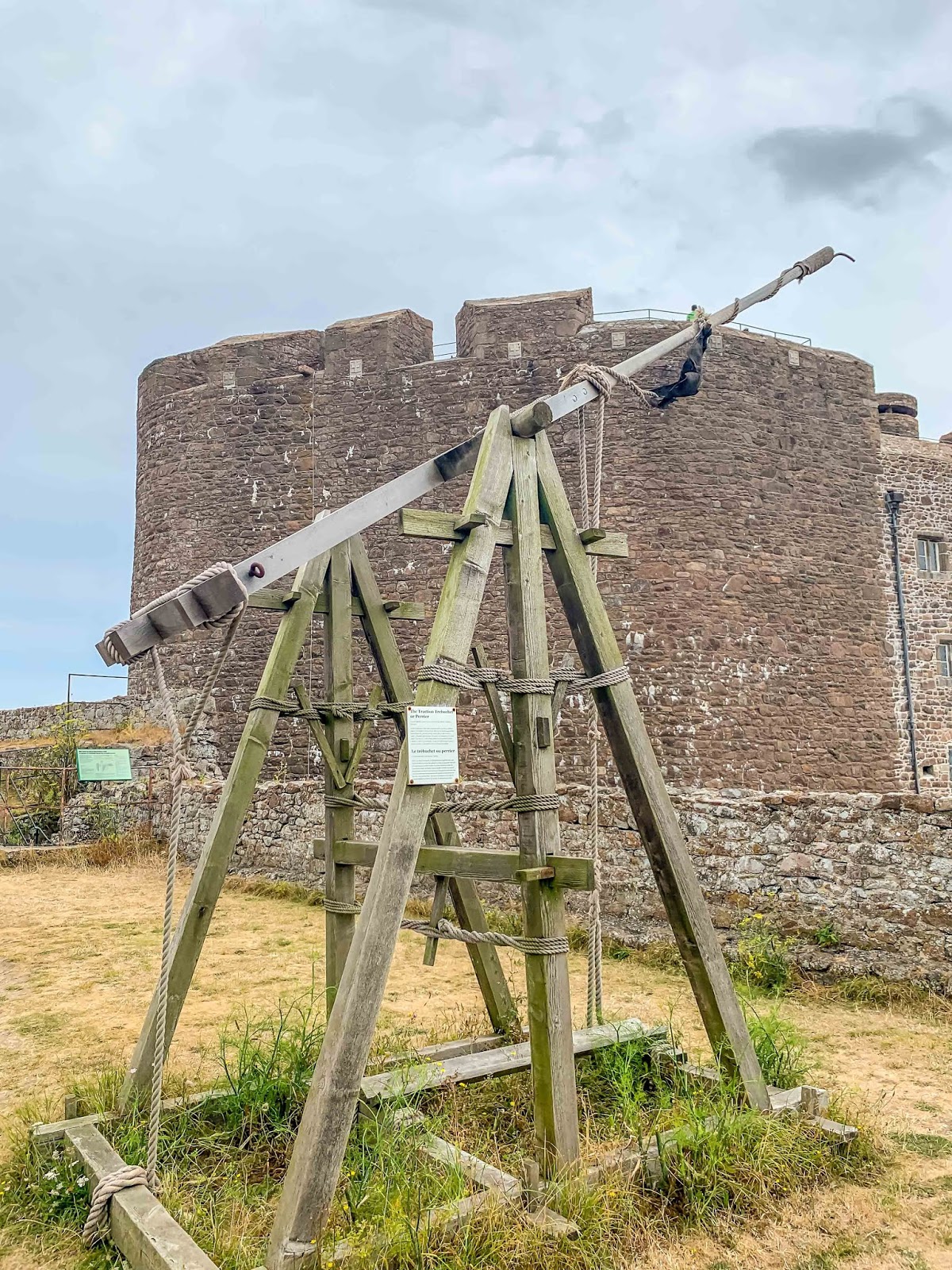
| Traction Trebuchet – A counterweight system to hurl wooden poles, darts, missiles across the wall at oncoming enemy. It took a team of men to load and launch the weapon |
although during the Second World War German occupation (1940–1945), the occupying forces garrisoned the castle and added modern fortifications camouflaged to blend in with existing structures.
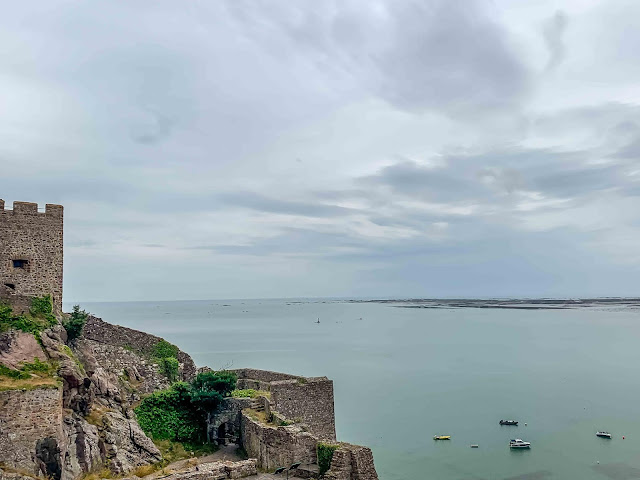 |
| View of the Channel islands about midway to the top |
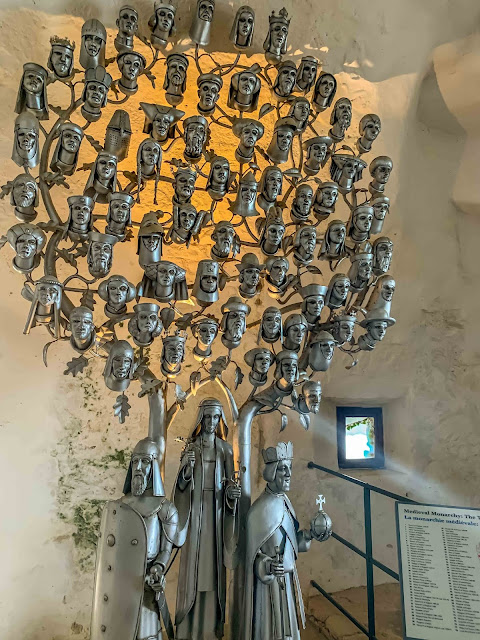 |
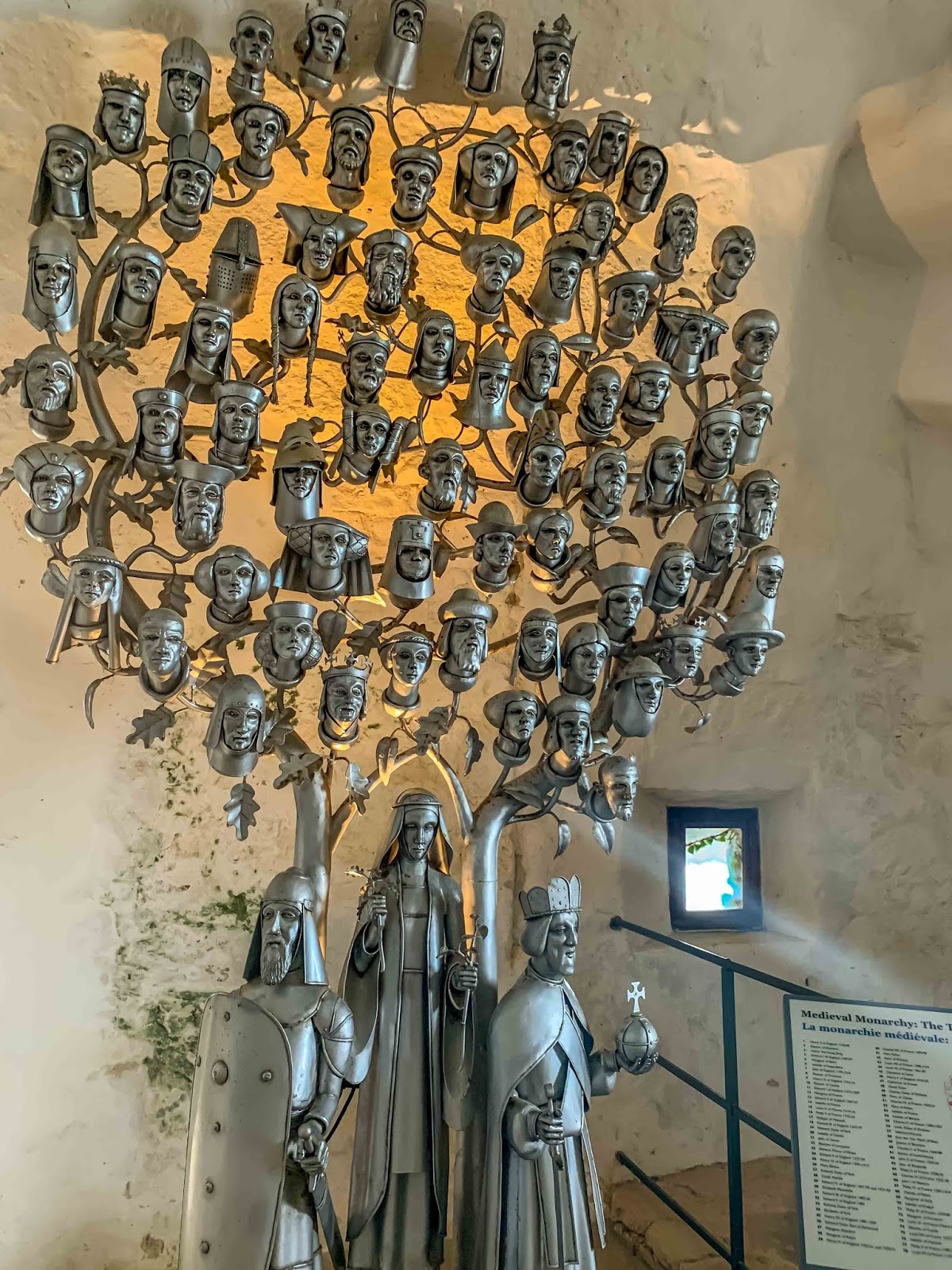
| Medieval Monarchy – The Tree of Succession – Basically, who inherits the Throne. Interesting form of artwork |
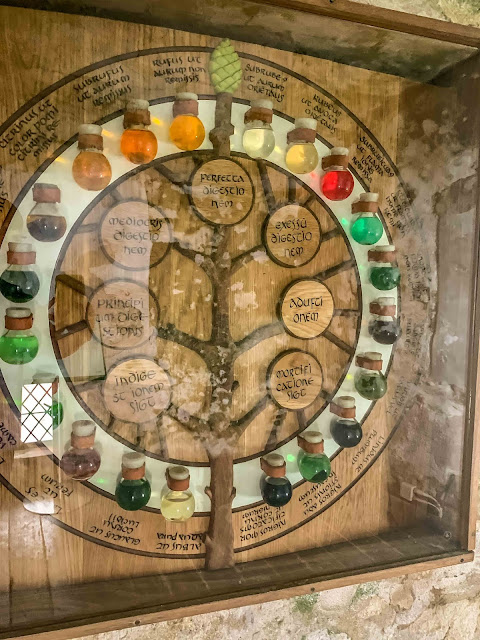 |
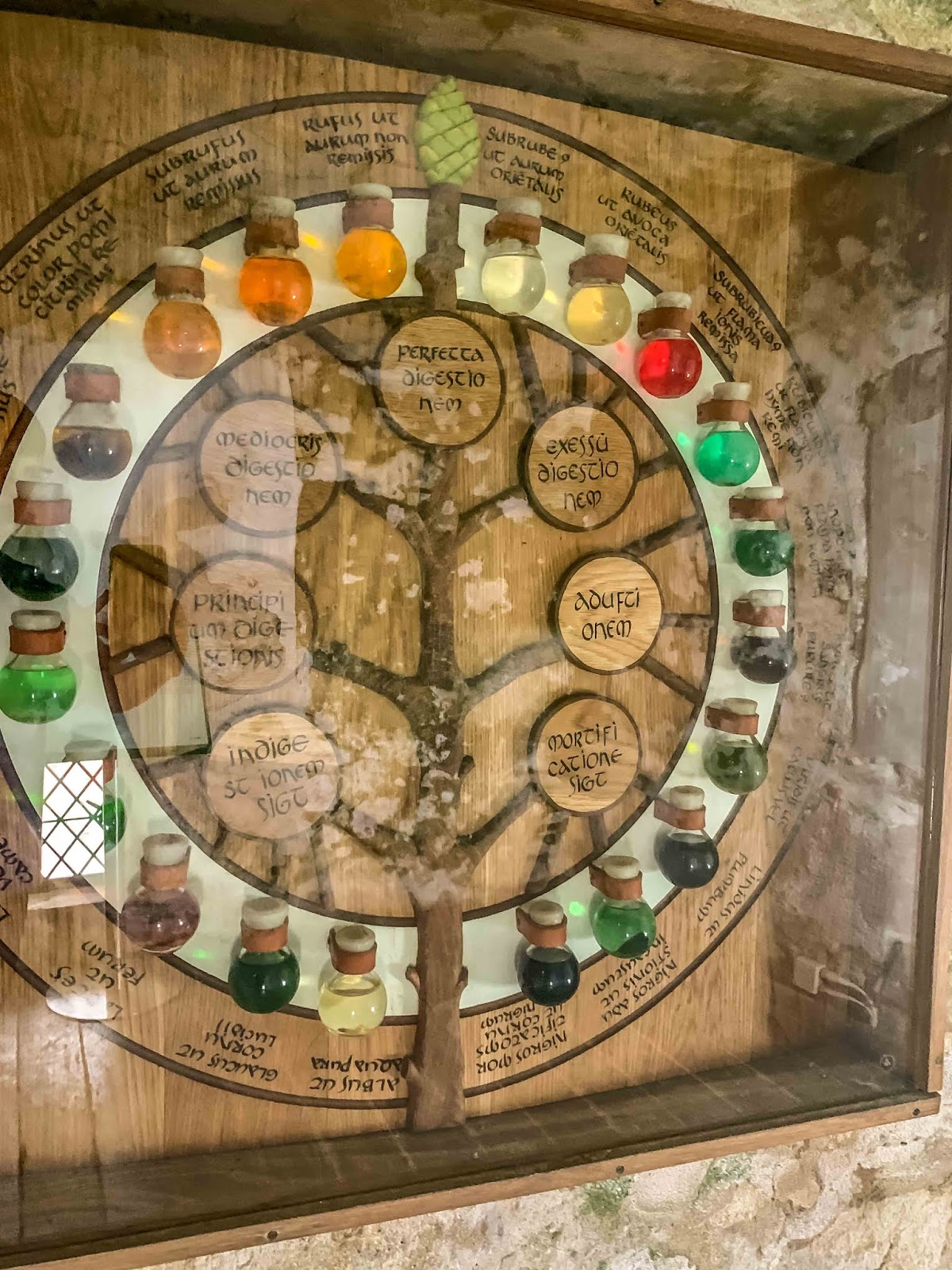
| Medieval Medicine. The darker the urine, the sicker you were. In the 12th & 13th centuries, the doctors used the 4 humors one of which was this urine wheel and the stars to try to determine what your illness could be |
The castle is now a heritage site and is being well kept for visitors like us to enjoy.
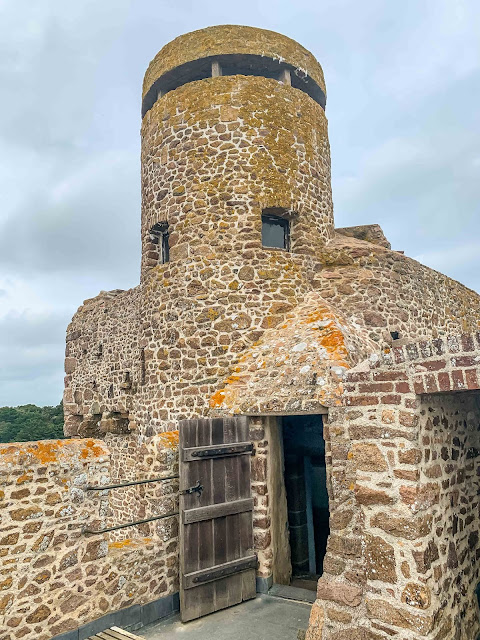 |
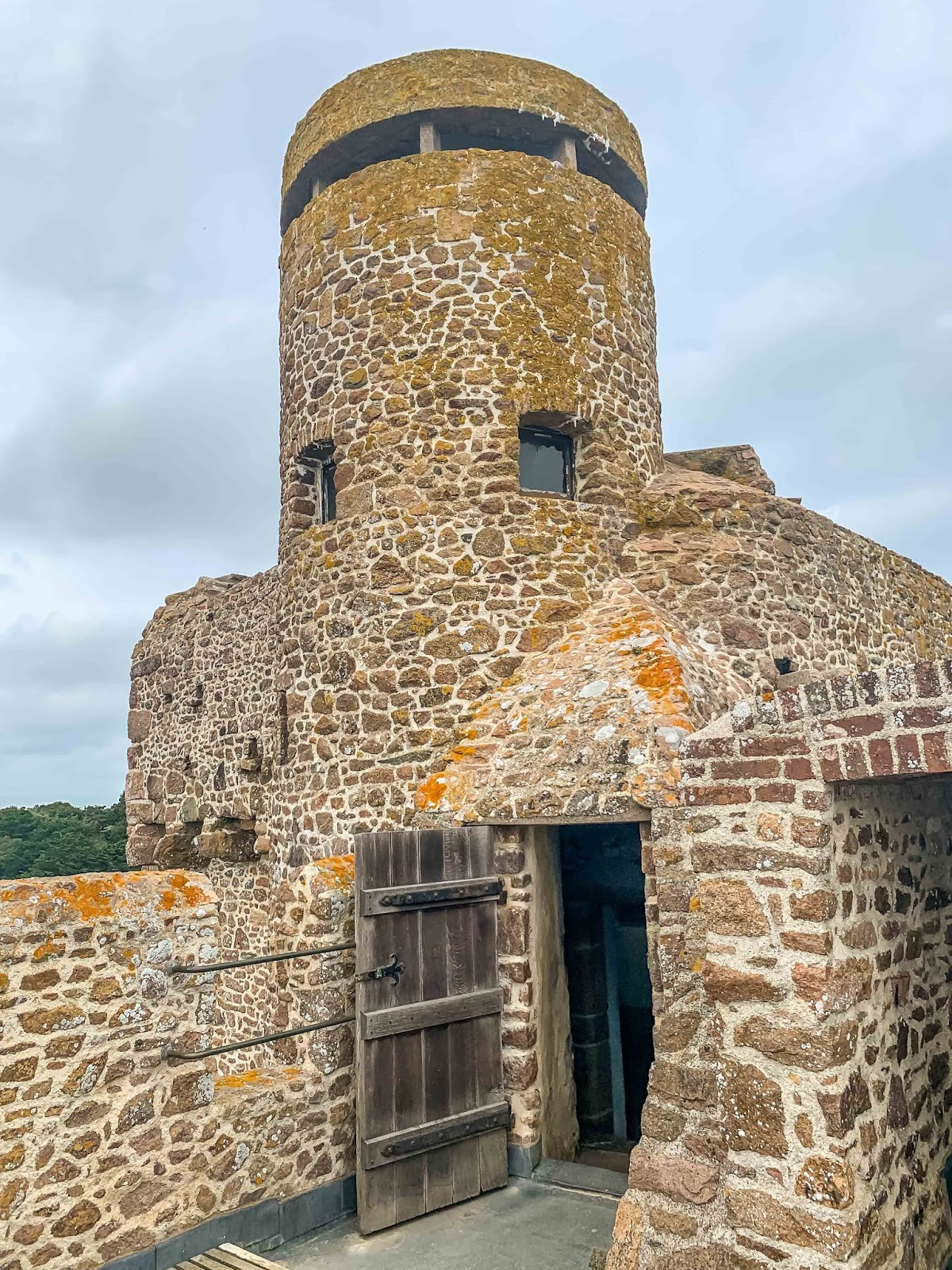
| “The Roof of the Great Chamber” when first built was made from lead. The deck may have contained access to the artillery. |
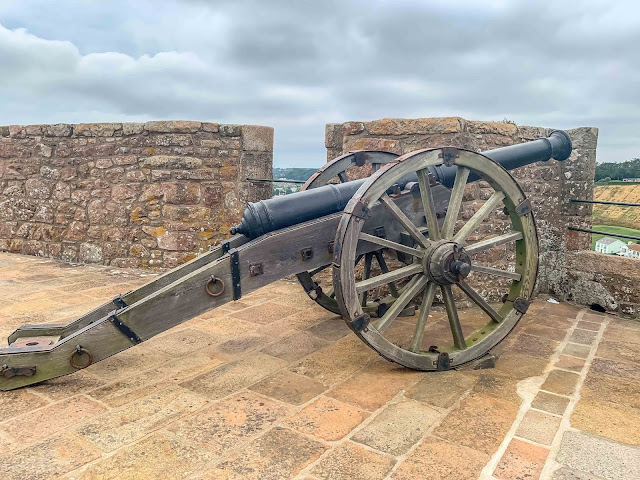 |
| This location was “The Mount Battery” which provide a substantial and stable base for cannons to counter any threats. |
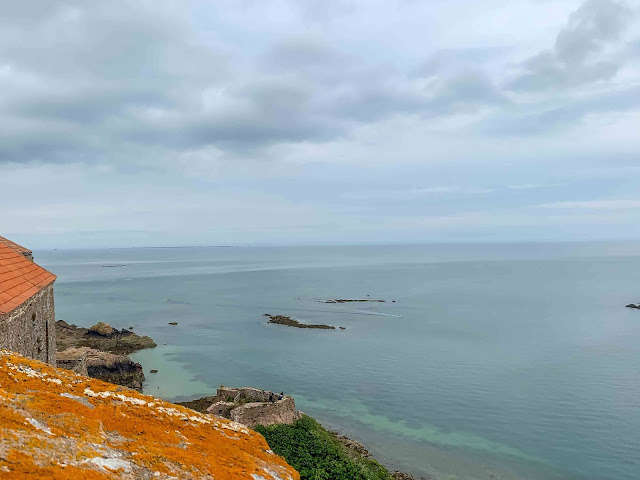 |
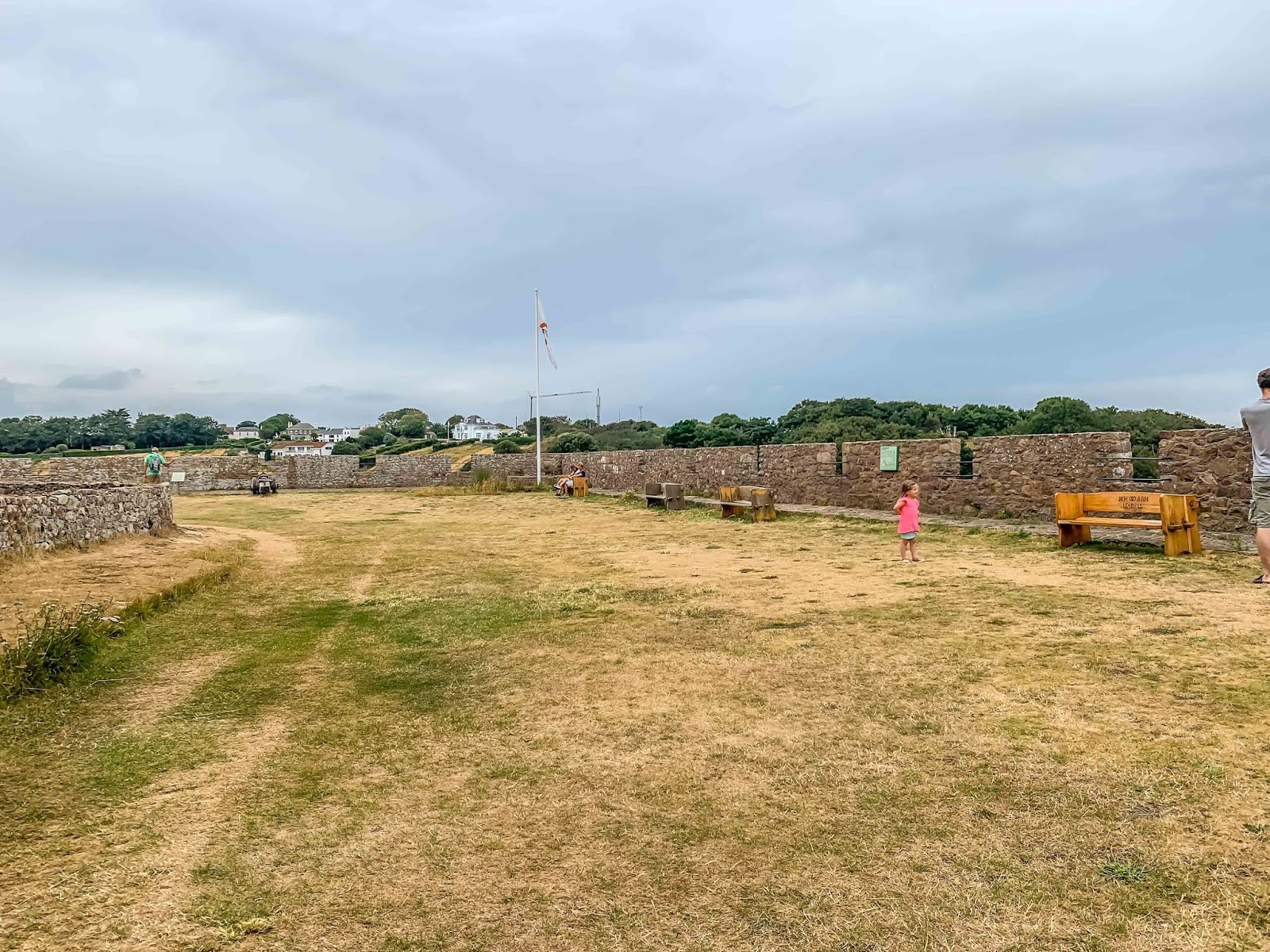
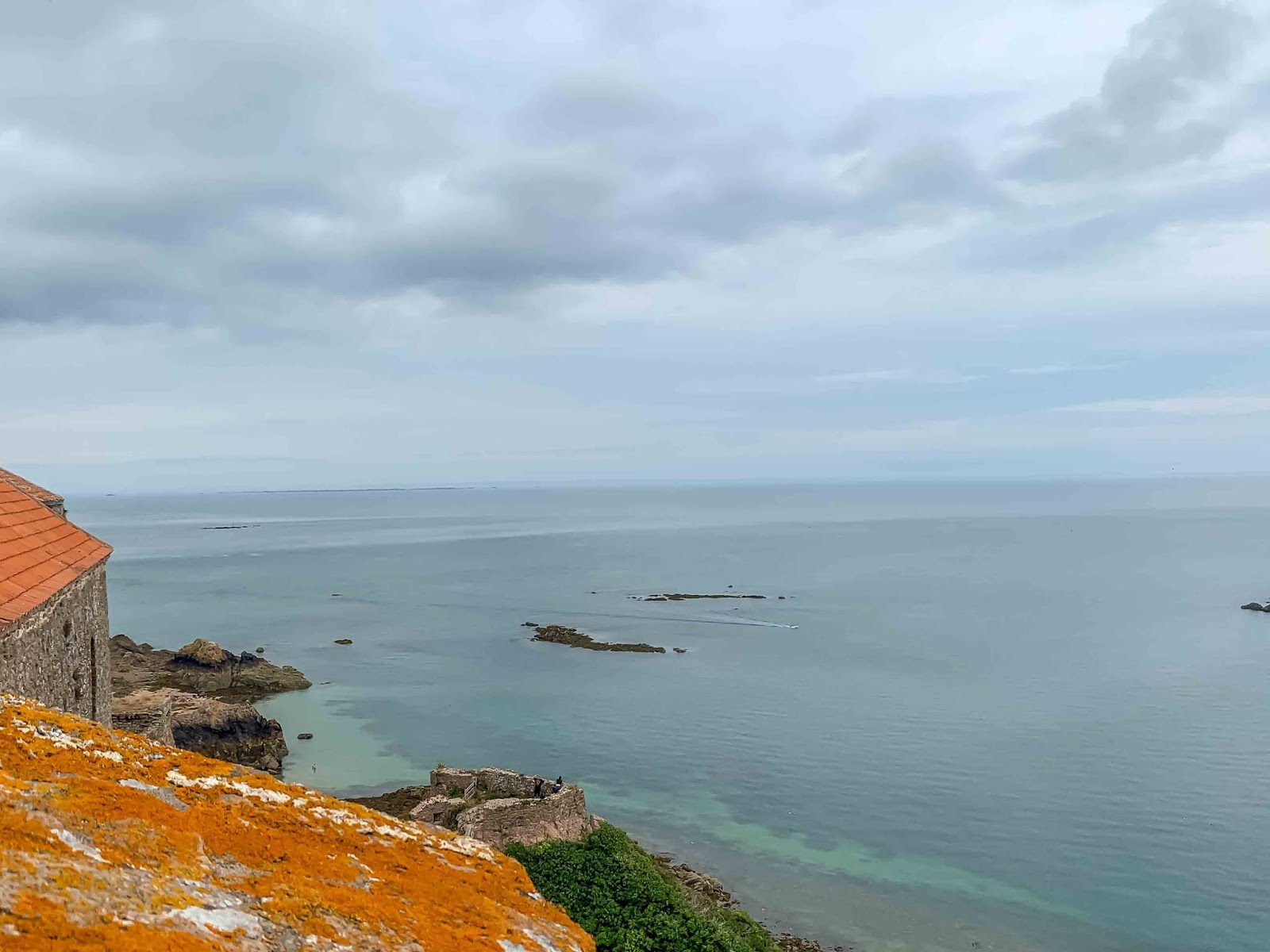
| View from the top |
May God bless you all!
Chuck & Lea Ann
 WorldTravelReynolds

Love the castle!
LikeLike
It has a lot of history! I bet it could be creepy if decorated at Halloween!
LikeLike
Love the castle!
LikeLike
It has a lot of history! I bet it could be creepy if decorated at Halloween!
LikeLike