 |
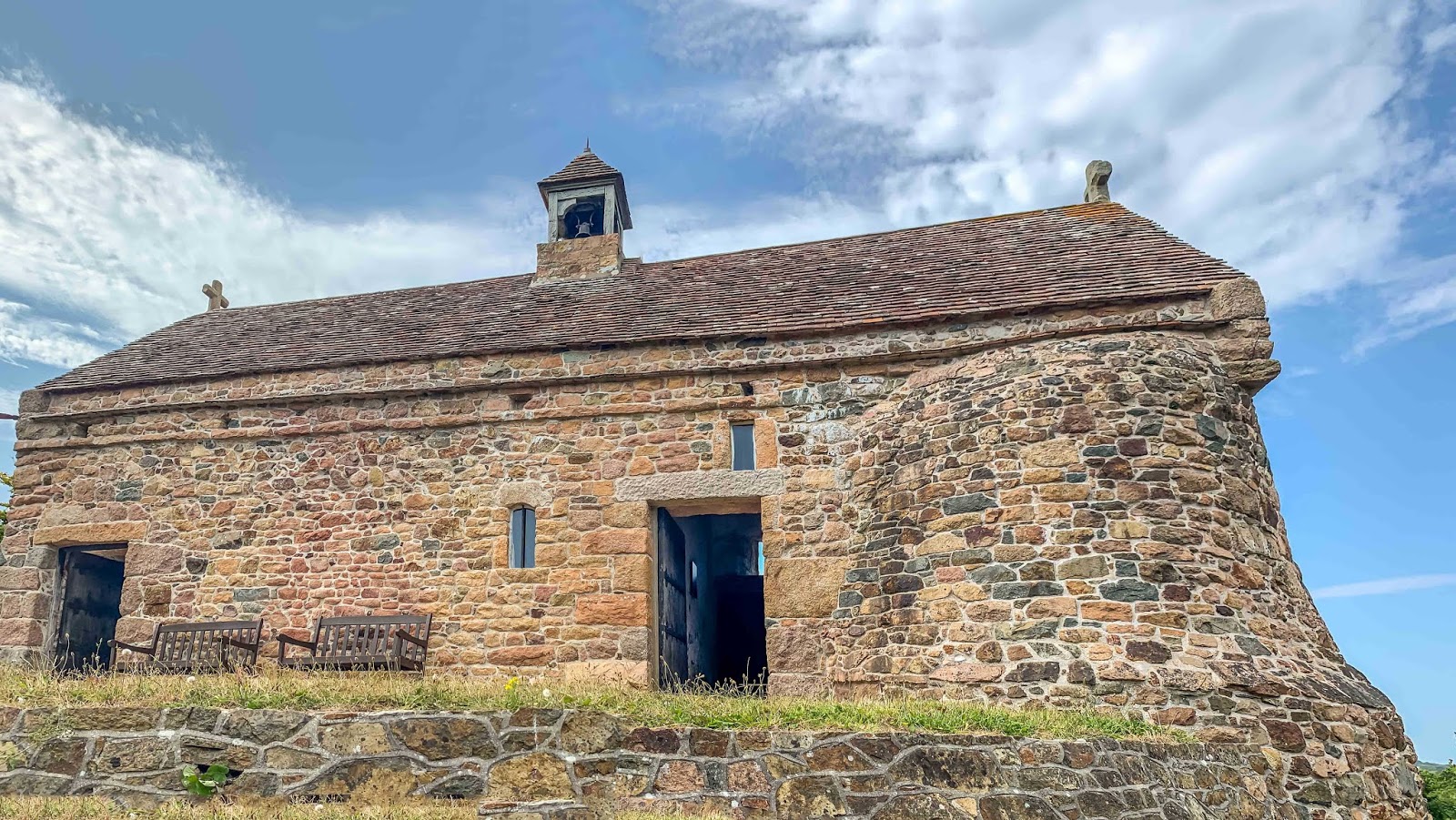
| Chapel of Notre Dame de la Clarte |
Yesterday we decided to walk to a place called La Hougue Bie. The walk to the location wasn’t bad. About one and 1/2 miles from where we are staying but a lot of uphill climbing. Round trip that would have been 3 miles.
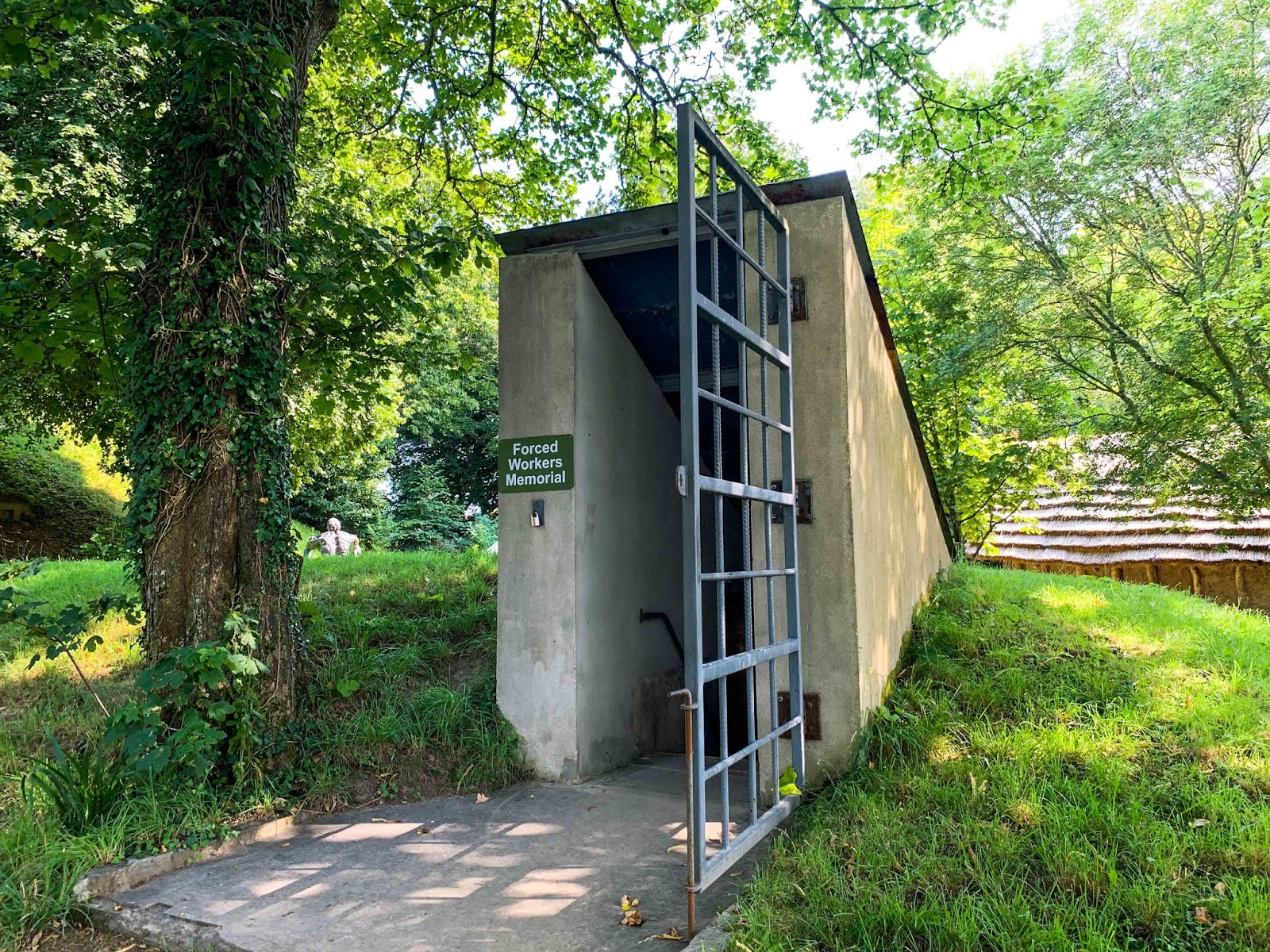 |
| Forced Workers Memorial |
We figured we’d visit the site and rest and then walk back a different route by the reservoir that we visited last week. We ended up walking 7 miles! We must be nuts!
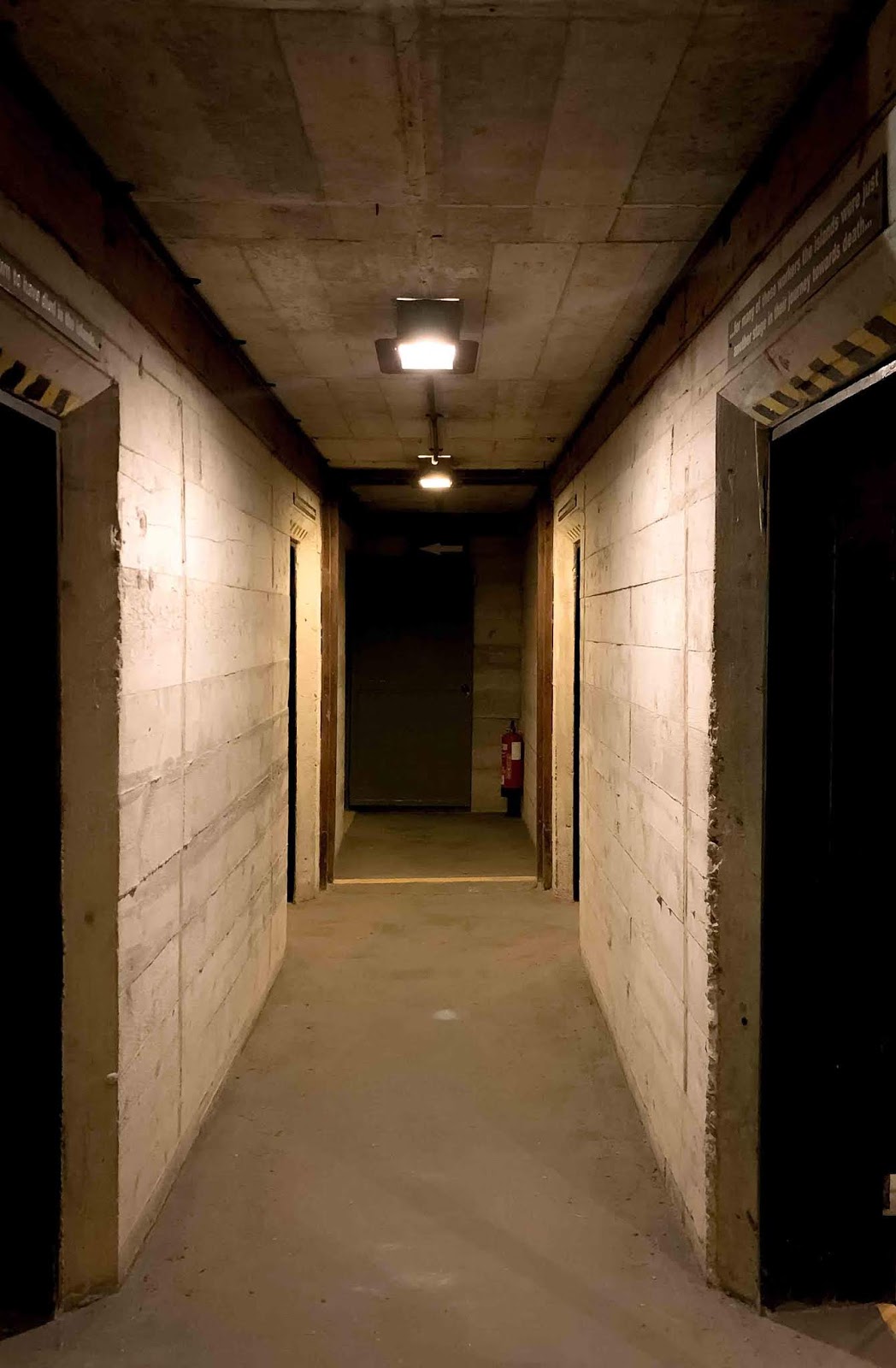 |
| Rooms (cells) in which the workers were housed |
We have done this before in the past but failed to take into the equation that it was a brutal 85 degrees. No wind to help cool us down and the pavement was pretty hot.
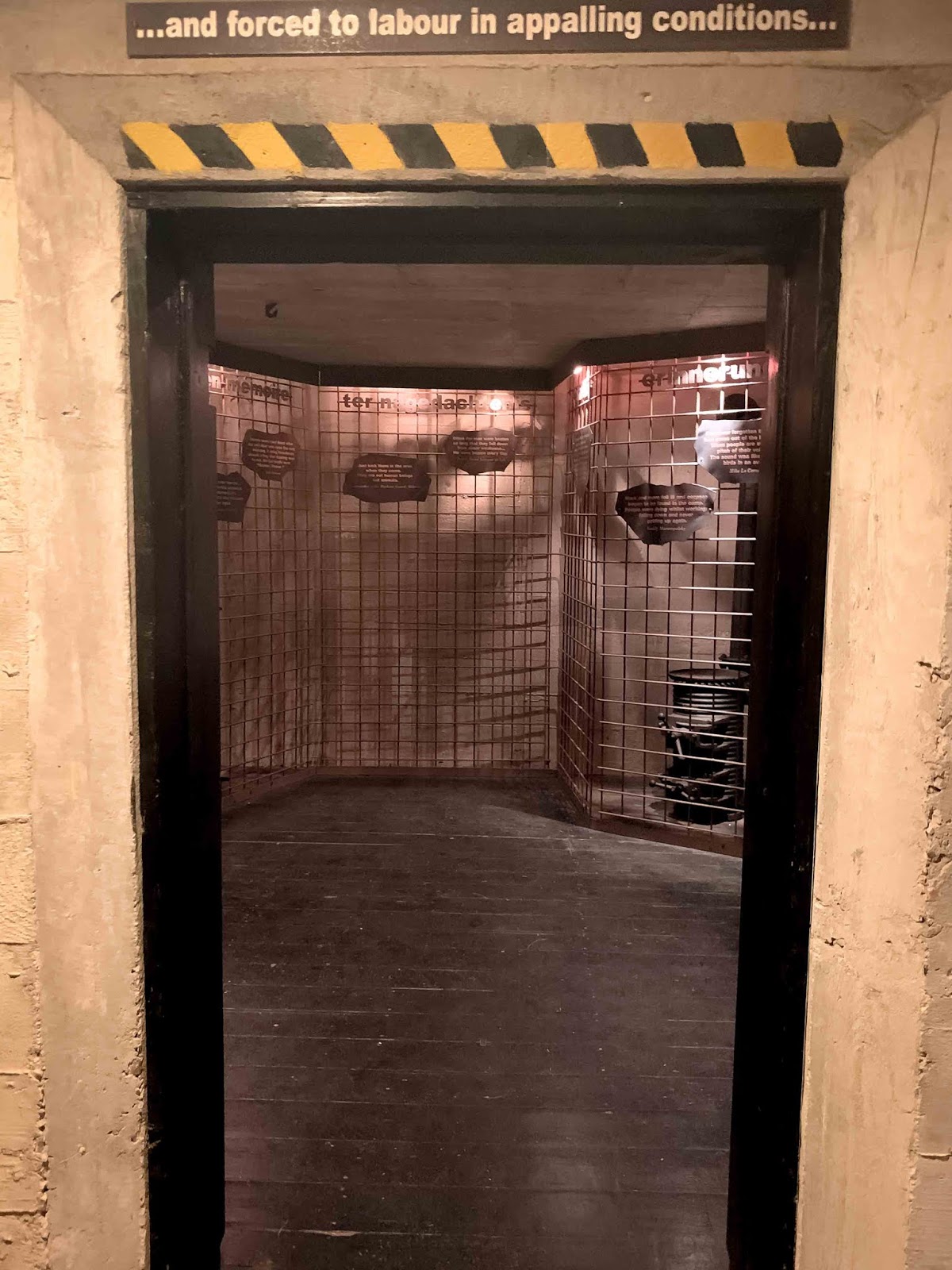 |
| Inside one of the rooms. There are writings inside from people reliving experiences |
Now, I know my Texas and Florida friends are saying, you call that hot? Well, it is if you have spent the last few months in the upper 60’s and it felt decent.
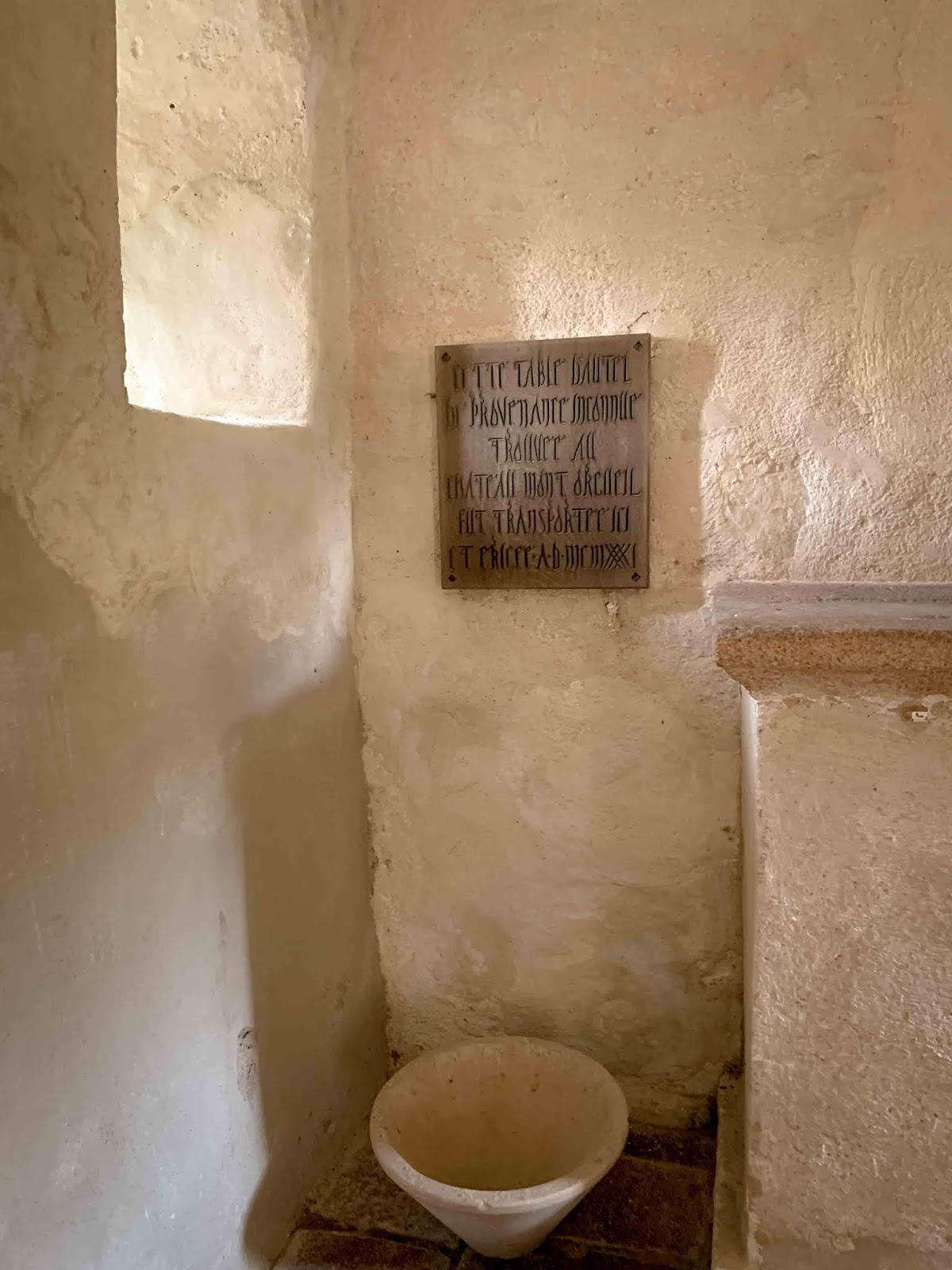 |
| Washing communion vessel from the late medieval period |
Your body gets accustomed to those cool temperatures. Today we are paying for it! We didn’t do anything but veg out on the sofa all day.
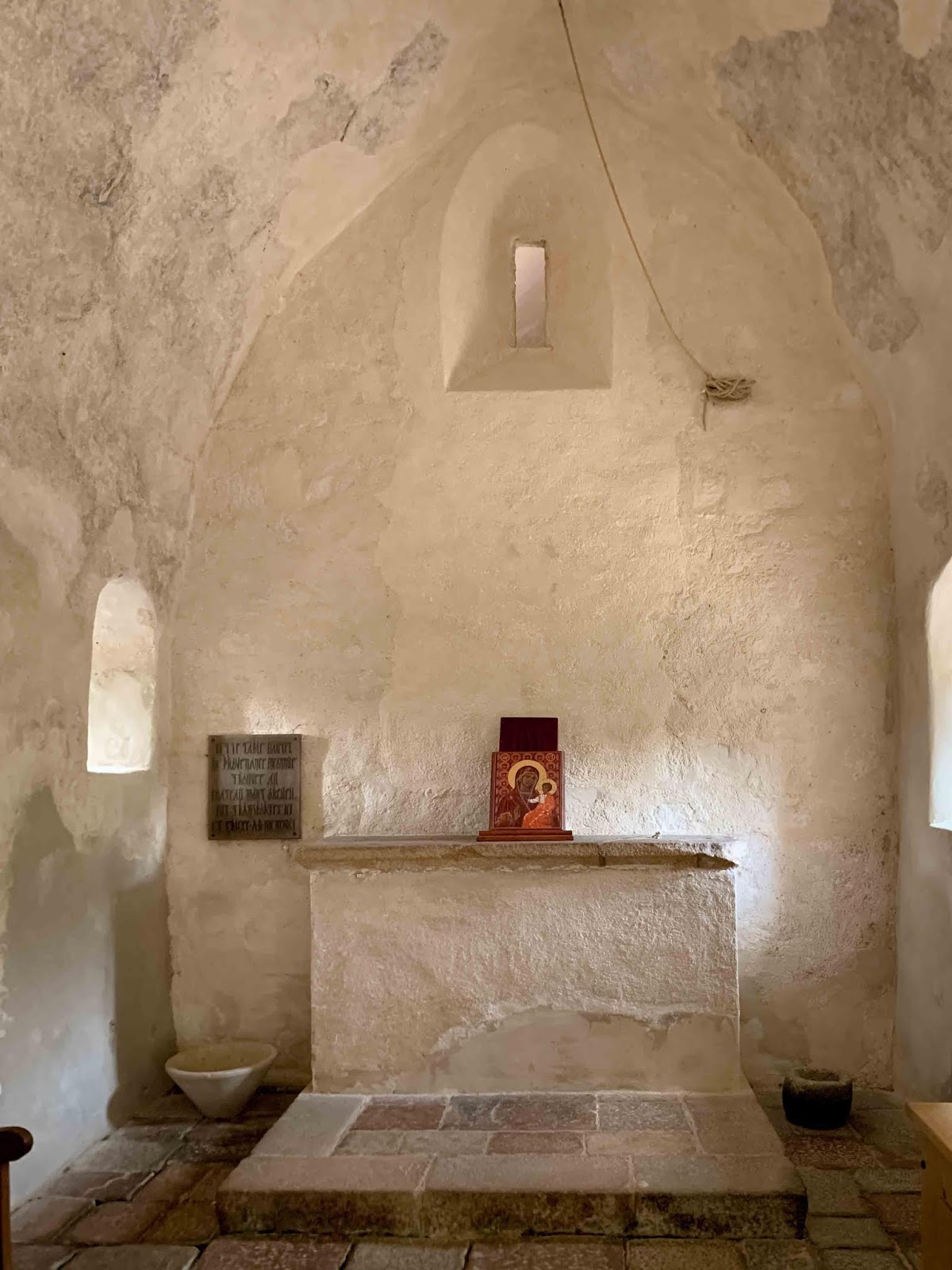 |
| Stone medieval altar |
I think Chuck went outside once to bring in the laundry. This evening has been much better. We are feeling more alive. More me than Chuck.
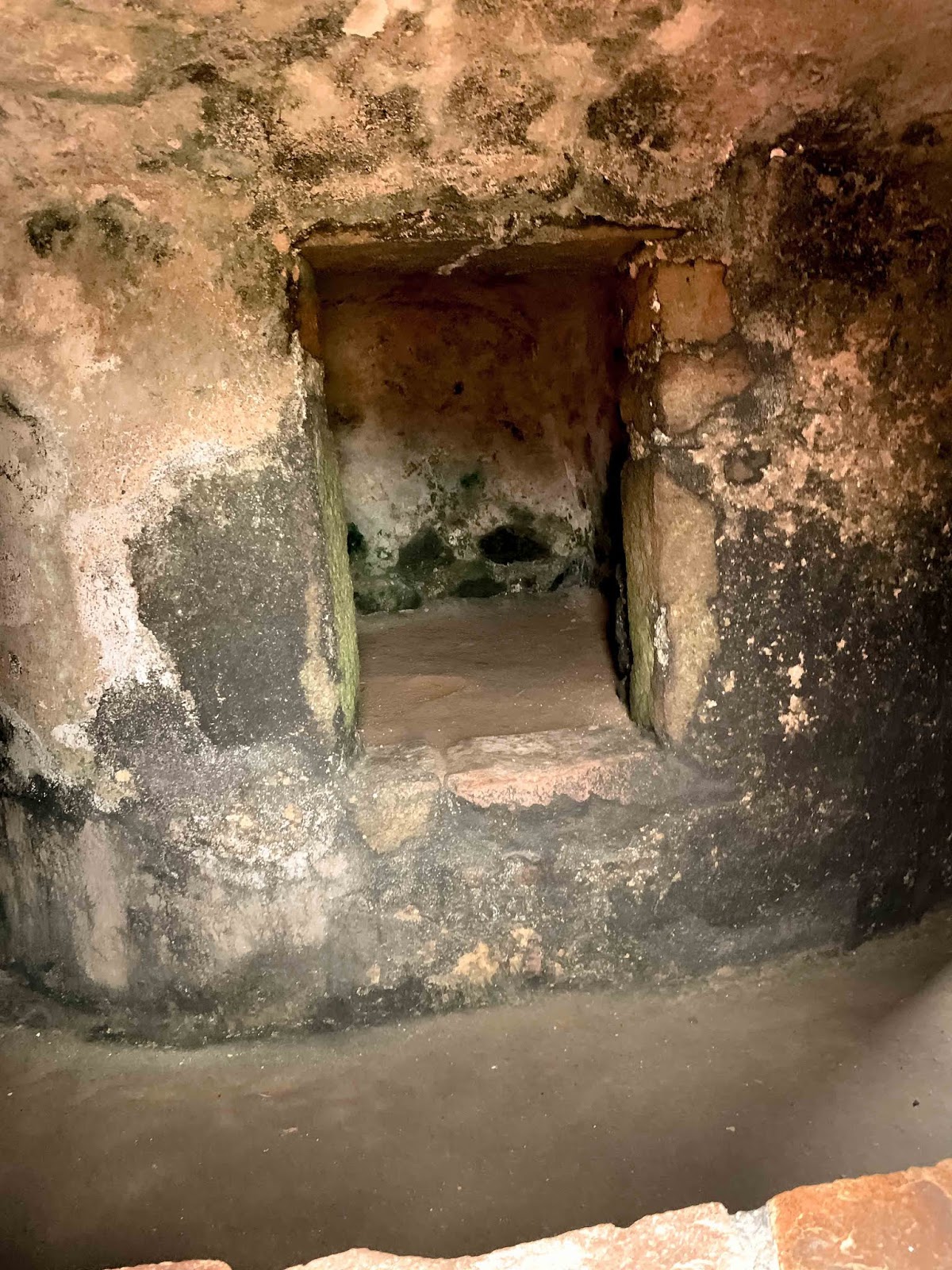 |
| Entrance to a Crypt. The main feature is a central relic representing the Holy Sepulchre where Jesus’s body was placed after the crucifixion |
He is tired but it doesn’t wipe him out like it does me. It’s sad he has 16 years on me and I can’t keep up! We had a nice time and would do it again but maybe when its cooler.
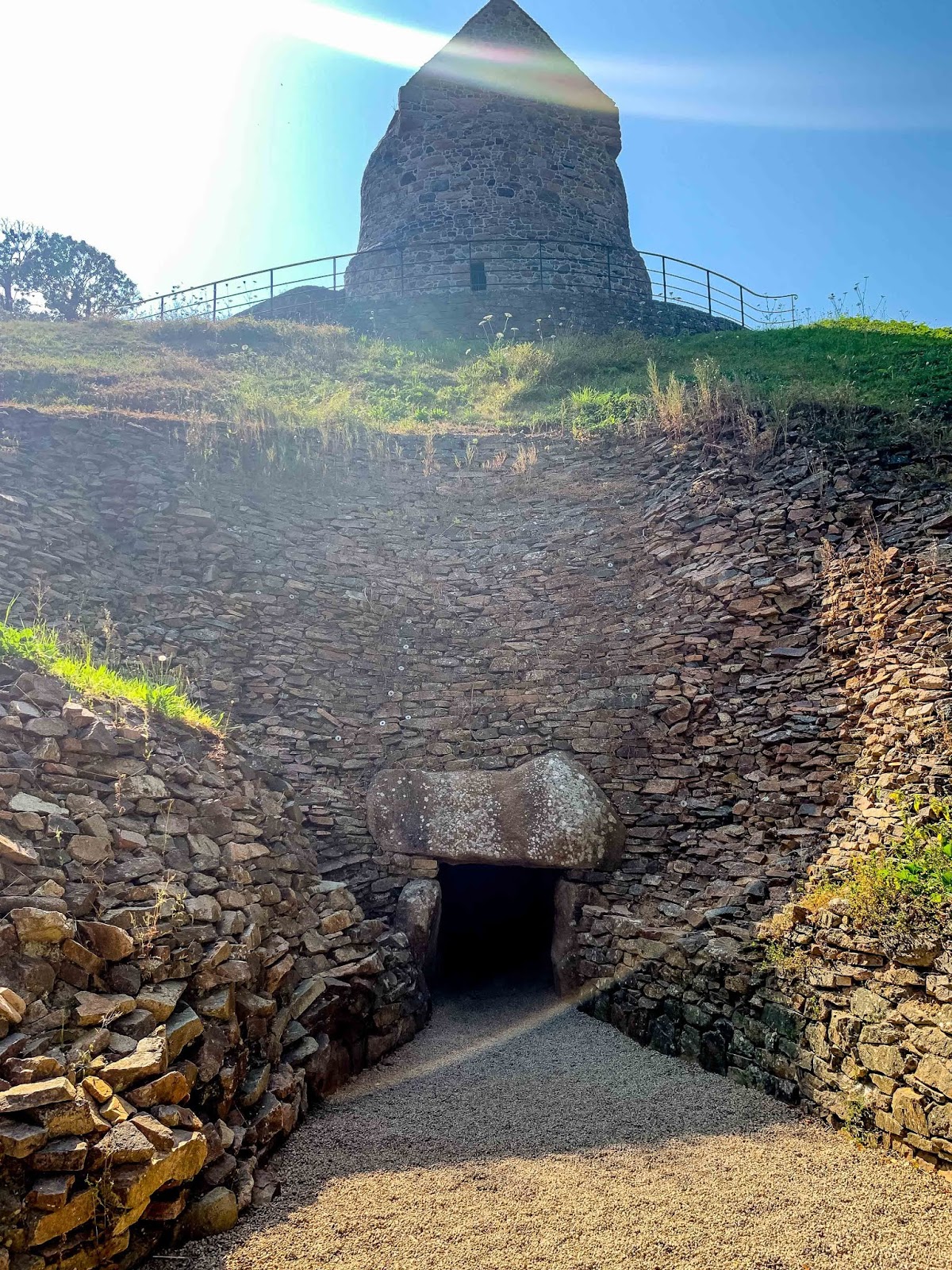 |
| The bottom part of the mound is the entrance to the dolmen. The top is the chapel. |
So, on to our exploring. La Hougue Bie Museum. It is a Neolithic tomb with archaeological finds. There was also a Memorial dedicated to the thousands forced to labour for their persecutors from 1940-1945.
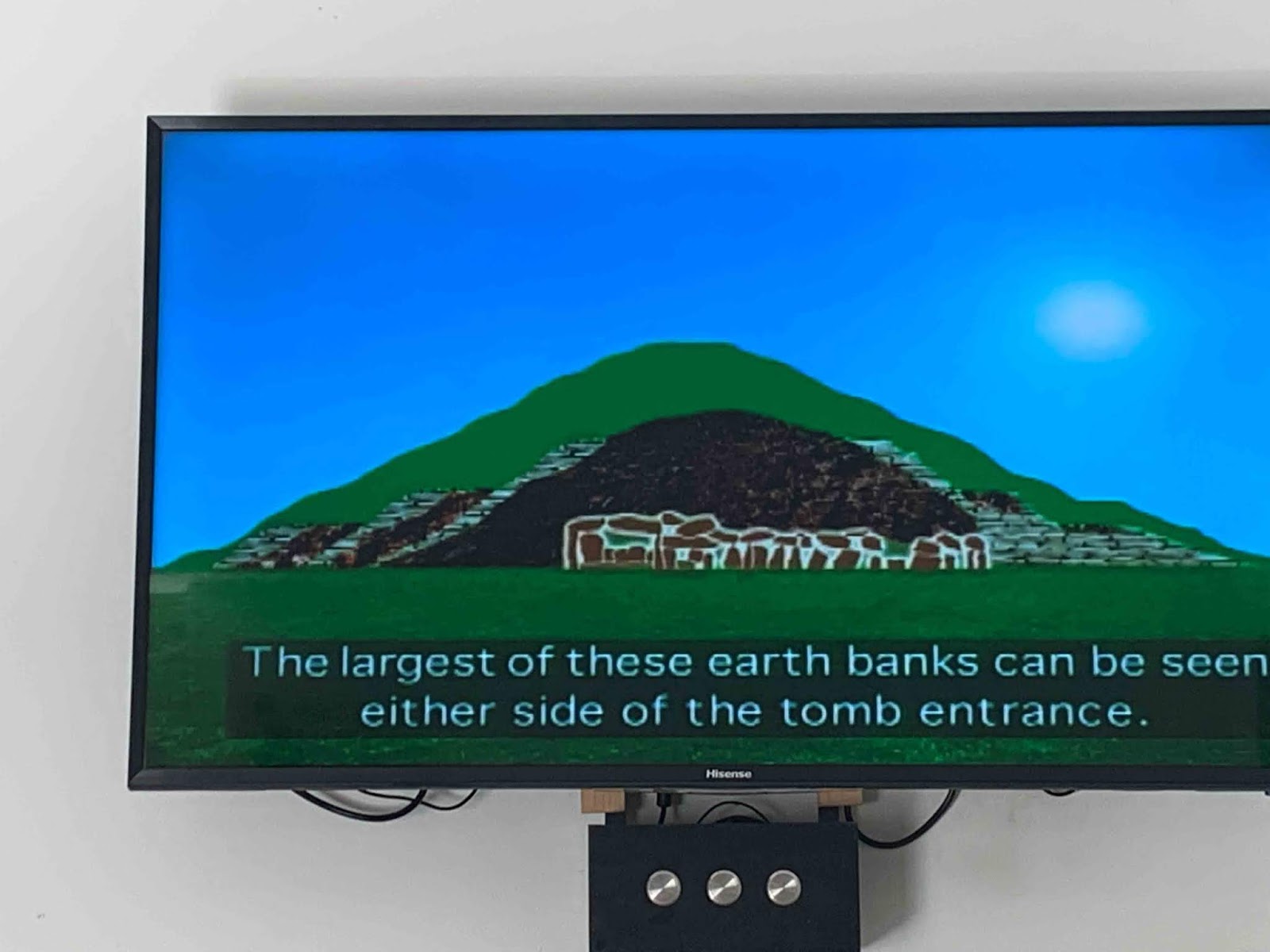 |
| This photo shows the dolman in the bottom middle portion. They kind of look like stone henge all mashed together under a massive amount of dirt, The chapel is not shown in this illustration. |
The site was underground housing where the Germans kept the forced workers in small cells that looked not much larger than a jail cell. Some of the stories written as tributes on the walls were heart breaking.
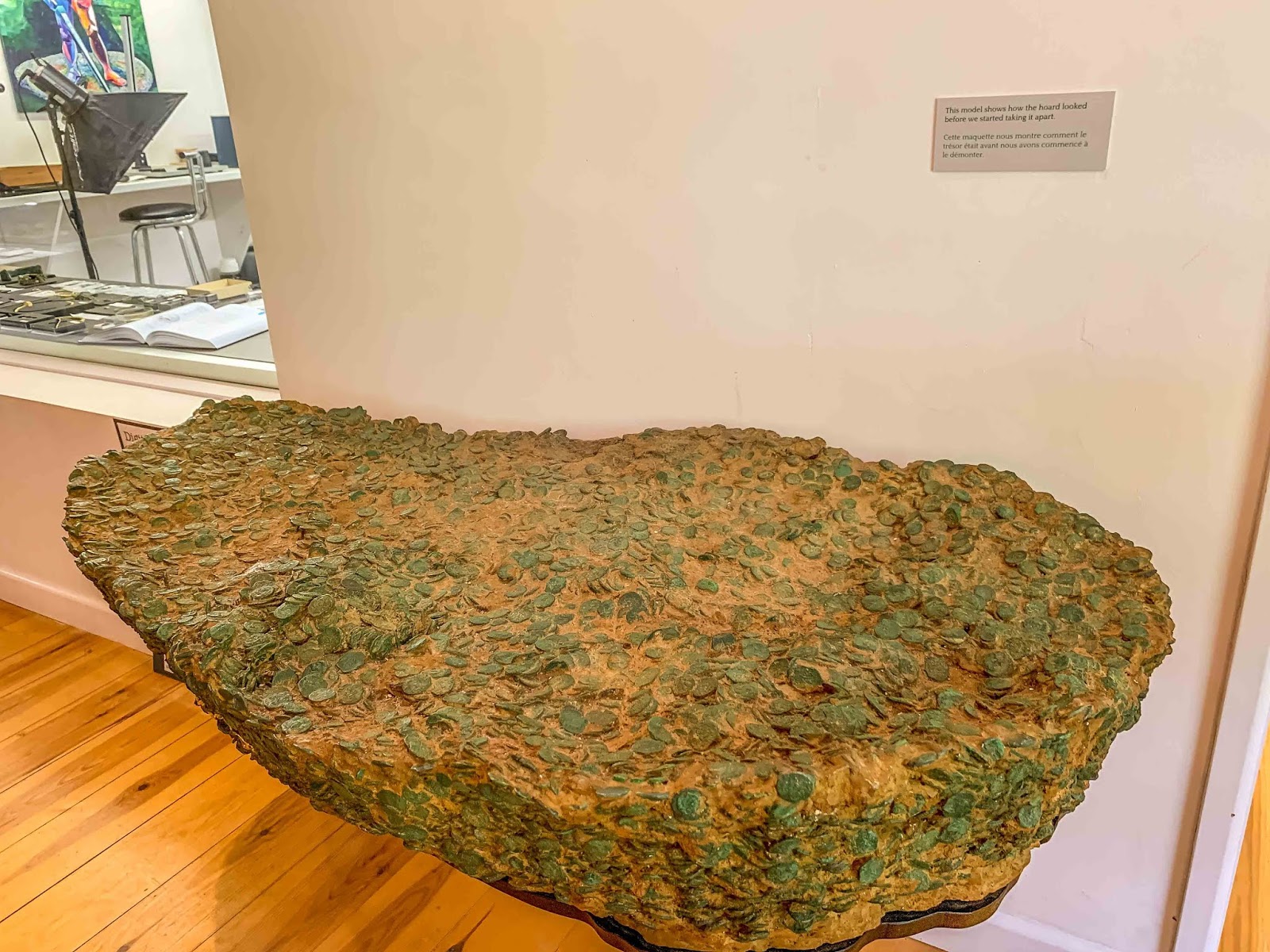 |
| The hoard of coins found in 2012 from the Iron Age (This is a replica of its actual size) |
La Hougue Bie is a dolmen covered with a mound built around 6,000 years ago. A dolmen, typically called a tomb, is actually a religious ritual site, pre-christian church.
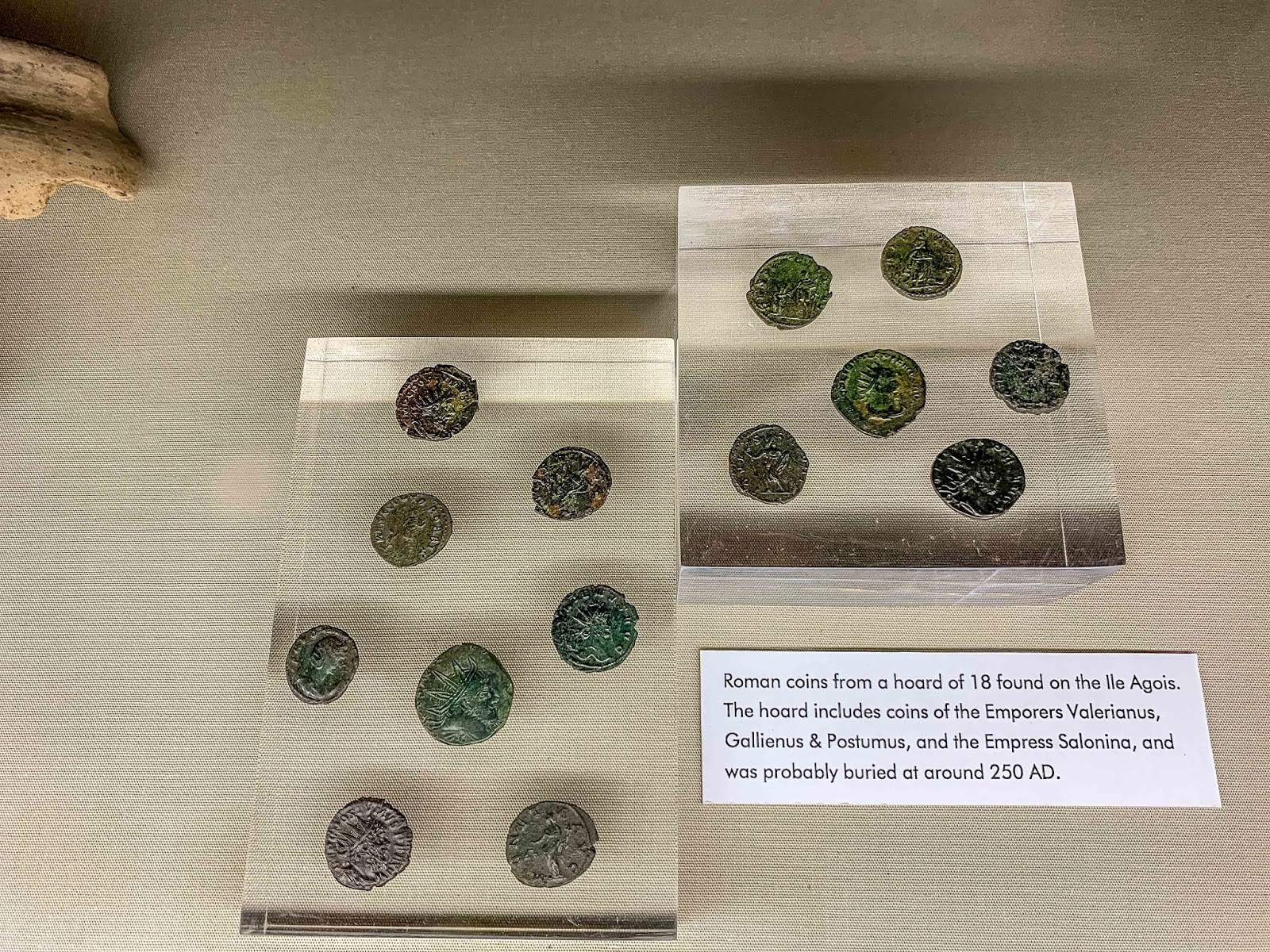 |
| Roman coins recovered from the hoard |
It was built during the Neolithic period as a place for religious rituals and ceremonies. During that period they worshiped their ancestors and the sun.
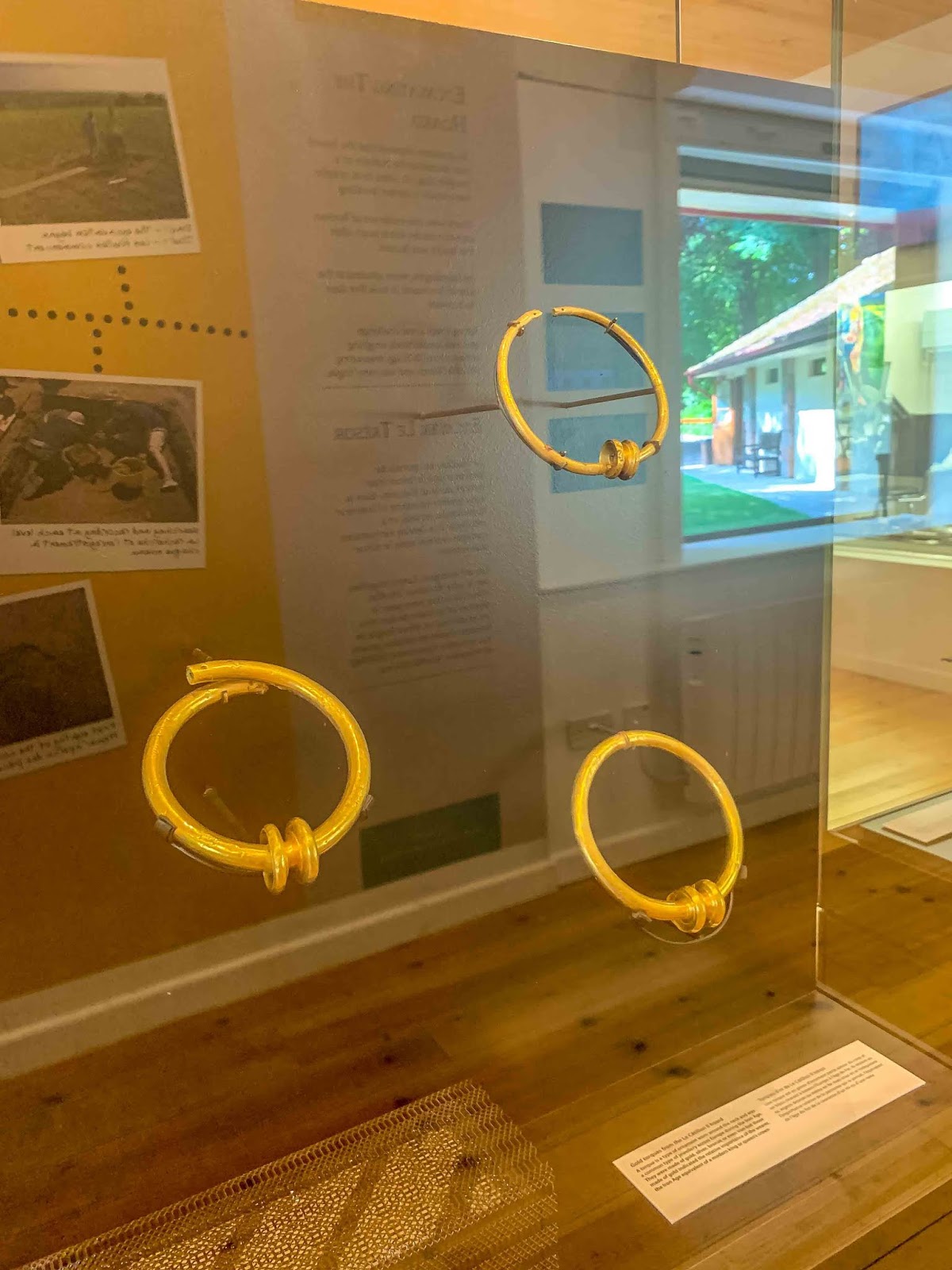 |
| Jewelry found within the hoard |
It is estimated that around 3000 people lived in Jersey during the Neolithic period. We walked inside the tomb but to get to it, we had to walk almost on our knees through an entryway to get inside. If you can imagine the Stonehenge pillars being cramped together and only being about 3-4 foot tall, thats how it looked.
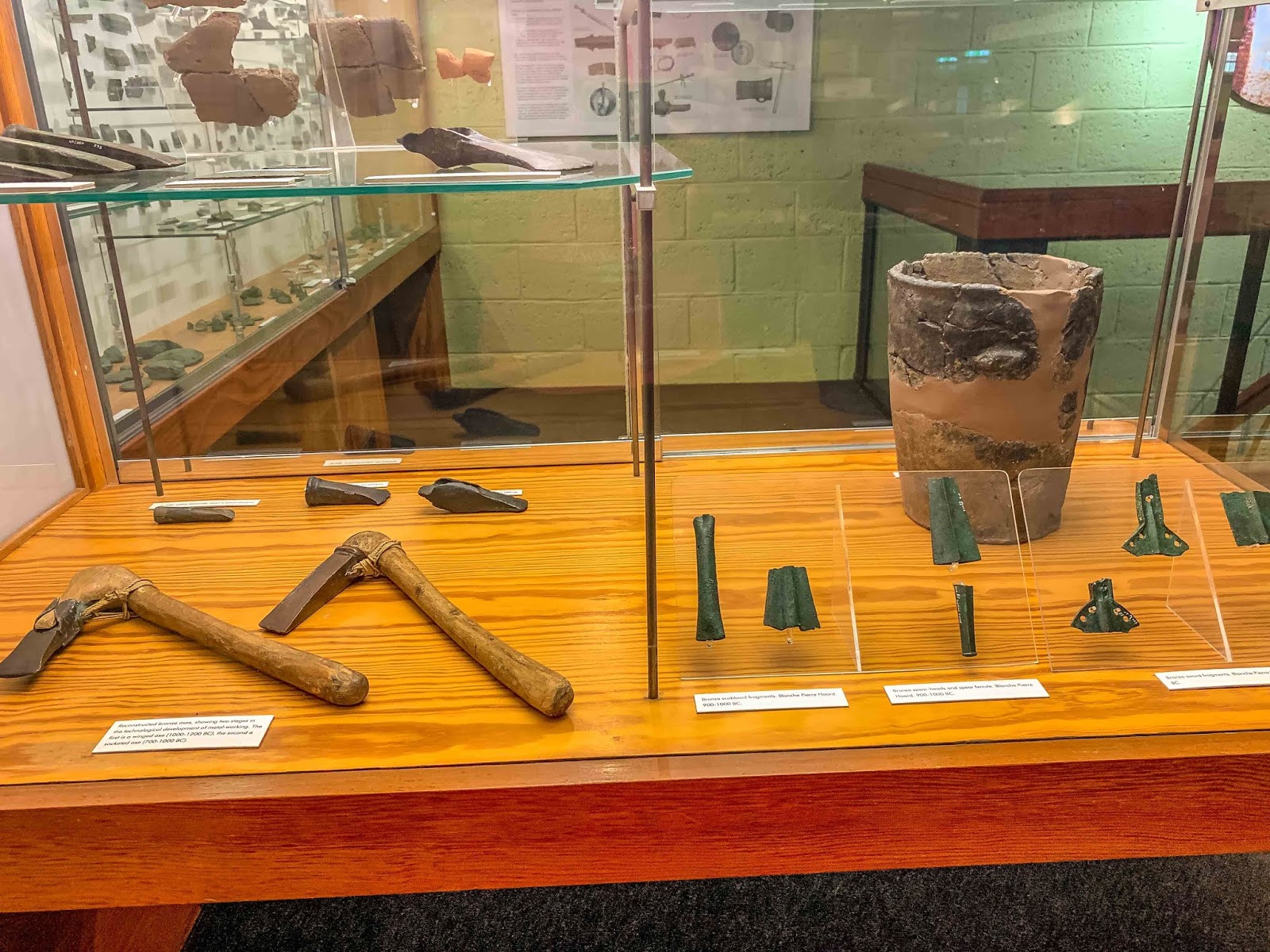 |
| Artifacts found around the same area |
Once we were inside, it was small rooms carved out of a wall and a large area in the middle for the rituals. Unfortunately pictures wouldn’t have shown much inside. It was pretty dark except the small artificial Christmas type lights scattered around. Outside the dolmen, we walked up the mound to the top where a church was built.
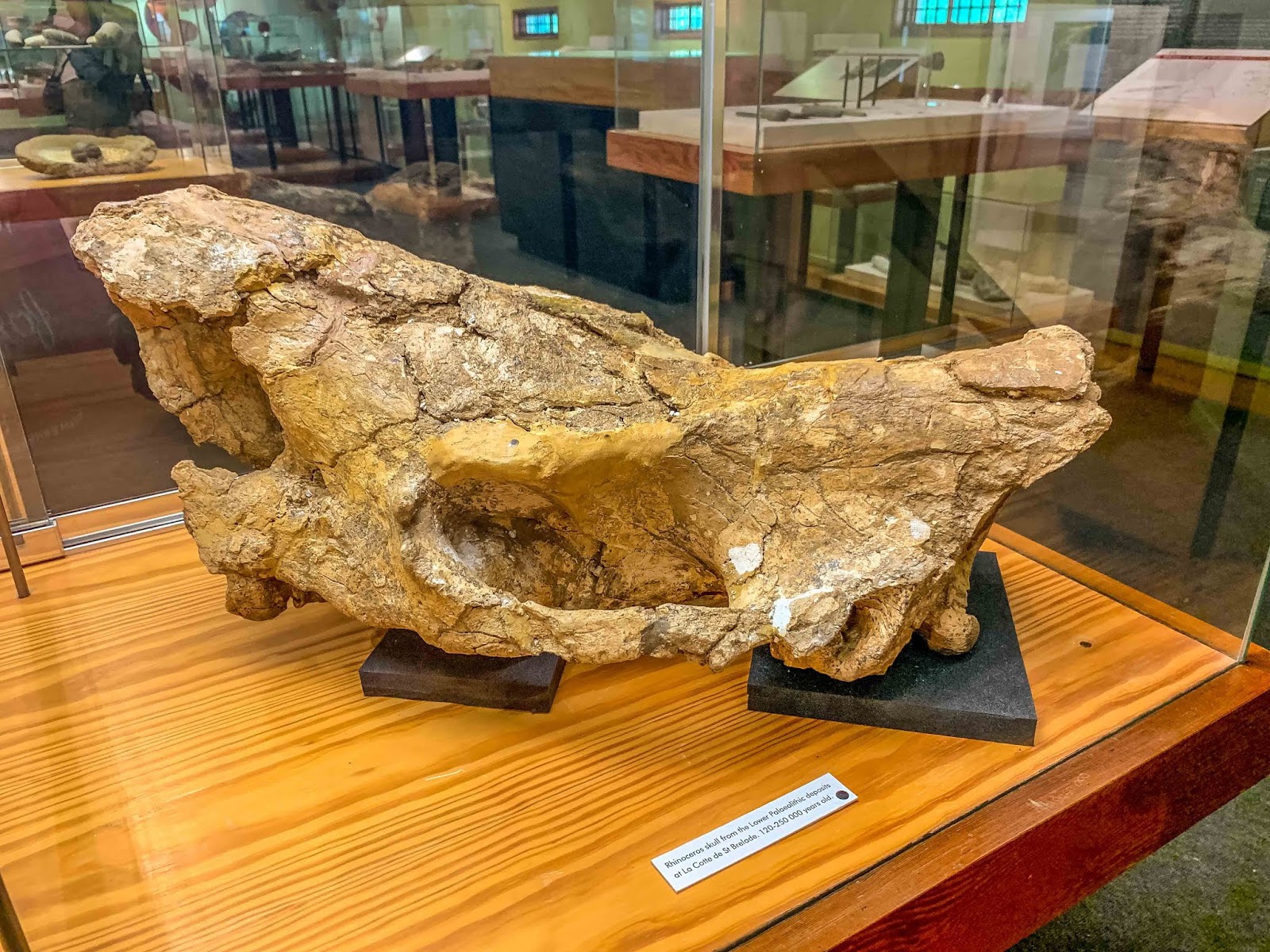 |
| A Rhinoceros skull. Approximately 120-250,000 years old |
It is called the Chapel of Notre Dame de la Clarte (Our Lady of the Light) from the 12th century. It is a good example of the superimposition of a Christian monument over a pagan religious site.
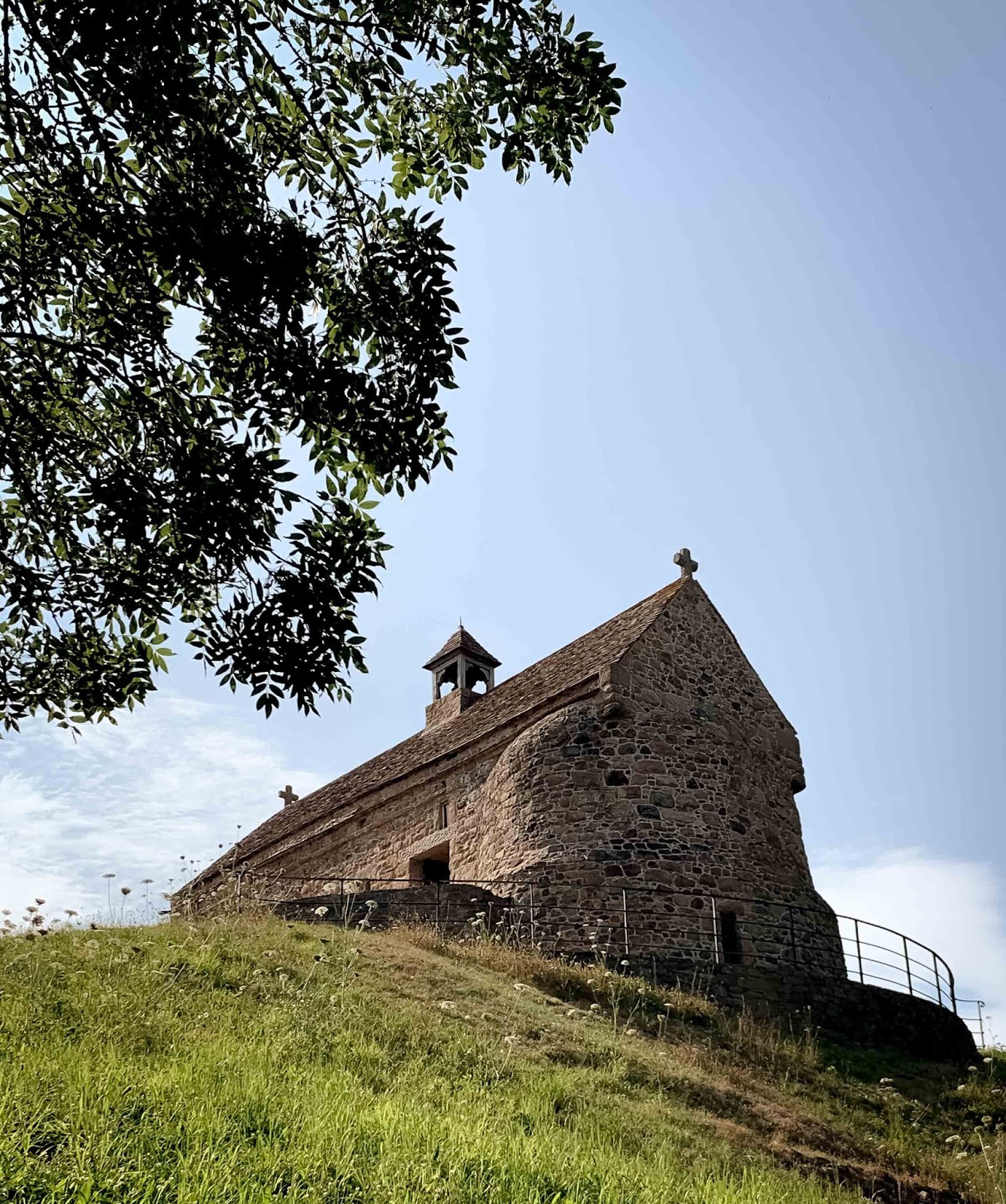 |
| The back of the Chapel |
The lady telling us about it said they wanted the Christian church to be the closest to heaven so they built it on top of the mound.
One of the interesting findings on this site was a Celtic coin and jewelry hoard that was buried about 2000 years ago during the Iron
 |
| This kitty kept her eye on us the whole time |
Age when Julius Ceaser was conquering Gaul. The only safe way to hide wealth during that time was to bury it. The hoard of coins was discovered in 2012 by some metal detectorists.
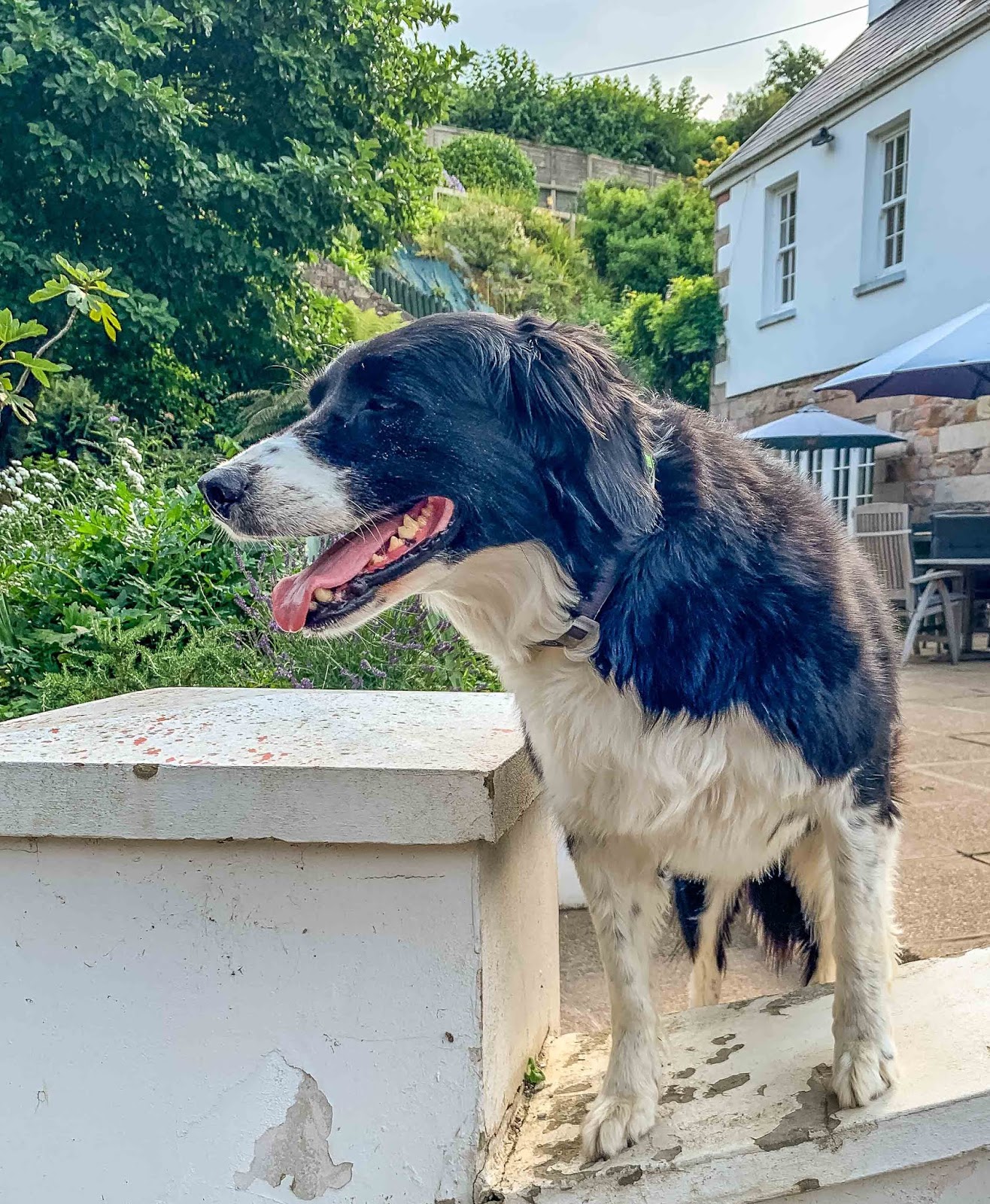 |
| This sweet dog jumped up on the fence to greet us. He was very friendly |
Not only did they find the coins but some jewelry was found as well. More than 70,000 coins were found and at this time, they are still waiting on the value of this find.
 |
| Momma chick and her babies. You cant see him but the daddy rooster was watching over them when they were crossing the road |
We had a good day but maybe next time we’ll pay closer attention to the heat!
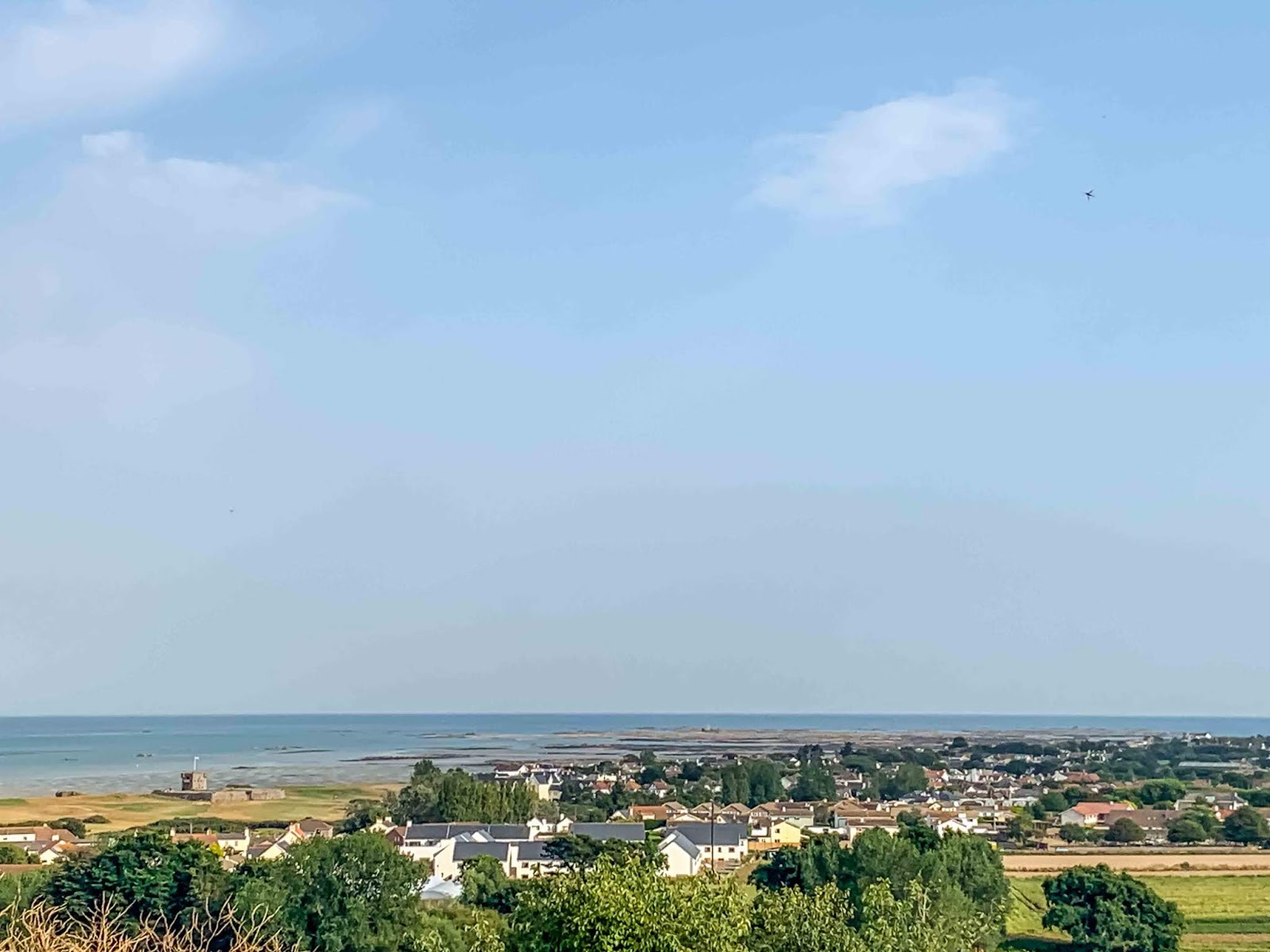 |
| Another amazing view on the East side of the island |
May God bless you always!
Chuck & Lea Ann
 WorldTravelReynolds