 |
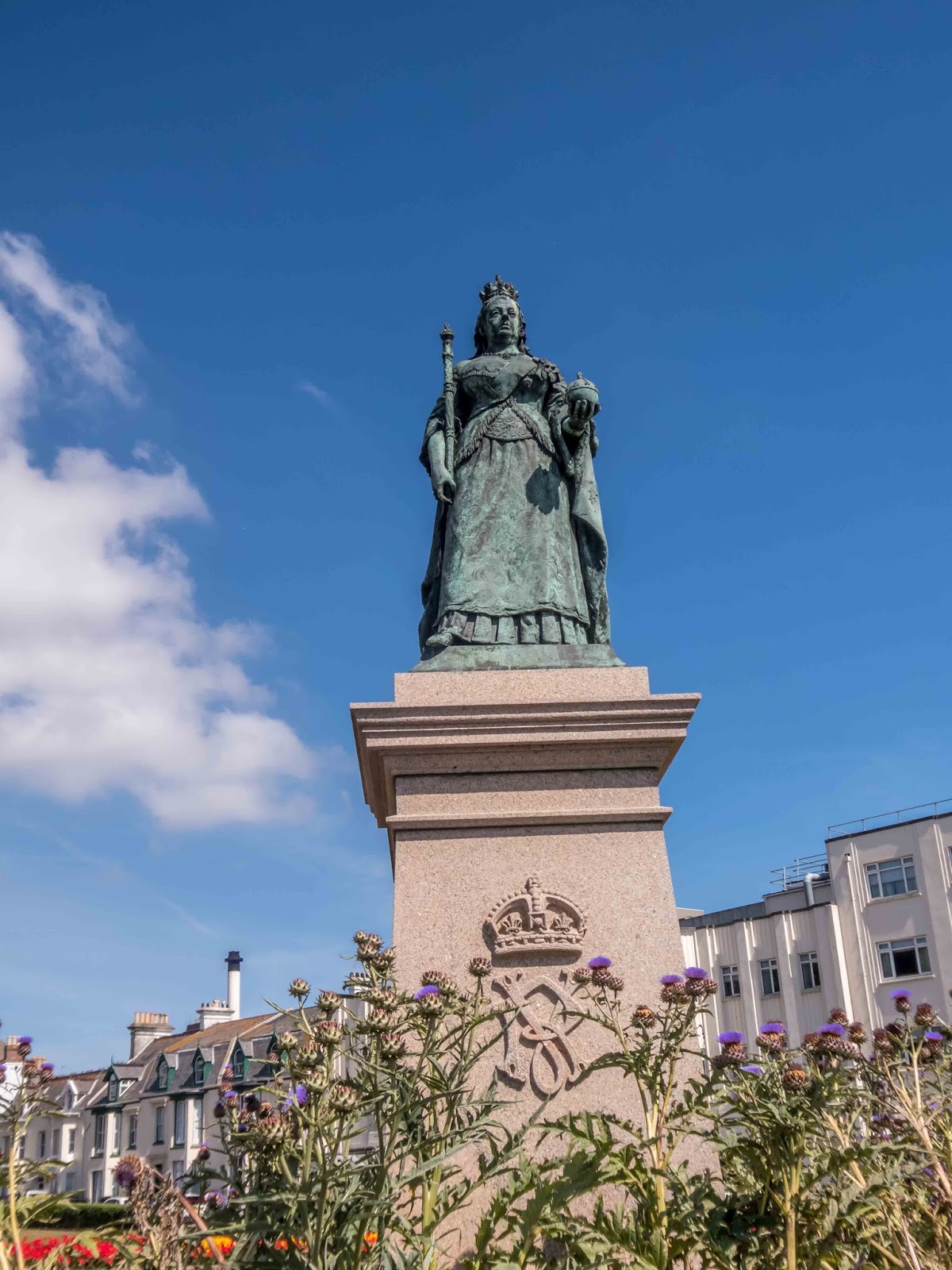
| Queen Victoria park |
We took the bus downtown today to walk through the Maritime museum and the Occupation tapestry.
 |
It cost us 6.60 pounds ($8.21 USD) round trip for both of us to ride the bus. And I didn’t have to be worried about Chuck’s driving!
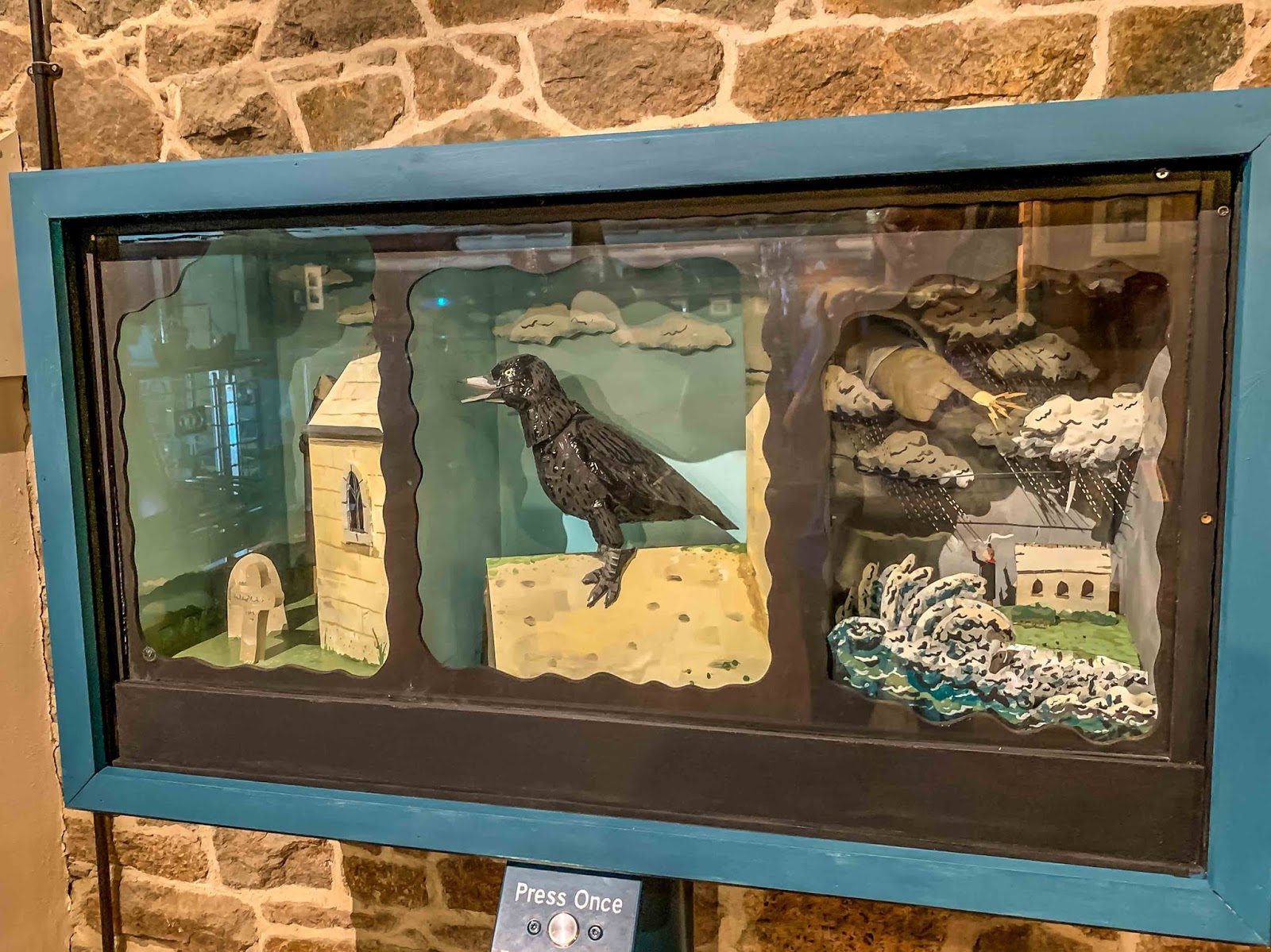 |
| The bird talks and the wind blows creating a hurricane |
However, our bus driver did get into an argument with a bicyclist that cut in front of the bus. It was pretty funny!
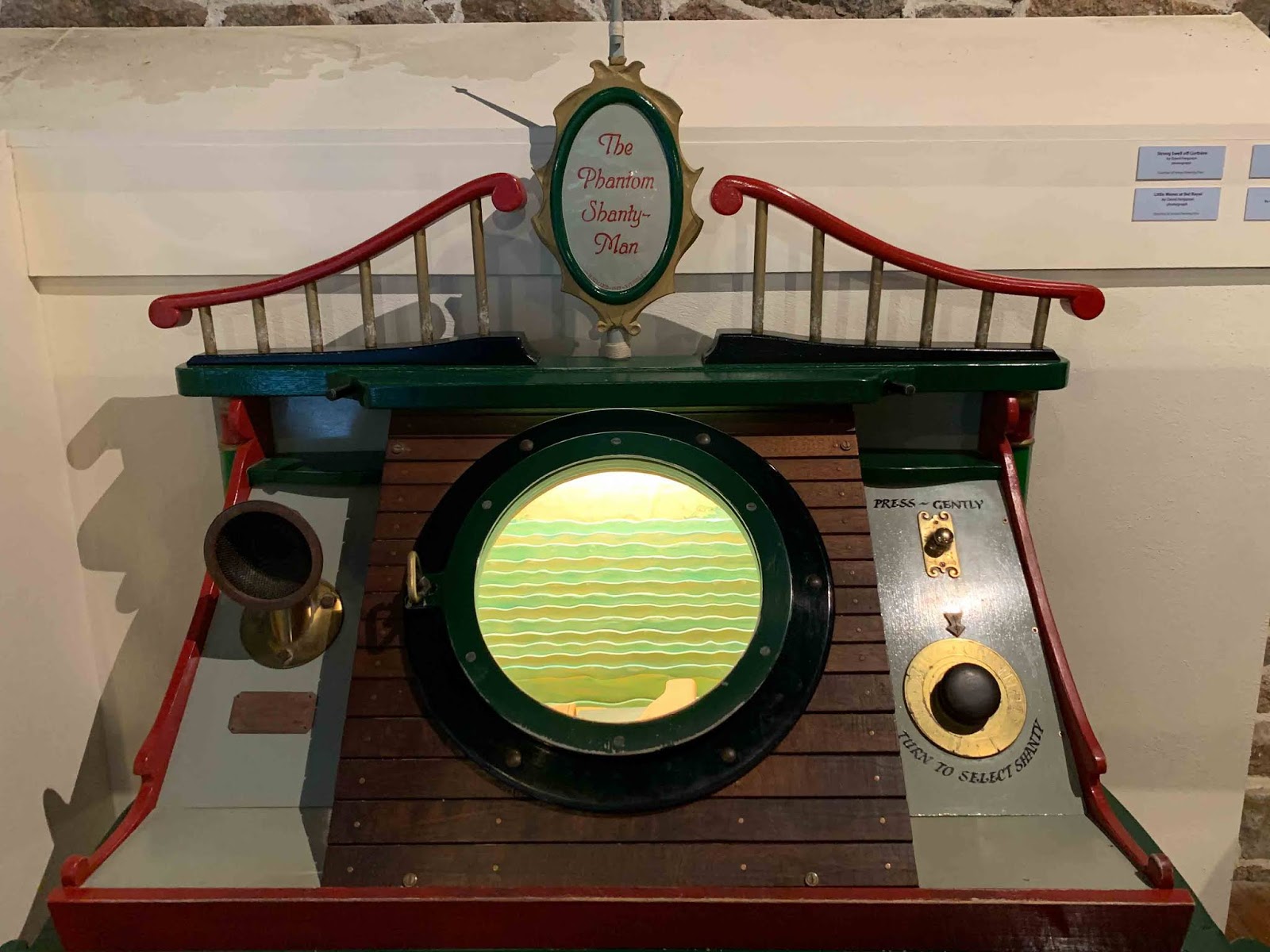 |
| Plays Shanty type (loud) music and you cant turn it off until the song is done! |
Our first stop was the Maritime Museum. It was interesting and somewhat fun. It was very interactive.
 |
| World globe that showed the journey of certain ships as they traveled around. One ship started in Richmond, VA. If you notice, either Hampton Roads is missing its mark or Richmond sure is close to New York |
I just imagined bringing the grandkids here and letting them play all day. They would have had a blast!
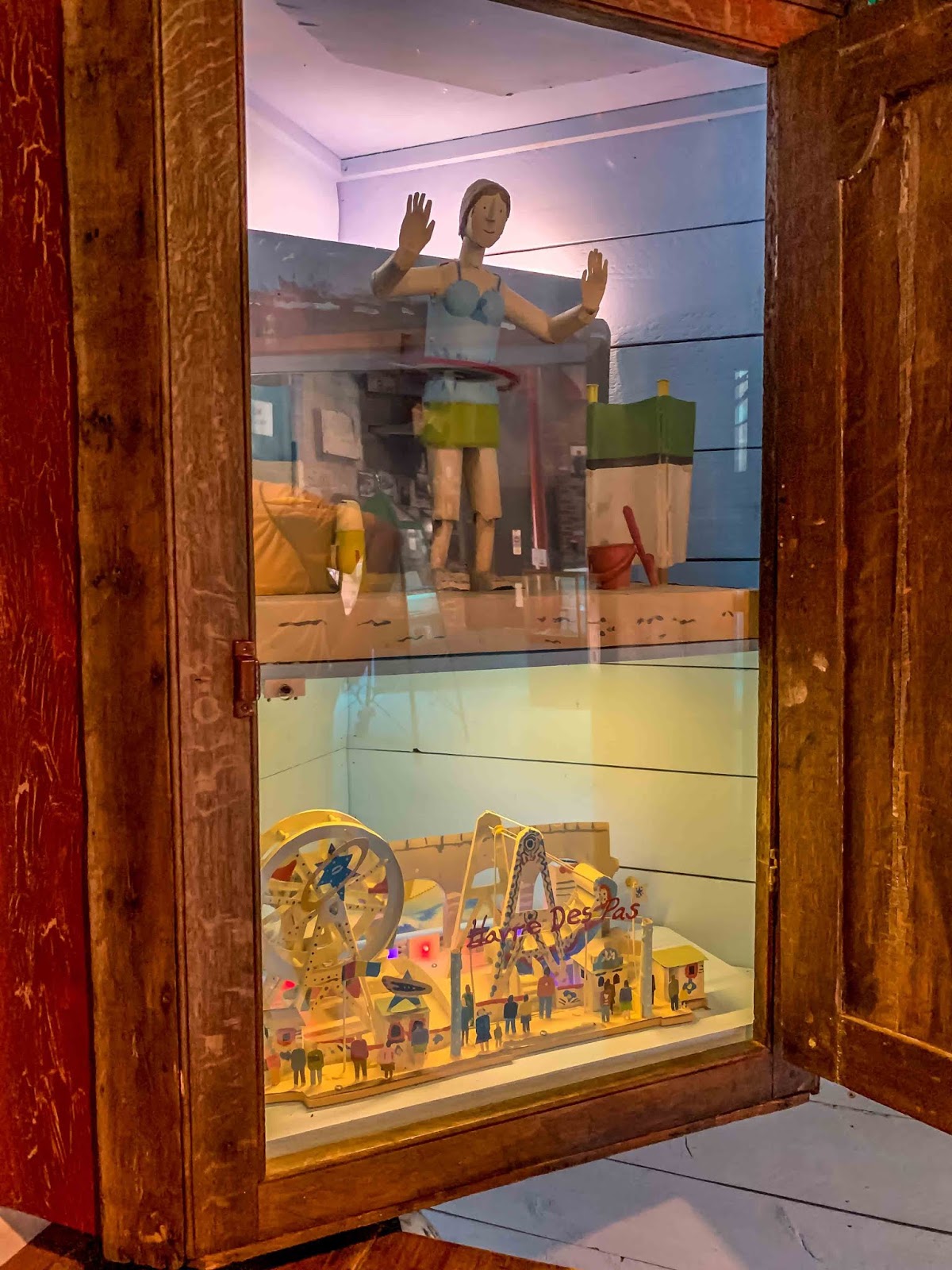 |
| One of the many doors that you open and find animated surprises |
You had doors to open, water to play with, noises to make and wheels to turn.
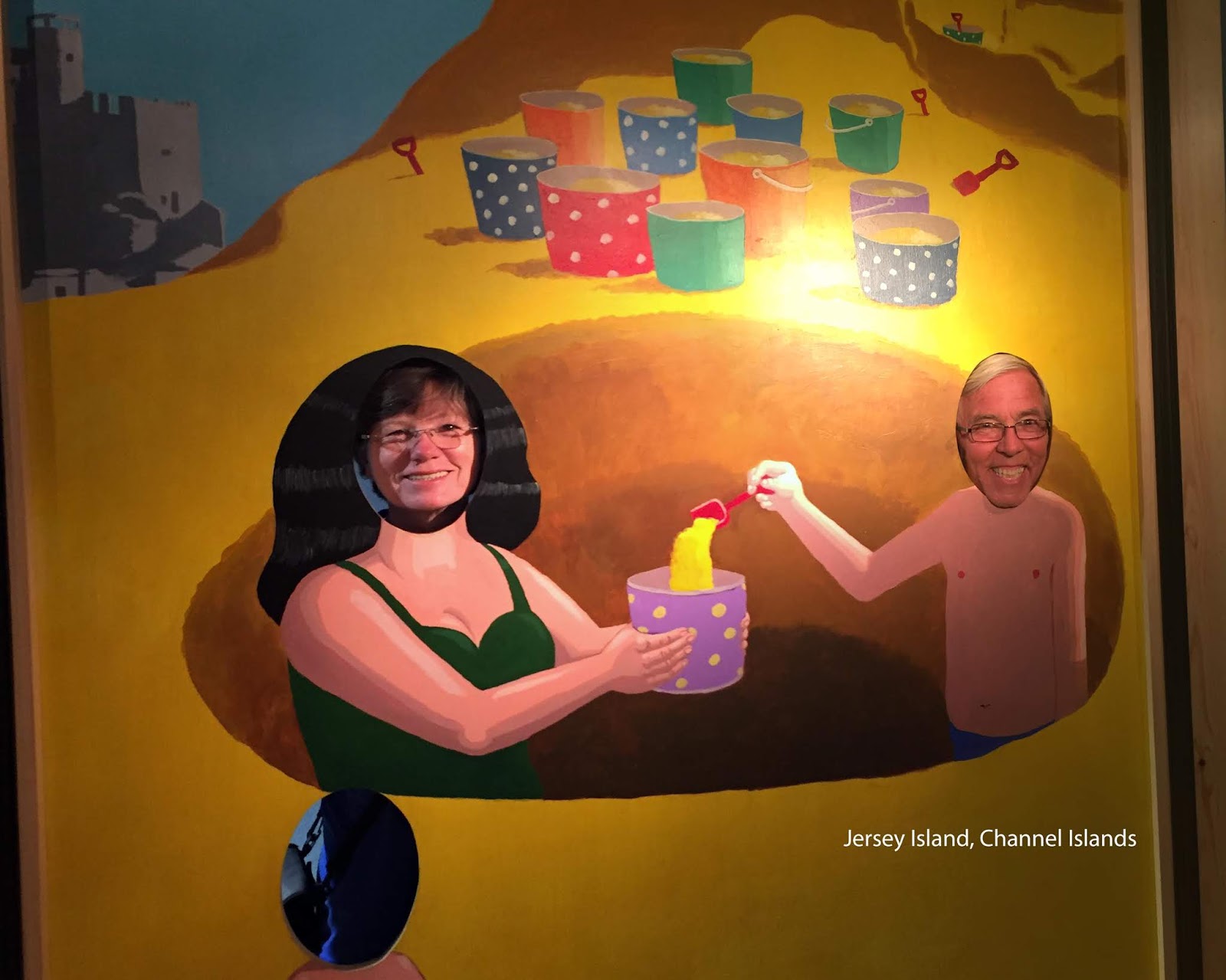 |
| We joined in on a little of the fun! |
The good news is that it did tell the history of Jersey.
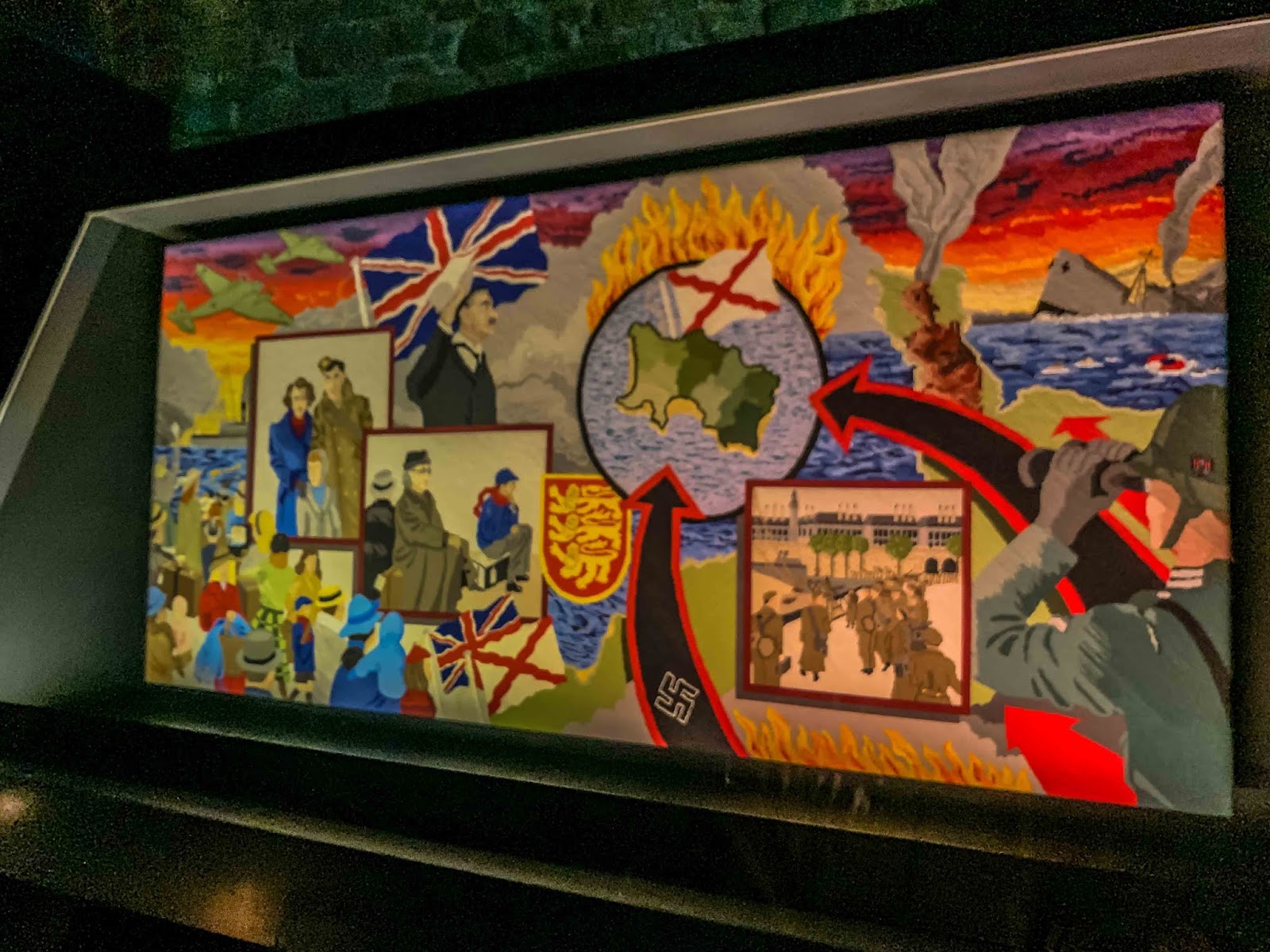 |
| Outbreak of War – In June 1940 every family in Jersey faced a terrible dilemma, to abandon their island home or face the prospect of living under German rule. |
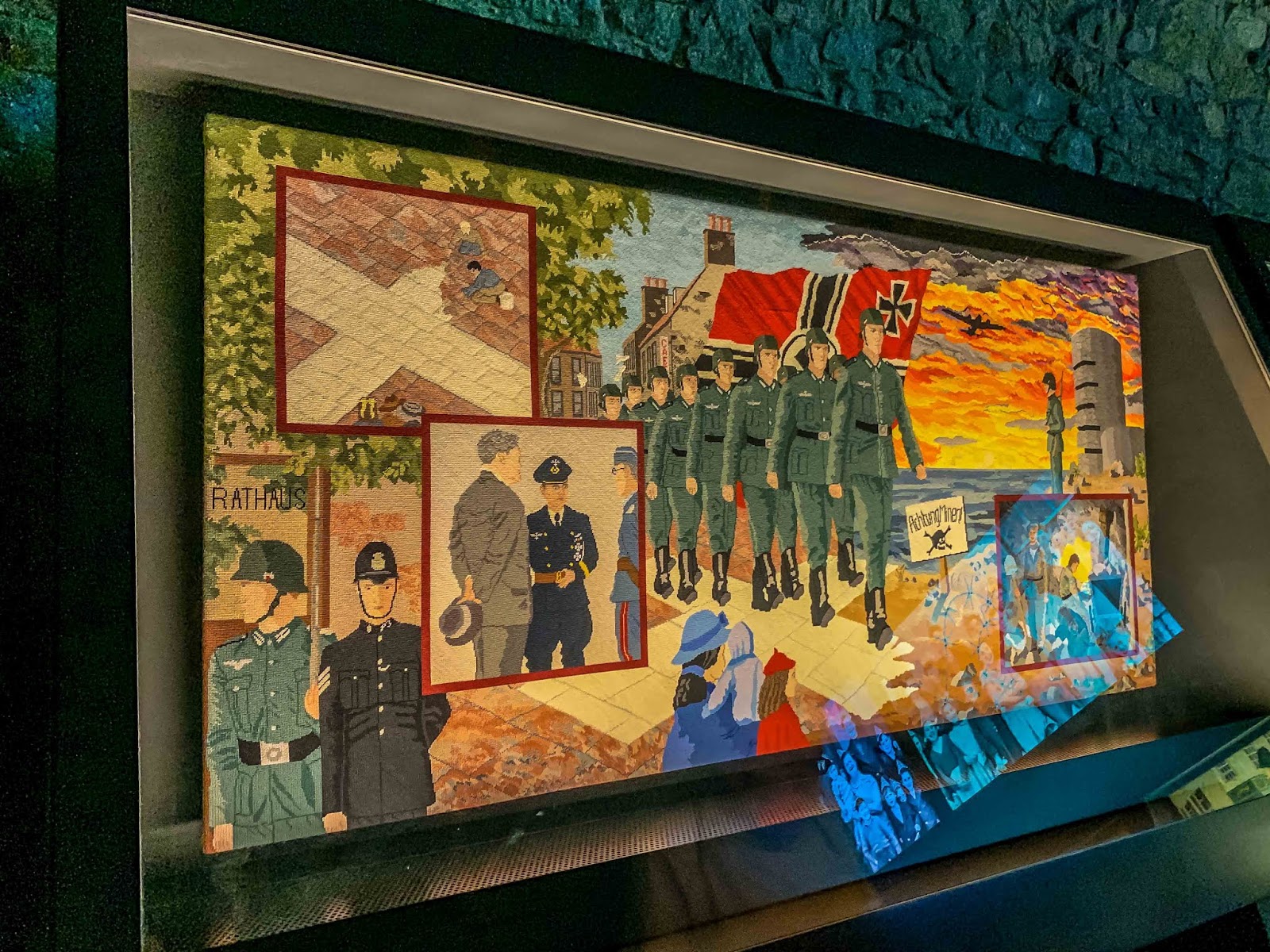 |
| Occupation – The Germans arrived in the island on July 1st, 1940 after bombing the harbour and demanding that white crosses of surrender be displayed in prominent places |
Very much the same as what we learned from touring other locations in Jersey.
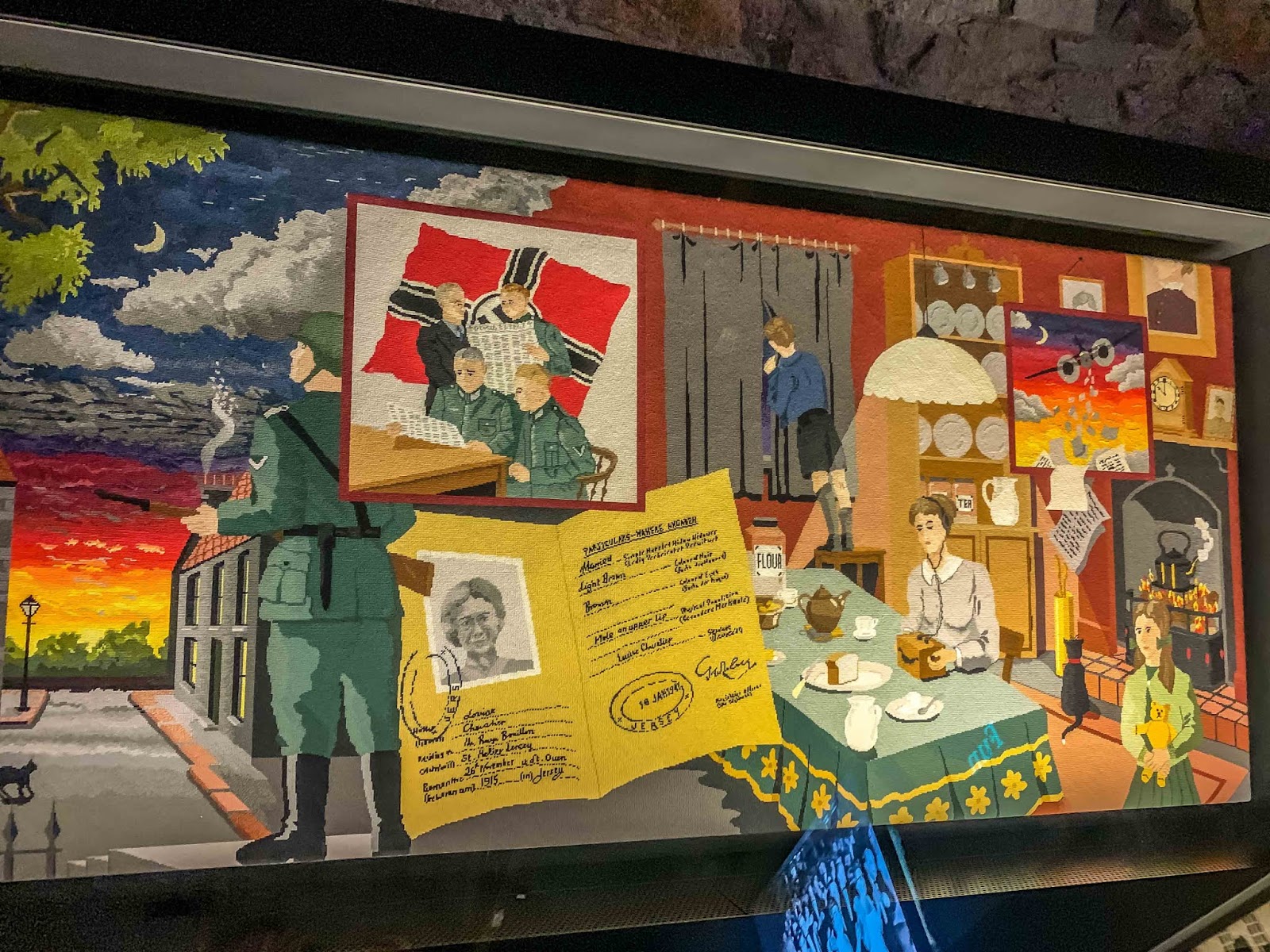 |
| Restrictions – Islanders were subject to a growing number of restrictions including curfews, identity cards, newspaper censorship and the banning of radios |
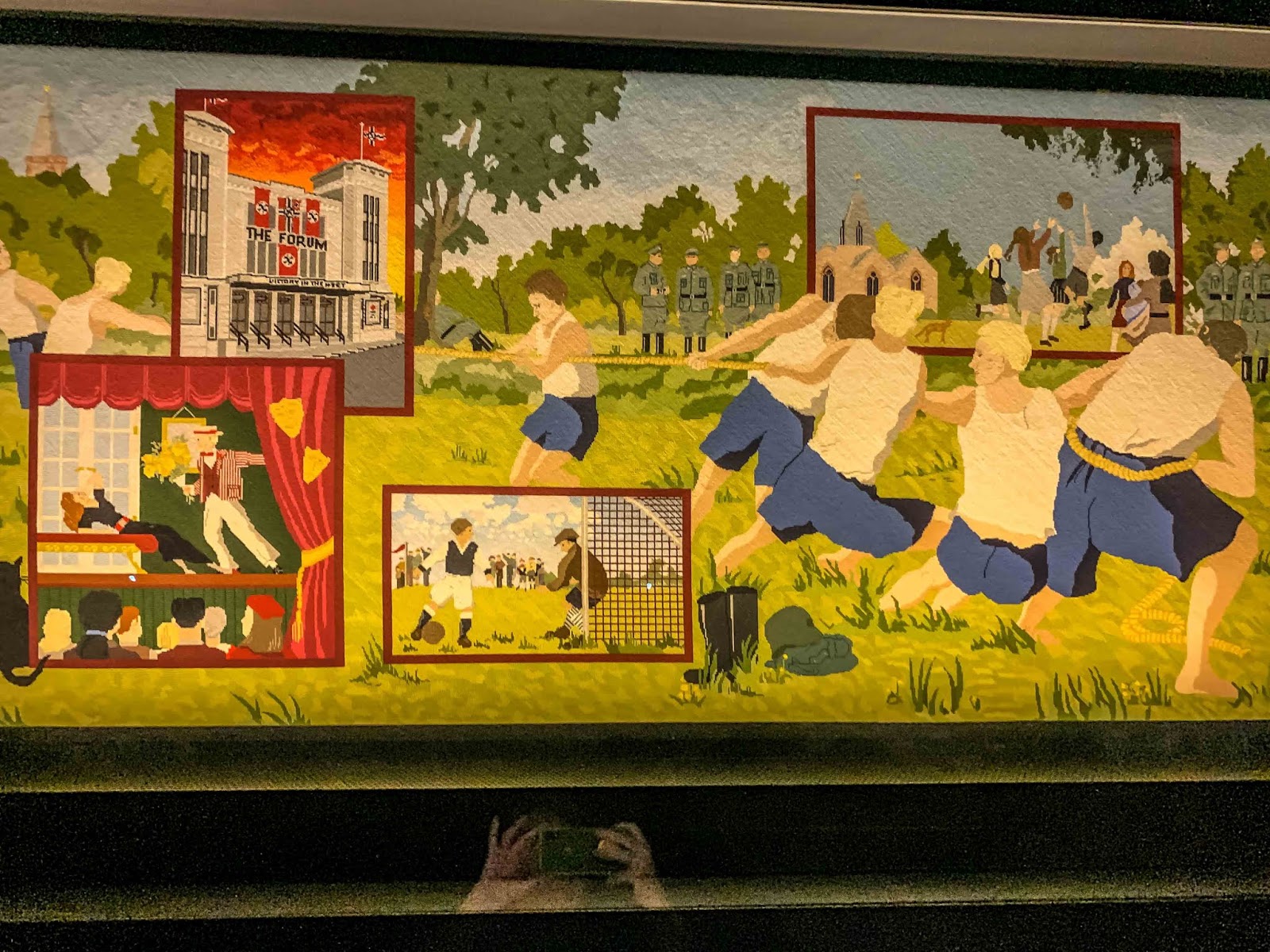
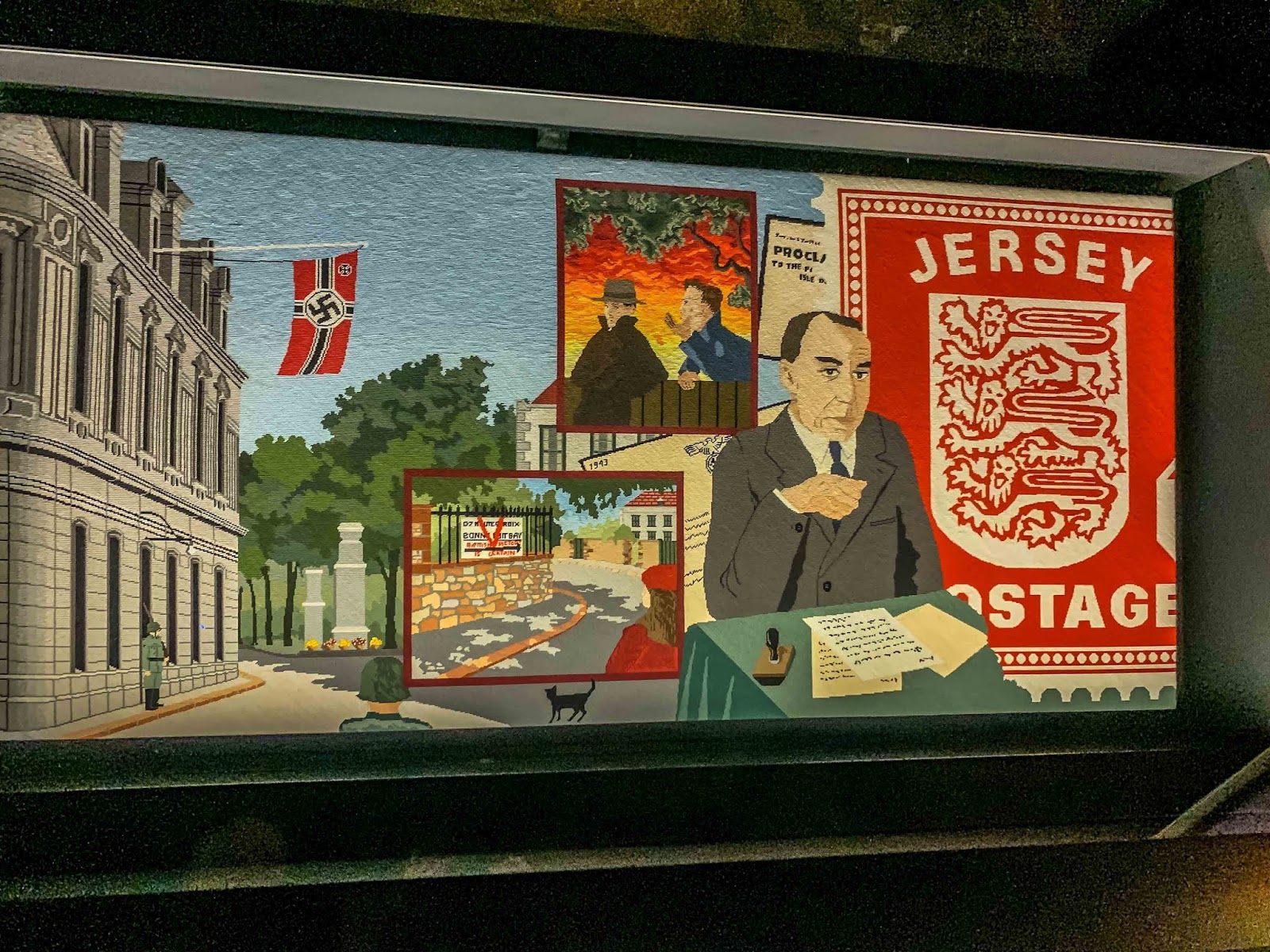
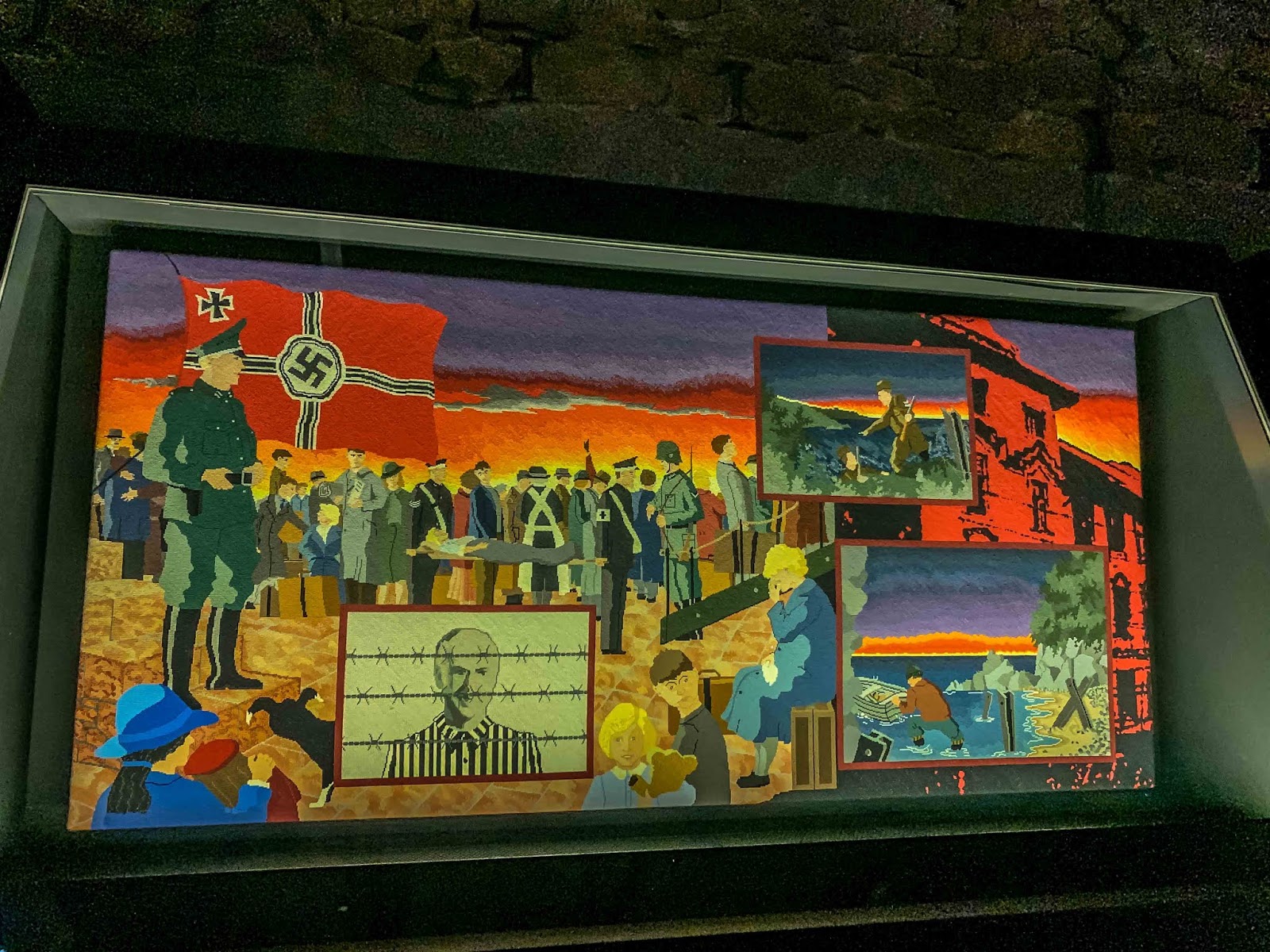
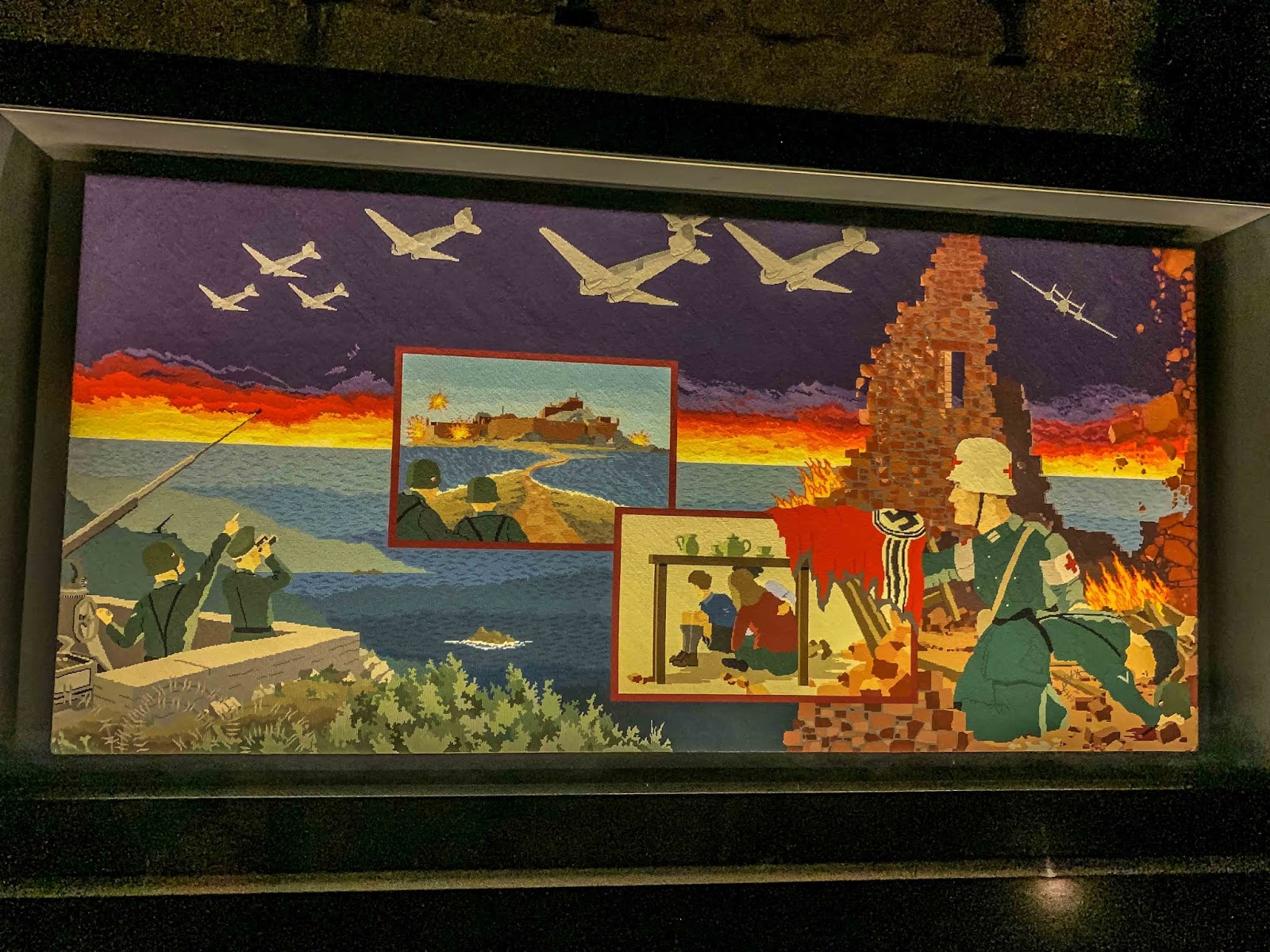
The most interesting was the Occupation Tapestry.
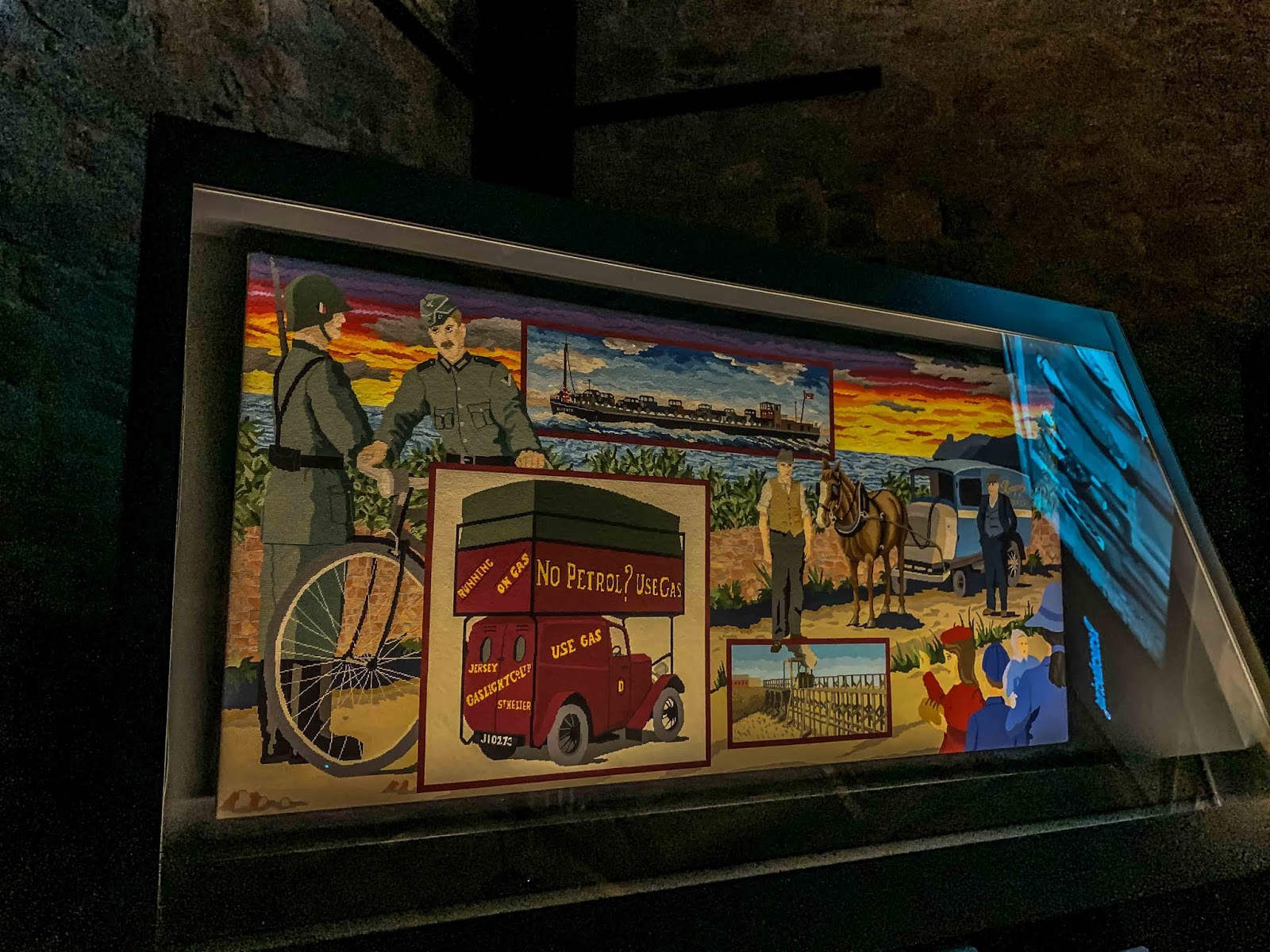 |
| Transport – Petrol shortages and the requisitioning of private vehicles placed sever restrictions on the ability of people to move around the island. |
After Jersey was liberated from the Germans after 5 years of occupation, many of the people of Jersey didn’t want to talk about what happened and the horror they had been through.
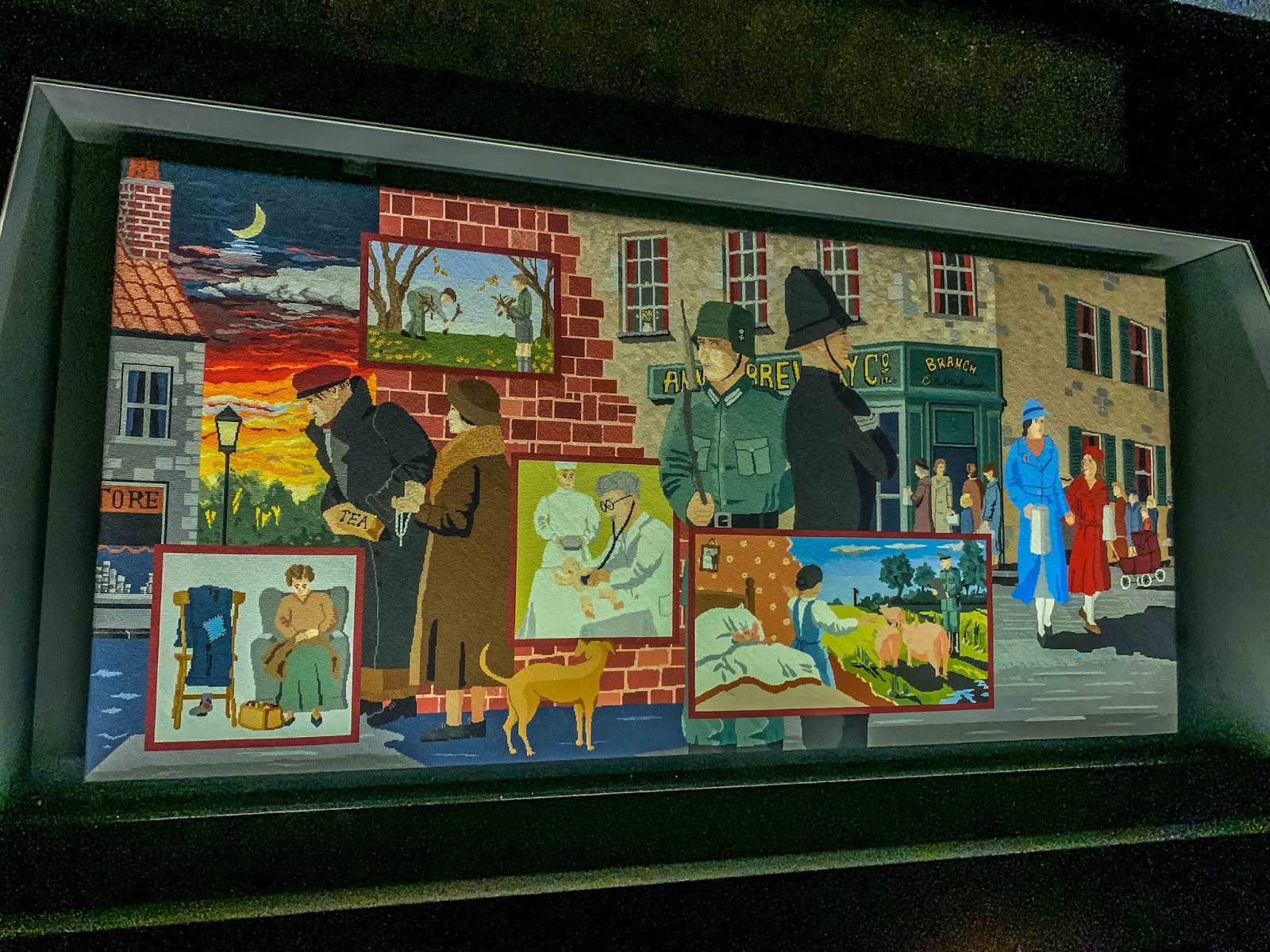 |
| Everyday – Despite living under enemy rule, Islanders had to find the basic necessities for life to go on. |
As the next generation was aging, they wanted to start educating the younger generation about what the island and their people have been through so the history wouldn’t be lost.
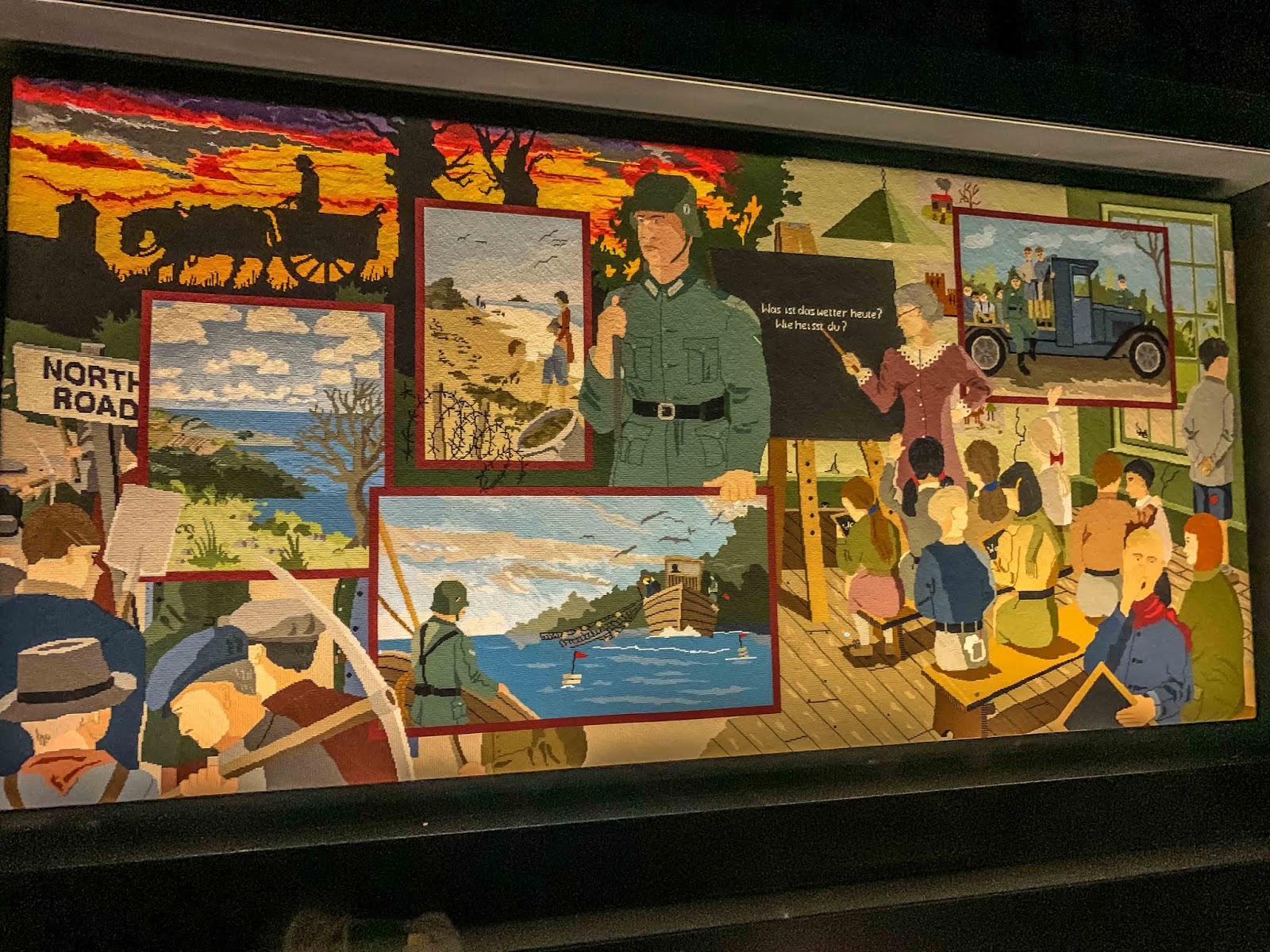 |
| School and Work – There were many changes at school and work because of fuel rationing, strict regulations and curfews imposed by the Germans |
As the years flew by and the celebrations of liberation became more regular the 50th anniversary was nearing in 1995. Many people wanted to do something spectacular so they put a committee together and came up with a story being told in a tapestry.
 |
| Social Life – Cut off from the mainland, Islanders had to produce their own forms of entertainment to get through the long years of the Occupation |
The final decision was made in 1991 when the work on the tapestry began and it was indeed complete in time for the anniversary to show the people of Jersey how much their lives and ancestry meant to Jersey.
 |
| Government – The Island had to continue to function and the Bailiff acted as an Intermediary between the civilian administration and the German Field Command |
In today’s blog I’m including all the tapestries and a quick overview of their meaning.
 |
| Deported – Many Islanders including those who were British-born, political prisoners or Jews – were deported and sent to internment camps, prisons and concentration camps of the Nazi regime |
About the tapestry itself, it took 275 shades of 52 different colors; 256 stitches per square inch in each panel.
 |
| By-Passed – On June 6, 1944, Allied armies landed on the beaches of Normandy. The war in Europe was entering its final phase |
With 12 panels, the total number of individual stitches for the entire tapestry was 7,520,256 and 29,857 hours to complete.
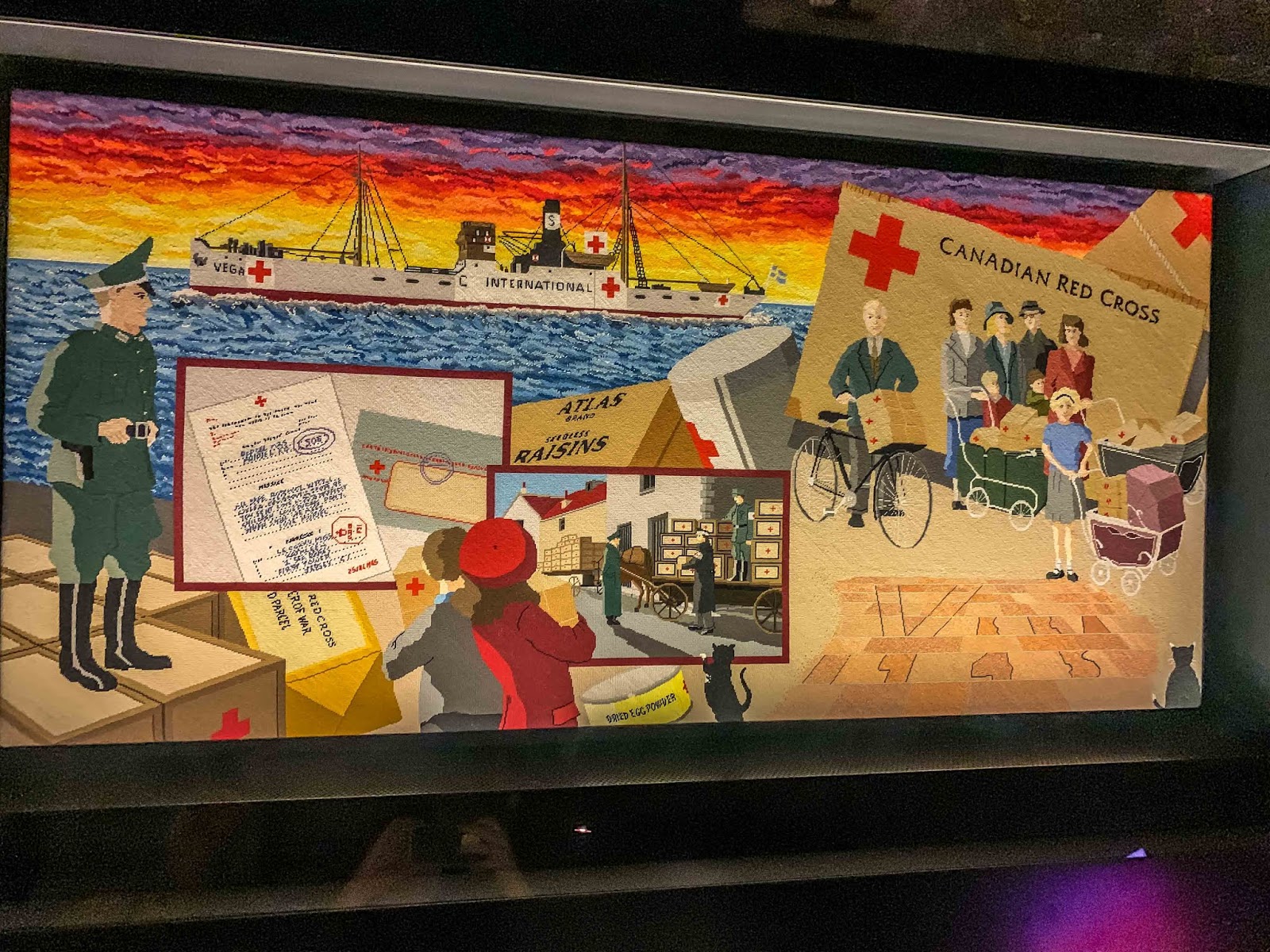 |
| Red Cross – The neutrality of the International Red Cross was invaluable in keeping families in contact and ensuring Islanders did not starve in the final months of the war |
If I haven’t lost you yet, the type of embroidery stitch the 233 embroiderers used was the basket weave tent stitch.
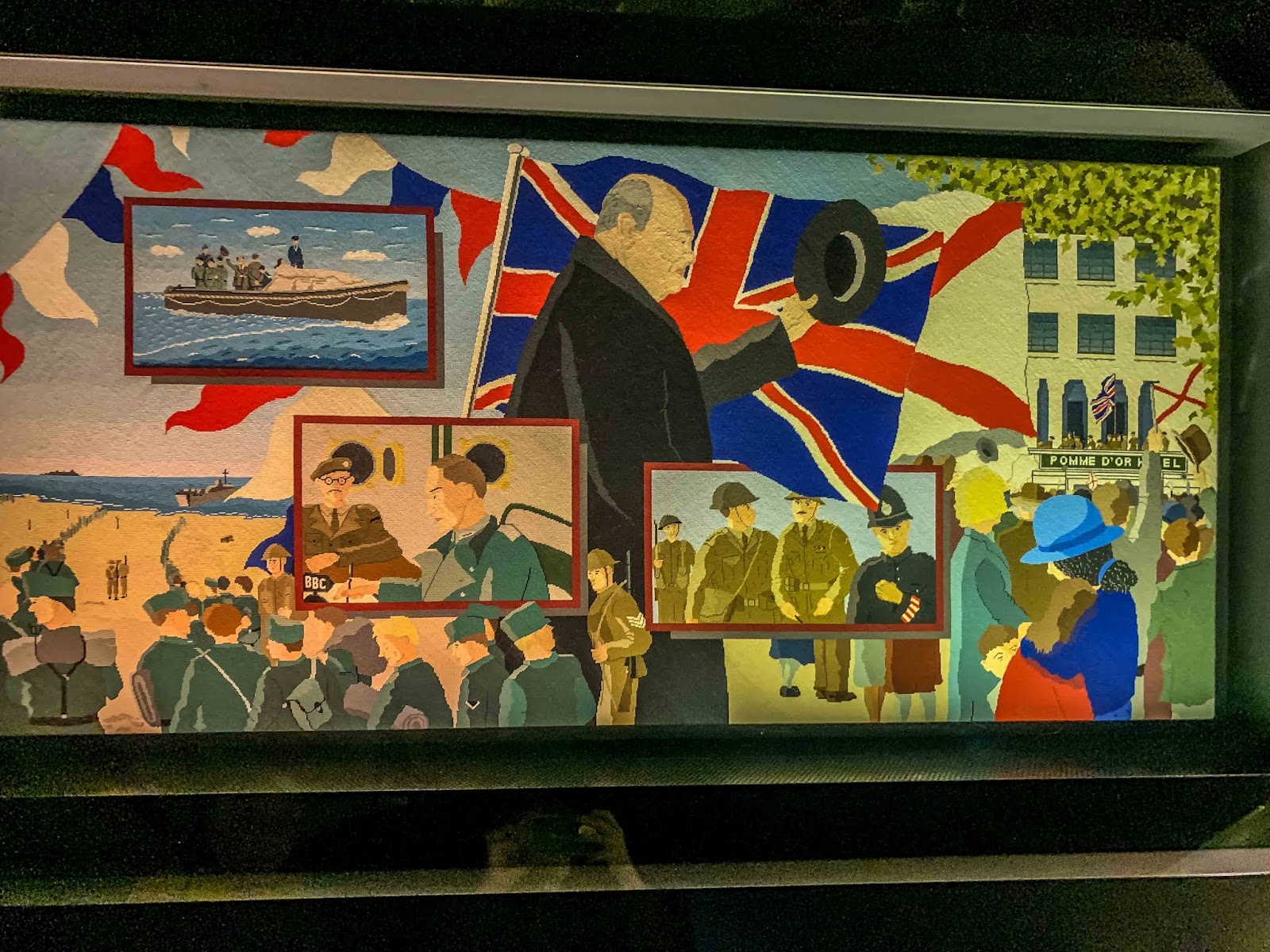 |
| Liberation – Having endured 5 long years of Occupation by German forces, Jersey was finally liberated by British Troops of Task Force 135 on May 9, 1945 |
It was an interesting piece of work and each time you look at the work, you see something different.
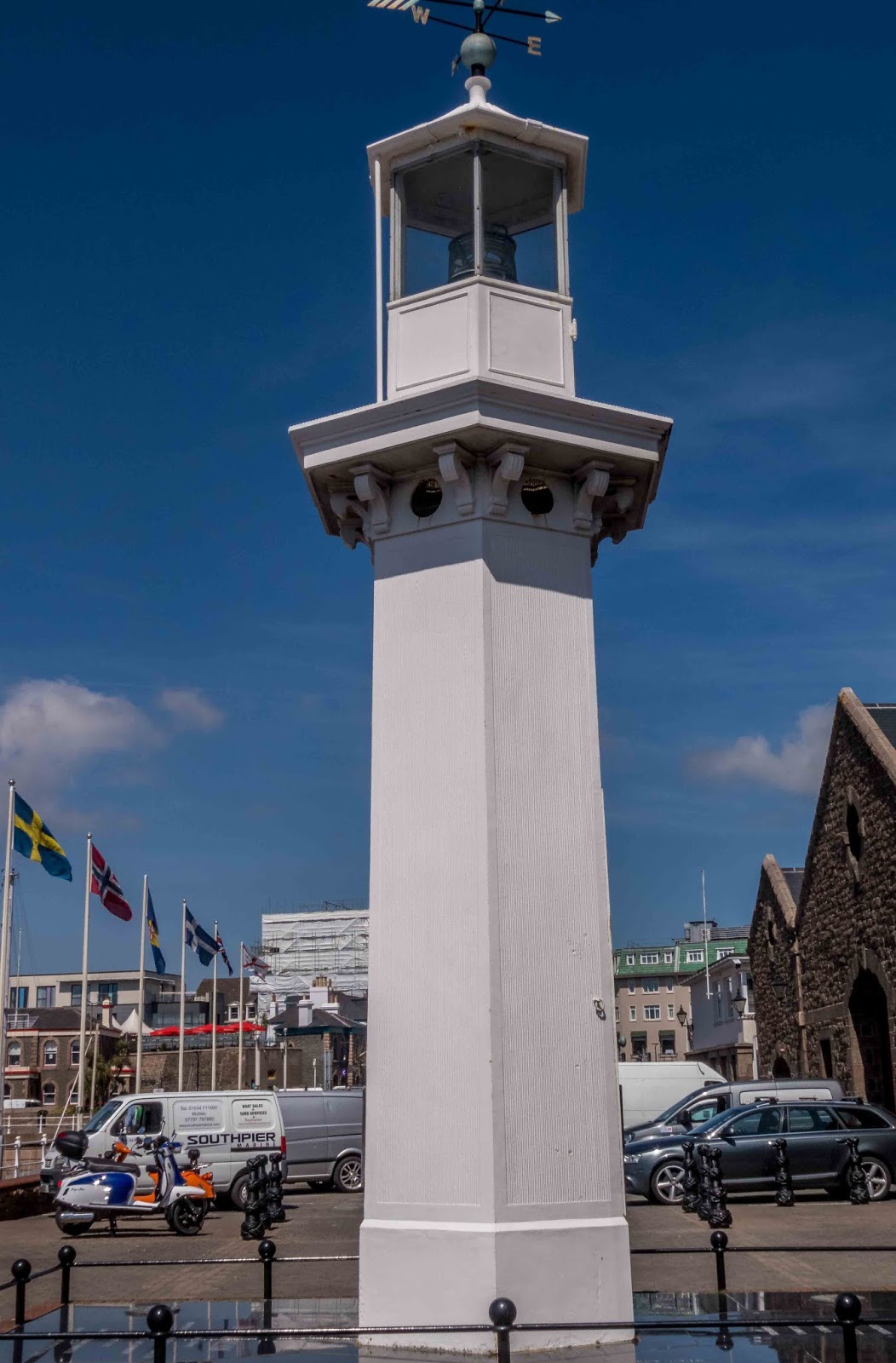 |
| Holocaust memorial |
After we exited the museum, we walked around to the Holocaust memorial. 21 Jersey islanders died in German camps and prisons during the war.
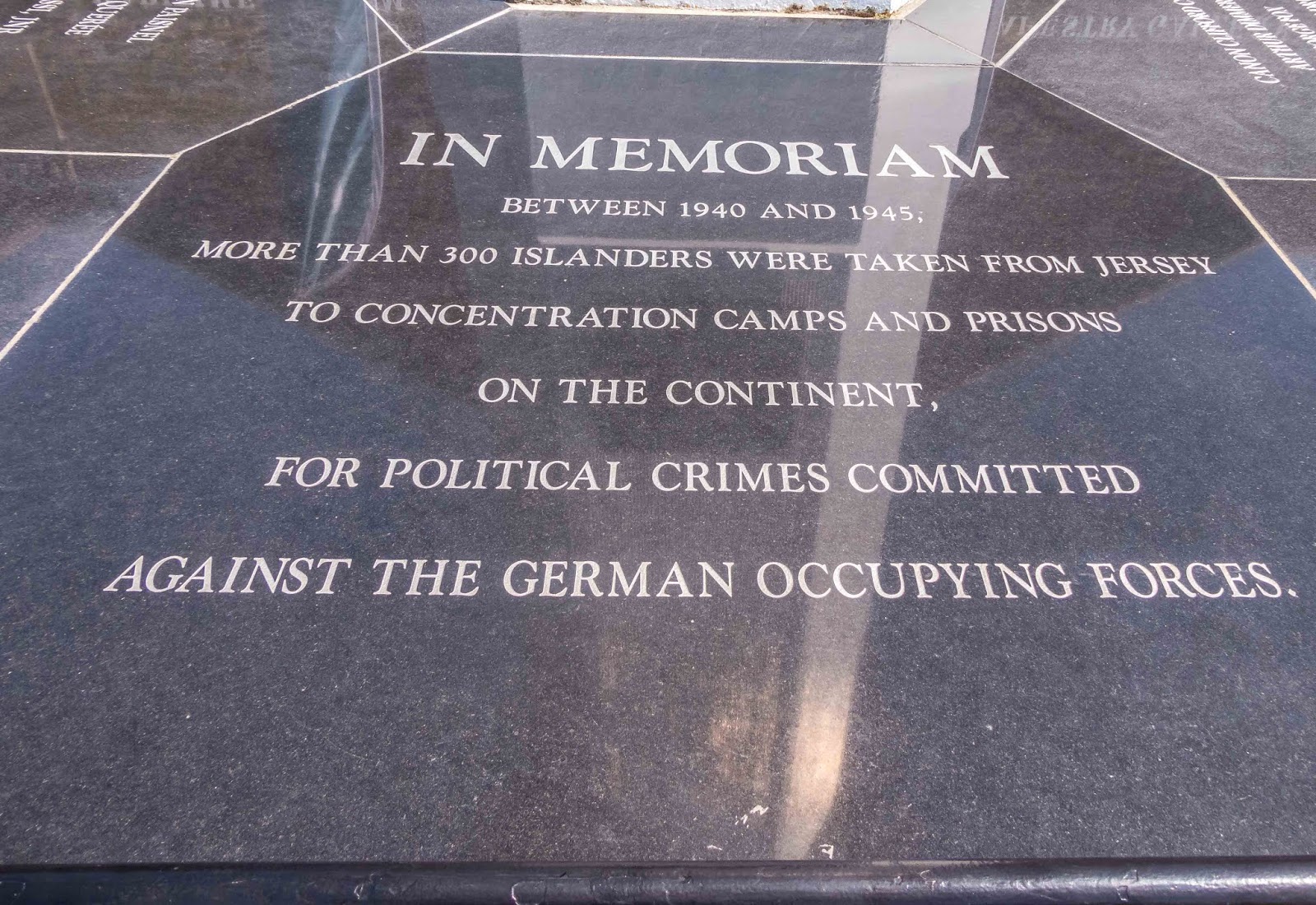
Such a wonderful tribute to those that lost their lives just trying to survive.
It was a nice, warm day. We walked by Queen Victorias park and then had a delightful lunch before heading back to the bus stop. Another successful day of not sitting in an office chair staring at a computer screen and working in a spreadsheet! My kind of life!
May God bless you always.
Chuck & Lea Ann
 WorldTravelReynolds